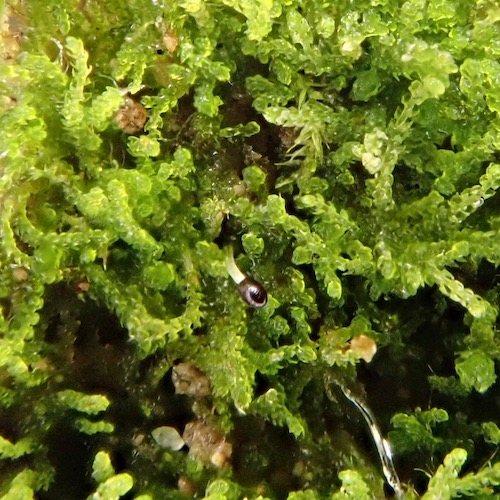
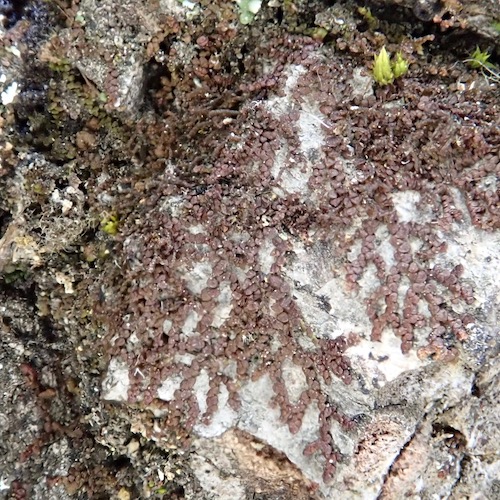
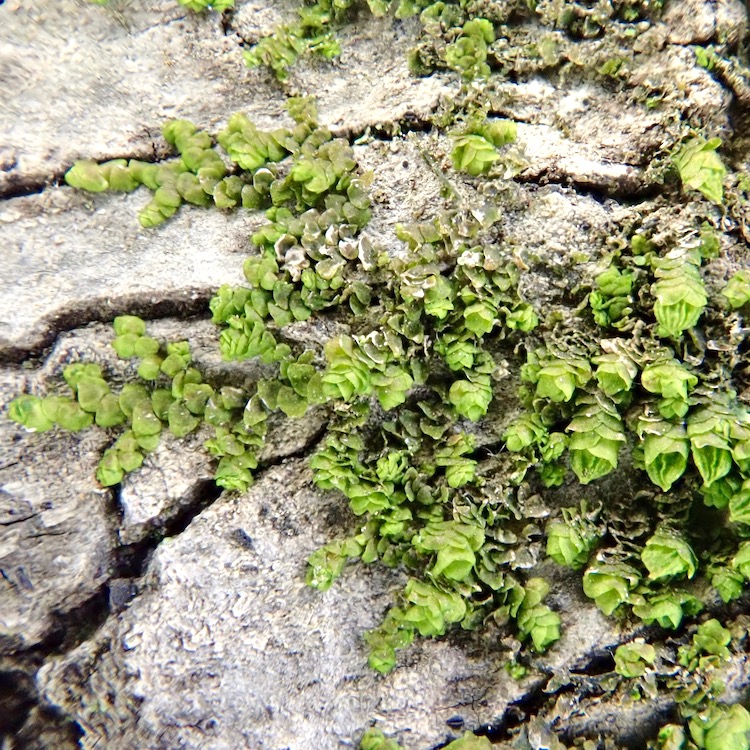
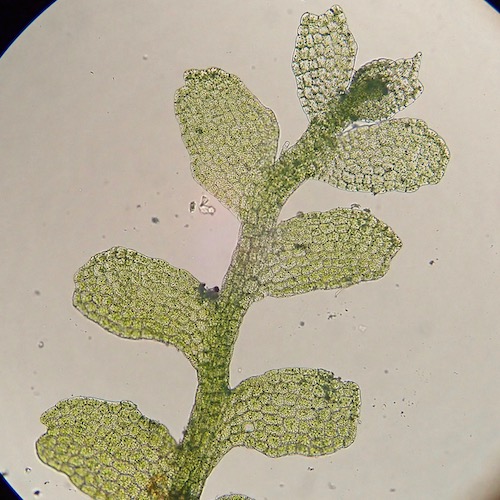
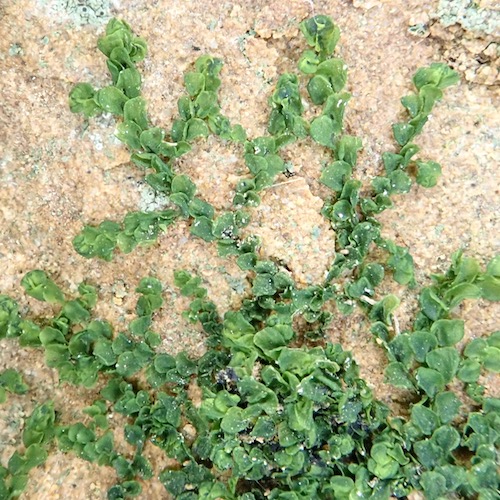
As of 2023, 22 liverwort species have been documented for mainland Santa Barbara County. Even with this low number, the morphological diversity is astounding. We have representatives of all four liverwort growth forms: complex thallose, simple thallose, leafy, and bottlepore. In fact, you may find yourself wondering why they are all classified as liverworts. For more background, check out my basic info pages.
Click on a thumbnail to navigate to each species page, with detailed descriptions and many photos labeled with key characters.
Complex Thallose Liverworts:
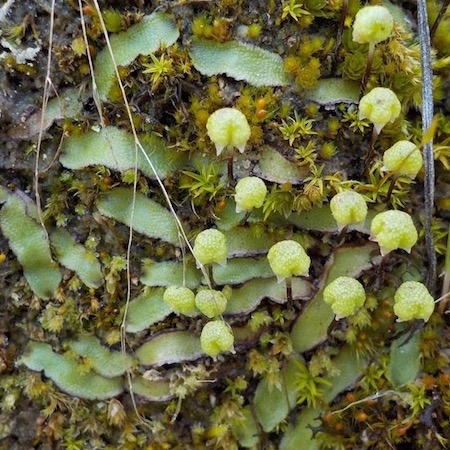
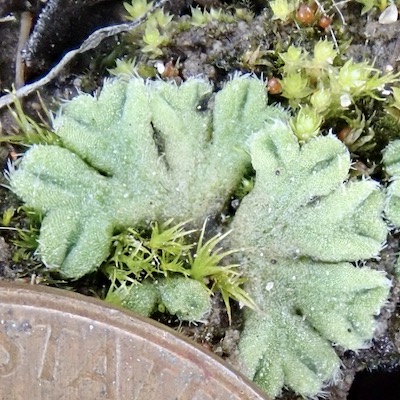
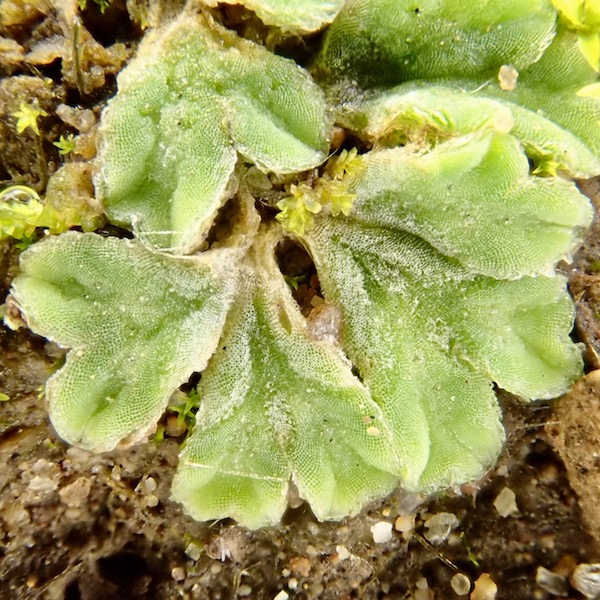
The complex thallose liverworts have a body, or thallus, which is differentiated into distinct layers, hence the complexity. They tend to be thick and meaty, and many have pores on the surface giving them a somewhat reptilian look. Here in Santa Barbara County, our most commonly encountered species are Asterella californica (now Calasterella californica), Targionia hypophylla, and Cryptomitrium tenerum.





Simple Thallose Liverworts:
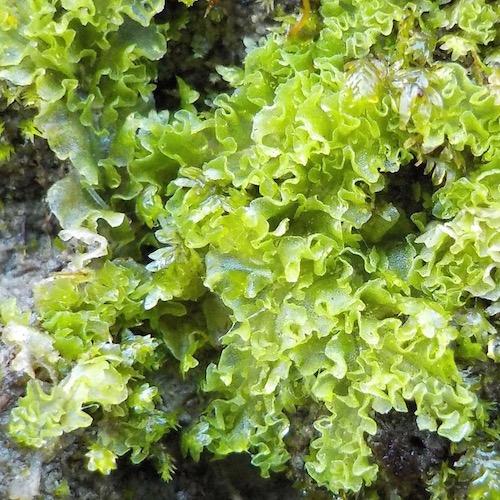
Simple thallose liverworts have a body, or thallus, which is uniform throughout, hence the simplicity. Our single local representative of the simple thallose liverworts has a thinner, more delicate appearance than our complex thallose liverworts.
Bottlepore Liverworts:
Bottlepore liverworts have a body composed of a single cell layer covered with bottle or flask-like structures. The two species that have been collected here in Santa Barbara County thus far are distinguishable only by examining spore characters.


Leafy Liverworts:
Leafy liverworts have a stem and leaves, typically arranged in two rows on either side of the stem, oftentimes with a third row of smaller leaves on the underside of the stem. Leafy liverworts are by far the most species-rich group of liverworts worldwide. Our local leafy liverworts tend to be quite small and are often overlooked.