
Marsupella bolanderi Austin (Underw.)
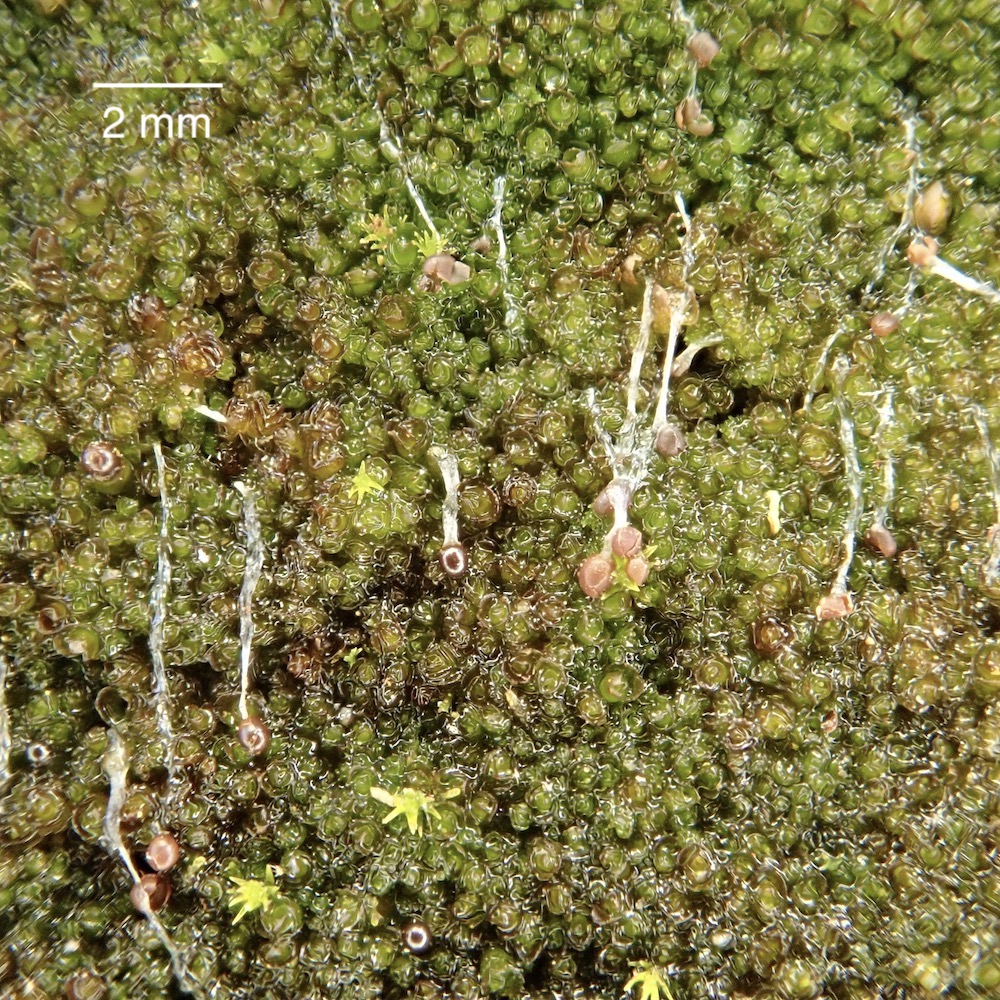
Marsupella bolanderi is a small (<6mm high, 0.1-0.2mm wide) leafy liverwort, with two rows of green to reddish bilobed leaves, that often overlap near the apex of the shoot, but are more remotely spaced further down the stem. The species is dioicous, with separate male and female plants. It is typically found growing on sandy soil or on sandstone itself, either in sun, where plants turn reddish, or in shade, where plants are greener. Plants may grow upright or more prostrate and may form loose or dense patches.
Scroll down for photos with labeled parts and more detailed descriptions.

Detailed Descriptions with Photos (click to enlarge)
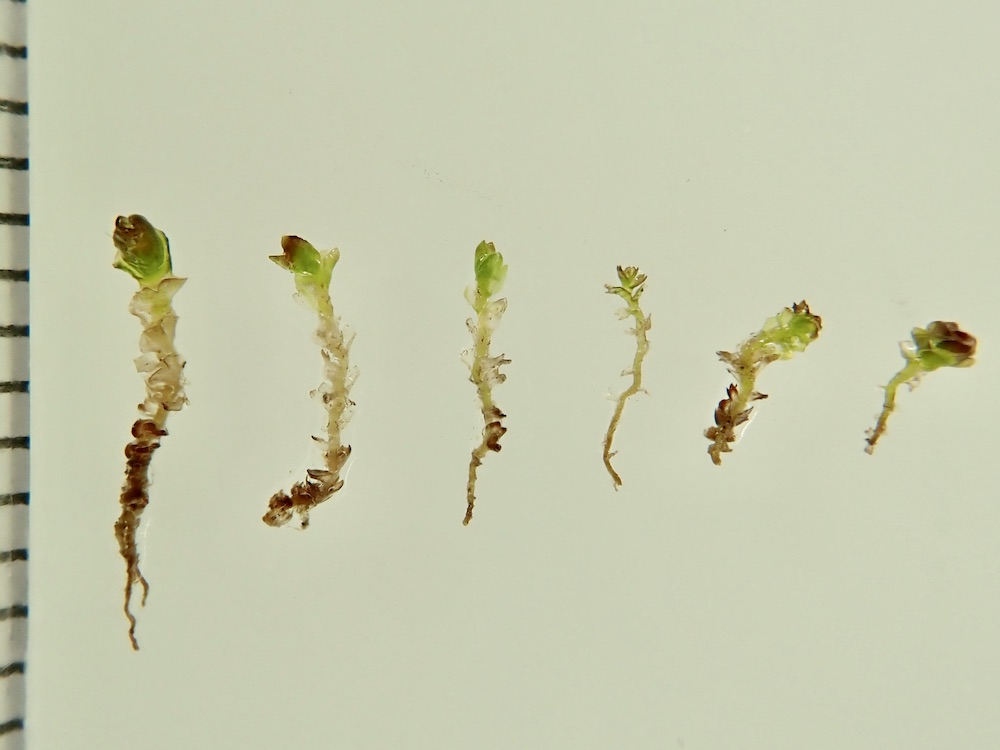
Individual Marsupella bolanderi plants are up to 6 mm long. Upper leaves are often reddish and densely overlapping, while lower leaves, less exposed to the sun, are often greener, as well as more distantly spaced along the stem.
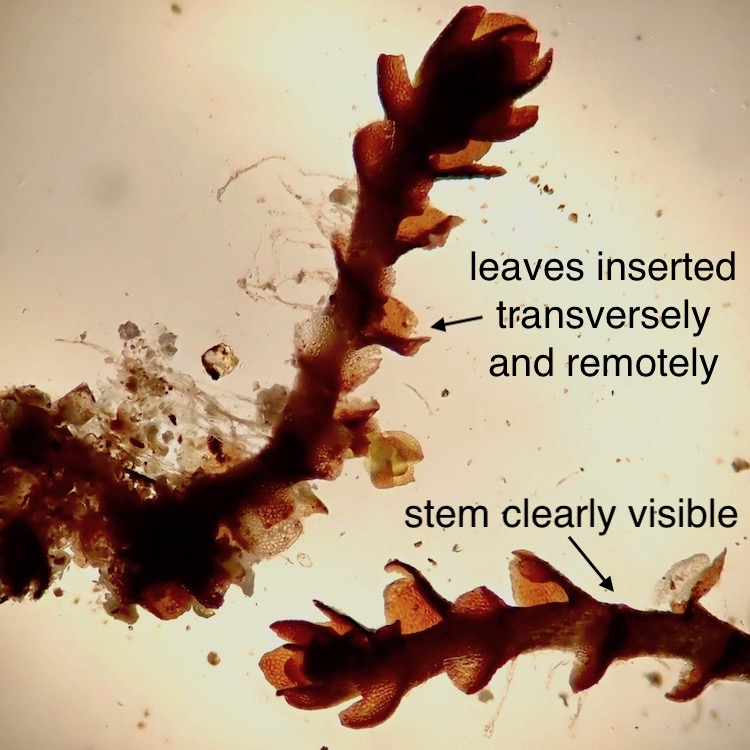
Marsupella bolanderi has two rows of leaves, which are transversely inserted into the stem, that is, they stick out at a right angle. The leaves are slightly concave and spreading. Whereas leaves at the apex of the shoot overlap one another, those below are remotely distributed along the stem such that the stem and the colorless rhizoids are clearly visible when viewed under a microscope. In contrast to many other leafy liverwort species, Marsupella bolanderi lacks a third row of smaller underleaves.
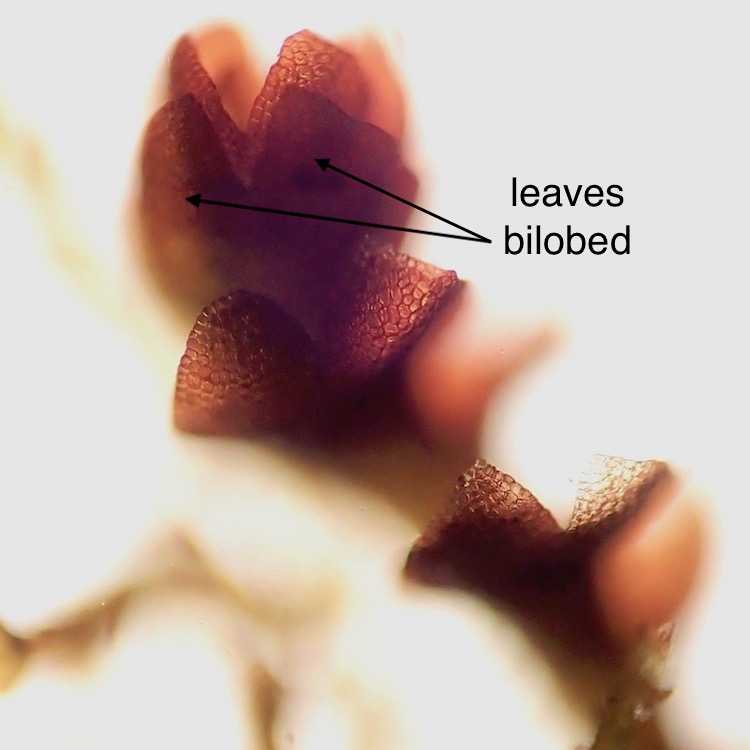
The leaves of Marsupella bolanderi are bilobed, with the sinus between the lobes extending up to a third of the length of the leaf. The tips of the lobes are acute to obtuse, resulting in triangular to ovate lobes.
Leaves at the tips of Marsupella bolanderi shoots are larger than those toward the base of the shoot. Doyle and Stotler describe the cells along the leaf margins of female bracts as radially elongate, that is, wider than high, though I have found this to be the case on other leaves as well.

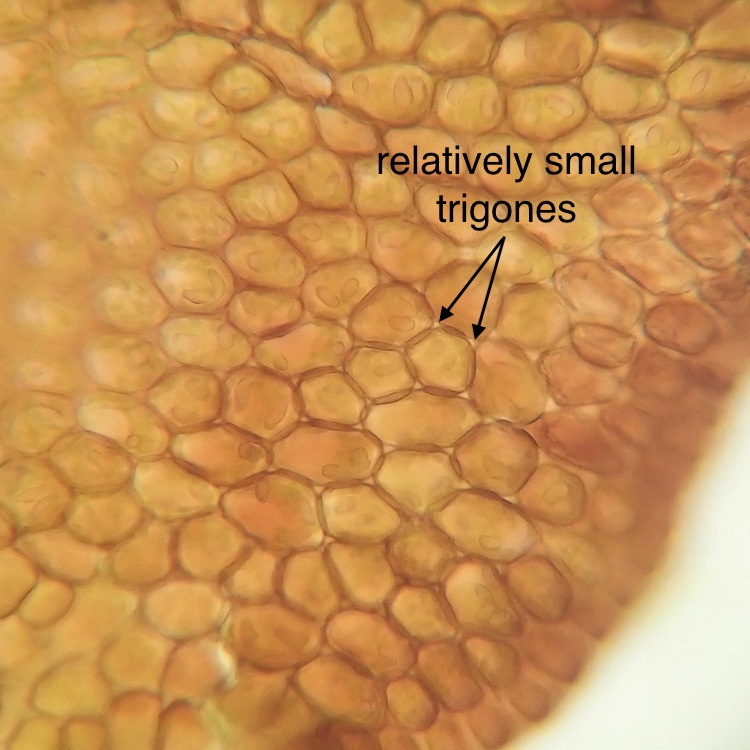
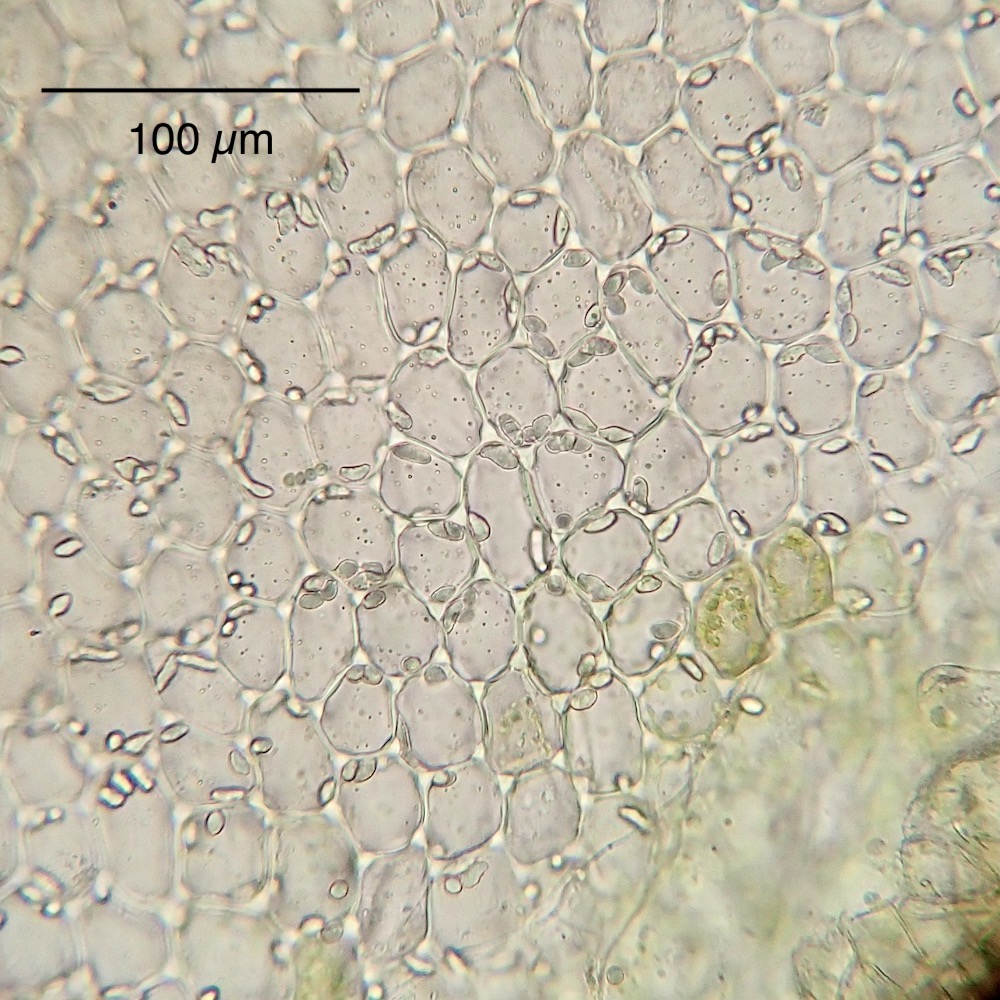
In this photomicrograph of a Marsupella bolanderi leaf magnified at 400x, one can see the reddish (vinaceous) cell walls and the rather small, triangular thickenings where three cells meet (trigones). This is in contrast to M. emarginata (not reported in Santa Barbara County), which has large, conspicuous trigones. The oil bodies within the cells are also visible, resembling funny little potatoes.
In this greener, less sun exposed Marsupella bolanderi leaf magnified at 400x, the trigones appear slightly larger.
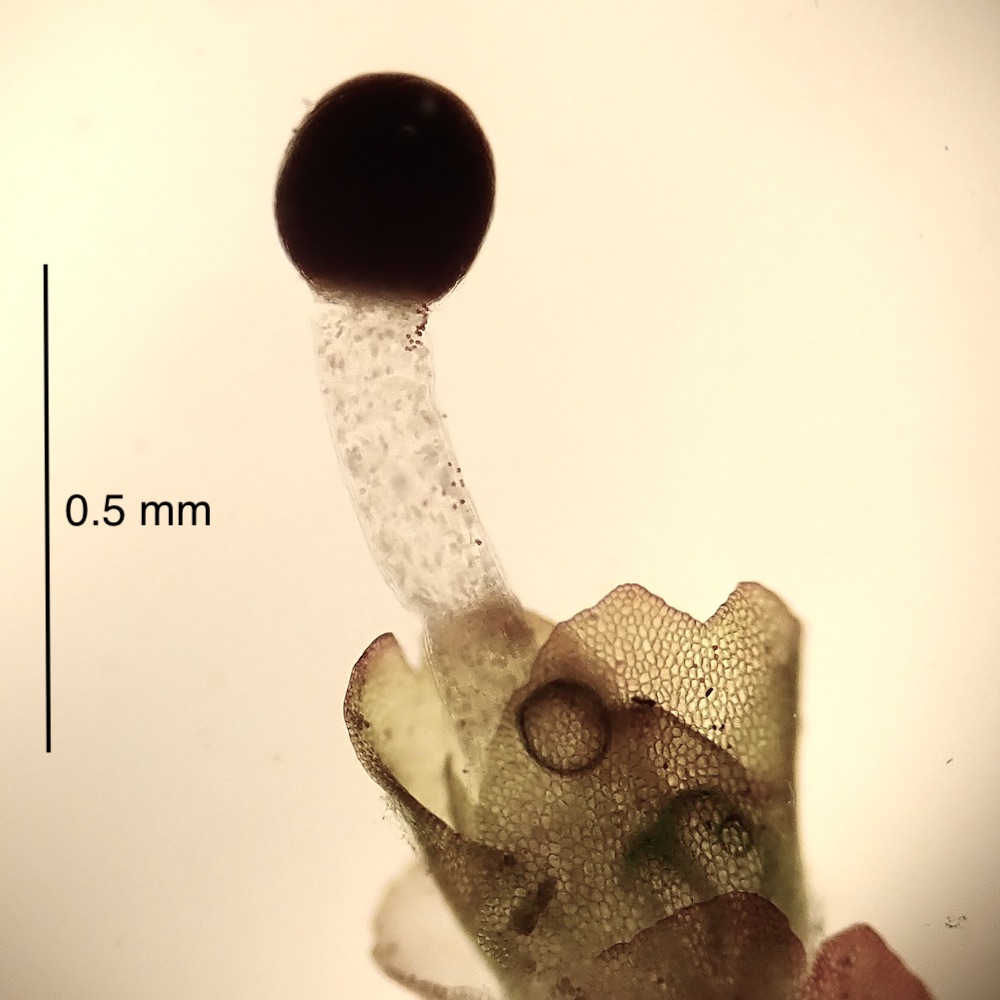
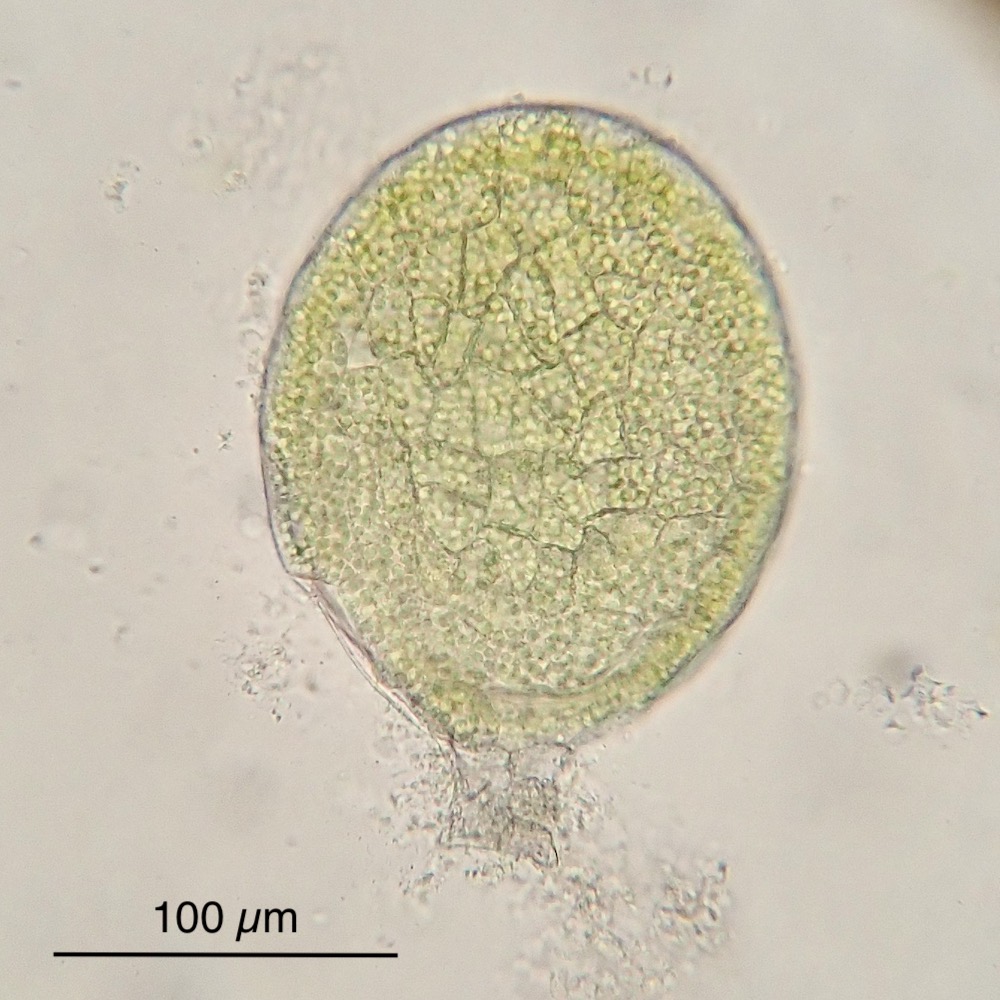
Occasionally one will enjoy the privilege of finding Marsupella bolanderi with sporophytes. Sporophytes consist of a black spherical capsule upon a flimsy, translucent seta.

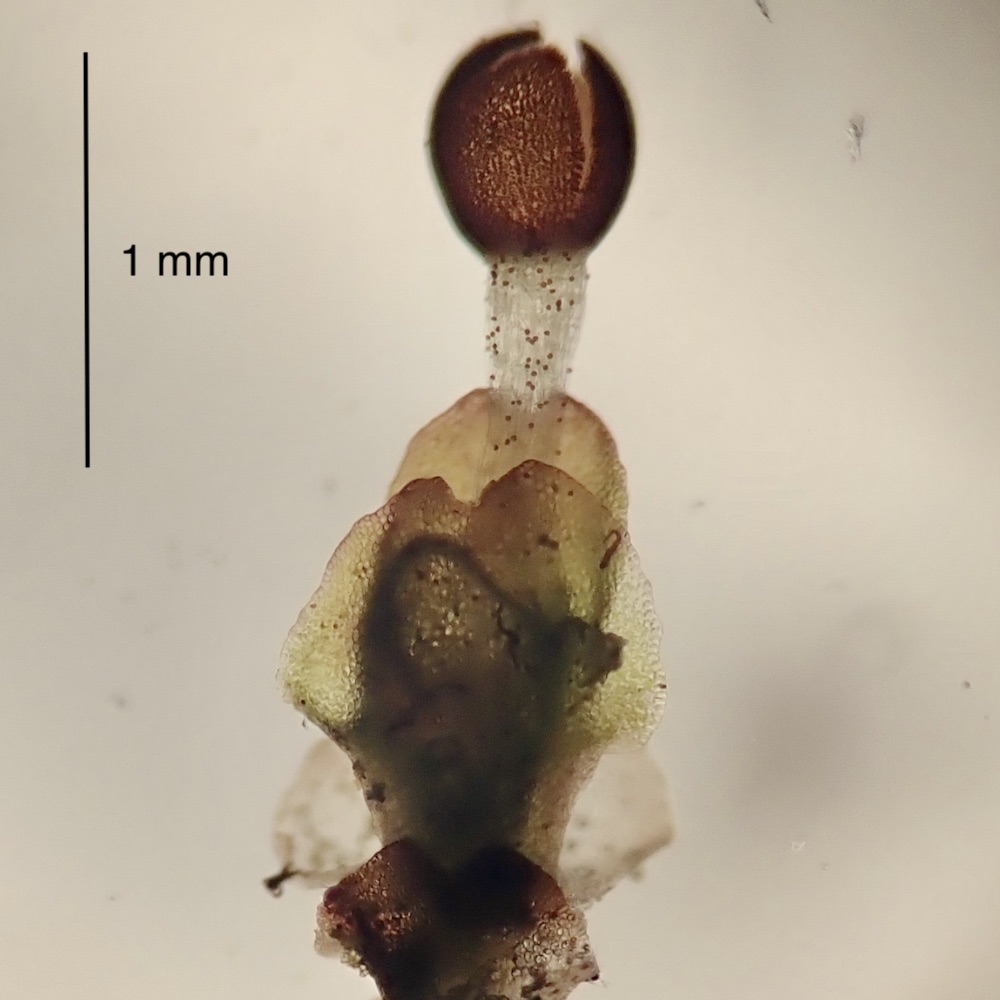
Marsupella bolanderi sporophytes are quite transient, with capsules opening along 4 lines of dehiscence to release spores, and watery setas collapsing shortly thereafter. The sporophytes shown here are now draped over the long-lived, persistent gametophytes.
Marsupella bolanderi sporophytes consist of a spherical black capsule atop a pale flimsy seta emerging from the perianth at the apex of the female plant.
At maturity, Marsupella bolanderi sporophyte capsules open along 4 lines of dehiscence to release the spores.
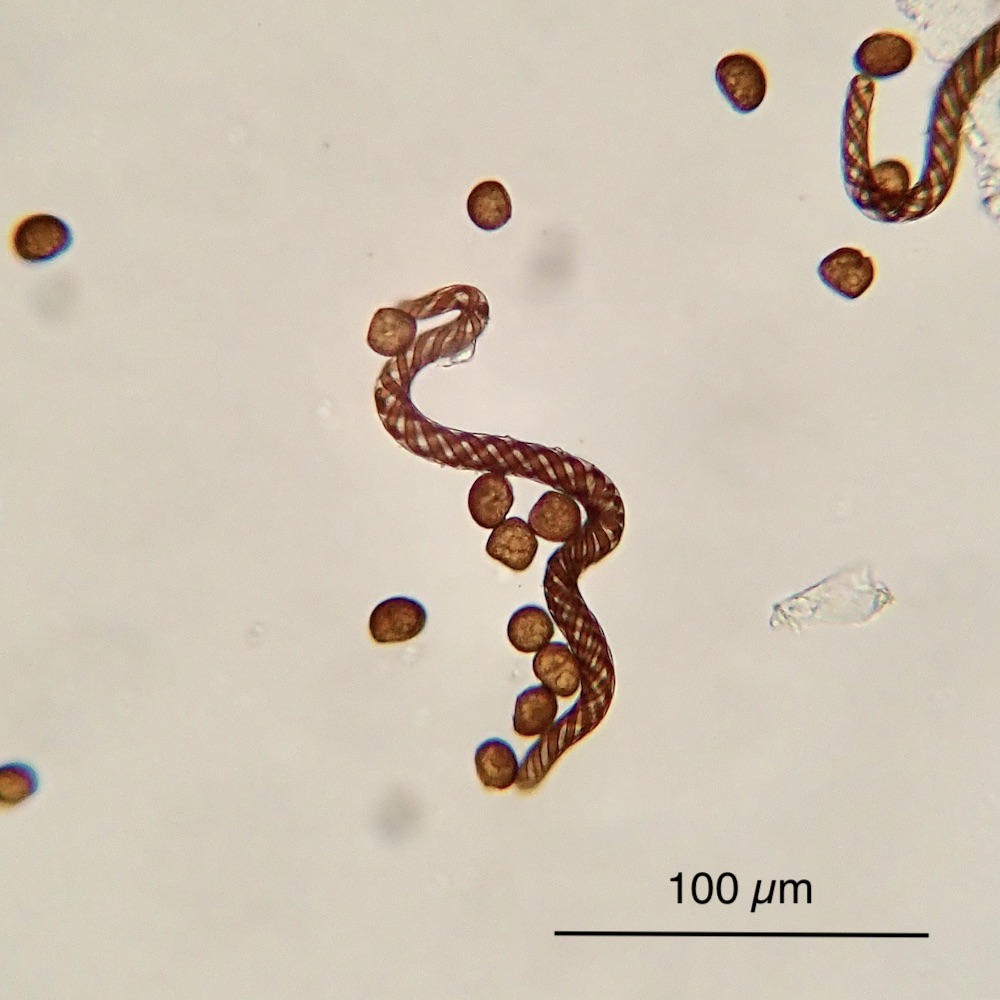
Spring-like elater cells help to disperse Marsupella bolanderi spores. David Wagner notes in his Guide to Liverworts of Oregon, that Marsupella bolanderi elaters consistently have three spirals, in contrast to those of Marsupella emarginata, which have two.
Marsupella bolanderi is a dioicous species, with separate male and female plants. Antheridia, the male sex organs, appear as green spheres nestled amongst the upper leaves of male plants.
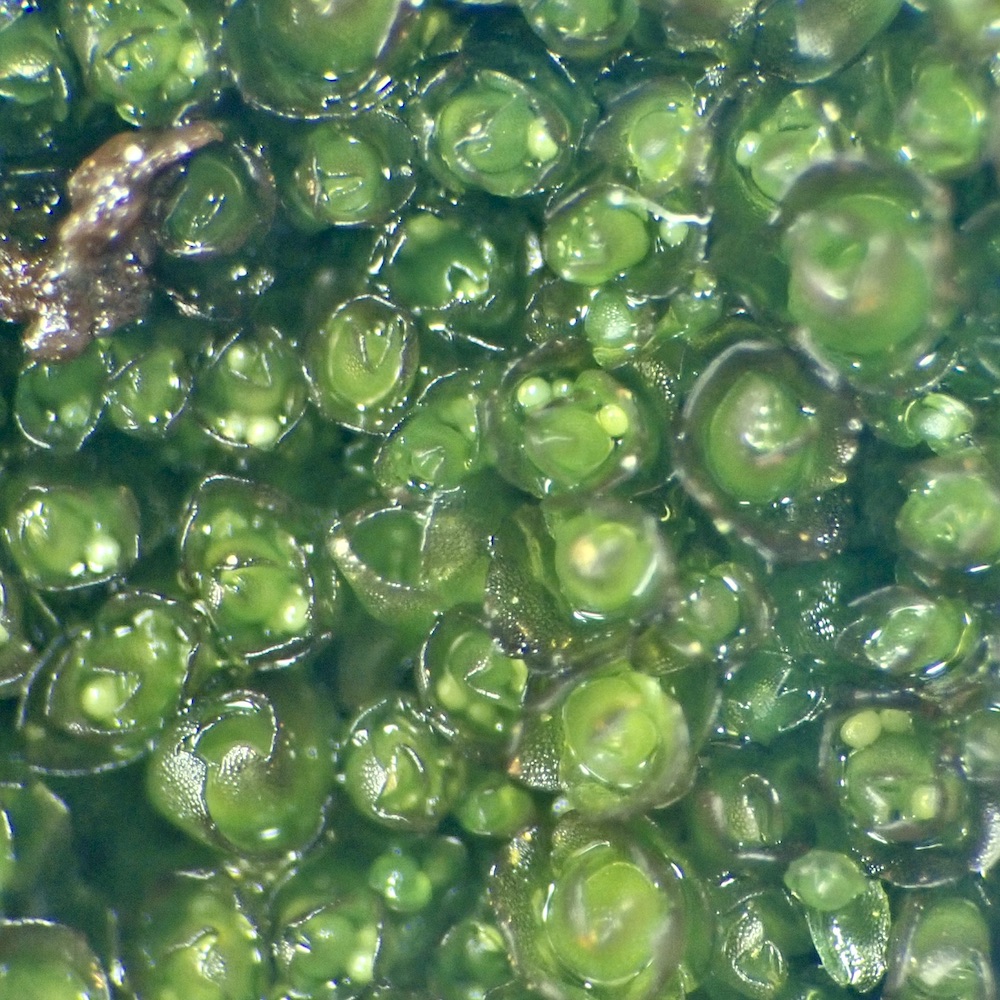
Upon closer inspection, one can see that the Marsupella bolanderi antheridia are in fact attached to the plant stem via their own tiny stems. Each antheridium contains thousands of sperm, which must swim to an archegonium on a female plant to fertilize the egg. The fertilized egg then develops into the sporophyte.
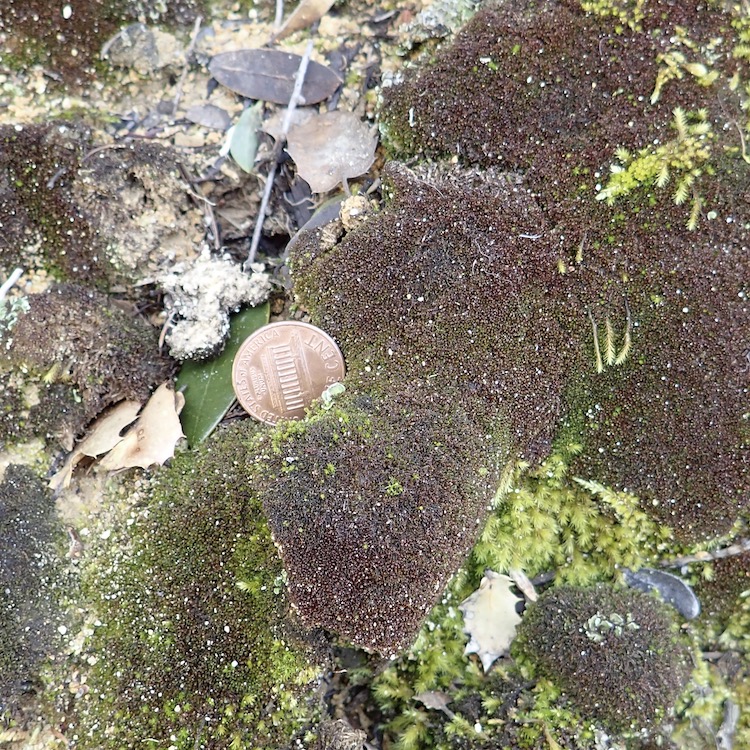
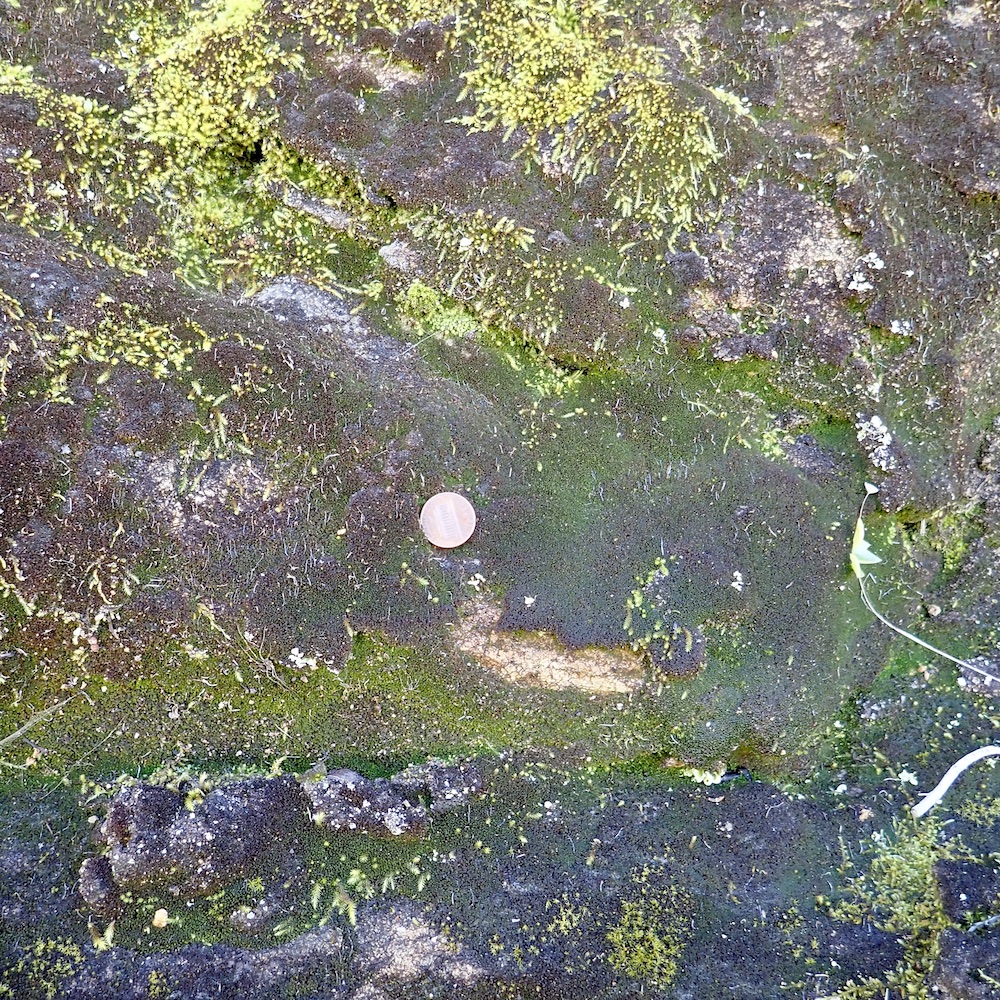
Though individual Marsupella bolanderi plants are quite small, they can form fairly extensive dense patches, visible from a distance as a dark maroon turf when moist and somewhat exposed. Less sun-exposed plants are typically less reddish and more greenish.
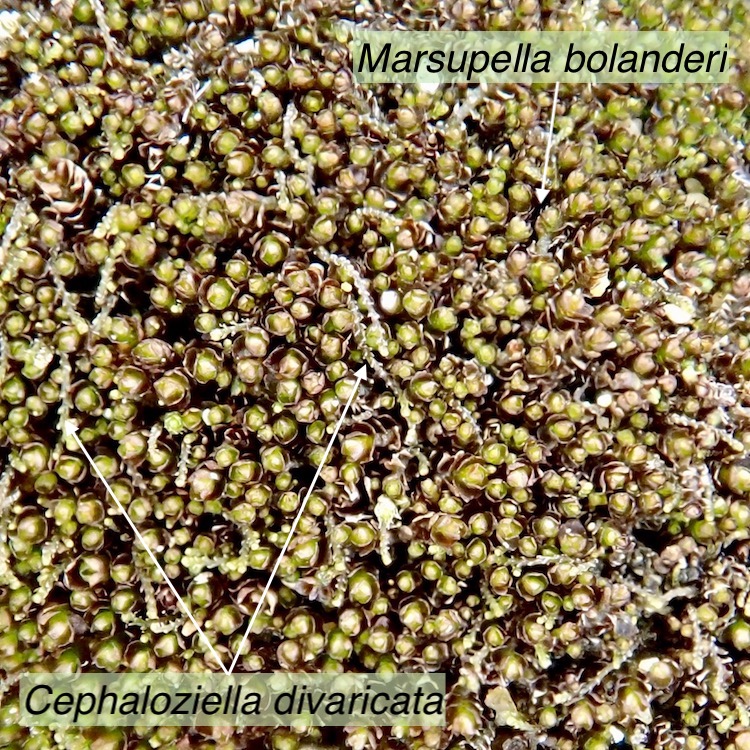
Marsupella bolanderi is often found with an even tinier, stringier leafy liverwort growing amongst it, Cephaloziella divaricata.
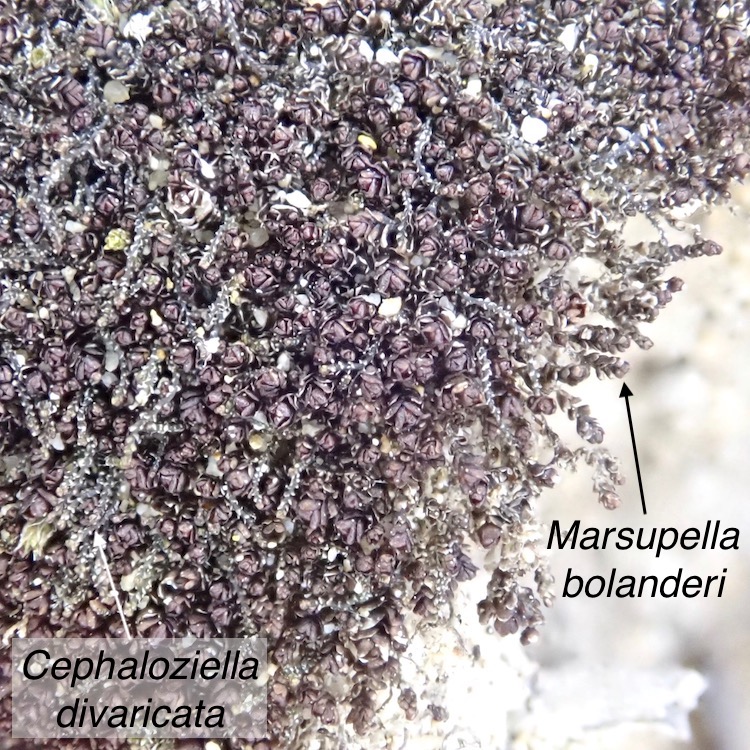
In this photo, Marsupella bolanderi and Cephaloziella divaricata are seen together again, this time moist, and a little greener. Cephaloziella divaricata are the skinnier, stringier plants often lying atop the more bulbous Marsupella bolanderi plants.
Habitat and Distribution
Marsupella bolanderi can be found on soil, particularly sandy soil, as well as on sandstone outcrops or on exposed rocks.
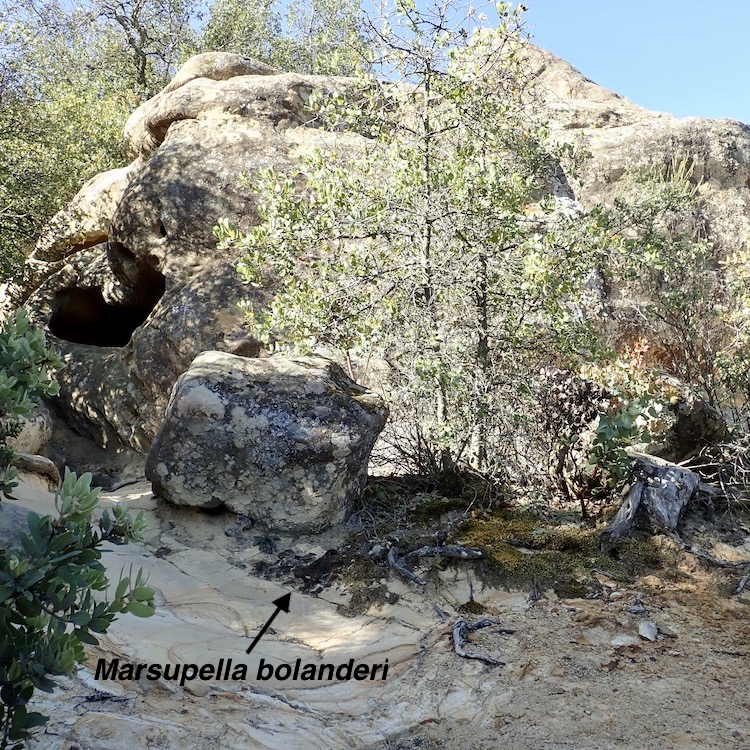
The Marsupella bolanderi collection with sporophytes featured on this page was growing on essentially vertical sandstone.
Marsupella bolanderi is said to occur from 65m-850m in elevation in California, Oregon and Washington, though a search of North American herbaria shows collections only in California.


