Stegonia hyalinotricha (Cardot & Thériot) R. H. Zander
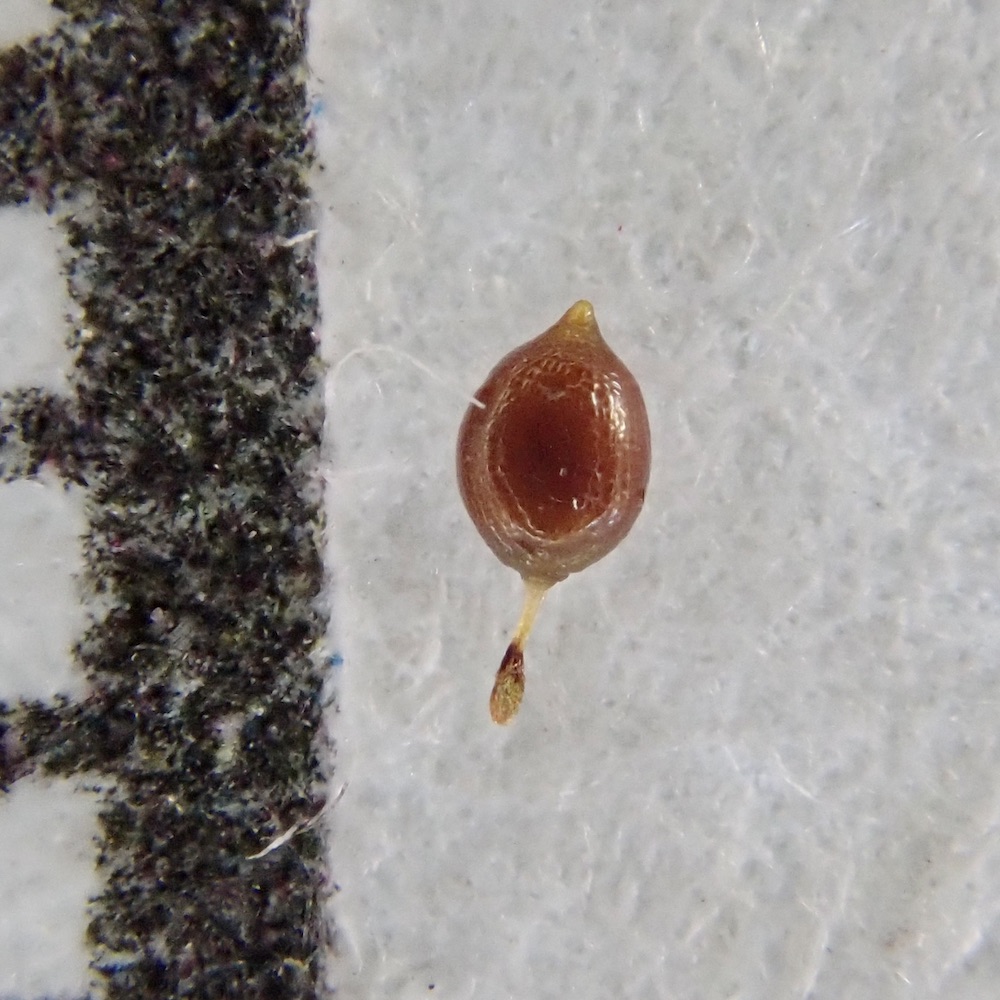
Stegonia hyalinotricha is a tiny (2 mm), budlike, ephemeral moss, that grows in small clusters on exposed soil, amongst grasses, herbs or shrubs. Its deeply concave leaves have long white hairlike tips (hyaline awns) and surround the sporophyte completely. Sporophytes consist of a slightly oblong capsule with a nipple-like apiculus, atop a slender, short seta. The capsule becomes a shiny, deep chestnut brown when mature, and is cleistocarpous, simply decaying to release the spores.
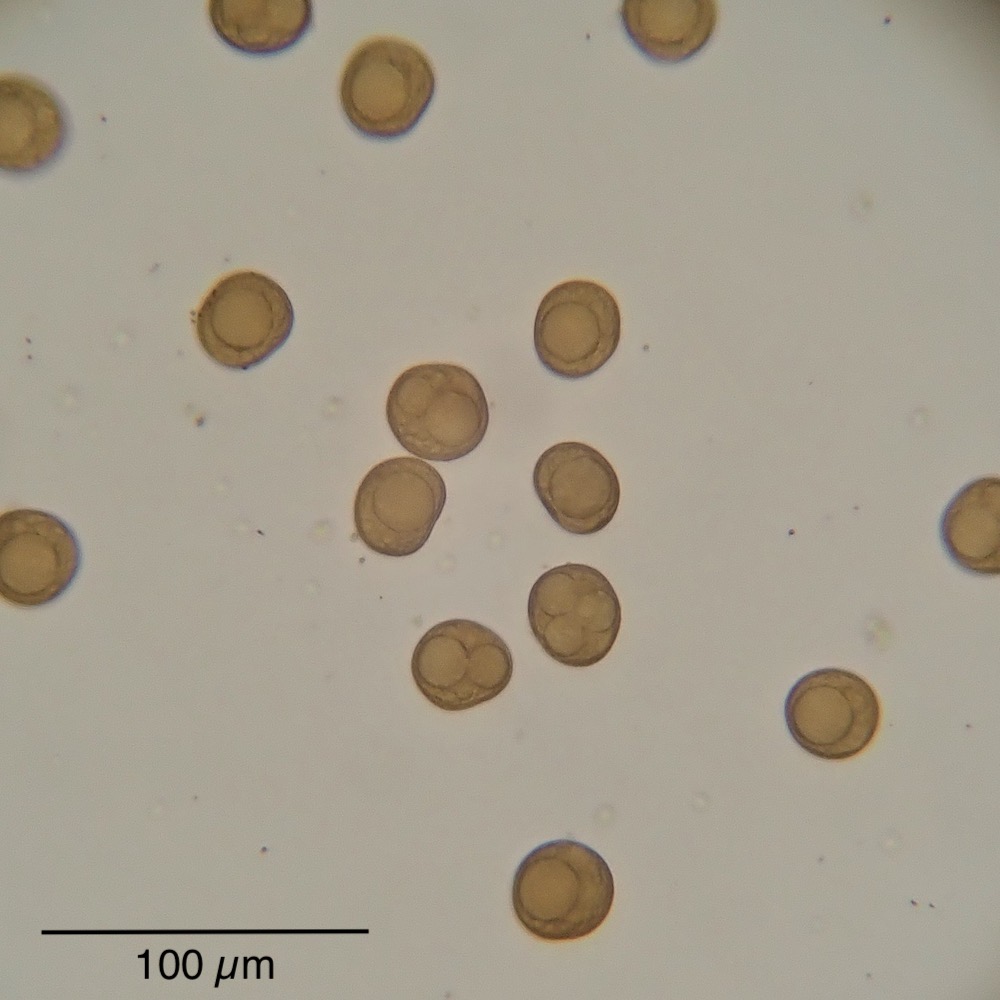
Scroll down for more photos (click to enlarge) and descriptions of habitat, plants, leaves, sporophytes, spores, distribution map, name origin, and similar species.
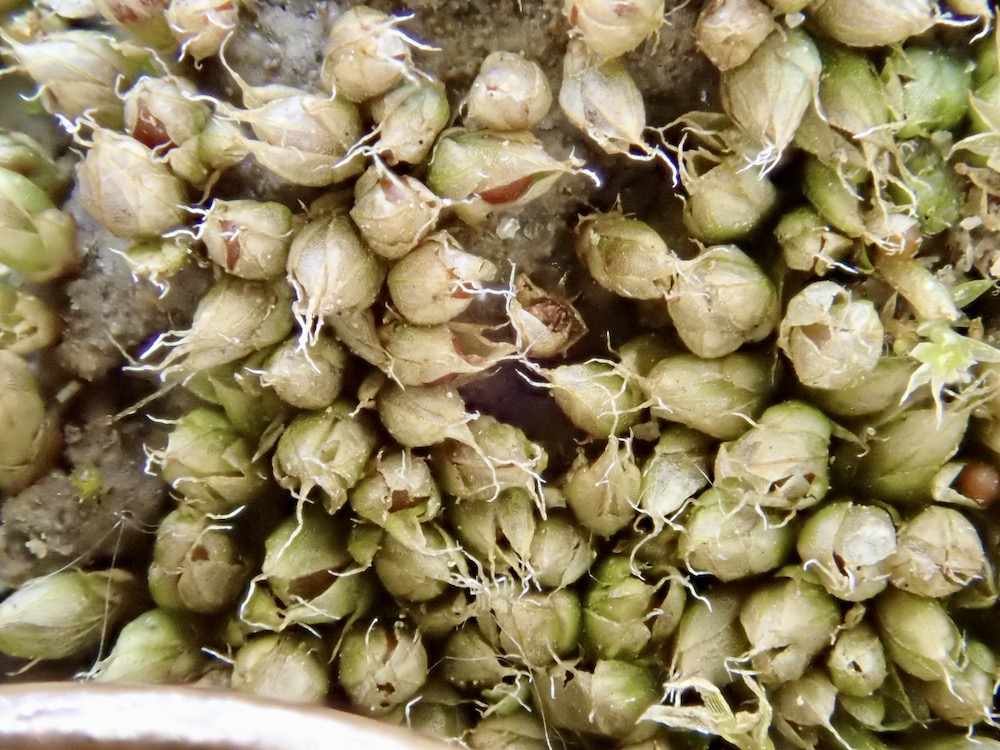
Habitat: Stegonia hyalinotricha grows on exposed soil amongst grasses, herbs and shrubs and other mosses.
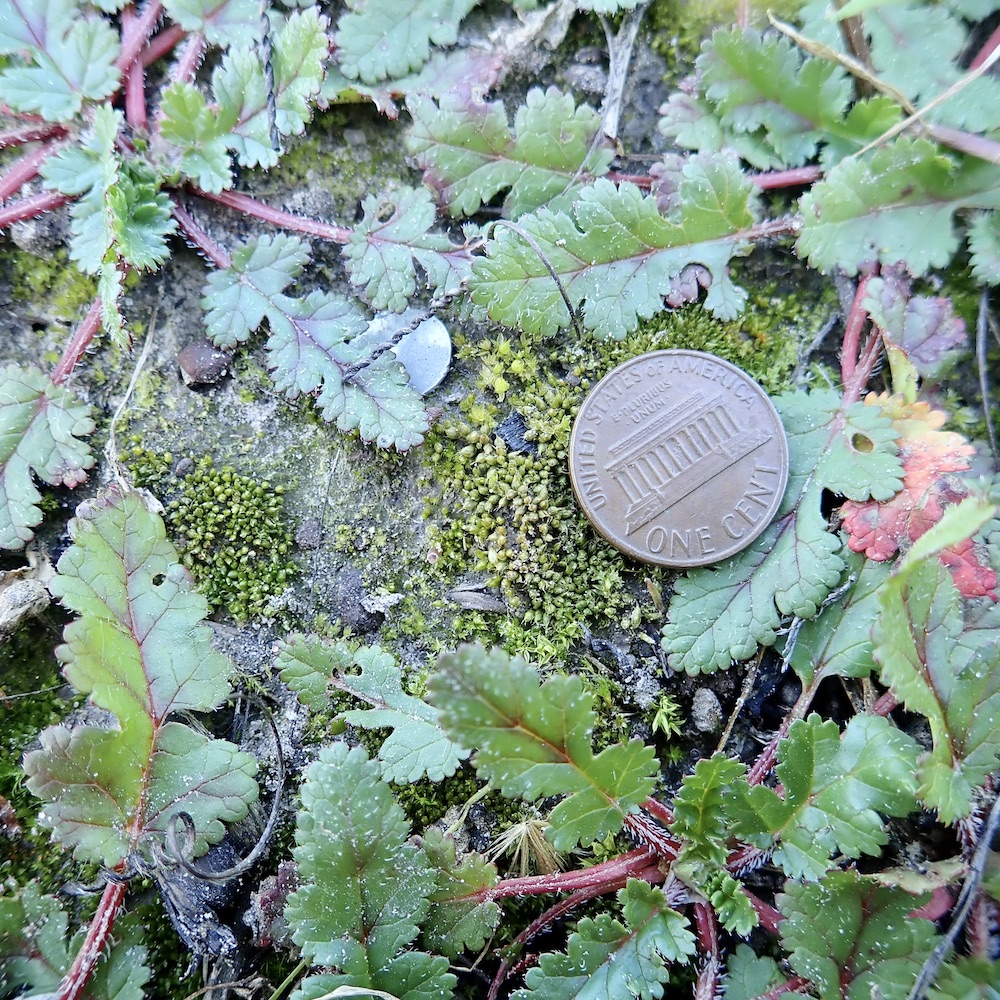
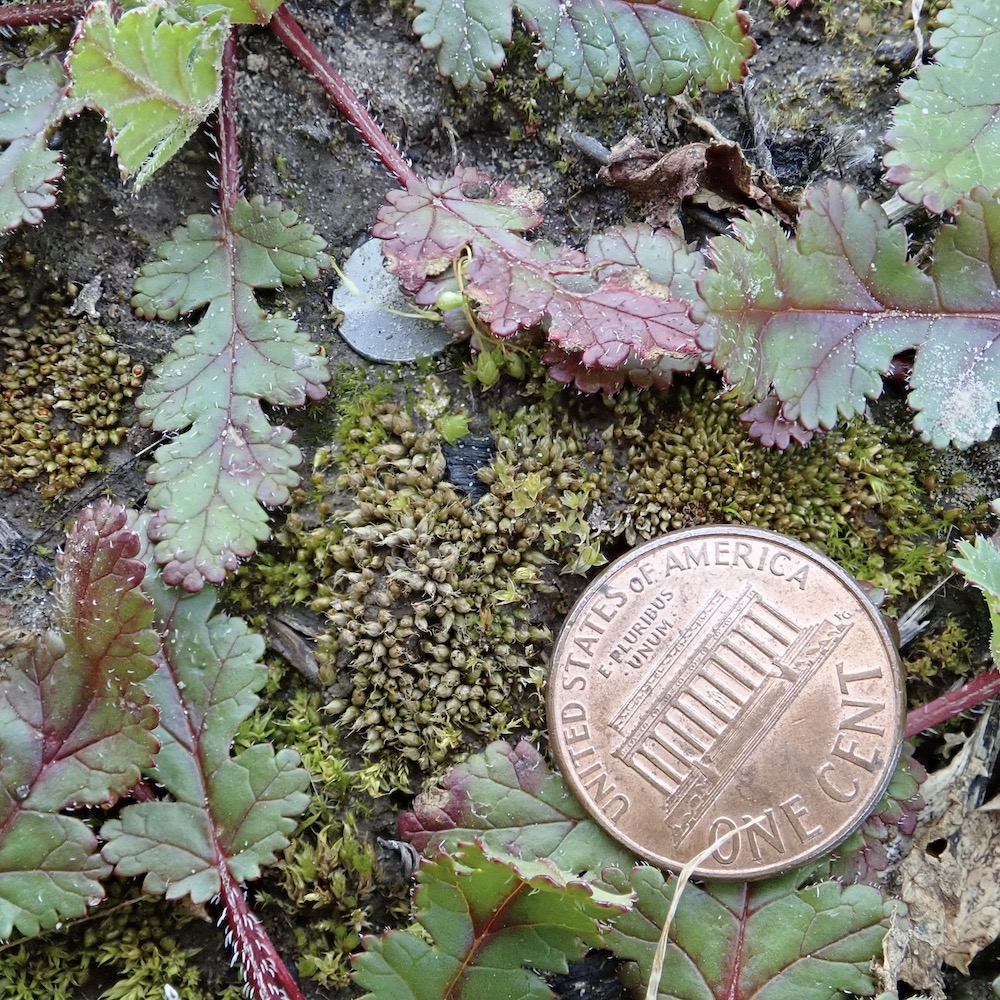
Habit: Stegonia hyalinotricha grows in small clusters, scattered or crowded, often in the company of other ephemeral and small mosses.
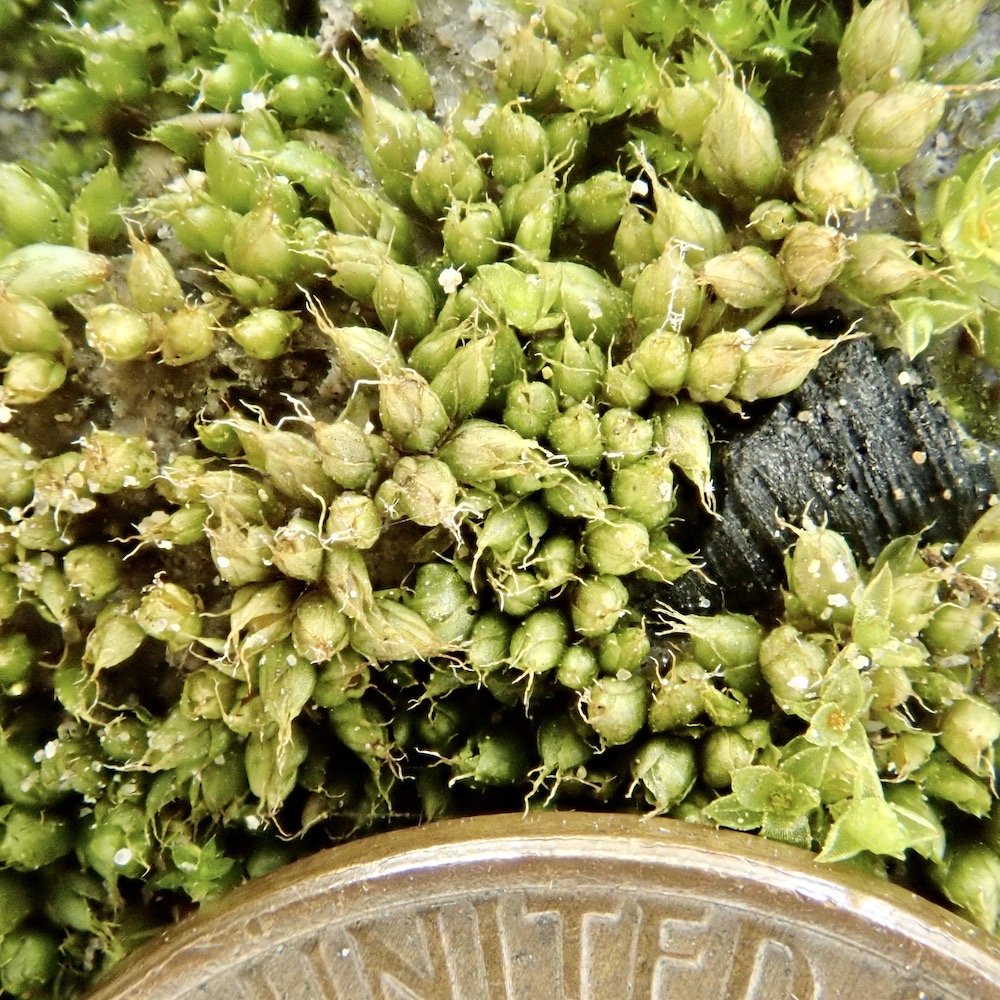
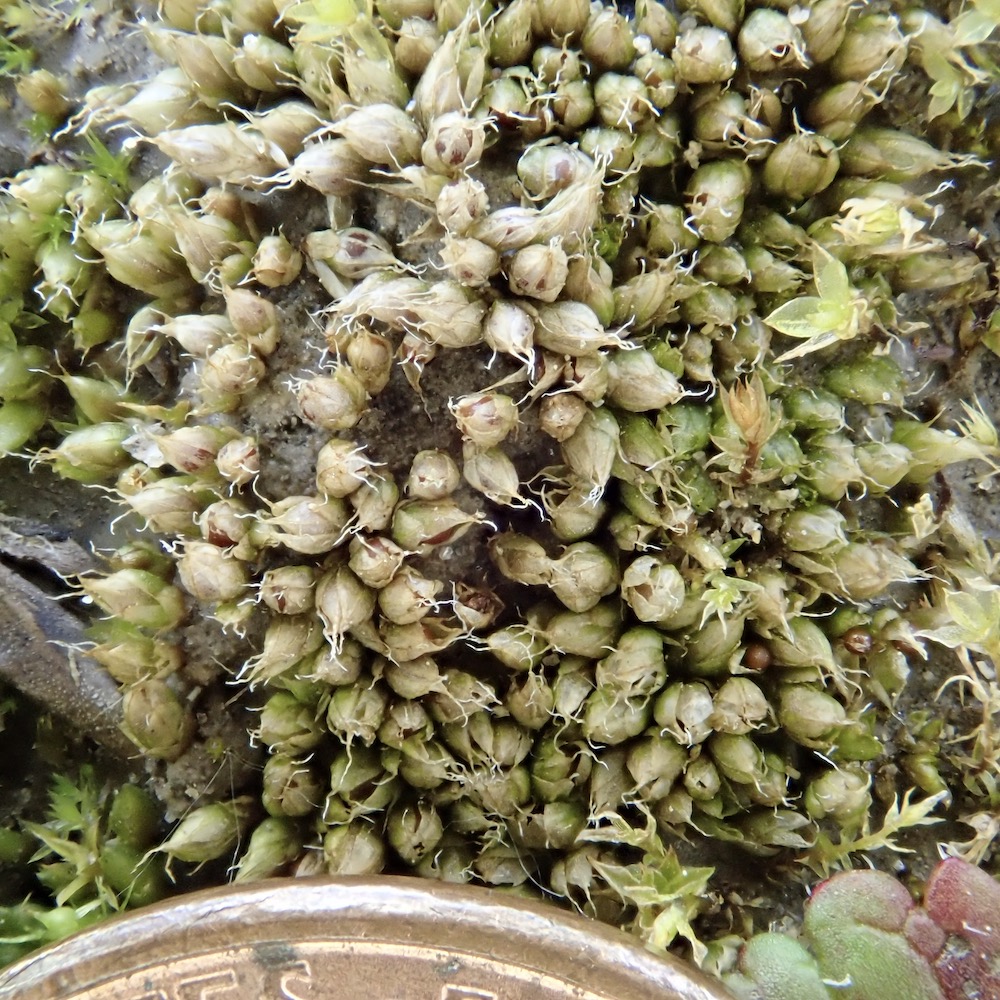
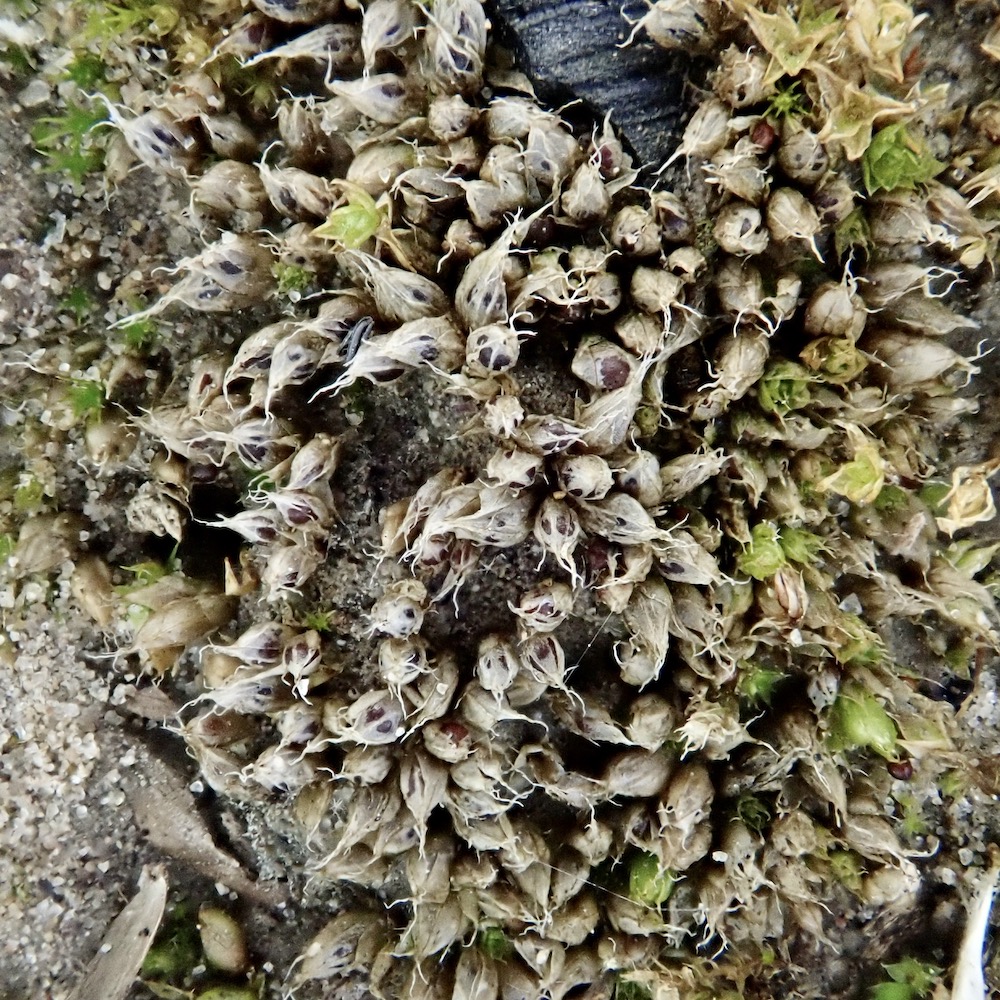
Plants: Stegonia hyalinotricha plants are tiny, up to 2 mm, and budlike, lacking a stem, resembling miniature onions, with their leaves tightly enveloping the round sporophyte,
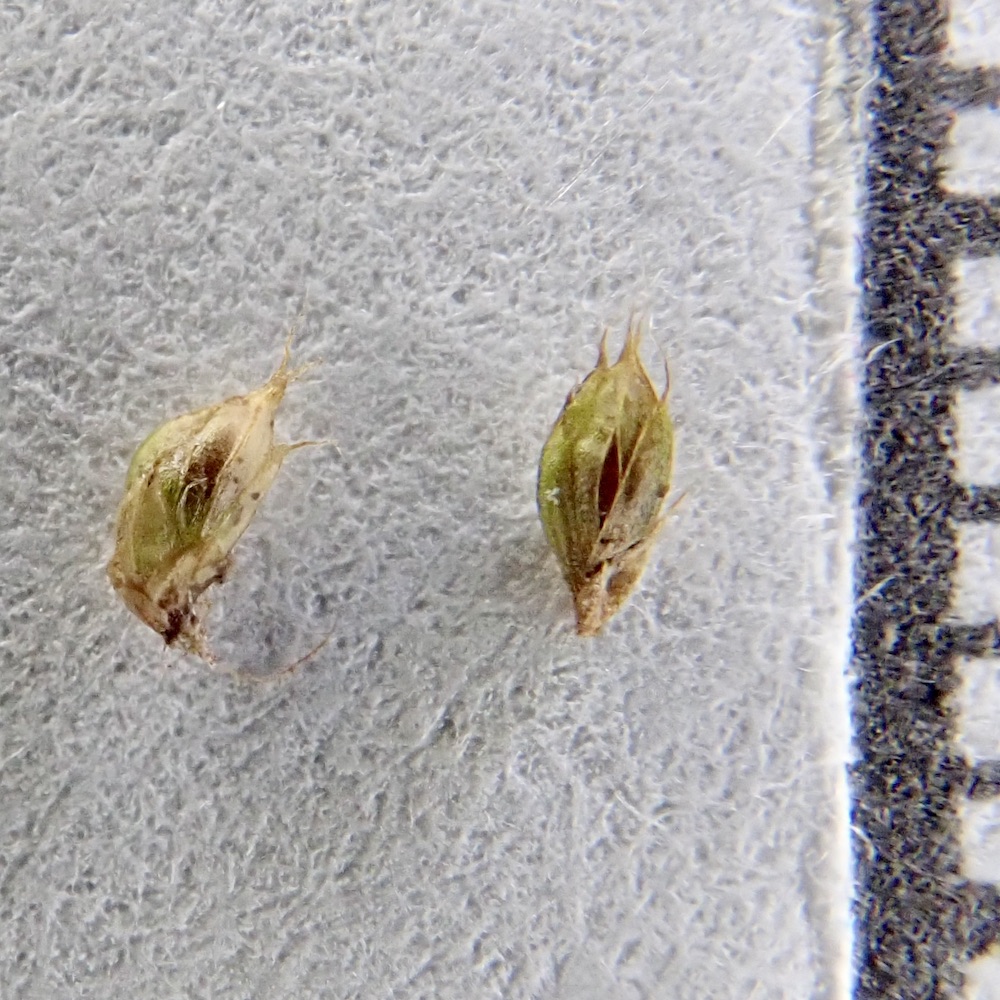
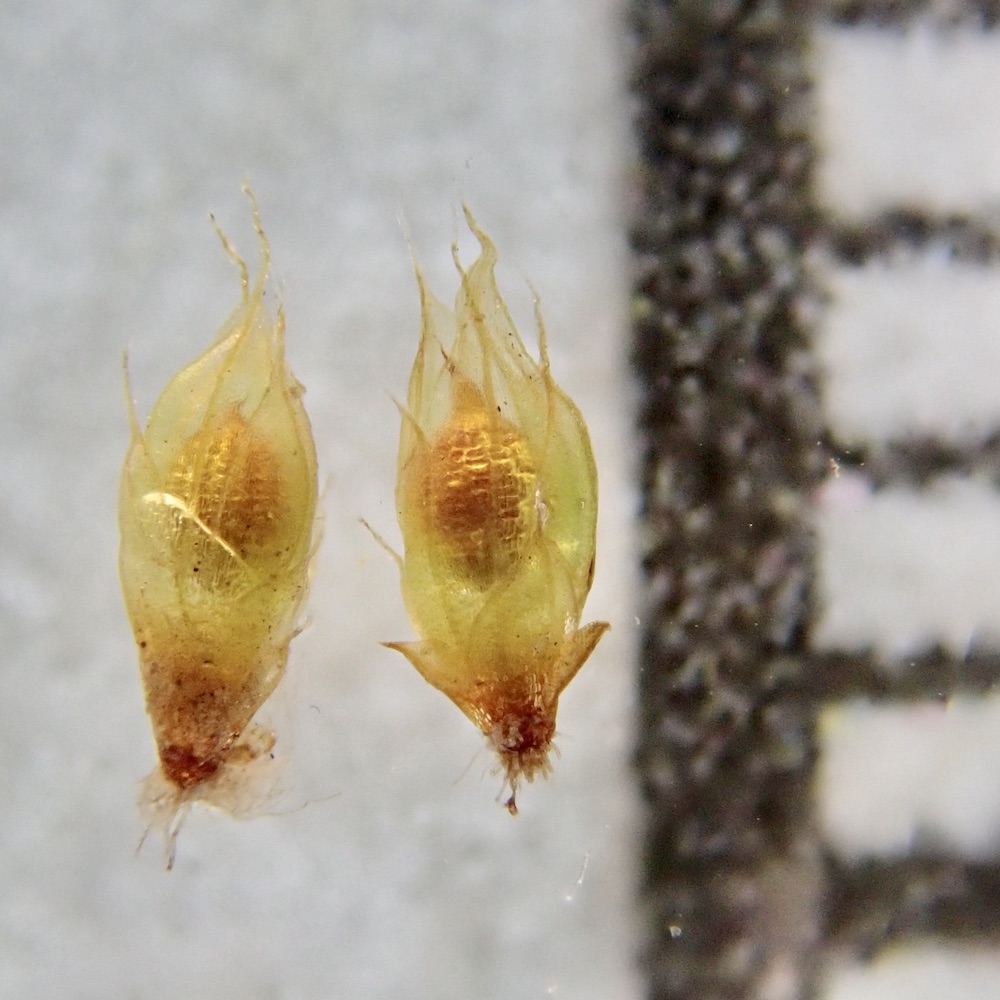
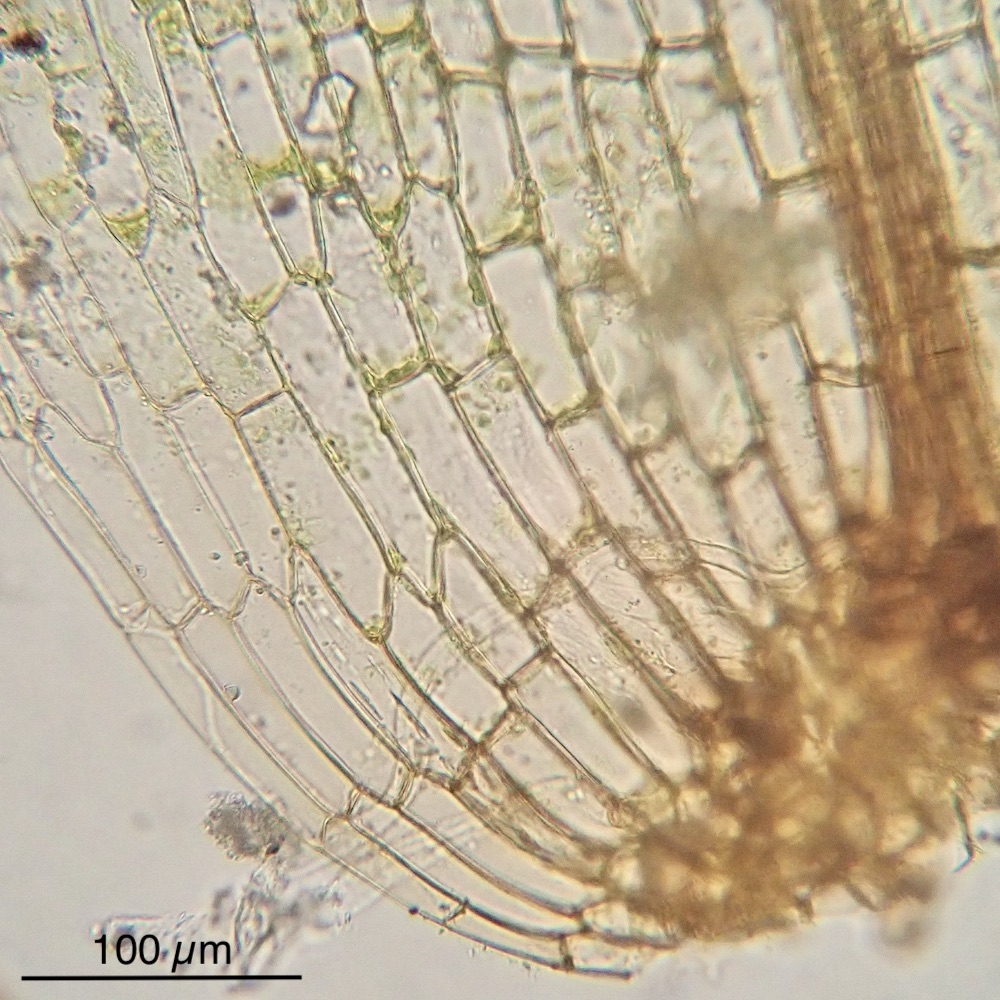
Leaves: Stegonia hyalinotricha leaves are ovate and deeply concave with long hyaline awns, which are often slightly wavy or bent (flexuose). The margins of the leaf tips may be somewhat scalloped (crenulate), and the cells near the base of the leaf are long and rectangular.
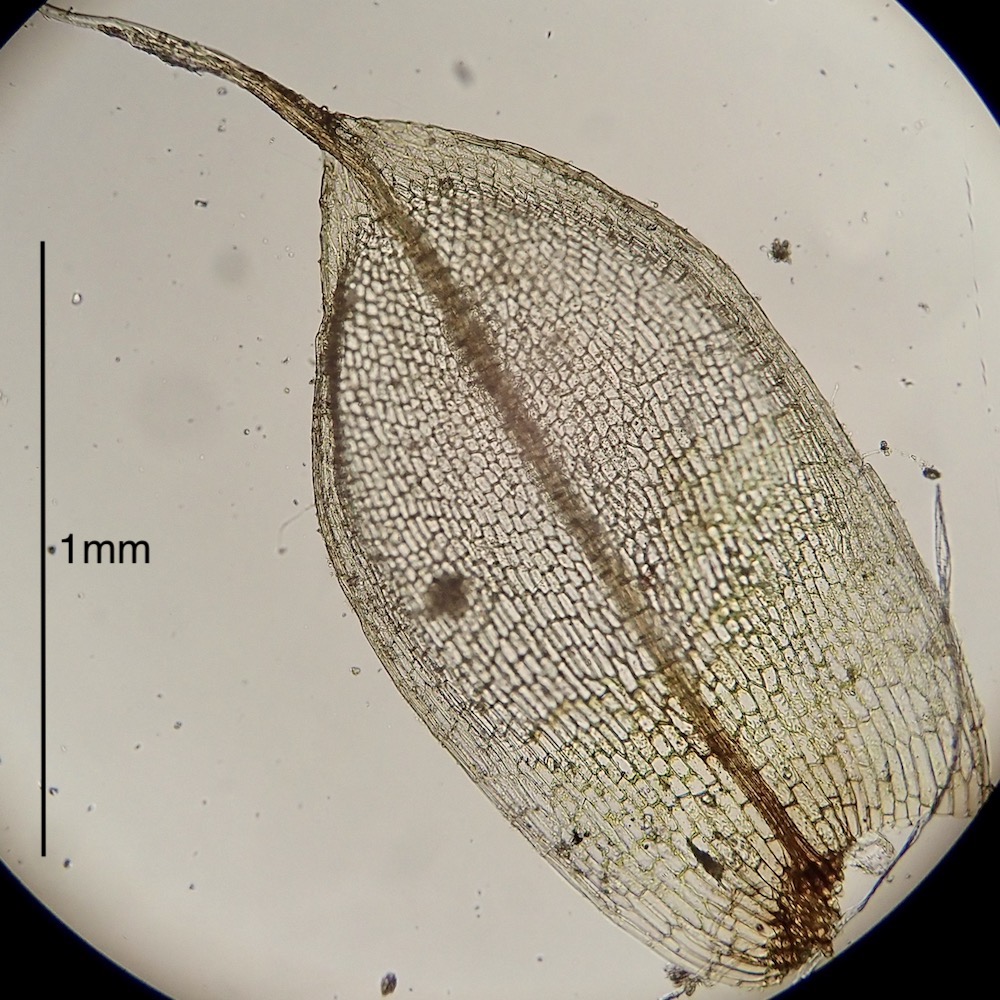
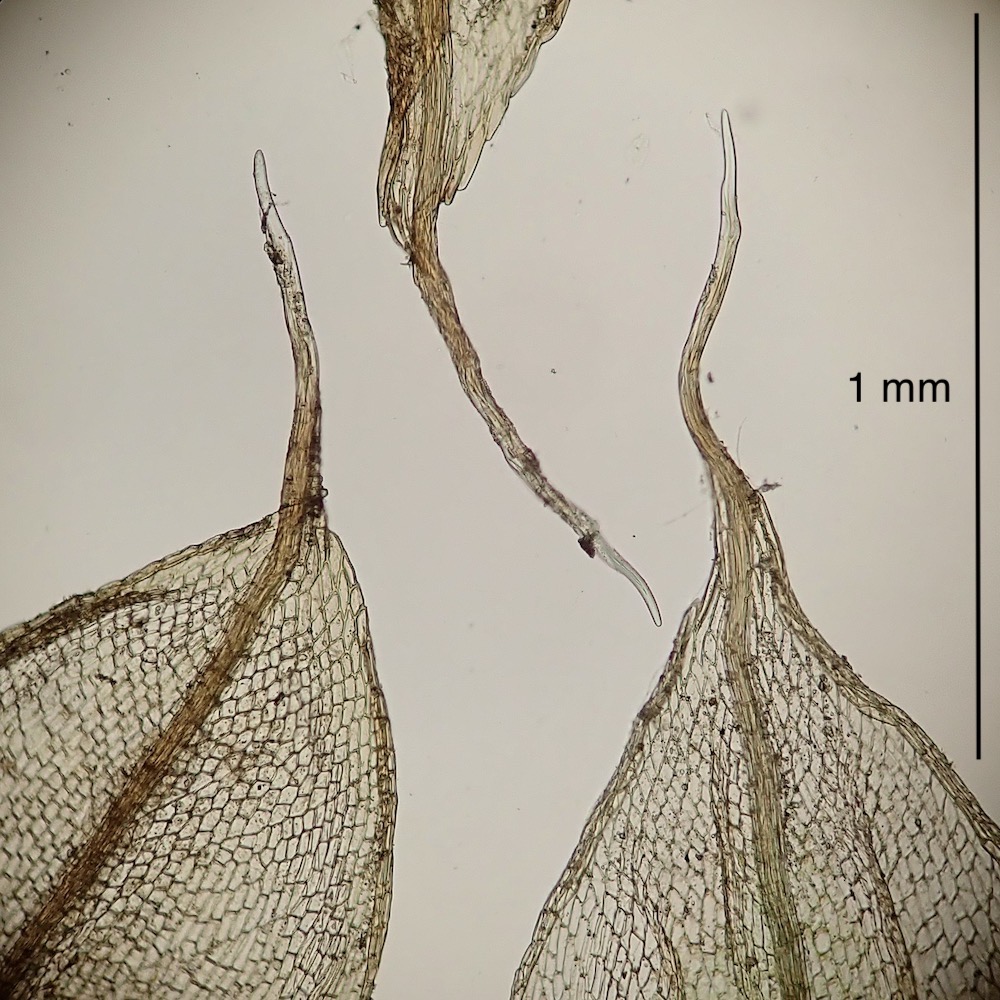
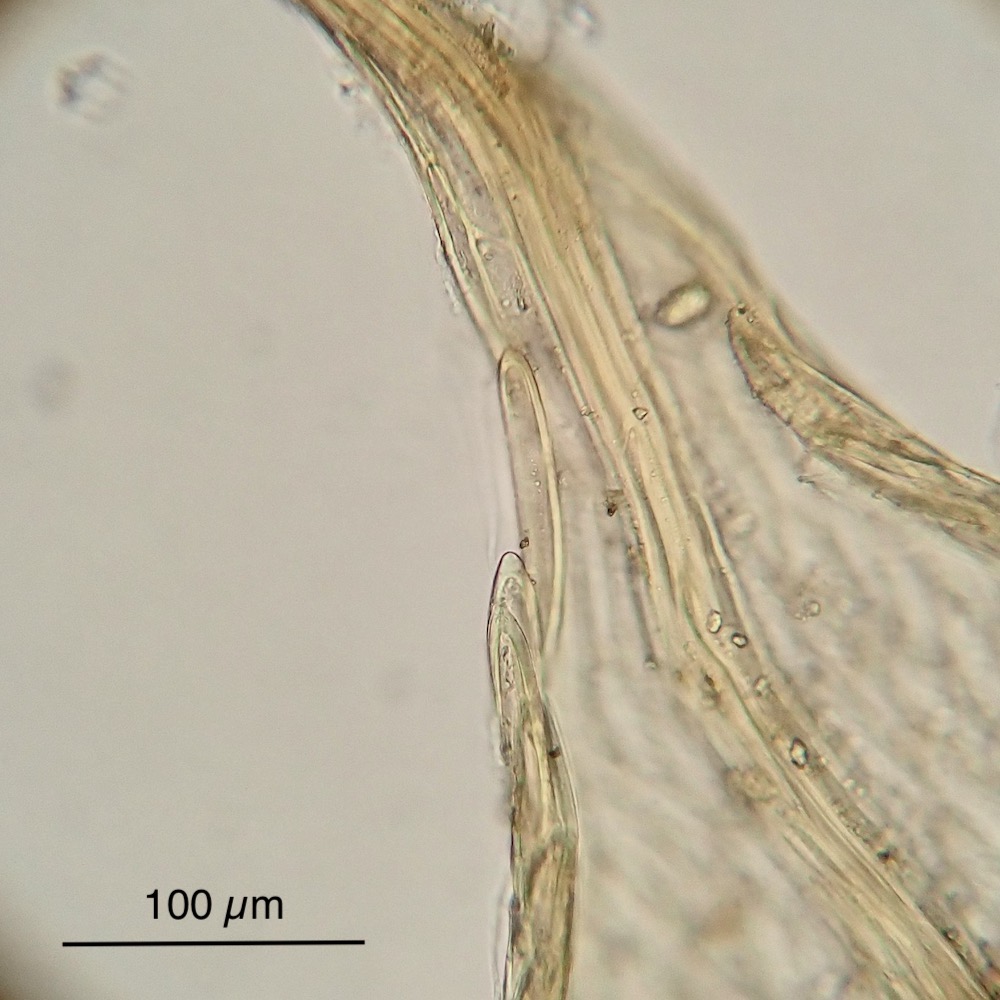
Sporophytes: Stegonia hyalinotricha sporophytes consist of a slightly oblong capsule with a cute little nipple-like apiculus, all atop a tiny slender stalk (seta). The sporophyte is hidden within the clasping concave leaves until they begin to decay. The deep chestnut brown capsule then erodes to release the mature spores within.
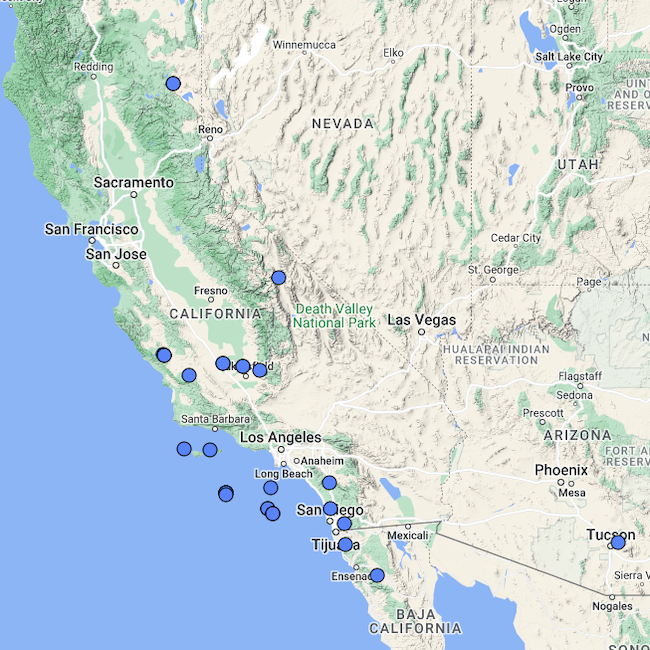
Distribution: Stegonia hyalinotricha is found in California, into Baja California and perhaps into Arizona.