Acaulon muticum (Hedwig) Muller Hal. var. rufescens (A. Jaeger) H.A. Crum
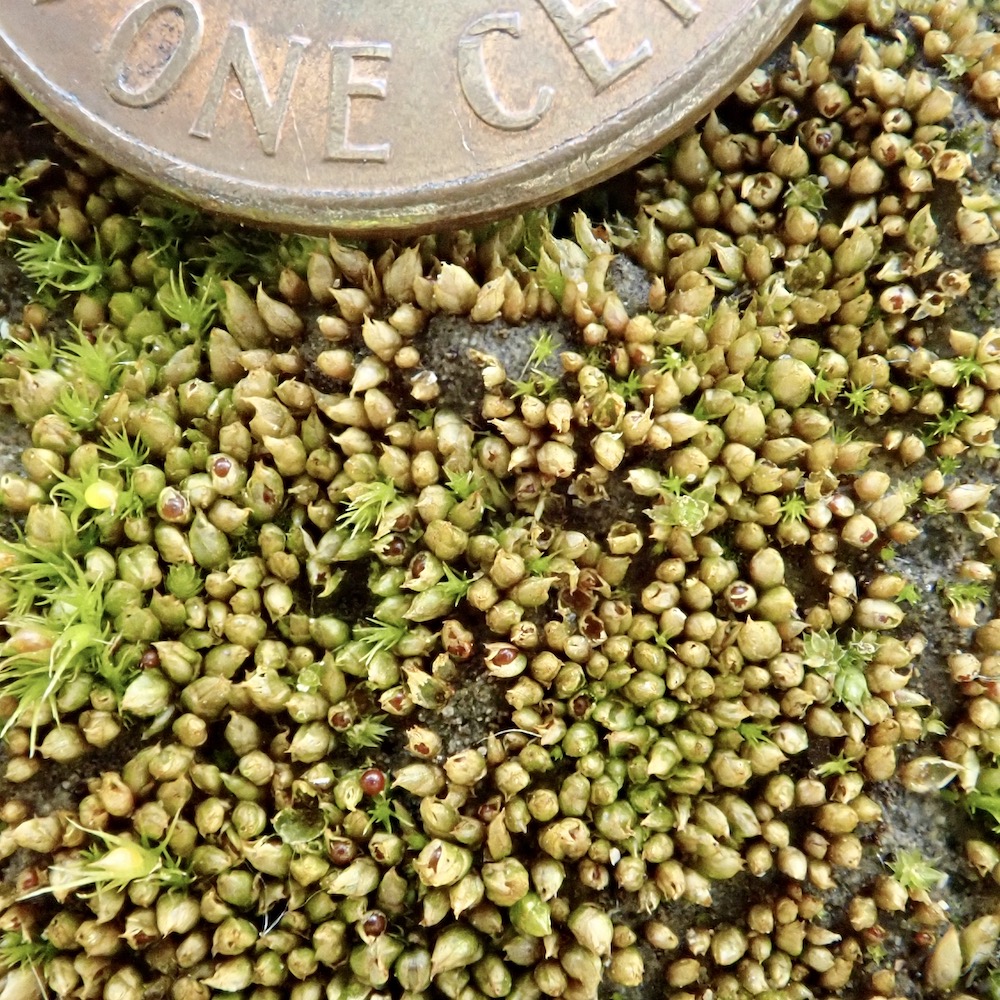
Acaulon muticum is a minute, budlike, ephemeral moss, which grows on disturbed soil along paths and on bare patches amongst grasses. The leaves are deeply concave and tightly overlap one another, completely surrounding the small spherical sporophyte capsule on its short seta. Plants may be scattered or in tight clusters, and are green when young and when shaded, reddish when mature and in full sun.
Scroll down for more photos (click to enlarge) and descriptions of habitat, plants, leaves, sporophytes, distribution map, name origin, and similar species.
Acaulon muticum var. rufecens
Acaulon muticum young plants in partial shade (CAH #1048). CC BY-NC Amanda Heinrich
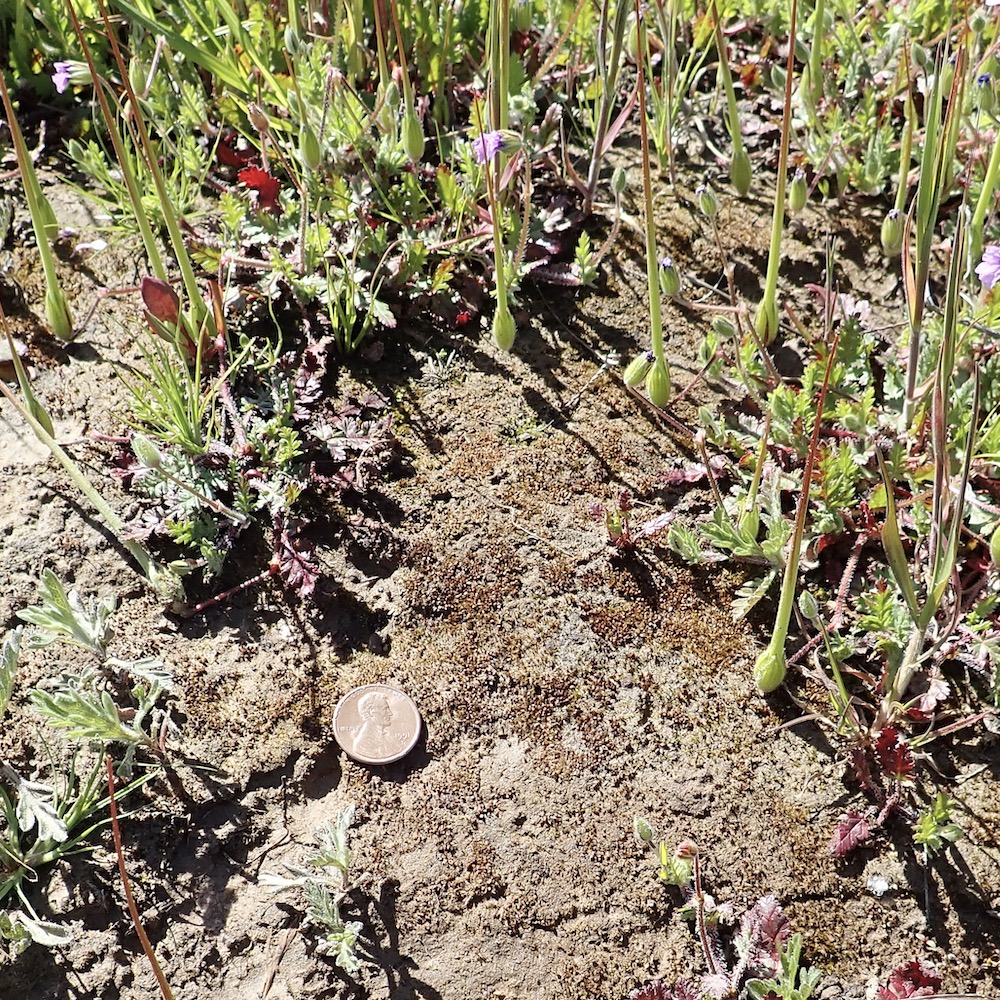
Habitat:  Acaulon muticum is found on soil in disturbed habitats, such as along trails or surrounding ground squirrel burrow entrances, in partial shade or full sun.
Acaulon muticum var. rufecens
Acaulon muticum moist, in partial shade, early in the season (January, CAH #1048). CC BY-NC Amanda Heinrich
Acaulon muticum var. rufecens
Acaulon muticum mature and drying, in partial shade, later in season (March, CAH #1069). CC BY-NC Amanda Heinrich
Acaulon muticum var. rufecens
Acaulon muticum plants tightly clustered in a carpet, moist, in the shade, early in the season (January, CAH #1048). CC BY-NC Amanda Heinrich
Acaulon muticum var. rufecens
Acaulon muticum mature and drying, in partial shade, later in season (March, CAH #1069). CC BY-NC Amanda Heinrich
Habit:  Acaulon muticum may grow as scattered individual plants or in tight clusters forming a virtual carpet. Early in the season and when growing in the shade, plants are a bright yellow green. Later in the season, particularly when growing in full sun, plants become reddish brown.
Acaulon muticum plants tightly clustered in a carpet, moist, in the shade, early in the season (January, CAH #1048). CC BY-NC Amanda Heinrich
Acaulon muticum var. rufecens
Acaulon muticum mature and drying, in partial shade, later in season (March, CAH #1069). CC BY-NC Amanda Heinrich
Acaulon muticum plants in full sun, late in season (April), reddish. (CAH #1068) CC BY-NC Amanda Heinrich
Acaulon muticum var. rufecens
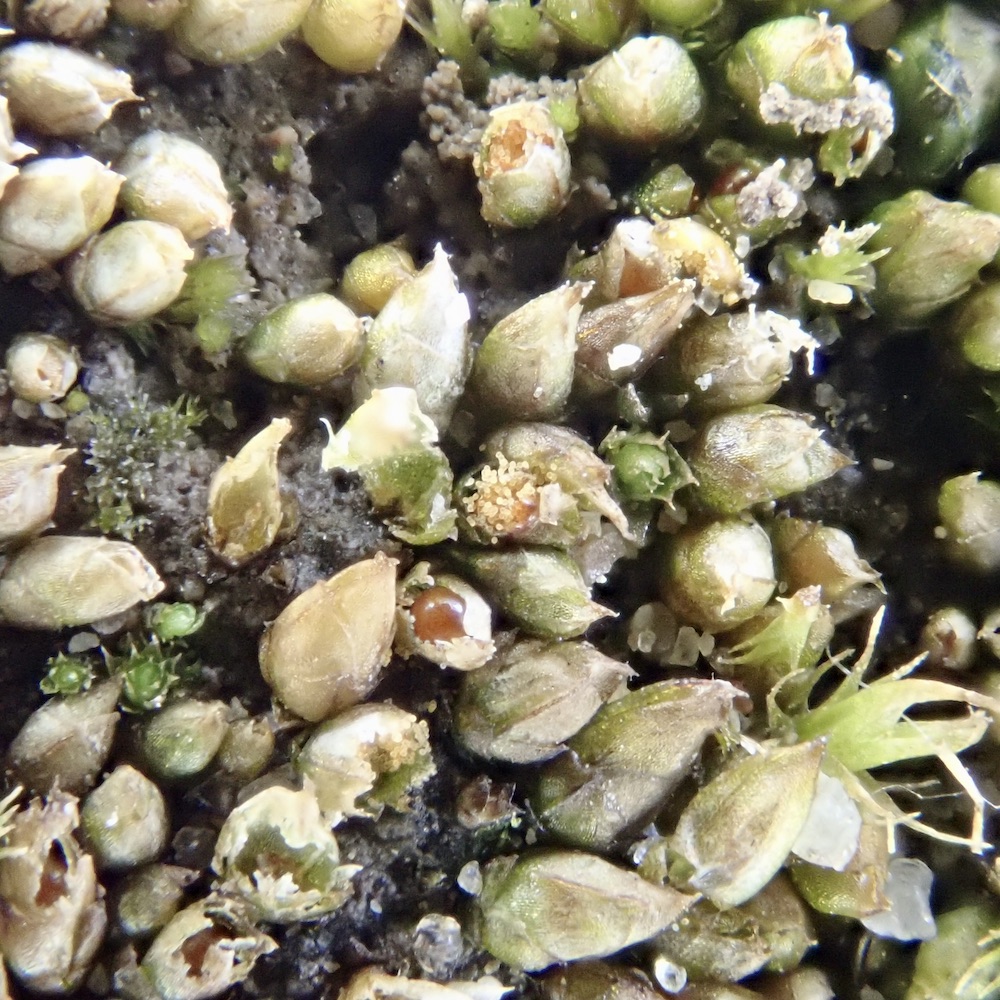
Acaulon muticum mature plants, leaves and capsules degrading to release spores, in full sun in April. (CAH #1068) CC BY-NC Amanda Heinrich
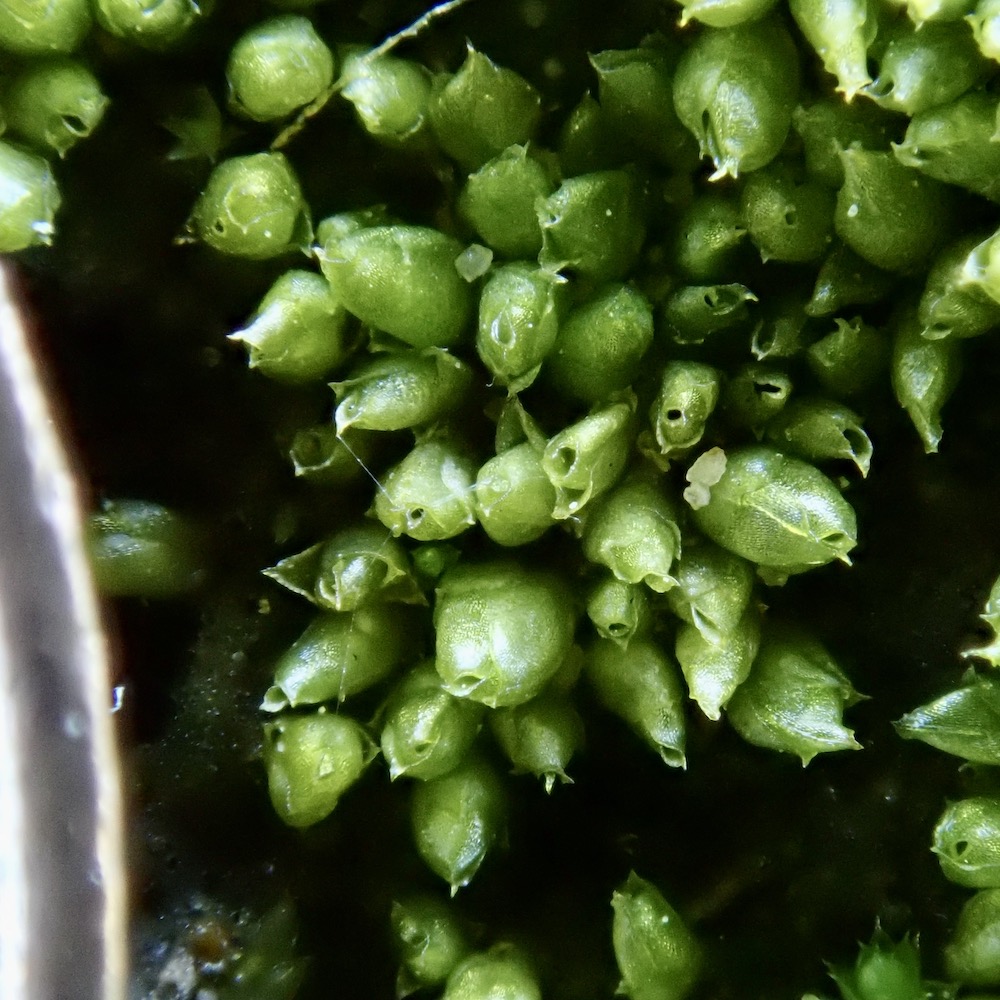
Plants:  Acaulon muticum plants are minute (to 2 mm tall) and budlike, with the leaves tightly overlapping one another and completely enveloping the tiny sporophyte within. Early in the season and when growing in the shade, plants are a bright yellow green. Later in the season, particularly when growing in full sun, plants become reddish brown, leaves eventually degrading, thus revealing the sporophytes.
Acaulon muticum var. rufescens
Acaulon muticum plants in partial shade, early in the season (January), green, moist, leaves fully enclosing developing sporophytes. (CAH #1048) CC BY-NC Amanda Heinrich
Acaulon muticum var. rufescens
Acaulon muticum mature plants, leaves and capsules degrading to release spores in partial shade in March. (CAH #1069) CC BY-NC Amanda Heinrich
Acaulon muticum var. rufecens plants
Acaulon muticum four individual budlike plants up to 2 mm tall. (CAH #1048) CC BY-NC Amanda Heinrich
Acaulon muticum var. rufecens
Acaulon muticum plant magnified 100x. Sporophyte is visible within clasping leaves. (CAH #1048) CC BY-NC Amanda Heinrich
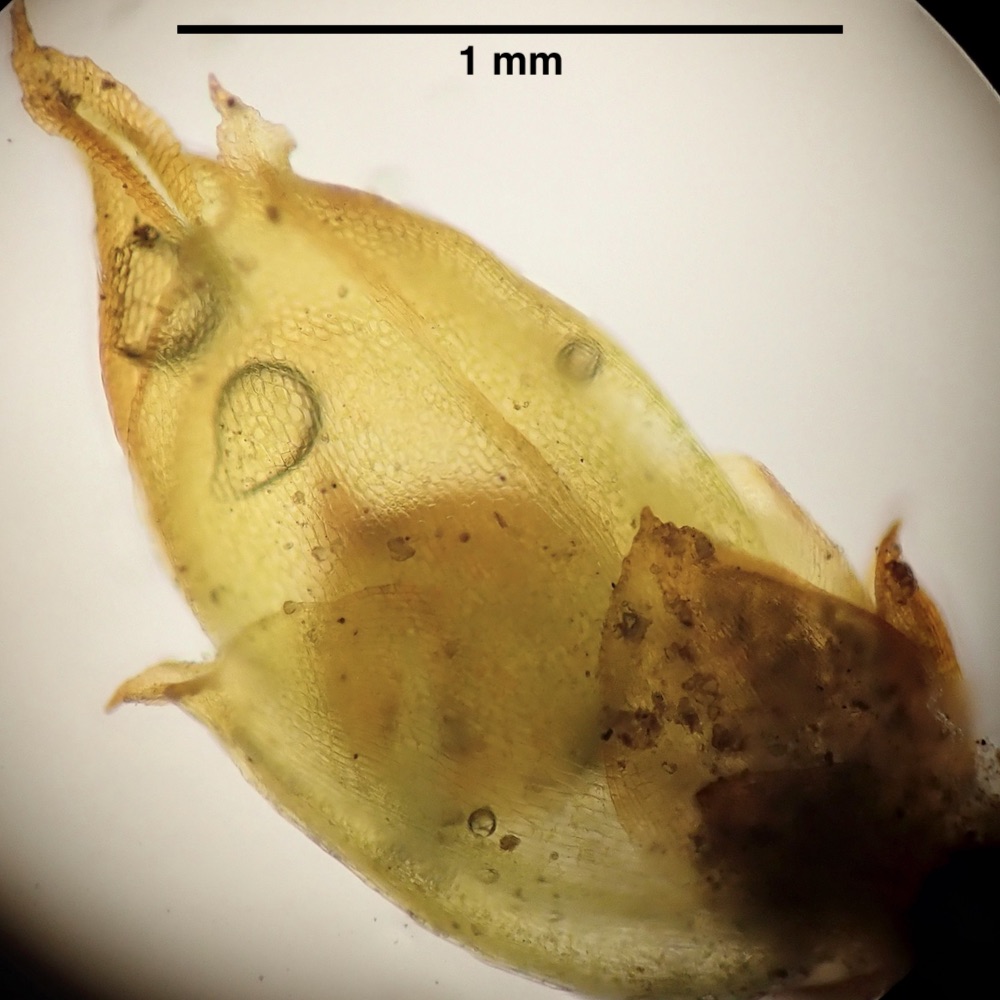
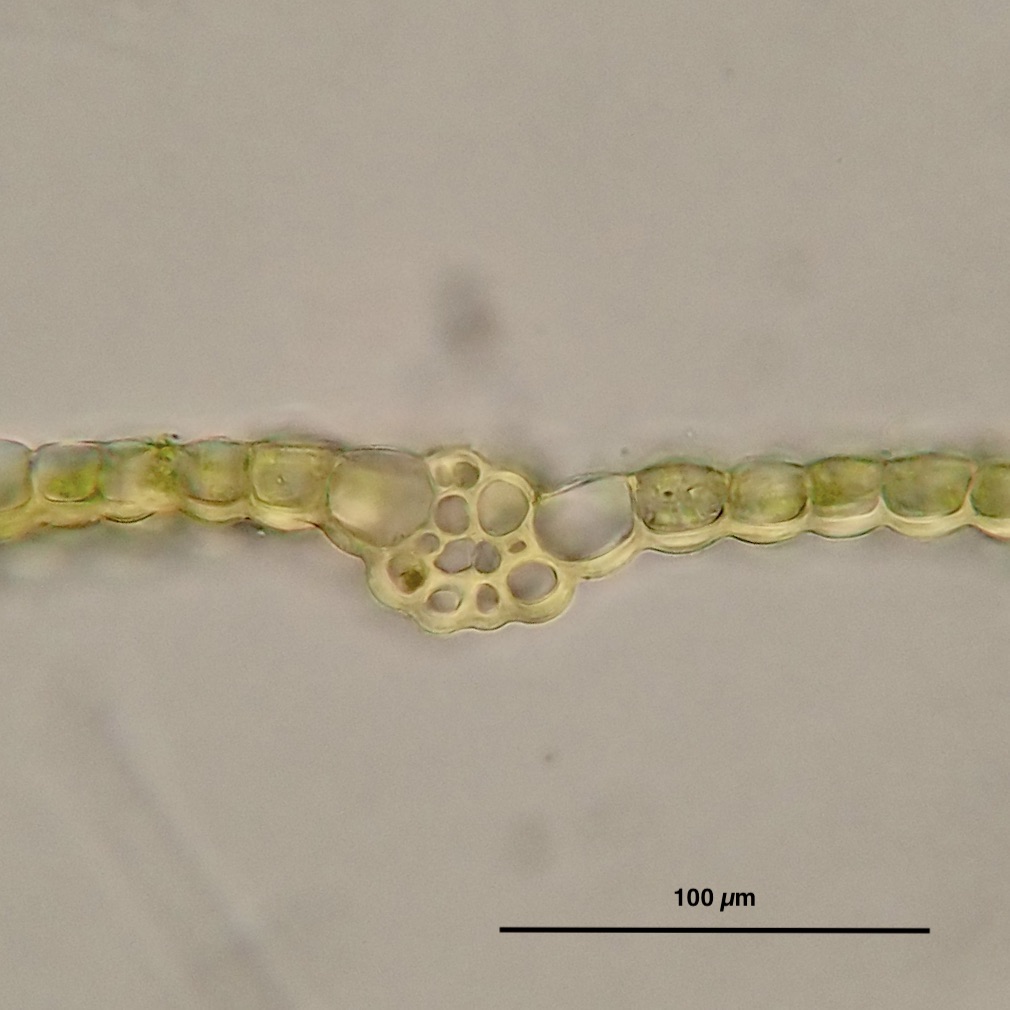
Leaves:  The inner, larger leaves of Acaulon muticum are deeply concave, often slightly toothed and recurved near the tips, ending in a short, stout point called an apiculus. In cross section the cell walls facing away from the stem (abaxial) are significantly thicker than those facing the stem.
Acaulon muticum var. rufecens leaf
Acaulon muticum leaf, 100x. (CAH #1048) CC BY-NC Amanda Heinrich
Acaulon muticum var. rufecens leaf
Acaulon muticum leaf, 100x. (CAH #1048) CC BY-NC Amanda Heinrich
Acaulon muticum var. rufecens leaf section
Cross-section of Acaulon muticum leaf, showing thickened abaxial cell walls, 400x. (CAH #1048) CC BY-NC Amanda Heinrich
Sporophytes:  Acaulon muticum sporophytes are short, simple and completely enveloped within the plant until the end of the season, when the leaves begin to decay. The capsule is spherical and chestnut brown, atop a very short seta, and degrades at maturity, releasing the spores.
Acaulon muticum var. rufecens sporophyte
Acaulon muticum plant, leaves removed to reveal sporophyte with spherical capsule, very short seta, atop stubby stem. (CAH #1069) CC BY-NC Amanda Heinrich
Acaulon muticum var. rufecens spores
Acaulon muticum spores, 400x. (CAH #1069) CC BY-NC Amanda Heinrich
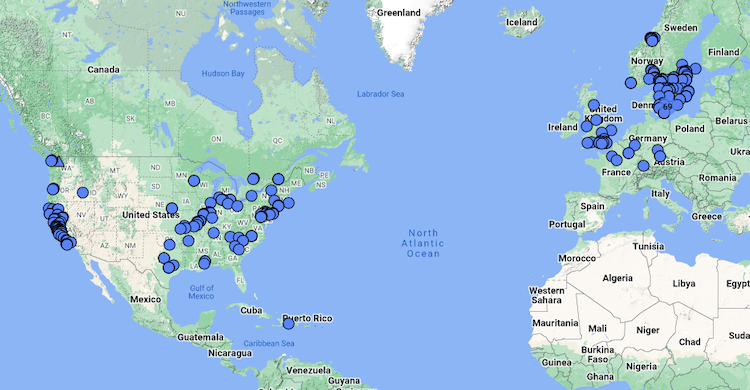
Distribution:  Acaulon muticum is found throughout California and the west coast, as well as in North America and Europe, however Acaulon muticum var. rufescens is restricted to N. America.
Acaulon muticum var. rufecens distribution
Acaulon muticum collections. Map generated by google maps using data from the Consortium of Bryophyte Herbaria of accessioned collections from herbaria.
Name: The genus name Acaulon is derived from the Greek a for without and kaulos for stem, referring to the lack of stems on the plants. The species epithet muticum comes from the Latin word muticus for blunt, presumably referring to the relatively blunt leaf tips, without long awns.
Similar Species in Santa Barbara County
Tortula acaulon, another ephemeral moss growing in similar habitat, is slightly larger, and less budlike, with longer, flatter leaves with longer hyaline awns, giving it a furrier look from a distance.
Stegonia hyalinotricha, another ephemeral moss growing in similar habitat, is similarly budlike, but the leaves have very long hyaline awns
References and Further Reading
Acaulon muticum var. rufescens, Richard Zander, Flora of North America Vol. 27, www.efloras.org, also available on the new Flora of North America site here.
California Mosses, Bill and Nancy Malcolm, Jim Shevock and Dan Norris. Available for purchase from the California Native Plant Society here.
Contributions toward a Bryoflora of California II. A Key to the Mosses, Daniel H. Norris and James R. Shevock, Madrono 51(2): 133-269. 2004. Available for purchase  here.