
Unifying Characters of Liverworts
What is a liverwort? Why are plants that look so different all called liverworts? Liverworts are non-vascular plants (lacking xylem and phloem), and are typically lumped together with the other non-vascular plants, mosses and hornworts, in a group called bryophytes. Liverworts are often defined by the characters which set them apart from mosses and hornworts.
Like all land plants, liverworts alternate between two generations during their life cycle: the gametophyte generation and the sporophyte generation (more on life cycle here). Liverwort gametophytes are the persistent, typically green structures, which make the gametes (sperm and eggs), and are incredibly diverse morphologically, but do have a few unifying characters. The sporophytes, the rather transient structures that make the spores, are more uniform and have several unifying characters.
Dorsi-ventral Orientation:
The most obvious unifying character of liverwort gametophytes is their dorsi-ventral orientation. Unlike most mosses, liverworts have a distinct upper (dorsal) and lower (ventral) surface, and generally lie in a prostrate position. This is true of all liverwort growth forms: complex thalloid, simple thalloid, leafy and bottle pore.


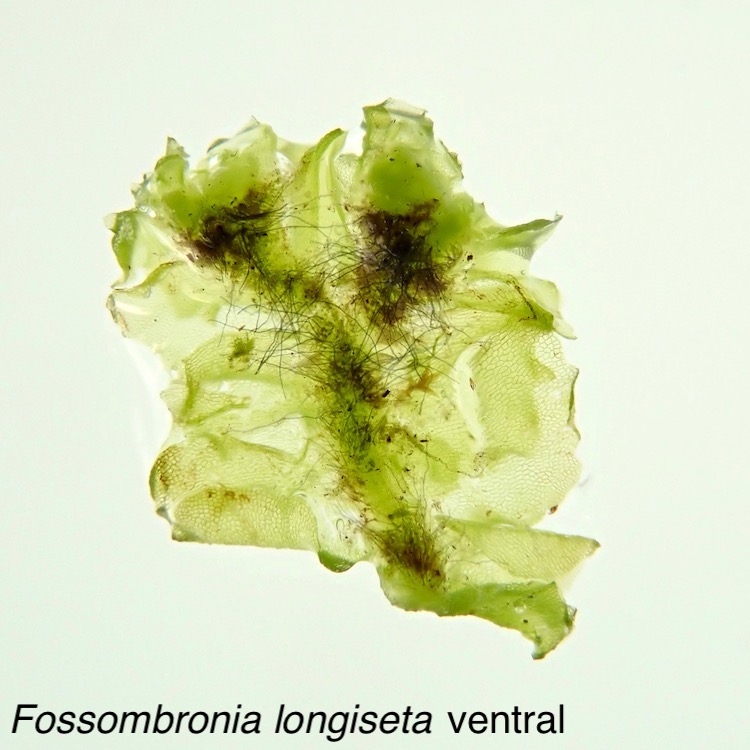


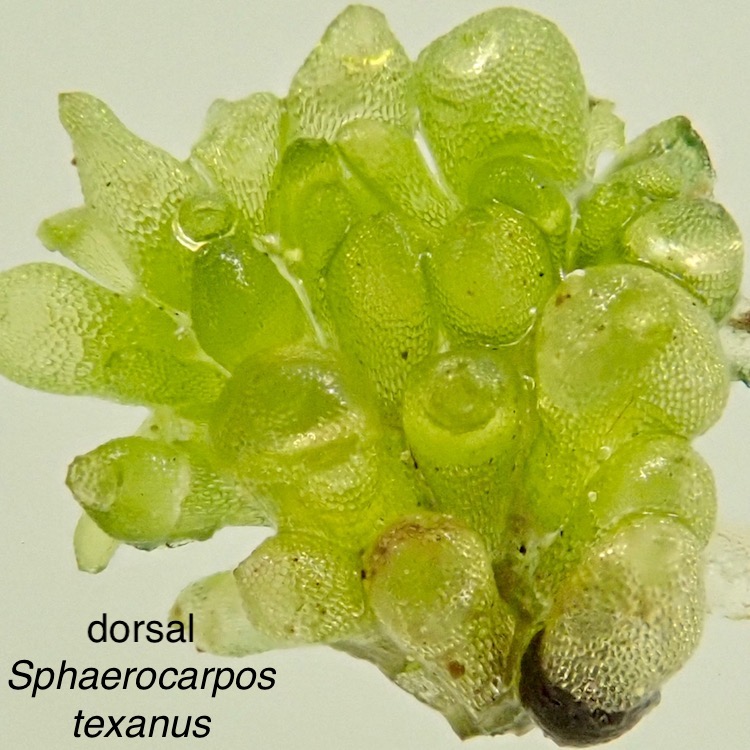

Unicellular Rhizoids:
Bryophytes have root-like structures called rhizoids, which attach the plants to the substratum, and may wick water externally, but do not transport water or nutrients internally. Each liverwort rhizoid is composed of a single cell, i.e. is unicellular, and may be colorless or purplish or brown, depending on the species. The rhizoids of some complex thalloid liverwort species may have peg-like projections, as shown below on Targionia hypophylla. In contrast, moss rhizoids are multicellular, often branched and typically brown. The rhizoids of hornworts are also unicellular, colorless and smooth.


Elaters:
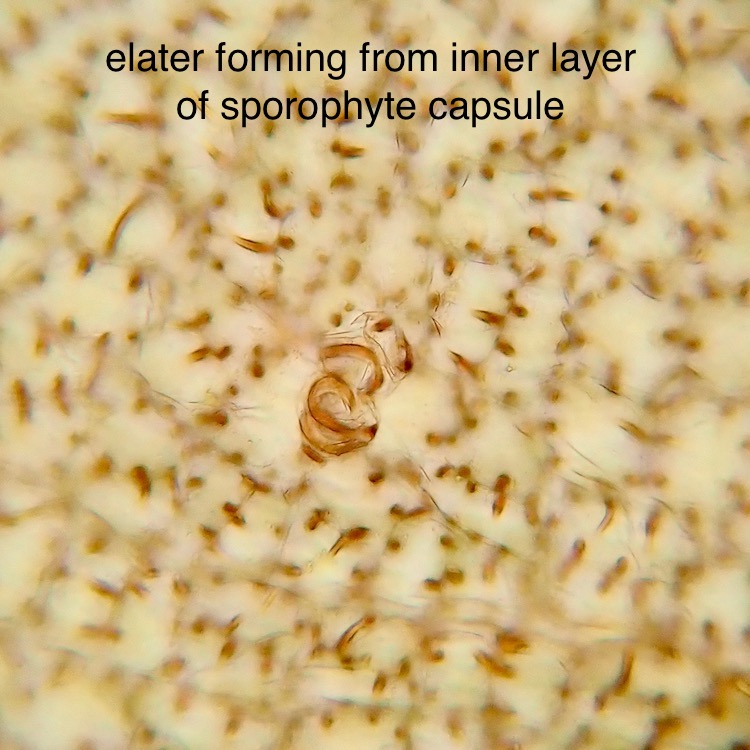
Most liverwort species have specialized cells called elaters, packaged within the sporophyte capsule along with spores (exceptions are species in the Ricciaceae and Sphaerocarpales). These cells are twisted like coils, and contract and extend in response to humidity levels, thereby springing open and pushing the spores out into the great wide yonder. Although not all liverwort species have elaters, all moss species lack them and hornwort species have pseudoelaters which look rather decrepit and are non-functional. Liverwort elaters all look similar from species to species but may differ in length and number of helical twists. The latter photos show elaters forming from the inner layer of a Fossombronia longiseta sporophyte capsule.



Transient, watery seta:
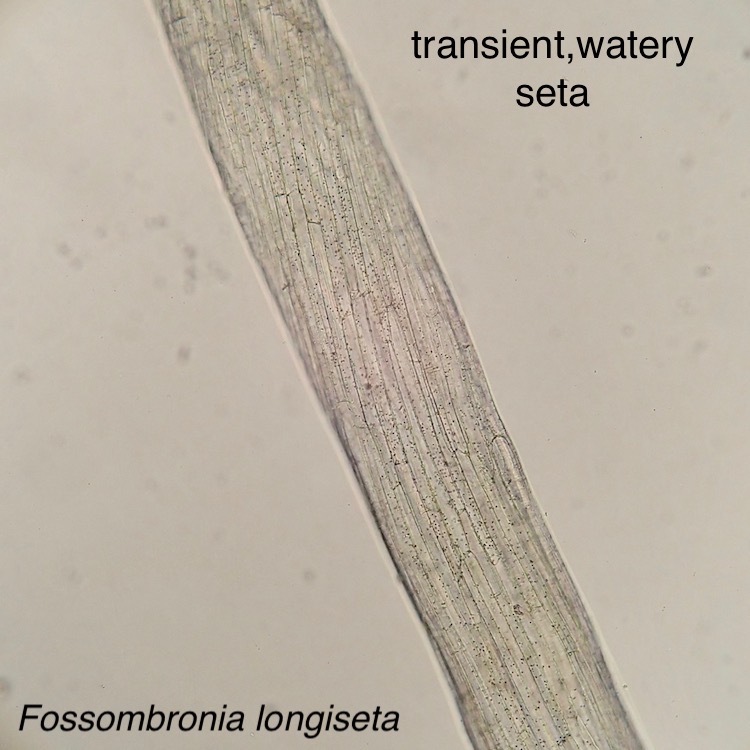
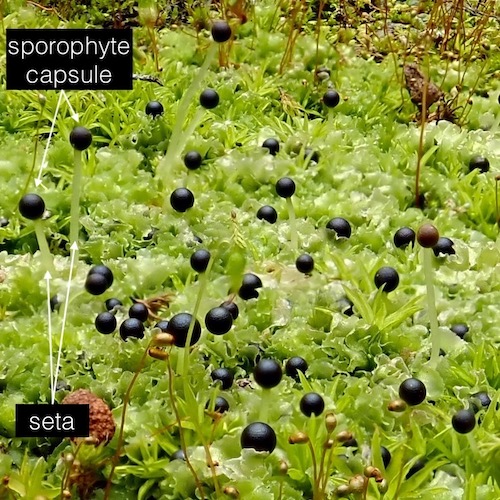
The seta of the liverwort sporophyte extends rapidly by cell elongation through the uptake of water. The structure is thus flimsy and rather transient, in contrast to those of mosses and hornworts, which elongate by cell division and are sturdier and more persistent. In addition, liverwort setae elongate after the capsule and spores have fully developed, as opposed to prior to their development as in mosses and hornworts. Note that some liverwort species lack a seta.


Simple capsule:
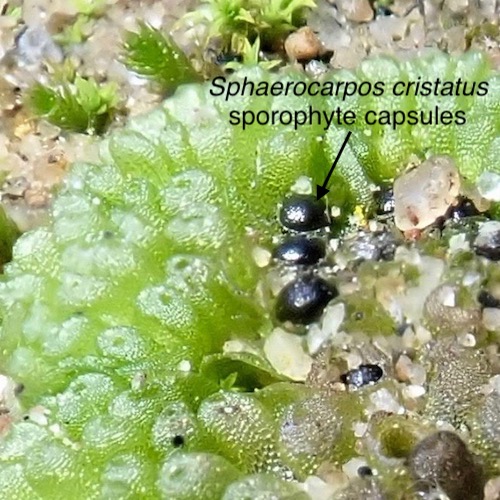
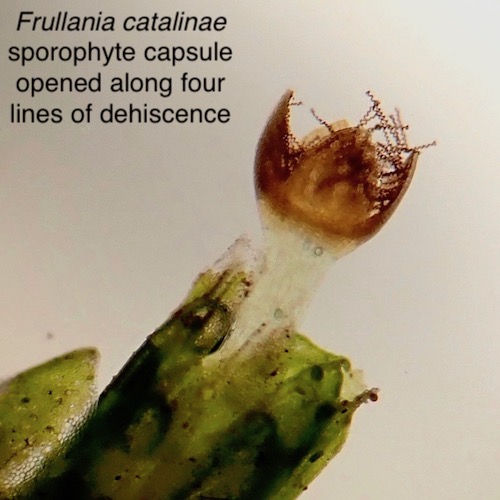
Liverwort sporophyte capsules are generally simple black spheres which split open along four lines of dehiscence or by simple fragmentation. In contrast, most moss species have a more sophisticated opening apparatus, consisting of an operculum (lid) and peristome (teeth). Hornwort sporophytes do not have a separate seta and capsule, but rather a “horn,” which serves as both.

 Bryophytes of Santa Barbara