
Antitrichia californica Sullivant ex Lesquereux
Antitrichia californica is a large (to 10 cm) pleurocarpous moss, light green when moist, darker green when dry, forming extensive, messy mats on boulders, hardwood tree trunks and horizontal branches, in partial shade to full sun. The stems are stiff and wiry, with branches widely and irregularly spaced, and often tapering toward the tips. Branch leaves are tightly appressed to the stem when dry, giving a ropey appearance. When wet, leaves are held away from the stem, resulting in a fuller, furry look.
Scroll down for more photos (click to enlarge) and descriptions of habitat, plants, leaves, distribution map, name origin, and similar species.

Habitat: Antitrichia californica grows on rocks and boulders, as well as on trunks and horizontal branches of hardwoods, often forming extensive monocultures.
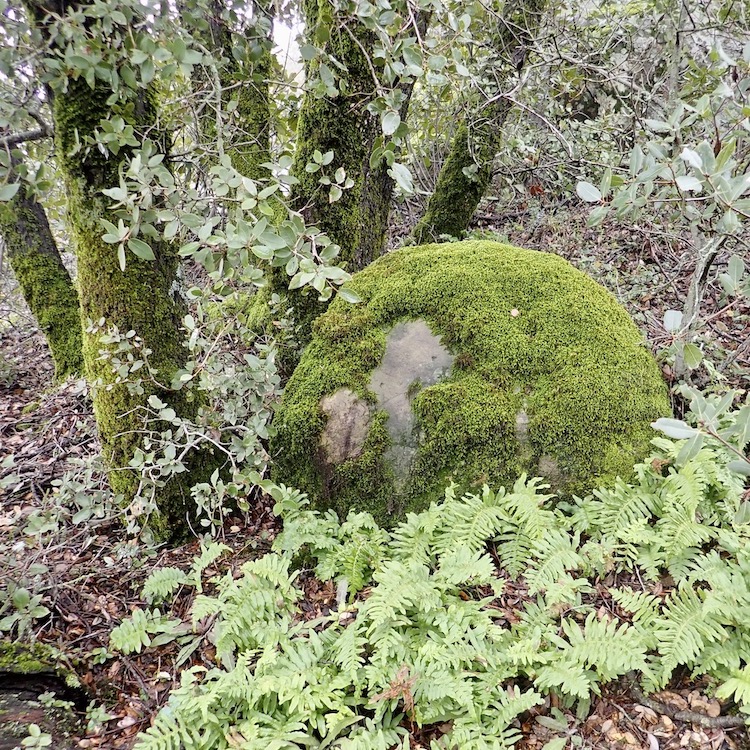

Habit: Antitrichia californica forms extensive, messy mats. When moist, plants are light green; branches look furry and point every which way. When dry, plants are darker olive green; branches look ropey and curl upward.
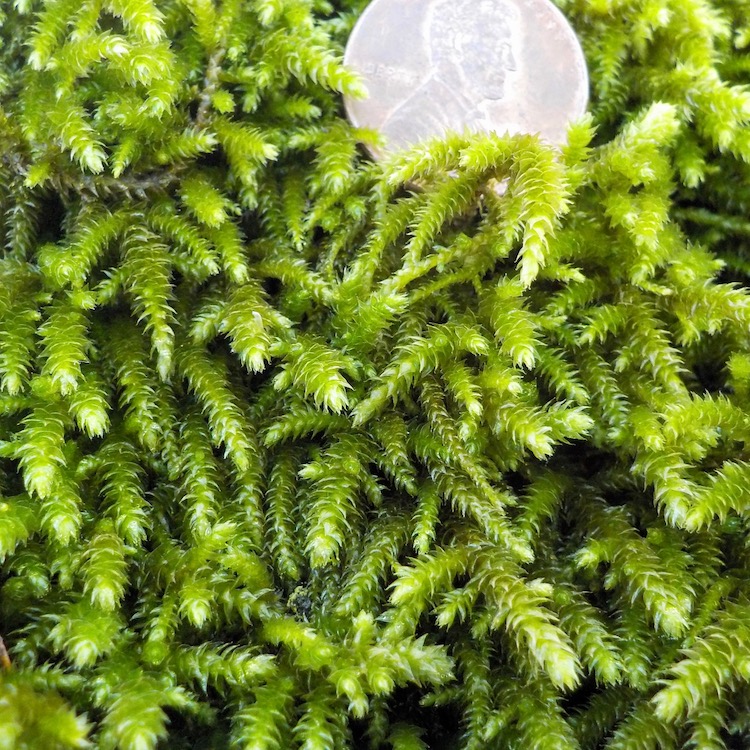

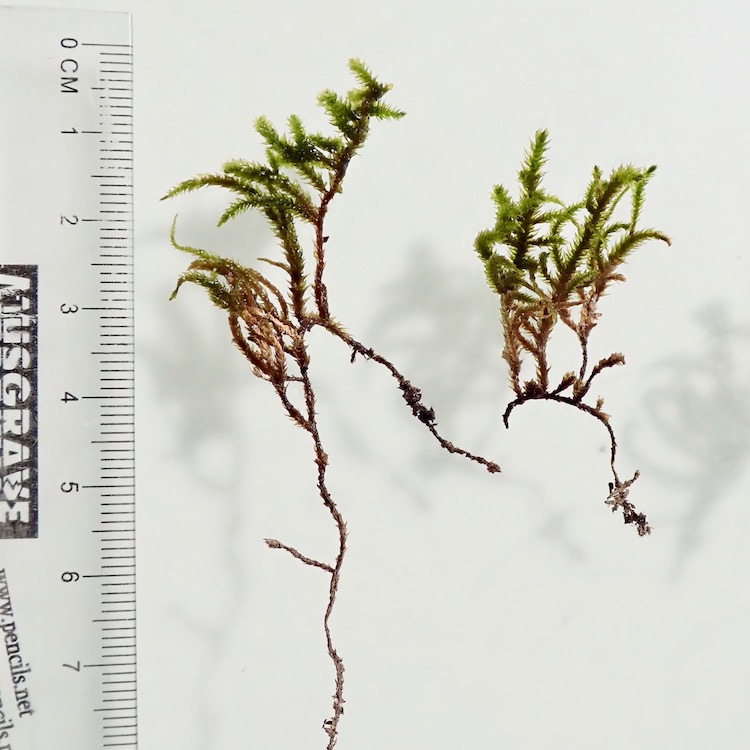
Plants: Antitrichia californica plants are large (to 10 cm) and stiff and wiry, with many distantly and irregularly spaced branches, which often taper toward the tips. Leaves are tightly appressed when dry, particularly on branches, resulting in a ropey appearance. When moist, leaves spread, resulting in a more furry appearance.

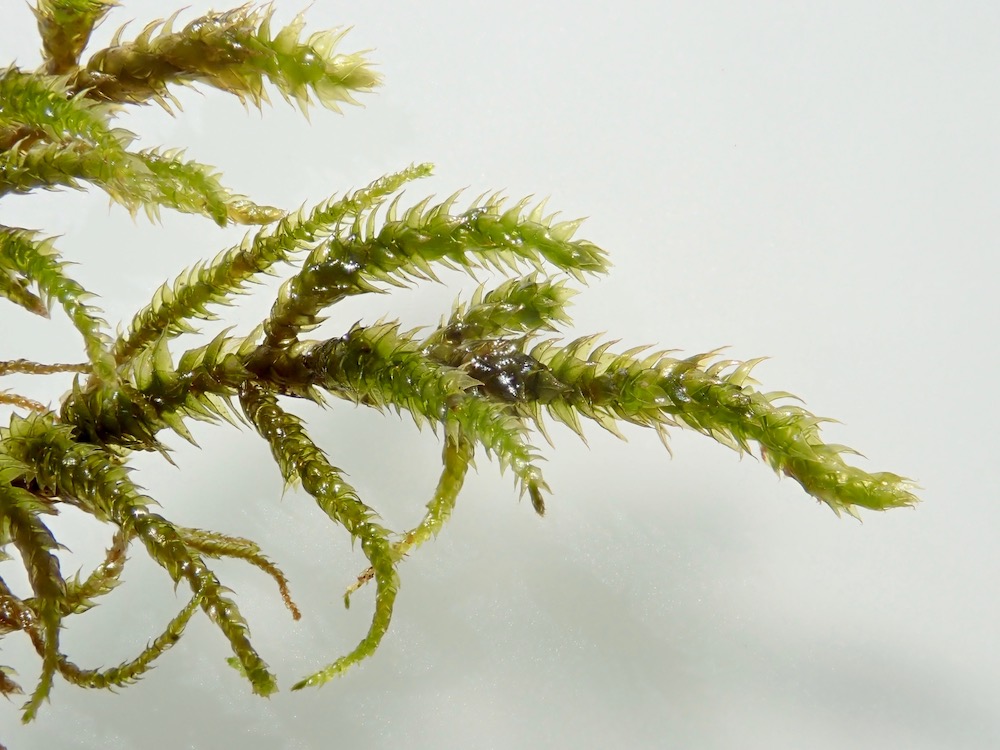

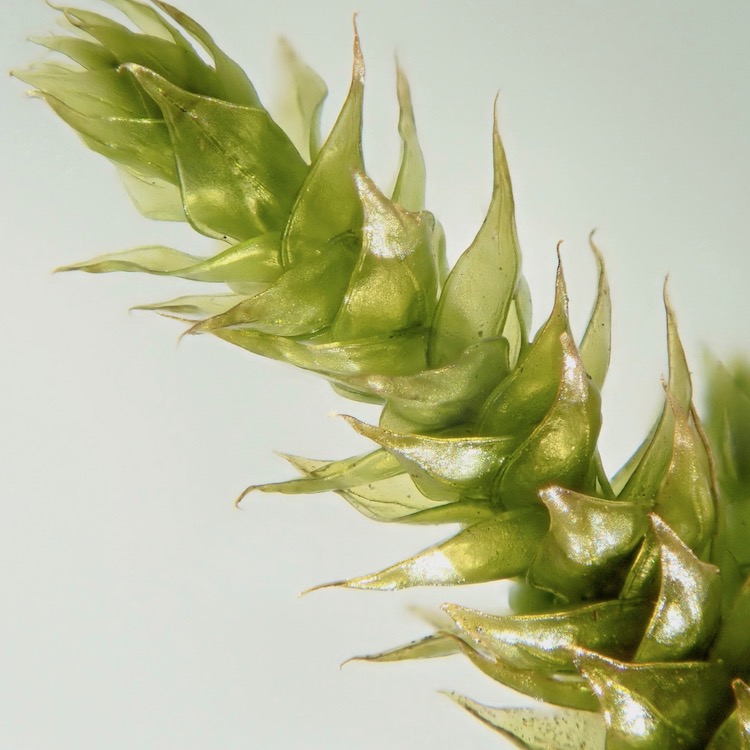
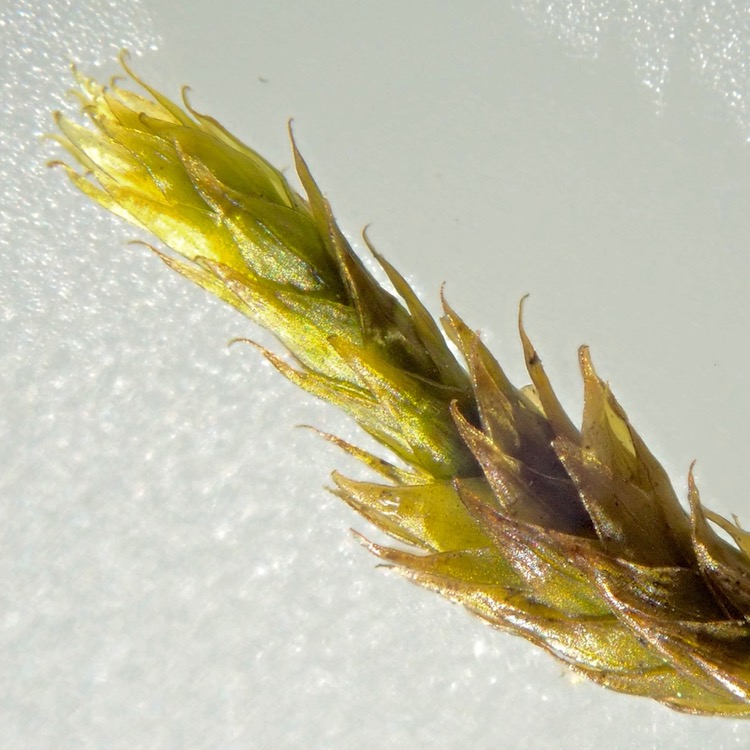
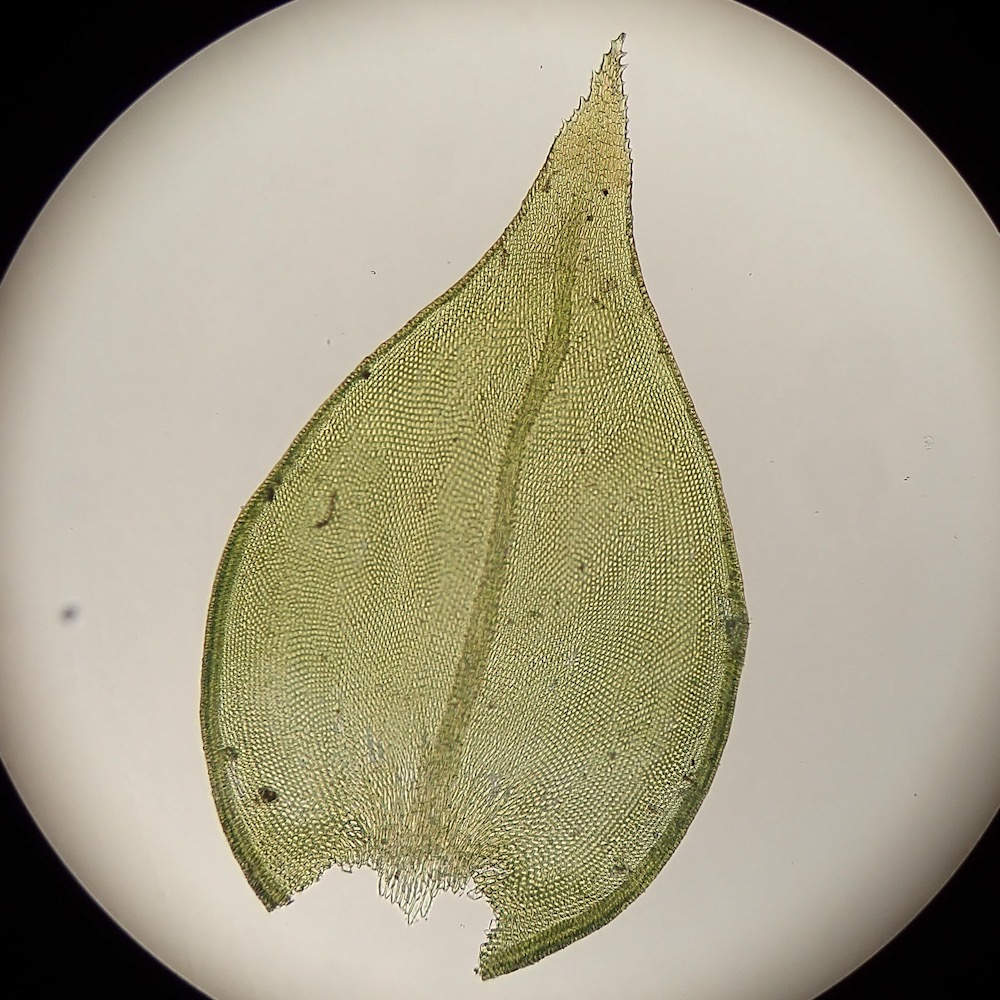
Leaves: Antitrichia californica leaves are ovate, with margins toothed near the tip, and tightly rolled under (revolute) from the base to nearly the apex. The cell at the leaf tip is often shaped like a crown (coronate). The midrib (costa) is quite sturdy and long, reaching nearly the apex of the leaf, and may be surrounded by very short, indistinct supplementary costae. Stem leaves are 2-3 mm long, whereas branch leaves are smaller.


Sporophytes: Sporophytes on Antitrichia californica appear to be rare in Santa Barbara County as I have never seen them in several years of searching. For descriptions and photos of sporophytes, see the references listed at the bottom of the page.
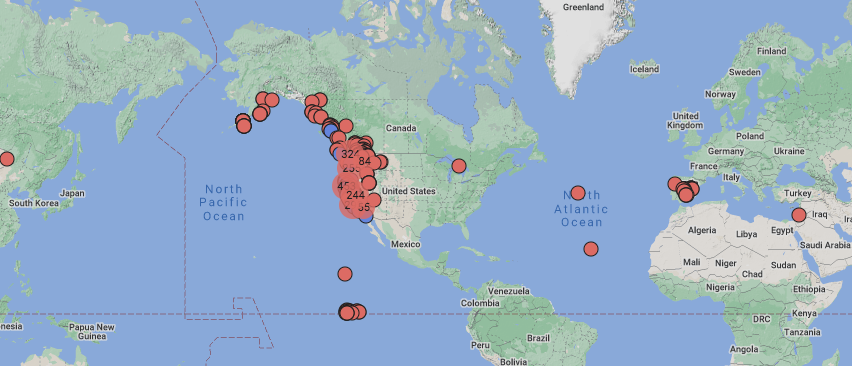
Distribution: Antitrichia californica is common in Santa Barbara County and indeed throughout cismontane California. It is found in western North America, as well as in southern Europe, northern Africa, southwest Asia and the Canary Islands.
Name: The genus name Antitrichia is Greek for opposite hair, refering to the endostome segments which are opposite the exostome teeth on the opening of the sporophyte. The species name californica refers to its prevalence in California.
Similar Species in Santa Barbara County

Nogopterium gracile has similarly tapering branches, but its branches curl downward when dry and look like birds’ feet, whereas those of Antitrichia californica curl upward. Moist Nogoterium gracile plants look more organized, with branches dangling downward, whereas those of Antitrichia californica point every which way, and look messier and more disorganized. Additionally, Nogoterium gracile leaves have plane margins, whereas those of Antitrichia californica are recurved.
 Bryophytes of Santa Barbara