Bestia longipes (Sullivant & Lesquereux) Brotherus
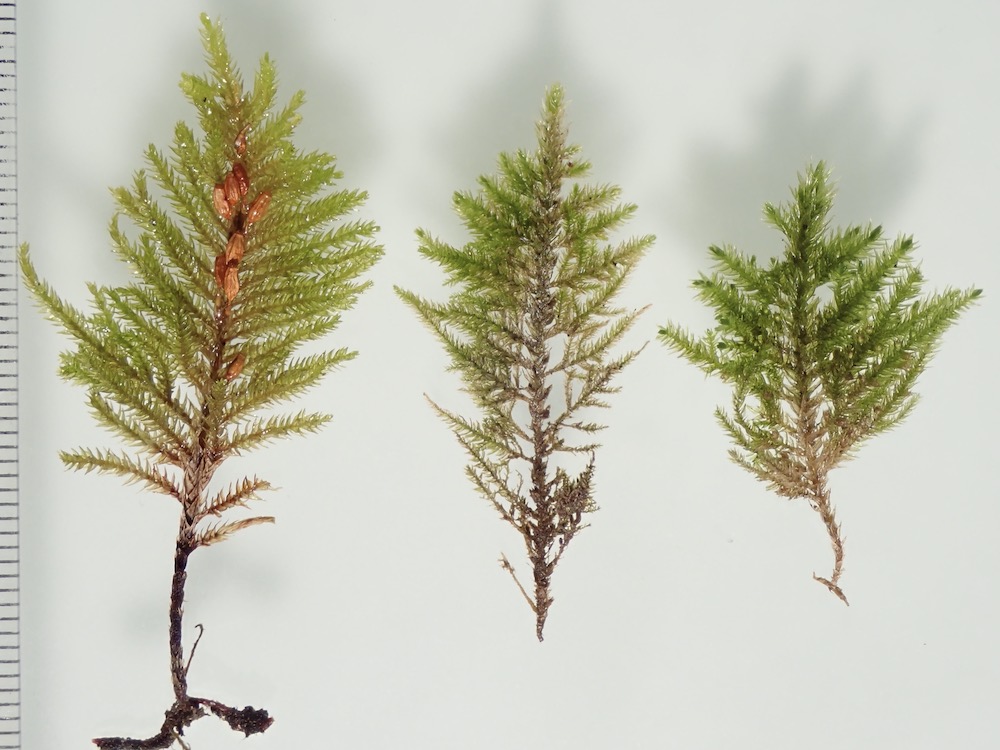
Bestia longipes is a large (to 12 cm), pleurocarpous moss, with soft, regularly pinnate branches, bright green when moist, olive green to brown when dry, which grows in large loose mats on rock walls and boulders in canyons along the immediate coast.
Scroll down for more photos (click to enlarge) and descriptions of habitat, male and female plants, leaves, sporophytes, distribution map, name origin, and similar species.

Habitat: Bestia longipes is found on rock walls, large boulders, and occasionally the bases of trees, along streams in canyons, primarily on the immediate coast of California.


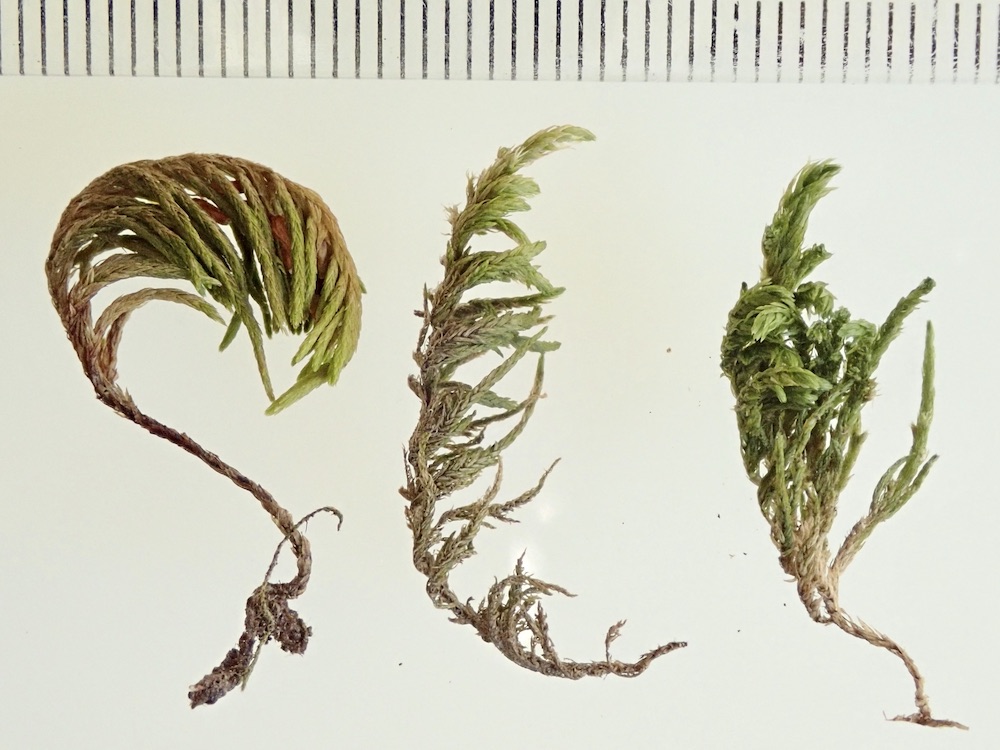
Habit: Bestia longipes plants dangle softly downward in loose mats, often extensive. When moist, the plants’ regularly pinnate, bright green branches look like tiny ferns. When dry, branches curl gently and plants often turn to the side, becoming more olive green-brown.
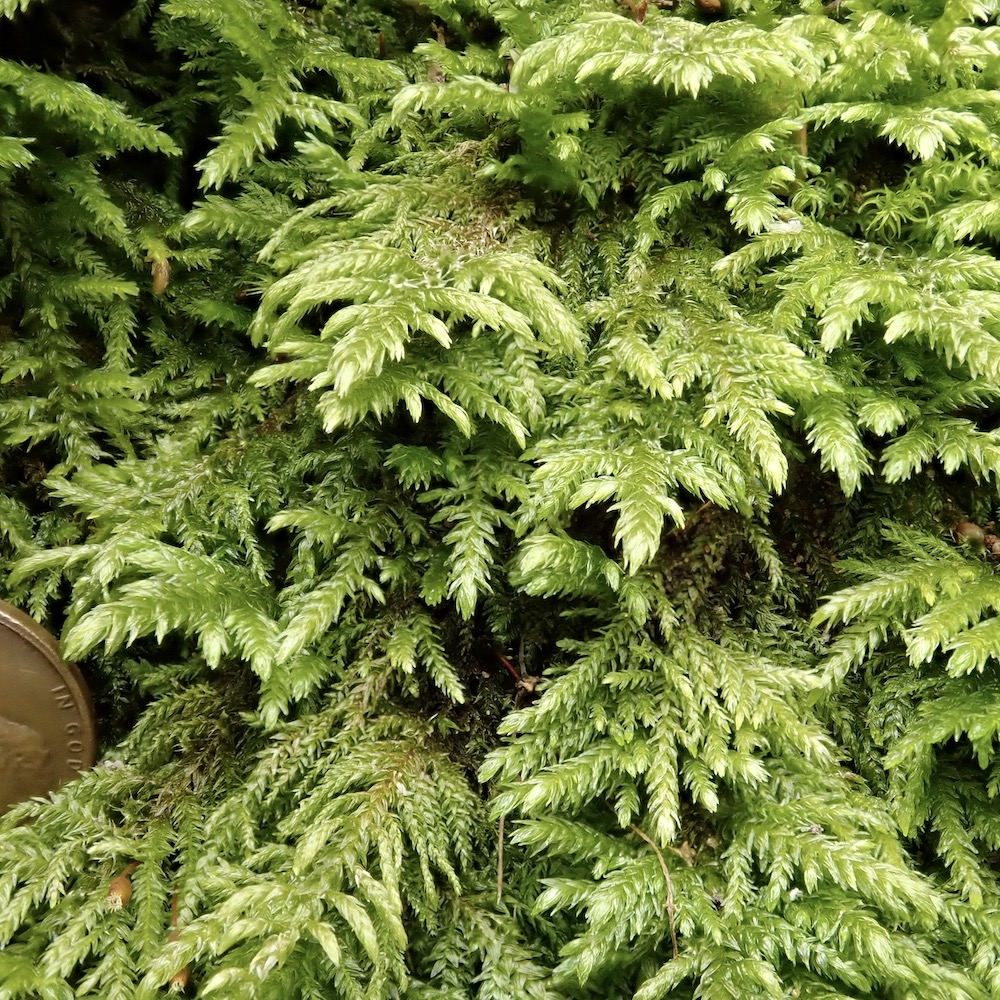

Plants: Bestia longipes plants are quite large, up to 12 cm, and have fairly regular, short, pinnate branches.


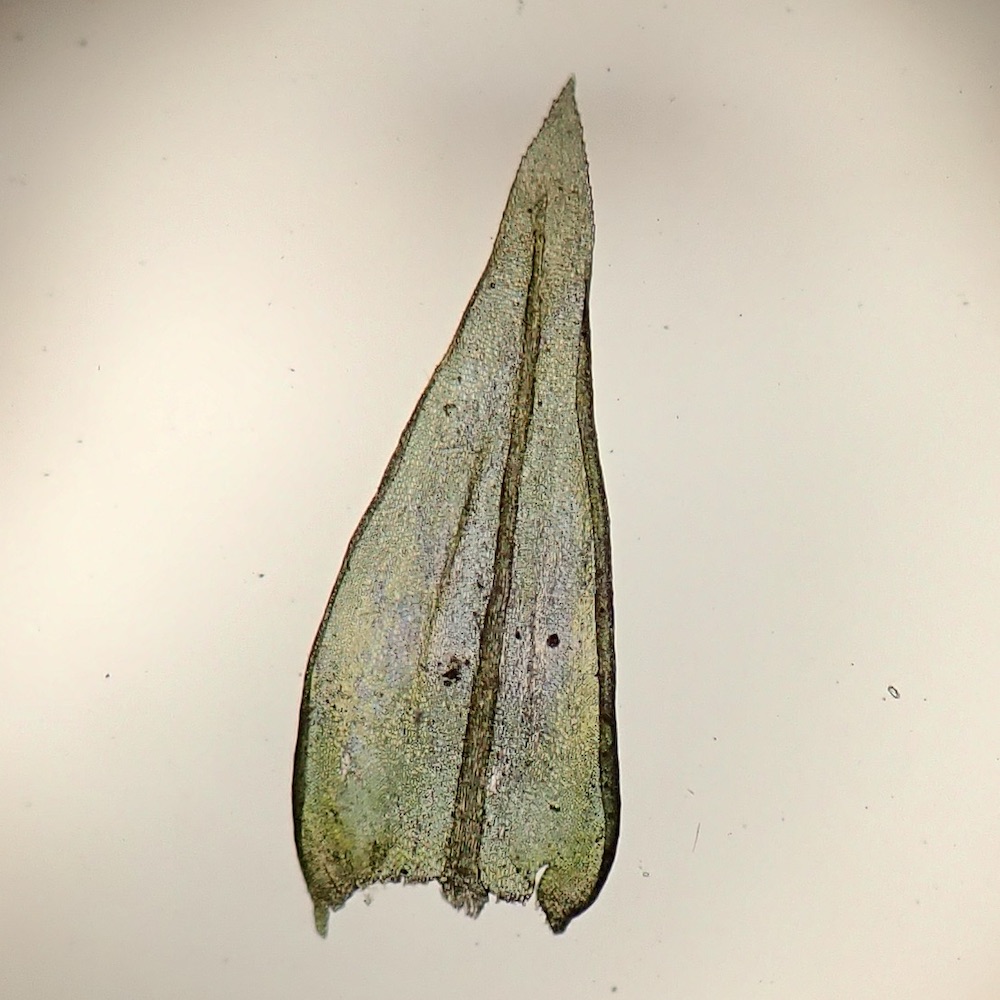
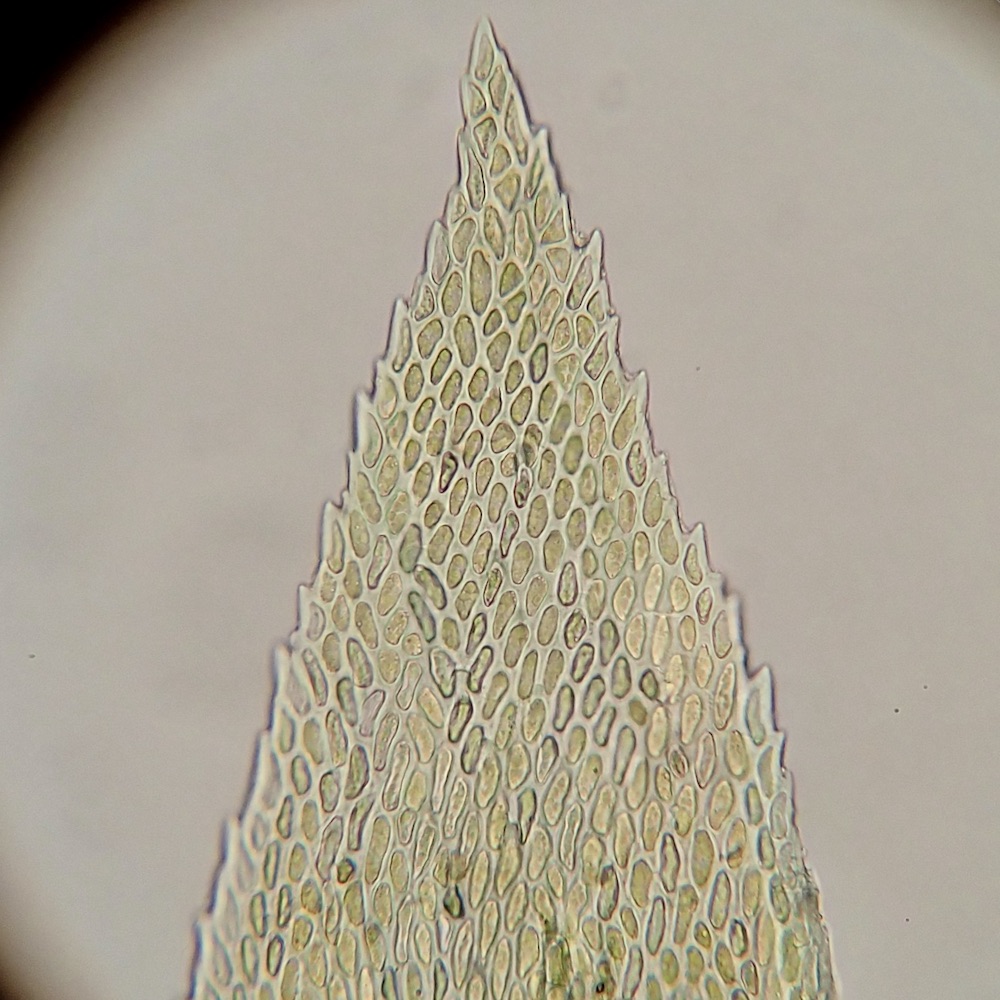
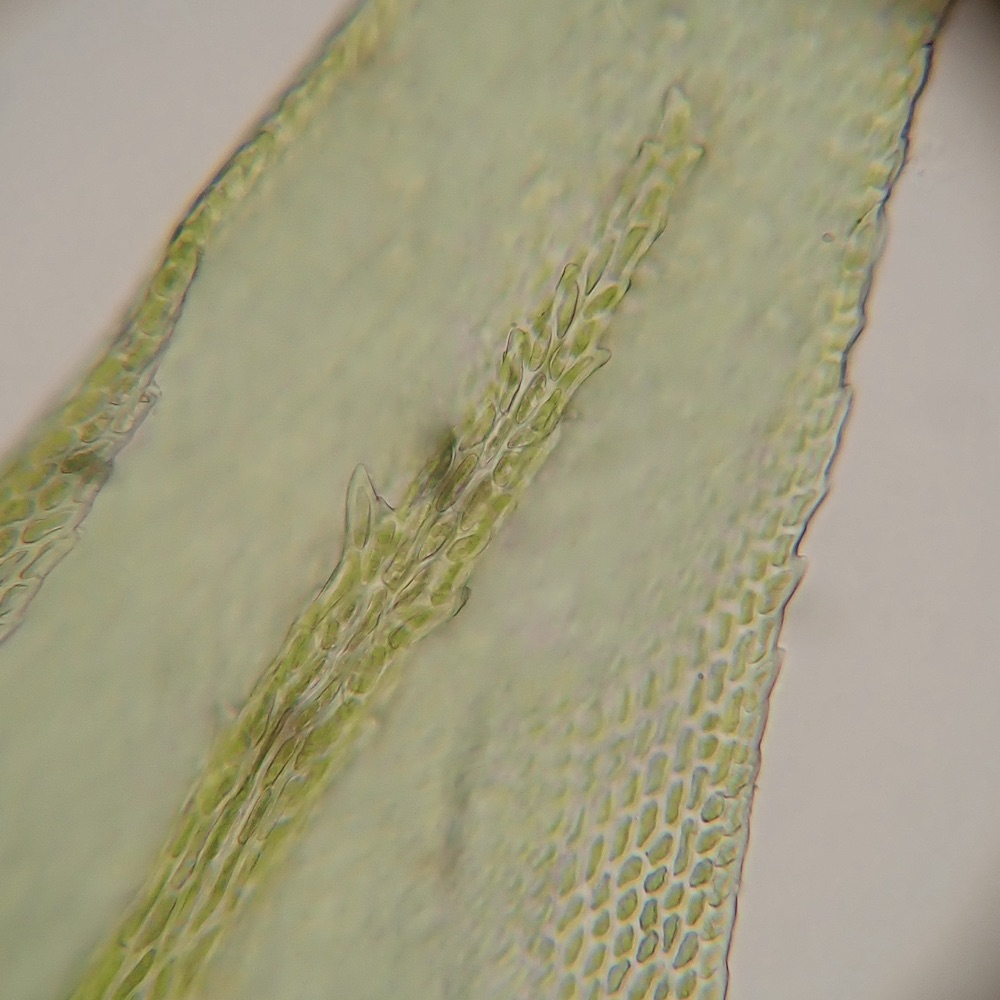
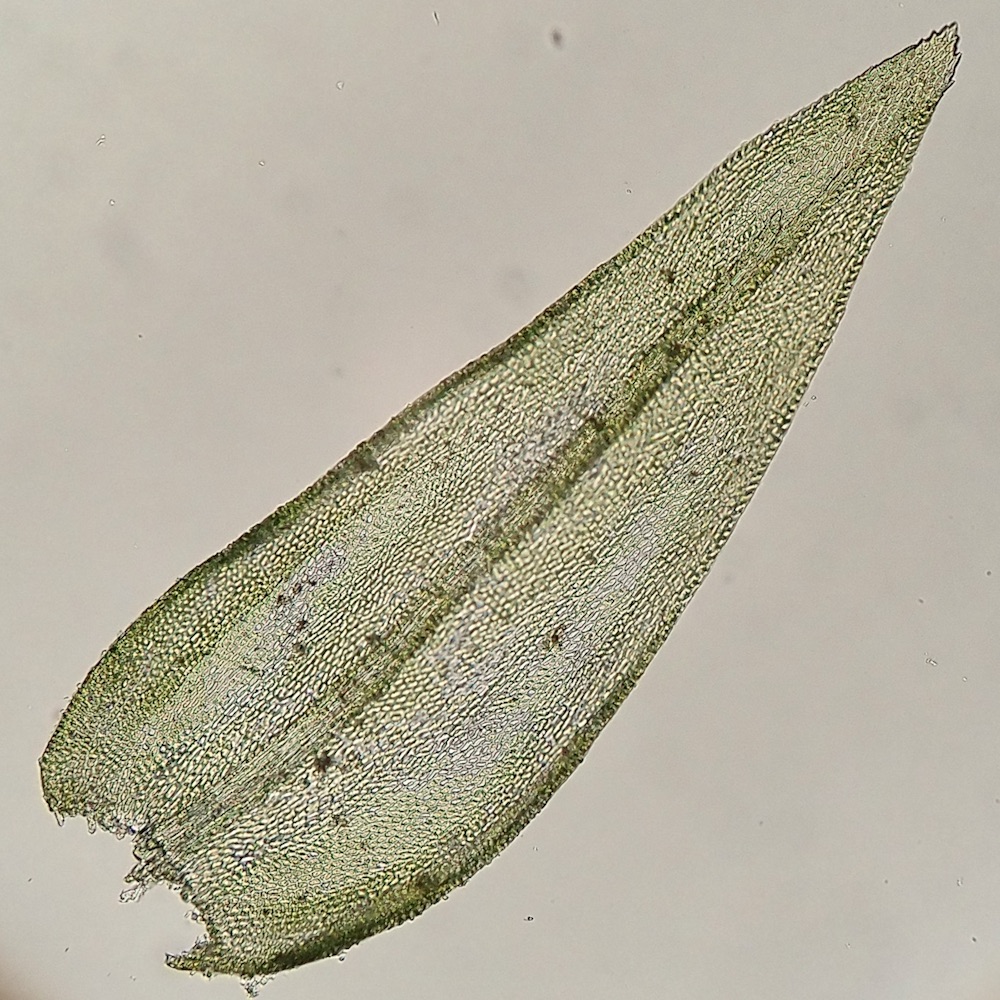
Leaves: Bestia longipes leaves are held away from the stem when moist, and are loosely appressed to the stem when dry. Leaves are triangular-ovate, slightly concave, 1.5-2 mm long, with those on the stem larger than those on the branches. The margins are recurved from the base of the leaf to about 3/4 up, and are toothed near the apex of the leaf. The costa is also toothed near the apex.



Perichaetia: Bestia longipes appears to be dioicous, with separate male and female plants. The female sex organs, archegonia, are housed within budlike perichaetia situated along the main stem. Each perichaetium houses many narrow, flask-shaped archegonia, each of which houses an individual egg. Upon fertilization by a sperm, the now diploid zygote develops into the sporophyte.

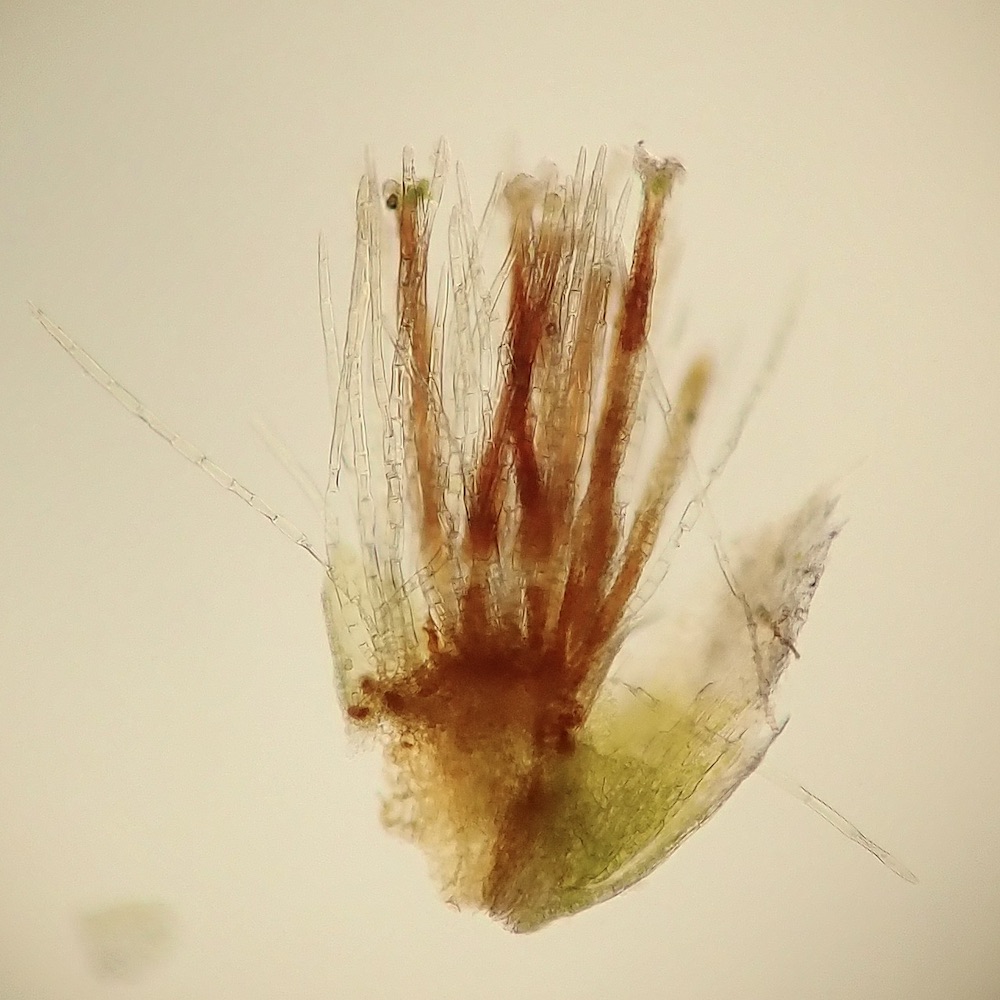
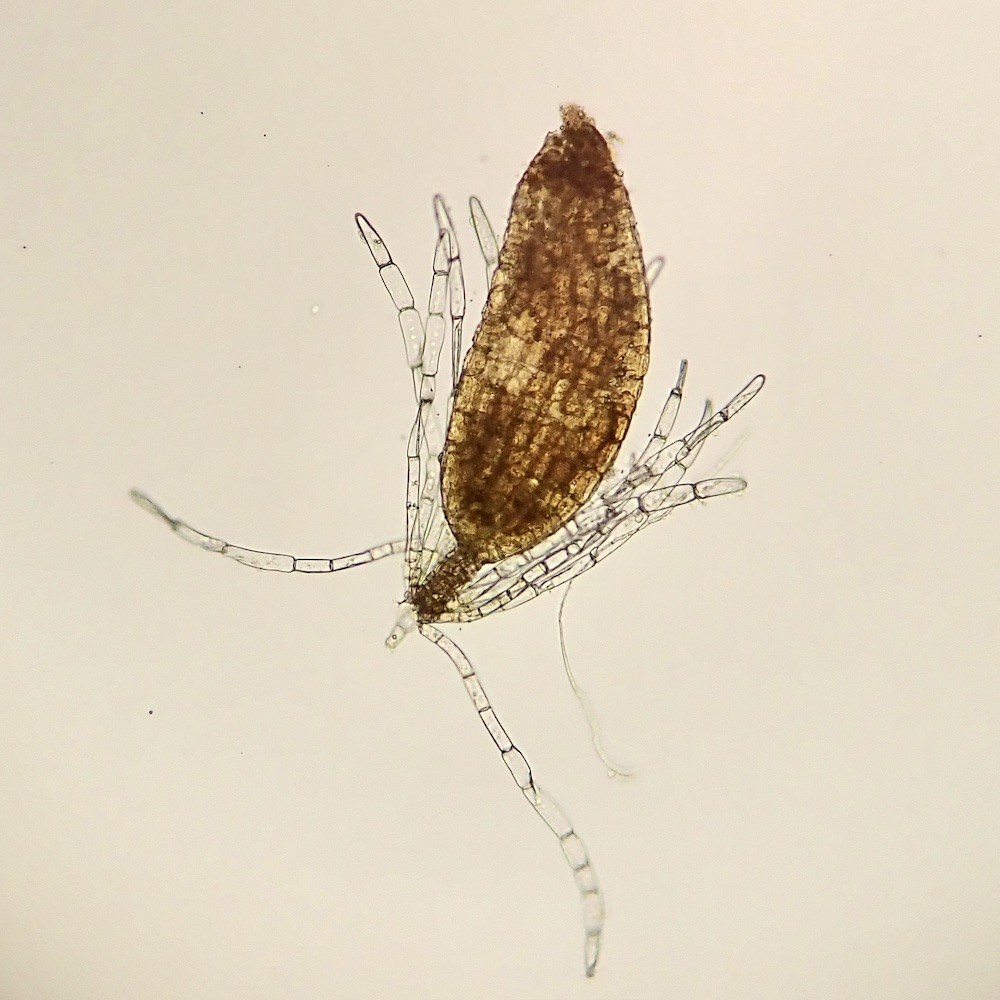
Perigonia: Bestia longipes male plants have tiny onion-like perigonia along the primary branches. Each perigonium houses several sausage-shaped antheridia, which in turn contain thousands of sperm.


Sporophytes: When an egg in an archegonium within a perichaetium is fertilized by a sperm from a perigonium, it develops into a sporophyte, the part of the plant that produces spores. Accordingly, sporophytes are found along the stem of female plants. Sporophytes are not often seen on Bestia longipes plants, but 2023 was a bumper crop year here in Santa Barbara County.


Distribution: Bestia longipes is endemic to California, possibly reaching into southern Oregon (one collection from 1935). It is not exactly plentiful in Santa Barbara County, but can be found within each stream canyon along the coast, sometimes in extensive populations.

Name: The genus name, Bestia, honors George Newton Best, an American bryologist, who lived from 1846-1926. “longus” is Latin for long, and “pes” is Latin for foot or stalk, though it is unclear to which stalk this refers – stem or seta.
Similar Species in Santa Barbara County
Beginners may confuse Bestia longipes with Dendroalsia abietina, another large moss with regularly pinnate branches. Dendroalsia abietina is typically larger, and more robust, with much stiffer and wirier stems and branches. When dry, its leaves overlap neatly and tightly, and plants curl up in a highly characteristic manner. Additionally, Dendroalsia abietina is less restricted in its habitat, and is found on rocks and trees away from streams and canyons.