
Scleropodium occidentale B.E. Carter
Scleropodium occidentale is a medium-large, green to yellow-green, pleurocarpous moss, which forms large mats on rocks and occasionally tree bases in and directly adjacent to seasonal creeks and streams. Its irregularly spaced branches taper slightly toward the tips and appear quite swollen and poofy even when dry. Its leaves are concave and the midrib ends in a spine, a feature which helps to differentiate it from the closely related S. obtusifolium.
Scroll down for more photos (click to enlarge) and descriptions of habitat, plants, leaves, distribution map, name origin, and similar species.
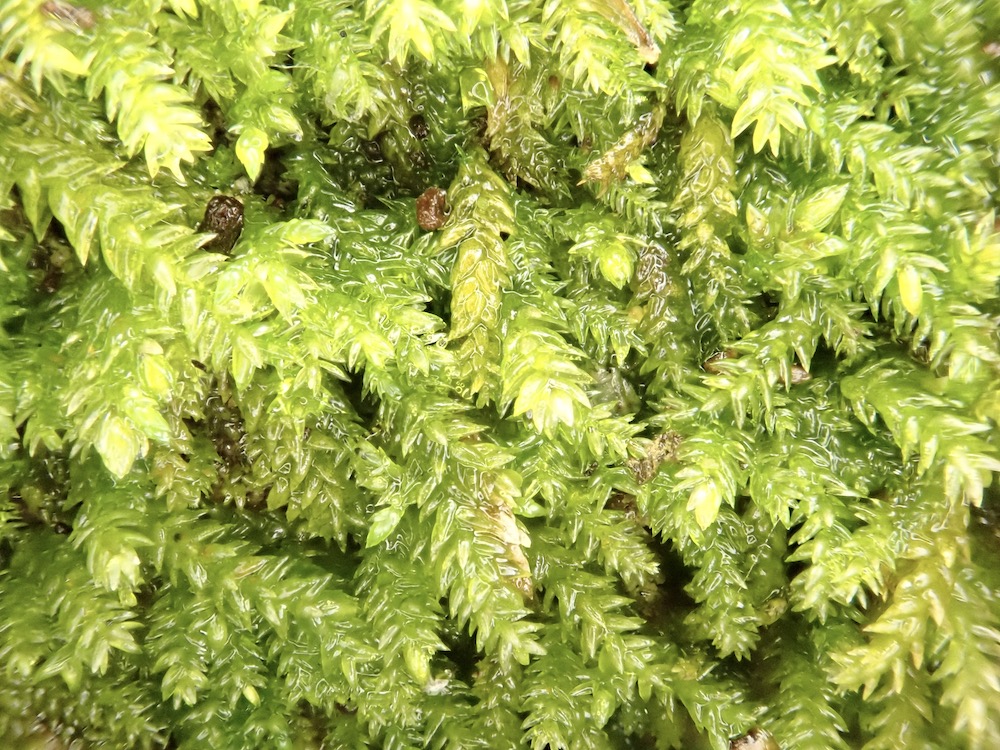
Habitat: Scleropodium occidentale is strictly an aquatic or semi-aquatic species, growing on rock or occasionally tree roots, in or directly adjacent to and thus in the splash zone of creeks or seasonal streams.

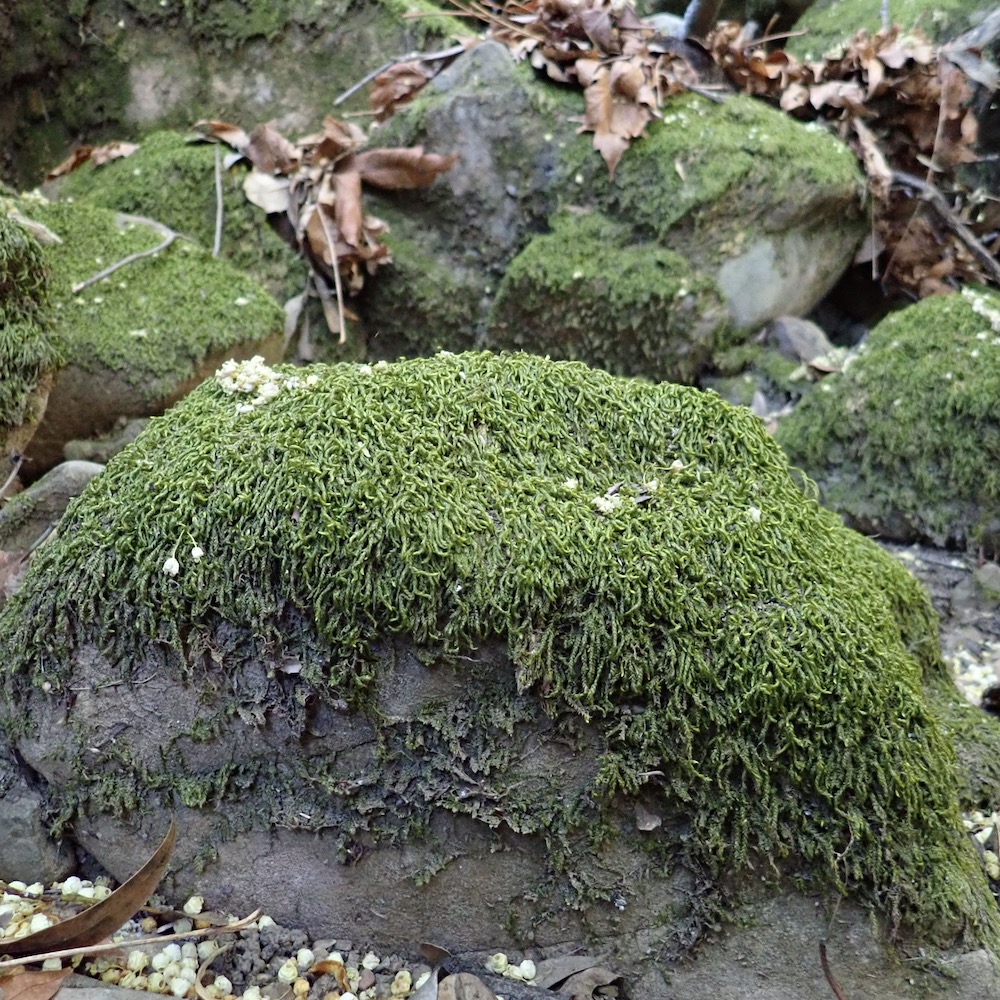
Habit: Scleropodium occidentale forms extensive messy mats, which obscure its irregularly spaced branching pattern. The branches taper slightly toward the tips and appear quite swollen and poofy even when dry.
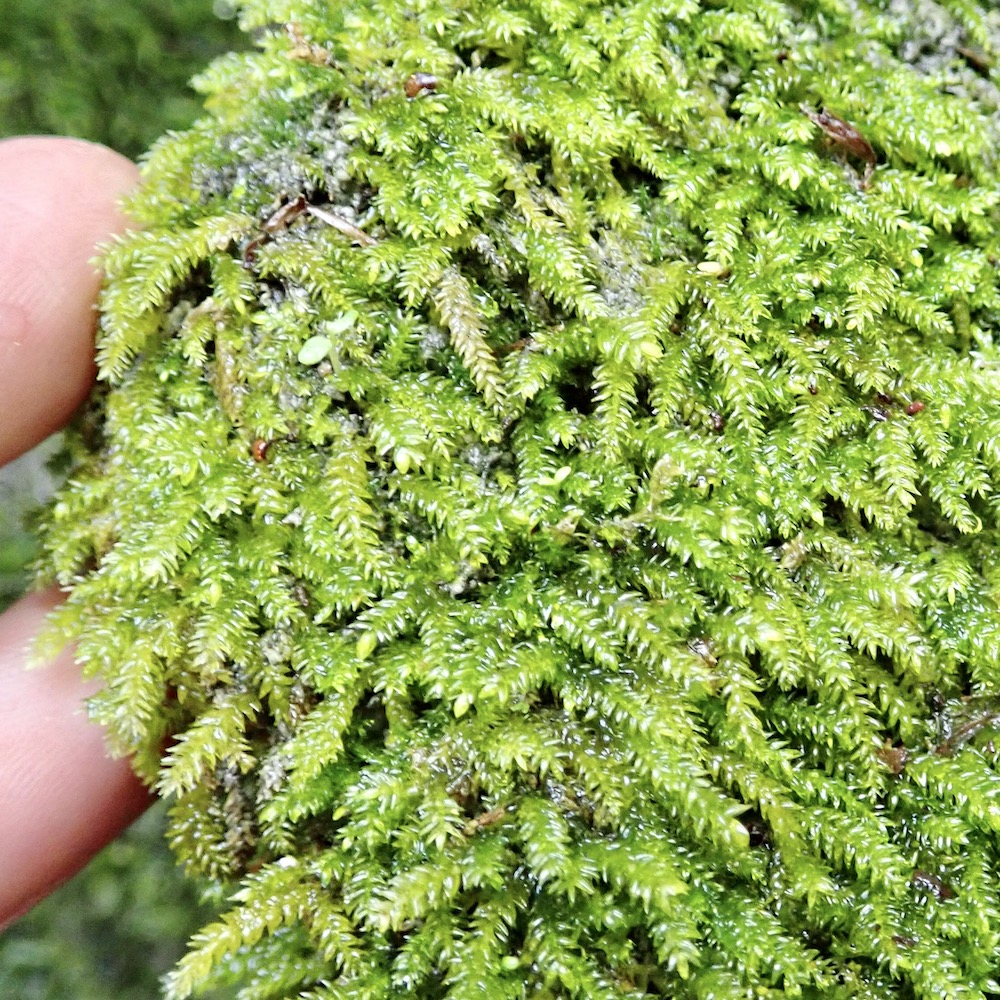

Plants: Scleropodium occidentale plants are medium-large (to 5+ cm), with many irregularly spaced branches which tend to bend midway and taper slightly at the tips (attenuate). The concave leaves are closely spaced on the stem, and overlap neatly when dry (julaceous), but are not exceedingly tightly appressed to the stem, resulting in a poofy appearance (tumid).


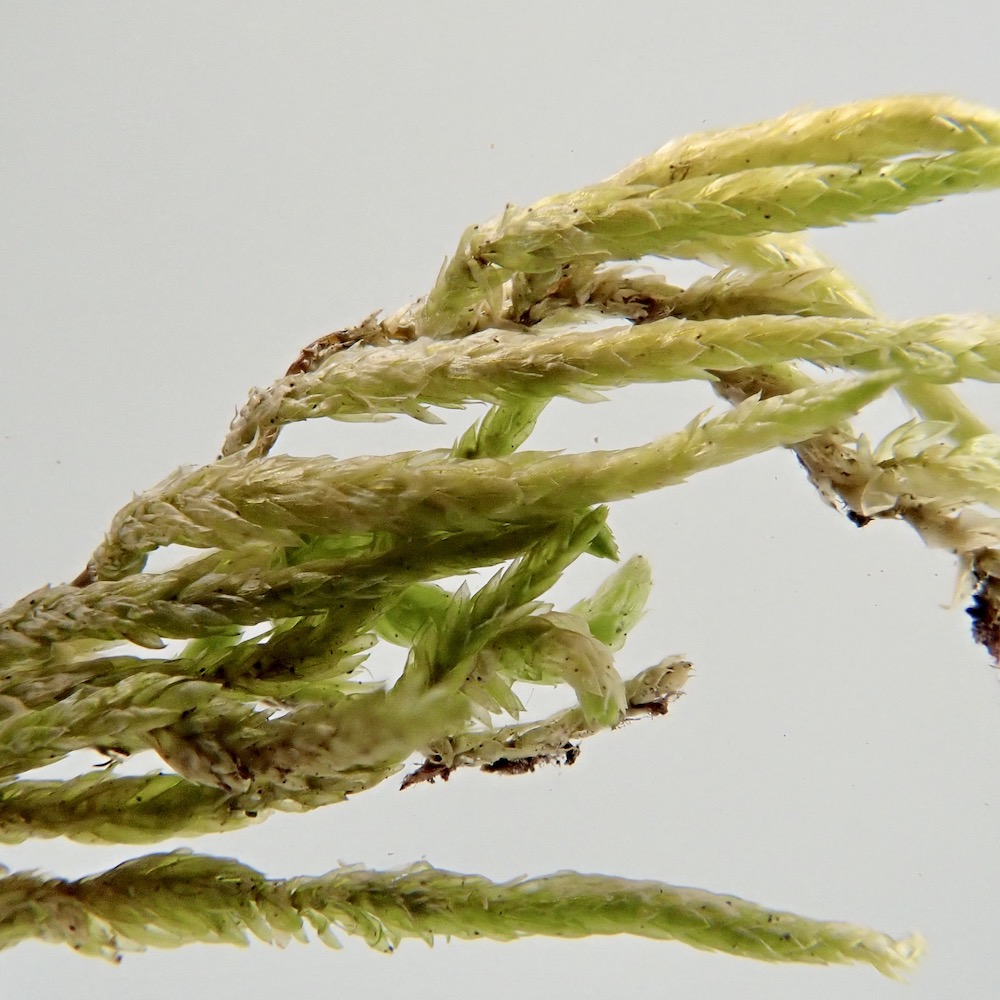
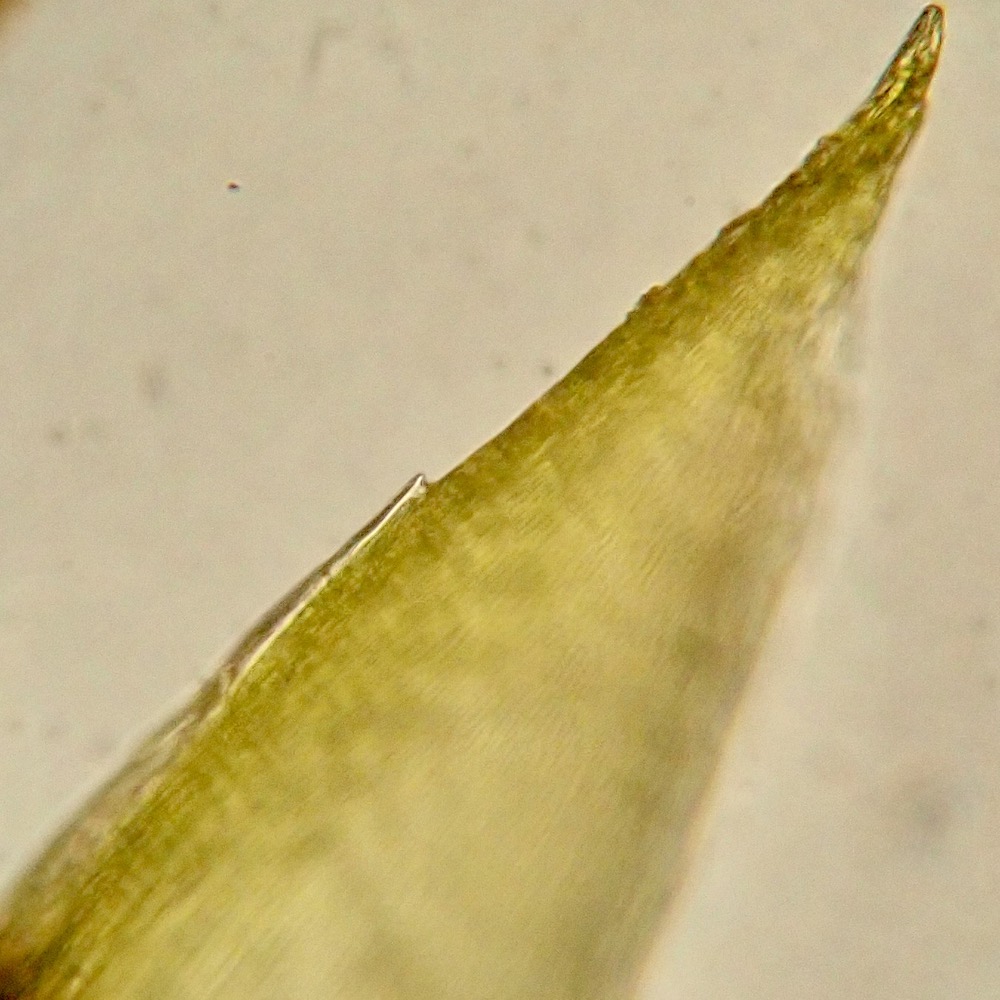
Leaves: Scleropodium occidentale leaves are ovate (sometimes more lanceolate) and concave, with a rather strong costa extending >70% up and terminating in a spine, a feature which helps to distinguish it from the closely related Scleropodium obtusifolium. The leaf margins are often slightly serrated and inrolled in the upper part of the leaf and the tips are generally acute.



Sporophytes: Please see the references below for information on Scleropodium occidentale sporophytes as I have yet to encounter them in Santa Barbara County.
Distribution: Scleropodium occidentale is found in California primarily west of the Sierra Nevada, into Oregon and BC, with a few scattered collections to the east. In Santa Barbara County thus far I have found it primarily in creeks on the north side of the Santa Ynez Mountains and have yet to find a creek containing both Scleropodium occidentale and Scleropodium obtusifolium.

 Bryophytes of Santa Barbara