
Pseudocrossidium obtusulum (Lindberg) H. A. Crum & L. E. Anderson
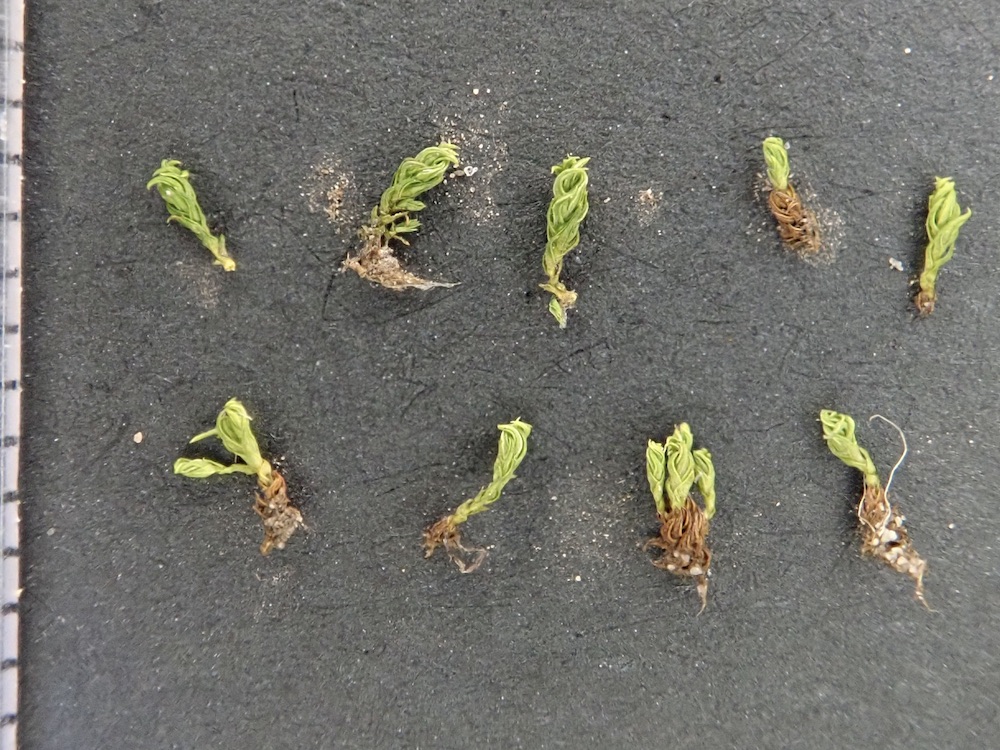
Pseudocrossidium obtusulum is a small (up to 2 cm) acrocarpous moss with bright green succulent leaves which tend to be arranged in a distinctive pinwheel manner when moist, and in tight corkscrews when dry. The leaf margins are revolute, that is bent back or recurved in several coils, contributing to the luscious look. Plants may be scattered or in crowded turfs, typically on flat, compact, sandy or gravelly soil, in partial shade or full sun.
Scroll down for more photos (click to enlarge) and descriptions of habitat, plants, leaves, distribution map, name origin, and similar species.
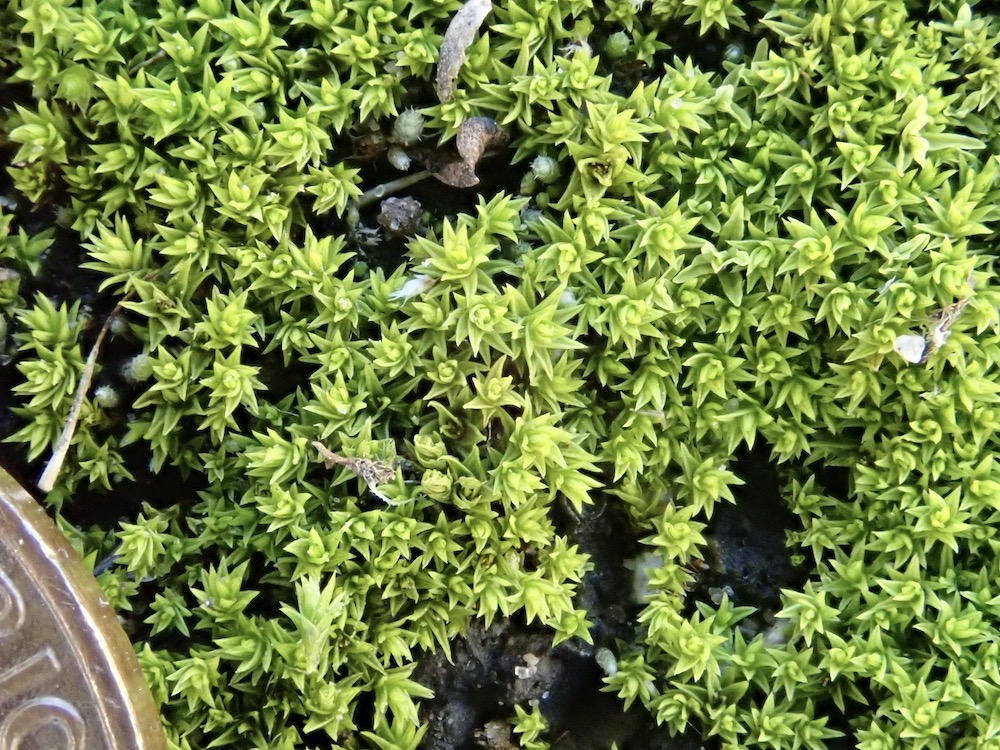
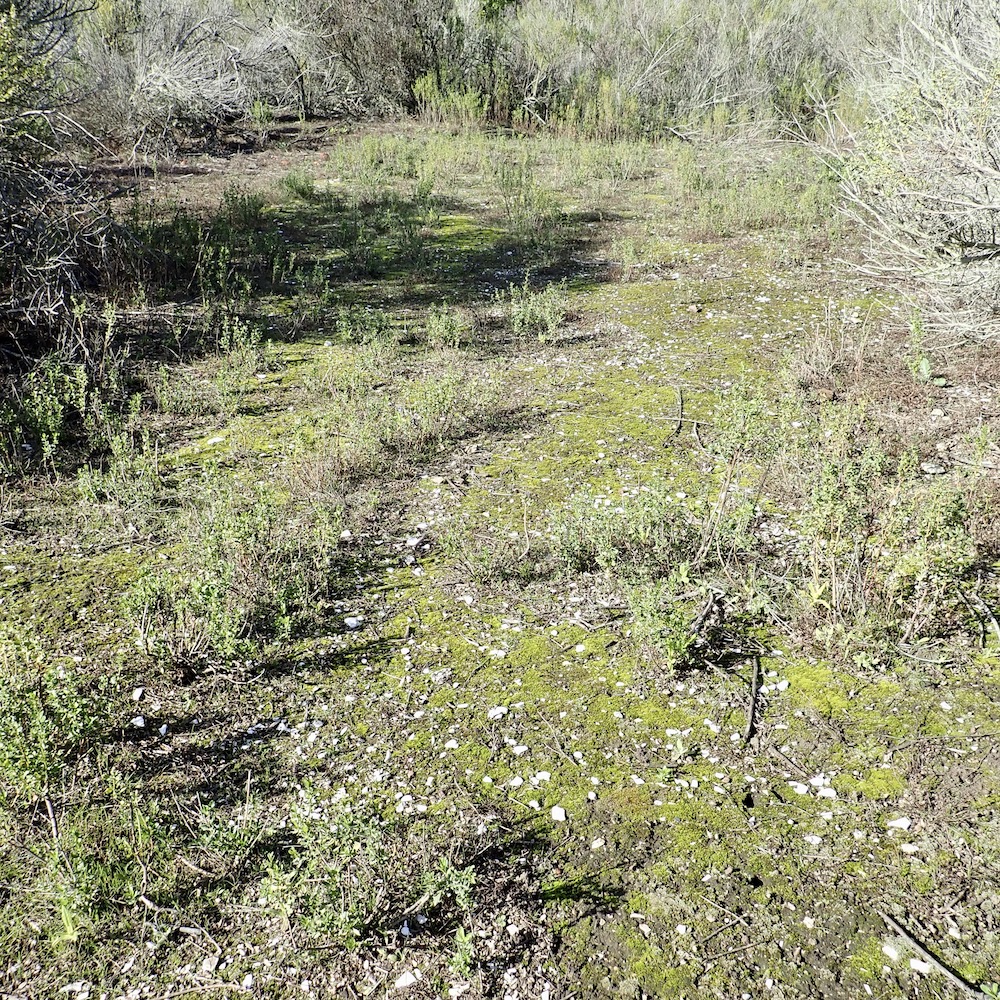
Habitat: Pseudocrossidium obtusulum typically grows on flat, compact, sandy or gravelly soil in partial shade or full sun.


Habit: Pseudocrossidium obtusulum tends to form loose to dense turfs but may also be scattered about and mixed with other species of exposed soil such as Bryum argenteum, Aloina aloides var. ambigua, Didymodon australasiae. Populations can be quite extensive, sometimes covering many square meters. When moist, turfs appear bright green and luscious. When dry, turfs become olive green and nubby.
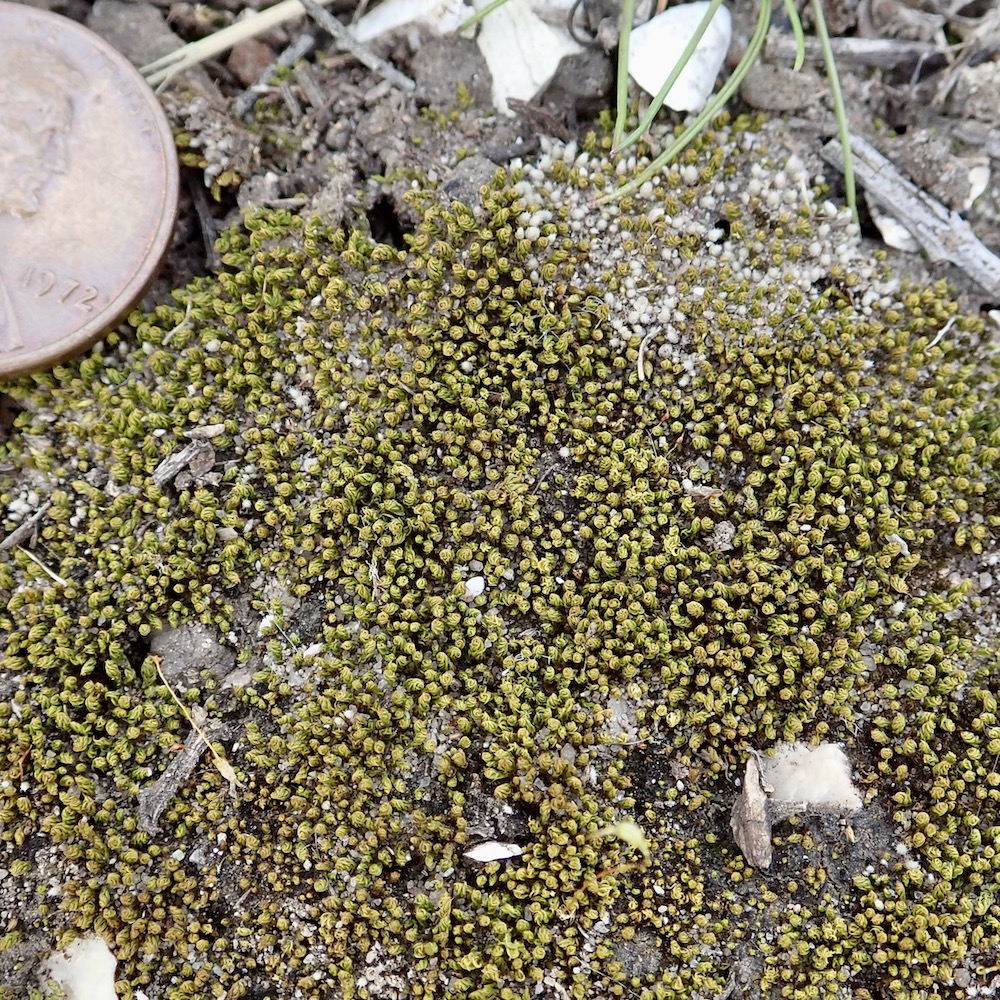
Plants: Pseudocrossidium obtusulum plants are said to be up to 2 cm tall, but I have found plants to be more on the order of 0.5 cm, here in Santa Barbara County as well as in San Luis Obispo County and in the foothills of the Sierra near Three Rivers. In the field, when moist, plants have a rather jaunty pinwheel look to them, with leaves slightly bent to one side. When dry and viewed from directly above in the field, plants have a tight corkscrew appearance. Some plants appear to be branched, with one or two smaller, daintier branches, or sturdy branches of equal size.
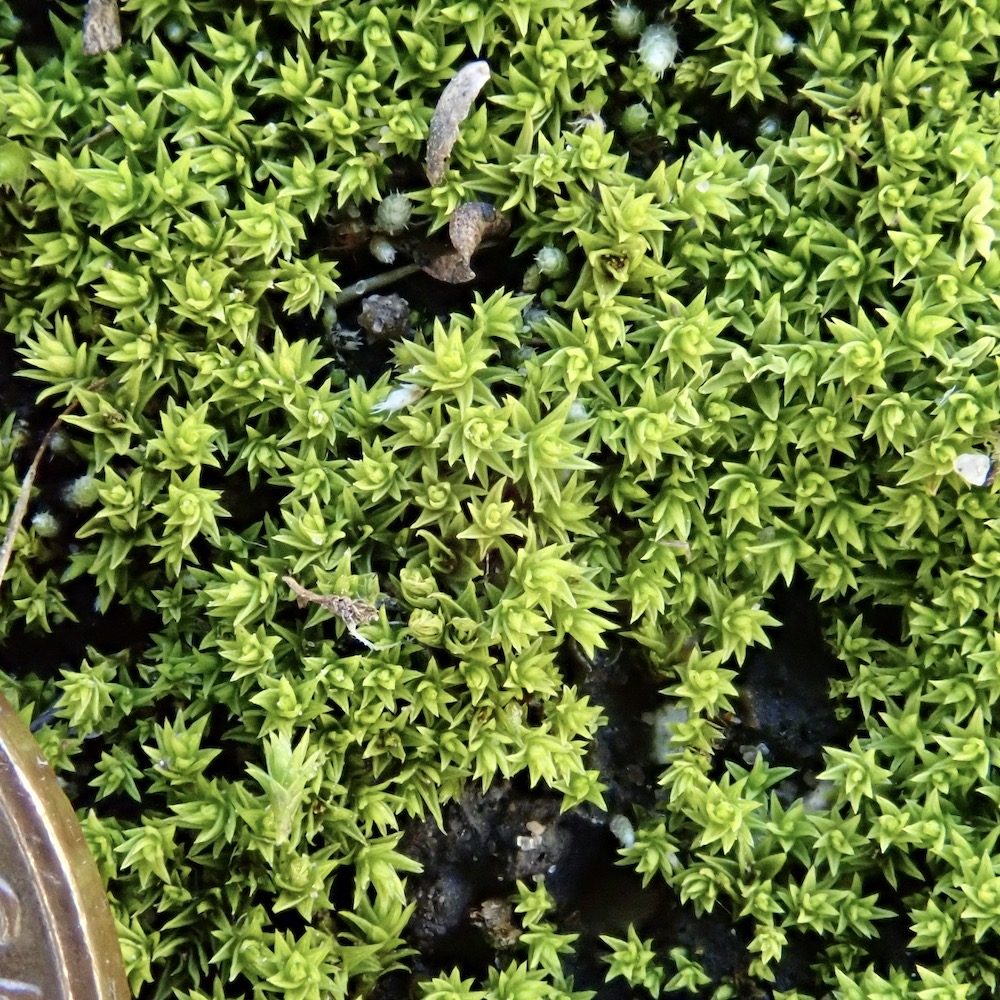
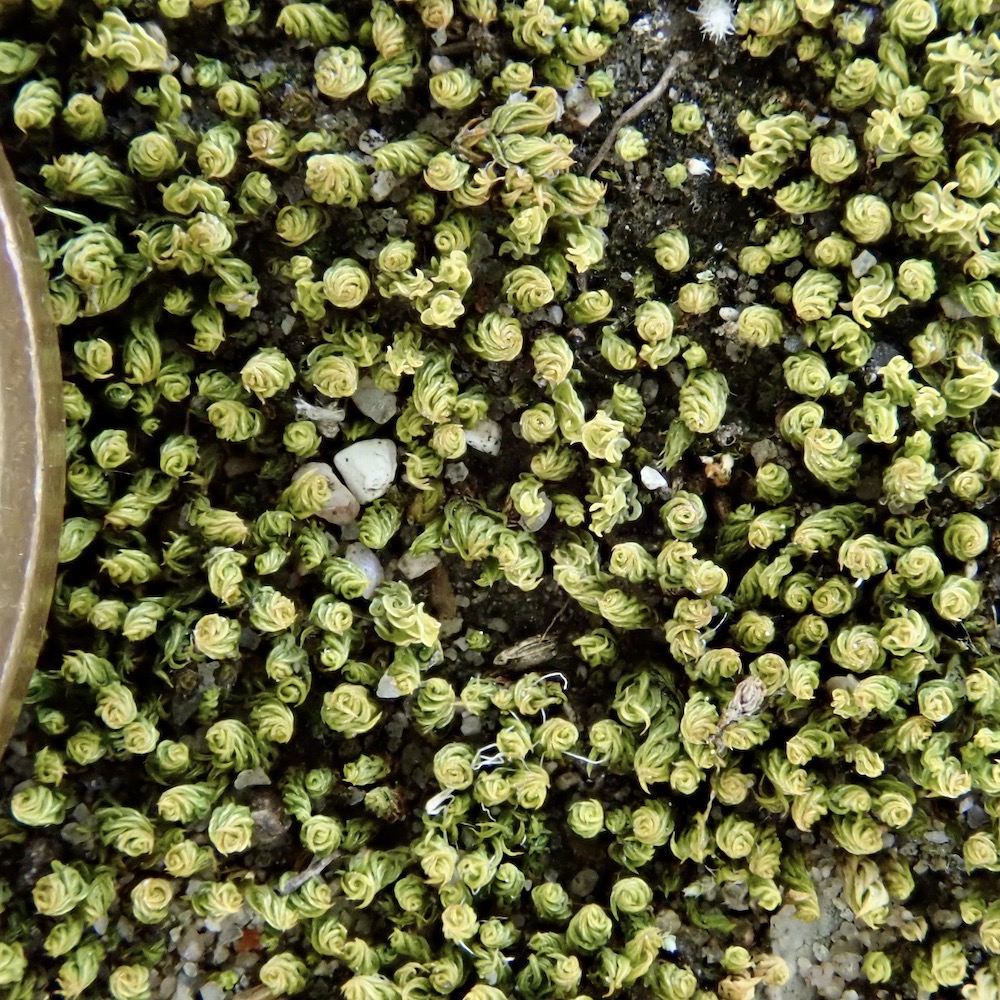

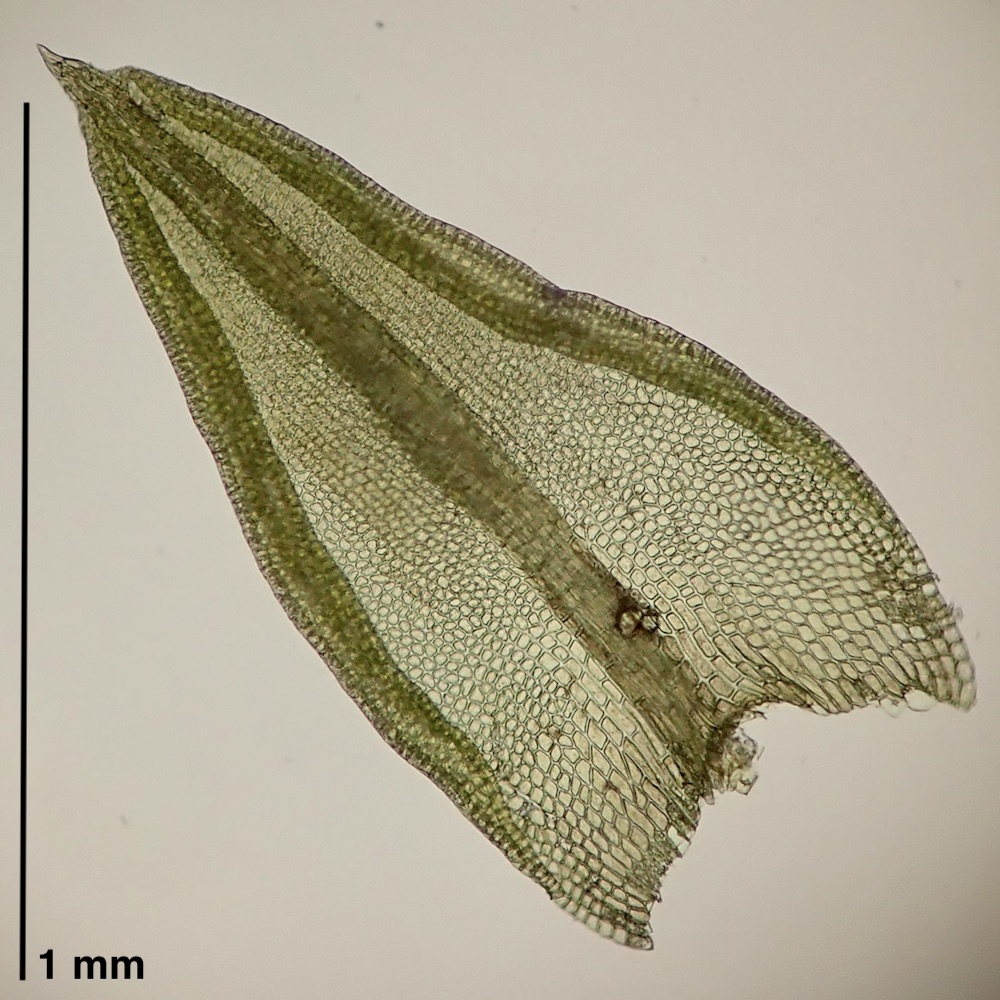
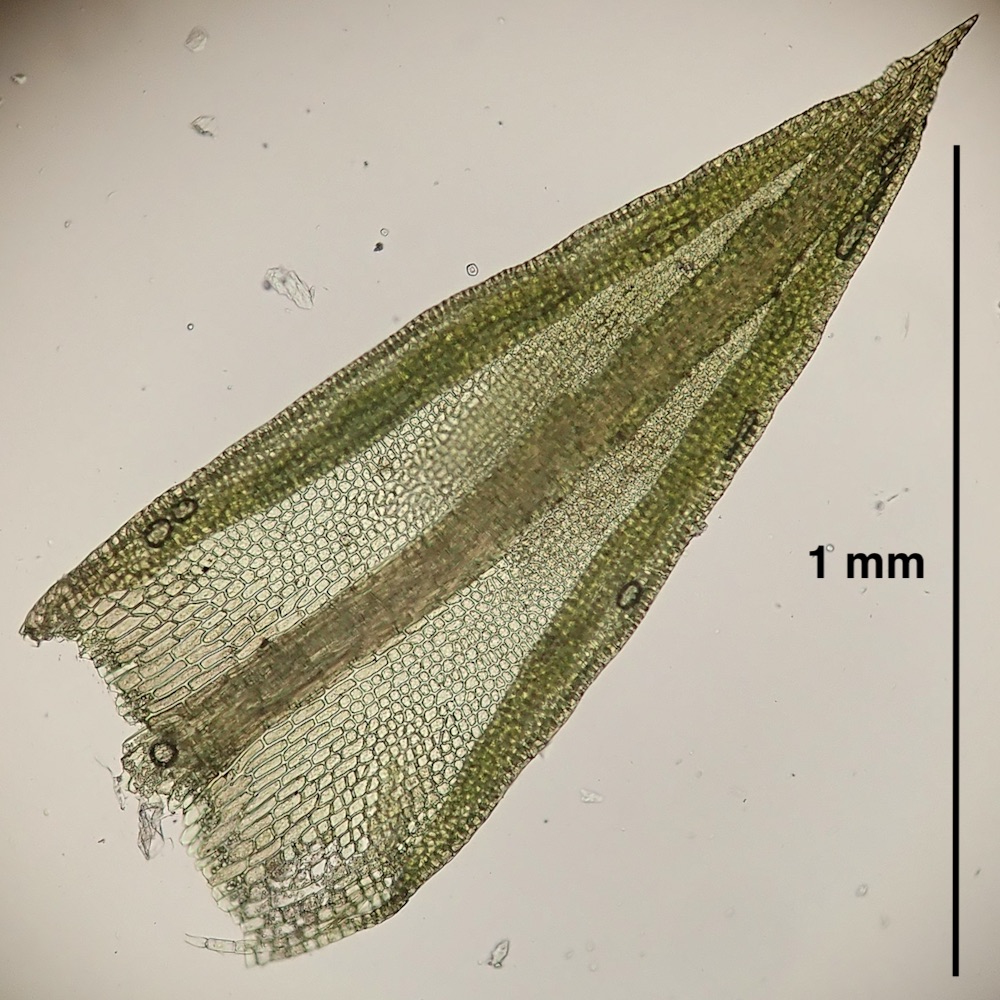
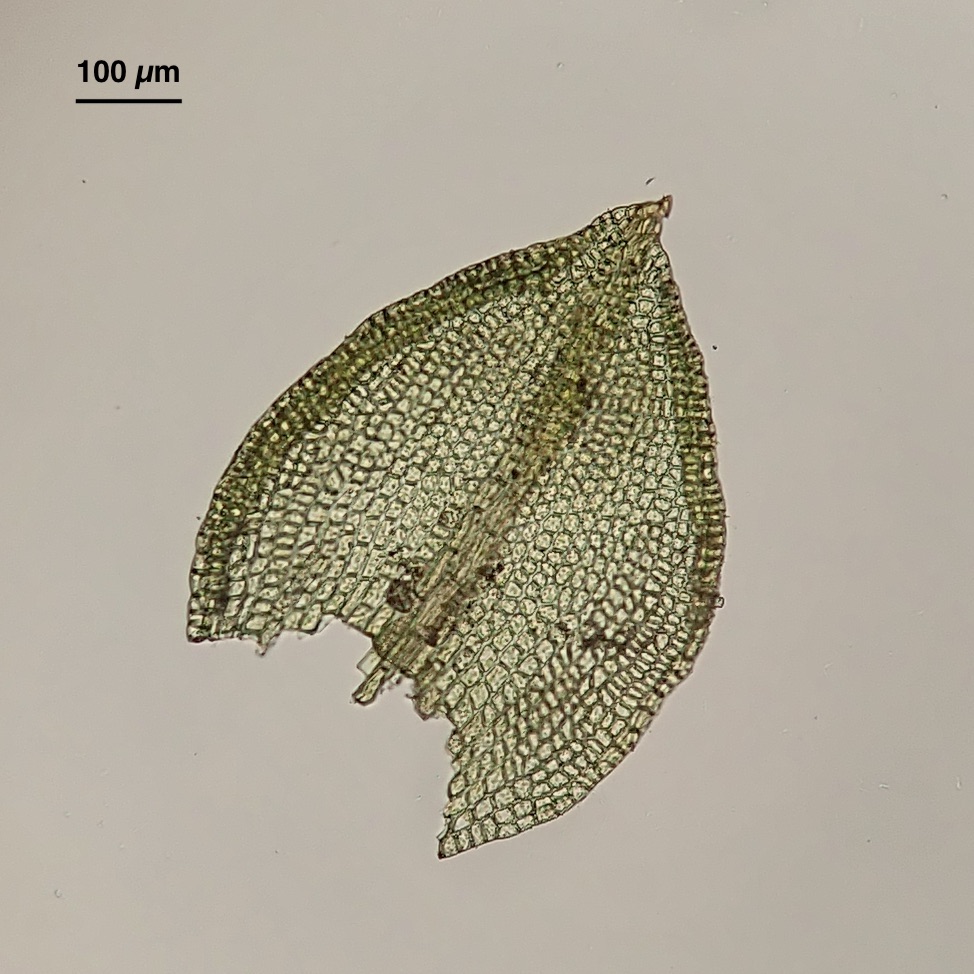
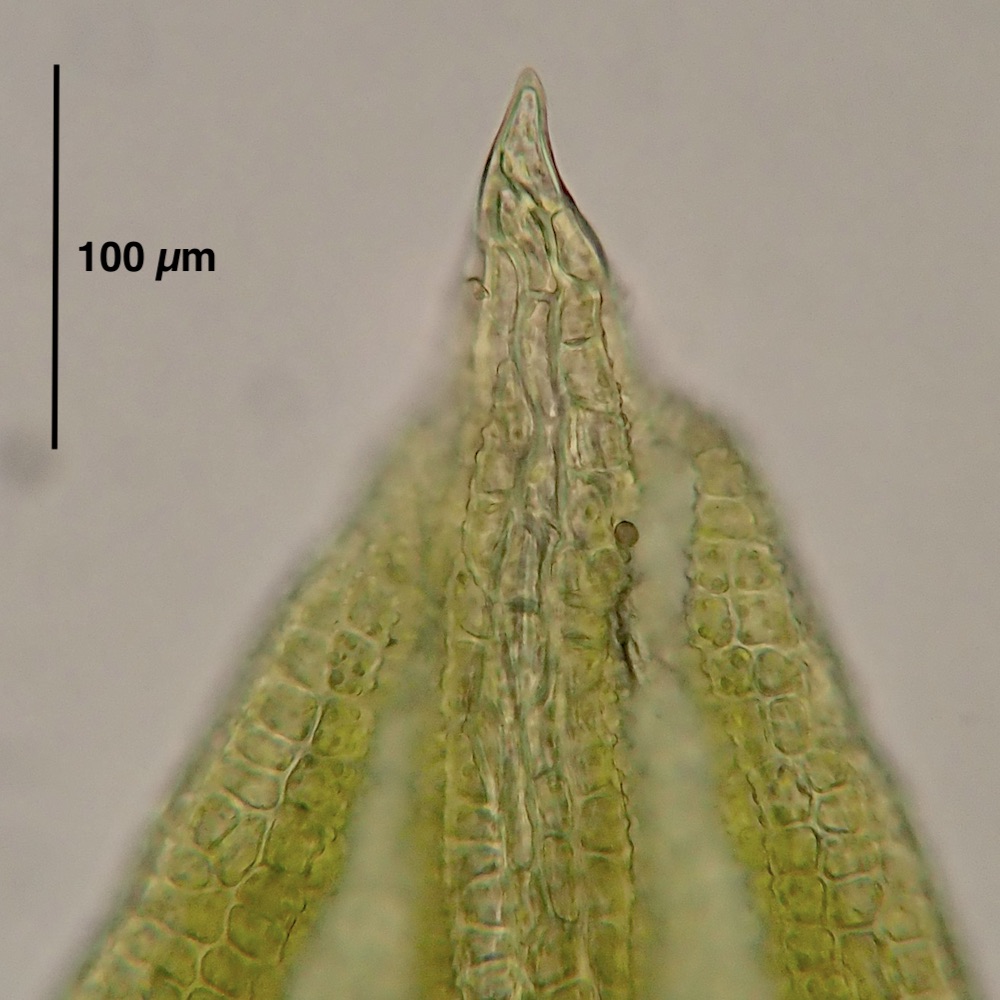
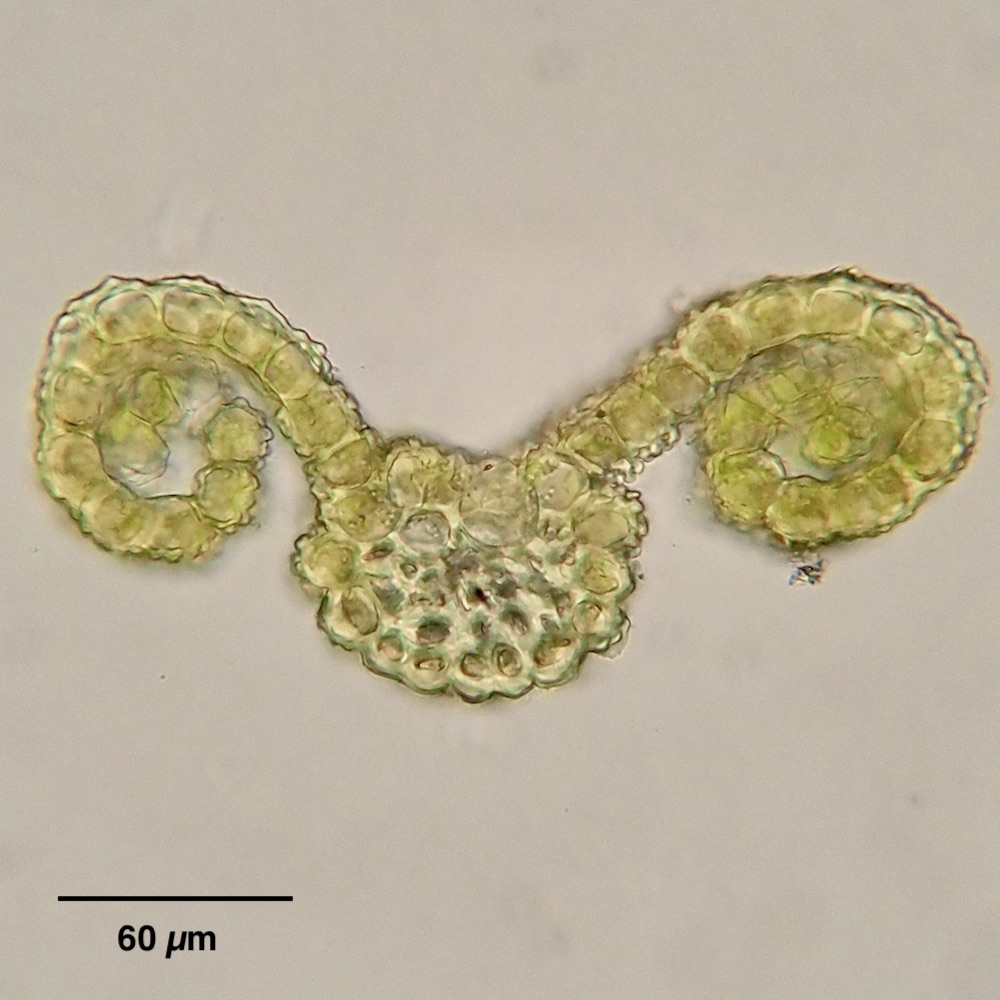
Leaves: From a distance in the field, Pseudocrossidium obtusulum leaves appear rather triangular and thick. Upon closer inspection under the microscope, most leaves have a bit of a flared base (ovate to ovate-deltoid). Smaller leaves tend to be more ovate, whereas larger leaves seem to be more deltoid. The sturdy midrib (costa) extends slightly beyond the leaf tip, ending in a sharp point (mucro). The margins of the leaves are said to be “revolute”, that is, they curve back in tight coils of one or two revolutions, from the tip of the leaf nearly to the base. This is most easily seen by making cross-sections, but is evident even in the field as a thickening along the edge of the leaf. In cross-section, one can also see 2-3 large empty guide cells within the costa, which helps to distinguish the species from the closely related P. replicatum, which has 4-6 guide cells at mid-leaf. The surface of the leaf cells is covered with a dense layer of papillae, outgrowths which help to collect and retain water.


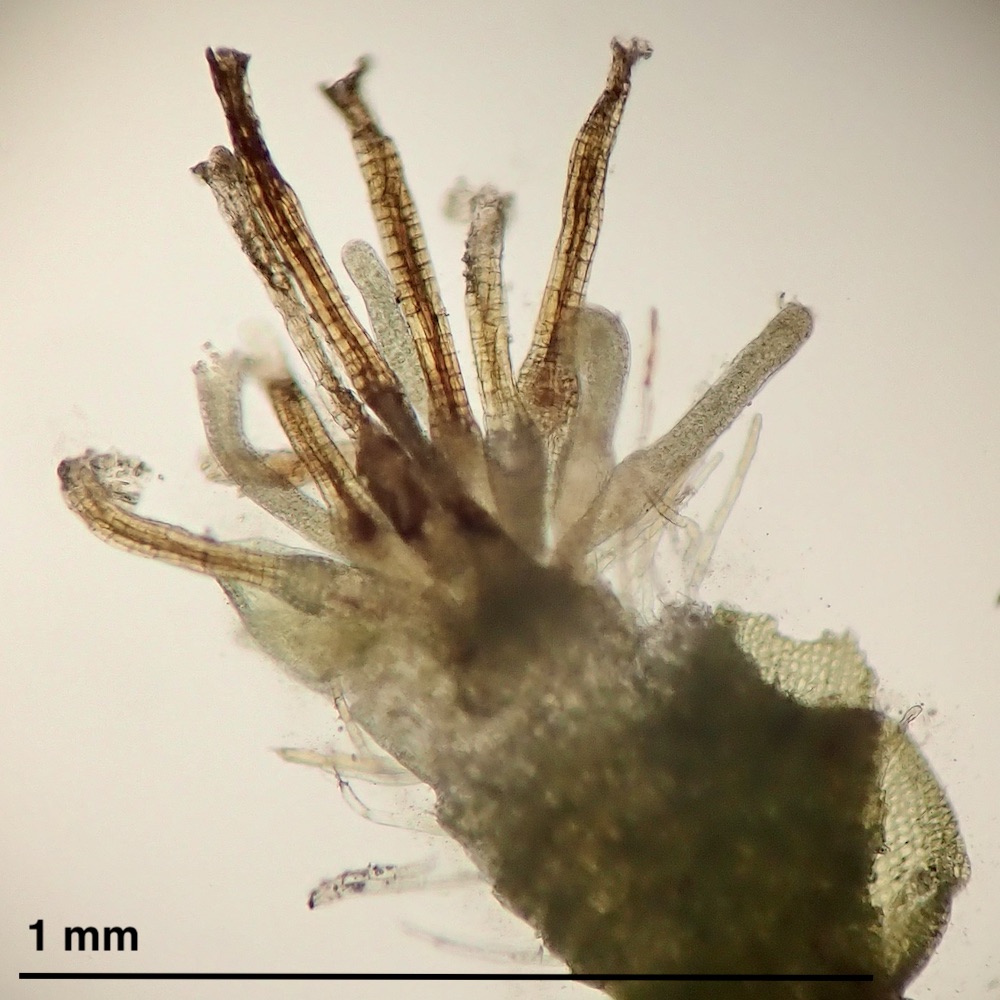
Sporophytes: Sporophytes appear to be rare on Pseudocrossidium obtusulum as I have yet to encounter them here in Santa Barbara County, or elsewhere in California. Many of the plants I’ve examined do have archegonia, though antheridia seem to be lacking, thus eggs are never fertilized to form a zygote which would develop into a sporophyte. Nevertheless, several of the populations I’ve seen cover several square meters, suggesting that asexual propagation is quite successful.
Distribution: Pseudocrossidium obtusulum is found across California, into Oregon, Washington and British Columbia, with scattered collections in other Western states, Greenland and Europe. The FNA also reports many collections from Alaska.

 Bryophytes of Santa Barbara