
Pleuridium acuminatum Lindberg
Pleuridium acuminatum is a very small, ephemeral, acrocarpous moss, with long narrow leaves tapering to a wispy point and surrounding a short but conspicuous sporophyte. It forms loose to dense turfs on exposed soil of disturbed areas, particularly grasslands but also along trails, in full sun or partial shade.
Scroll down for more photos (click to enlarge) and descriptions of habitat, plants, leaves, sporophytes, distribution map, name origin, and similar species.
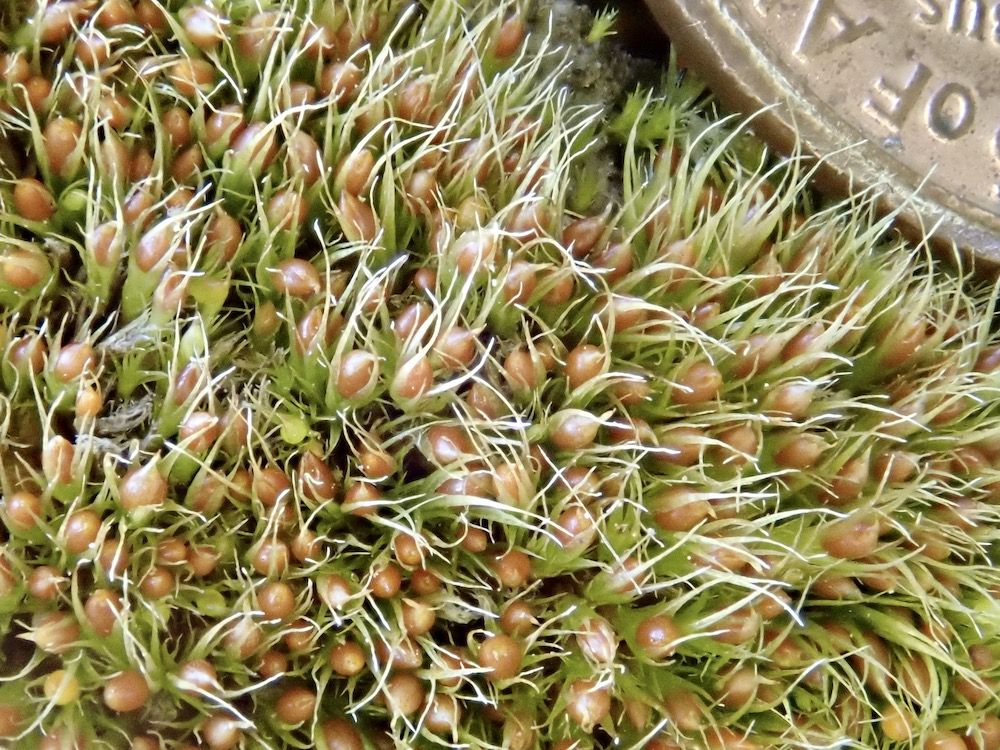
Habitat: Pleuridium acuminatum grows on disturbed soil in fields and along trails, often in full sun.


Habit: Pleuridium acuminatum forms loose to dense tufts or turfs, often in the company of other ephemeral moss species. Plants are erect, mostly unbranched, and light green, with long narrow leaves tapering to a fine point, giving the tuft a fuzzy appearance. Sporophytes are nearly always present, buried within the wispy leaves but easily seen, particularly as the capsules ripen and become a chestnut brown.


Plants: Pleuridium acuminatum plants are small (4-6 mm), erect, usually unbranched, with sporophytes immersed among the long narrowly tapering leaves, which are mostly erect, slightly more open when moist than when dry. Plants are monoikous, with each individual bearing both male and female organs, and consequently nearly always have sporophytes. Male organs (antheridia) are naked on the stem just below the perichaetium at the shoot apex, which initially houses the female organs (archegonia) and ultimately, once the egg is fertilized, houses the sporophyte. In contrast, the antheridia of Pleuridium subulatum are enclosed in bracts below the perichaetium, appearing as a dwarf male branch. However, I suspect that there are intermediates, as I have found plants with bistratose leaves (see below) and antheridia on the stem in the same clump with plants with bistratose leaves and antheridia in dwarf branches.

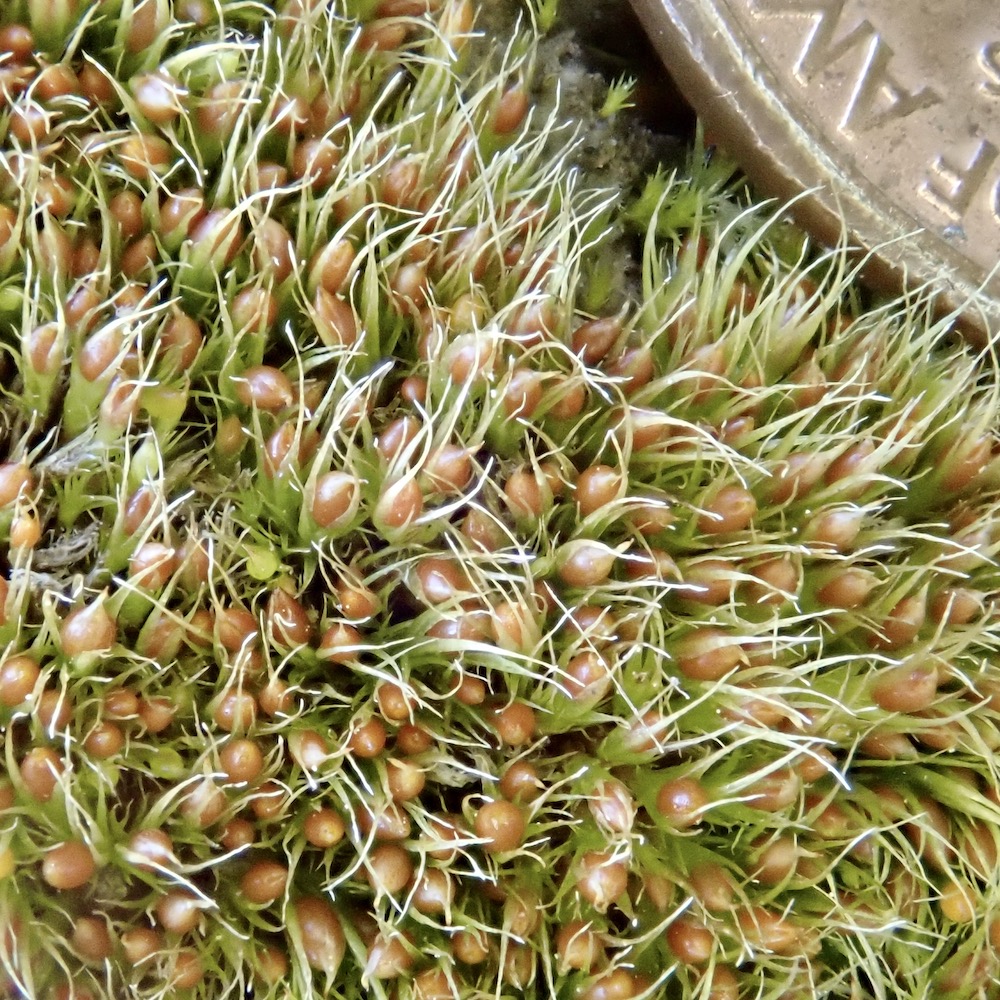

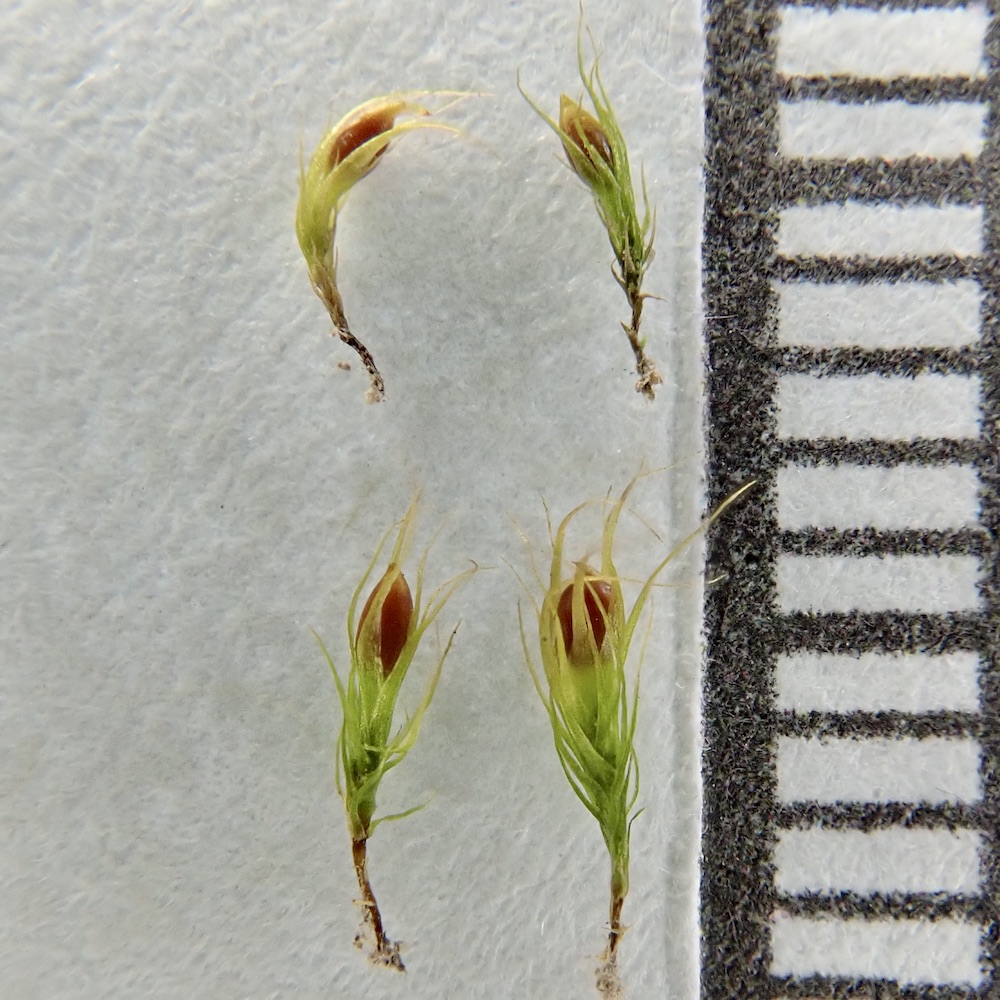


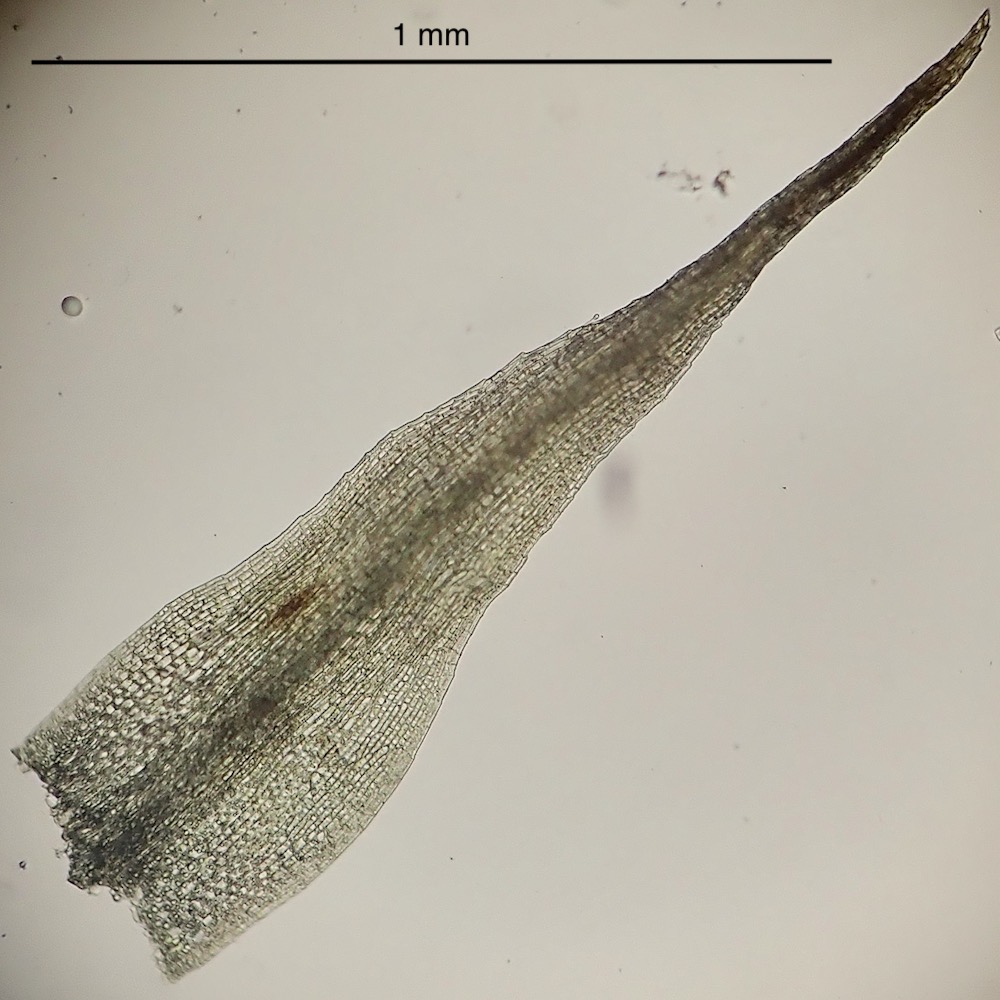
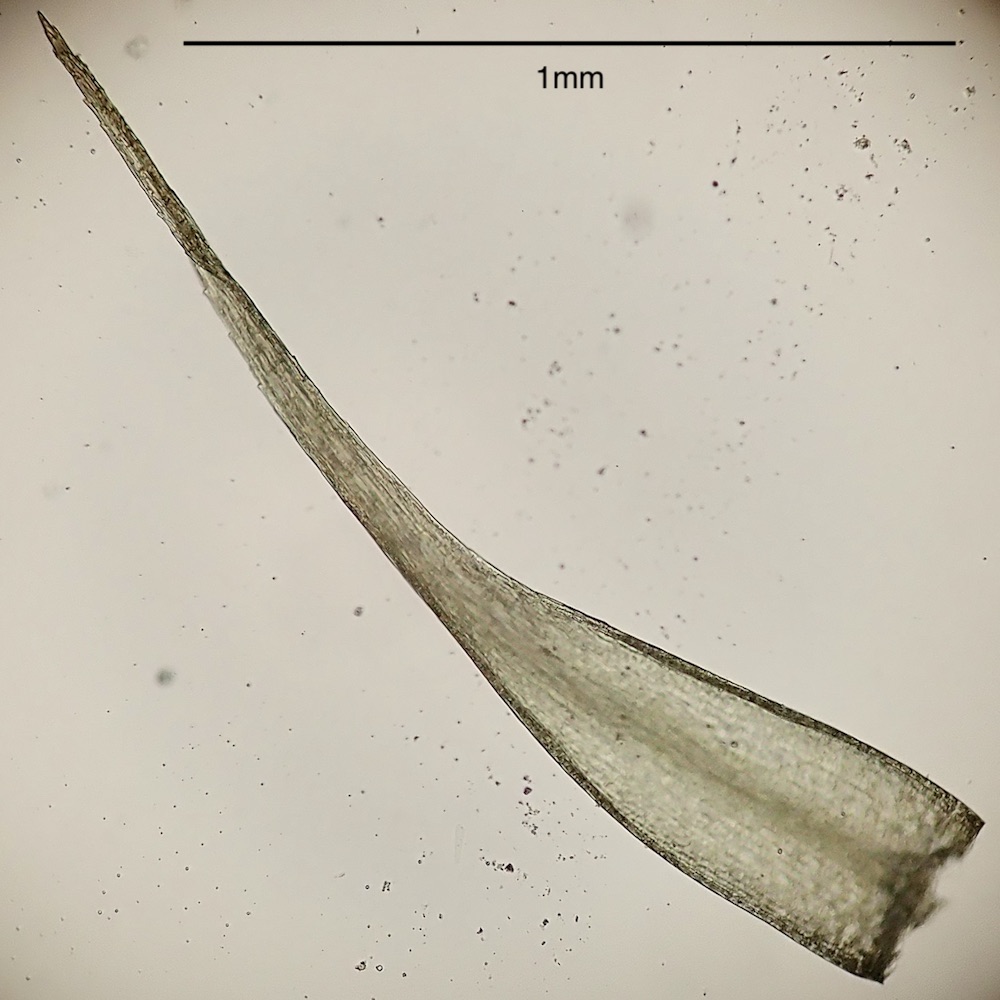
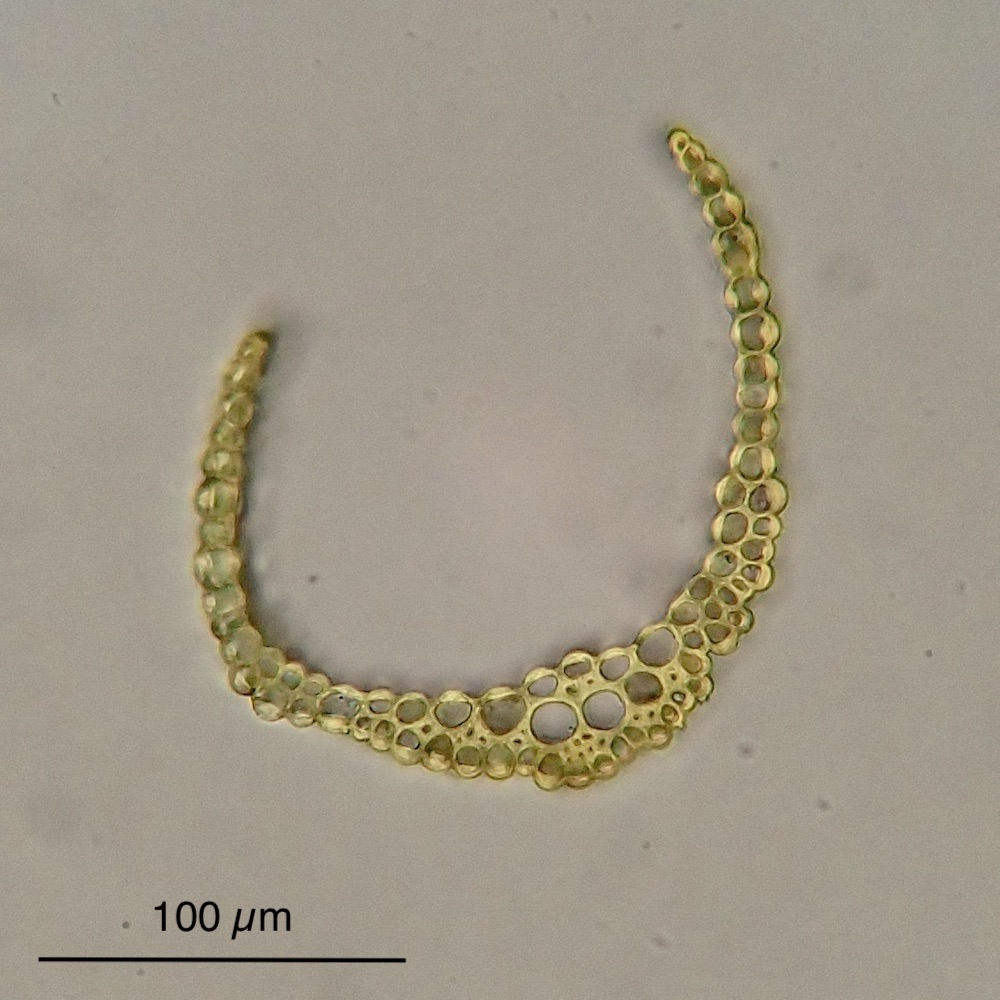
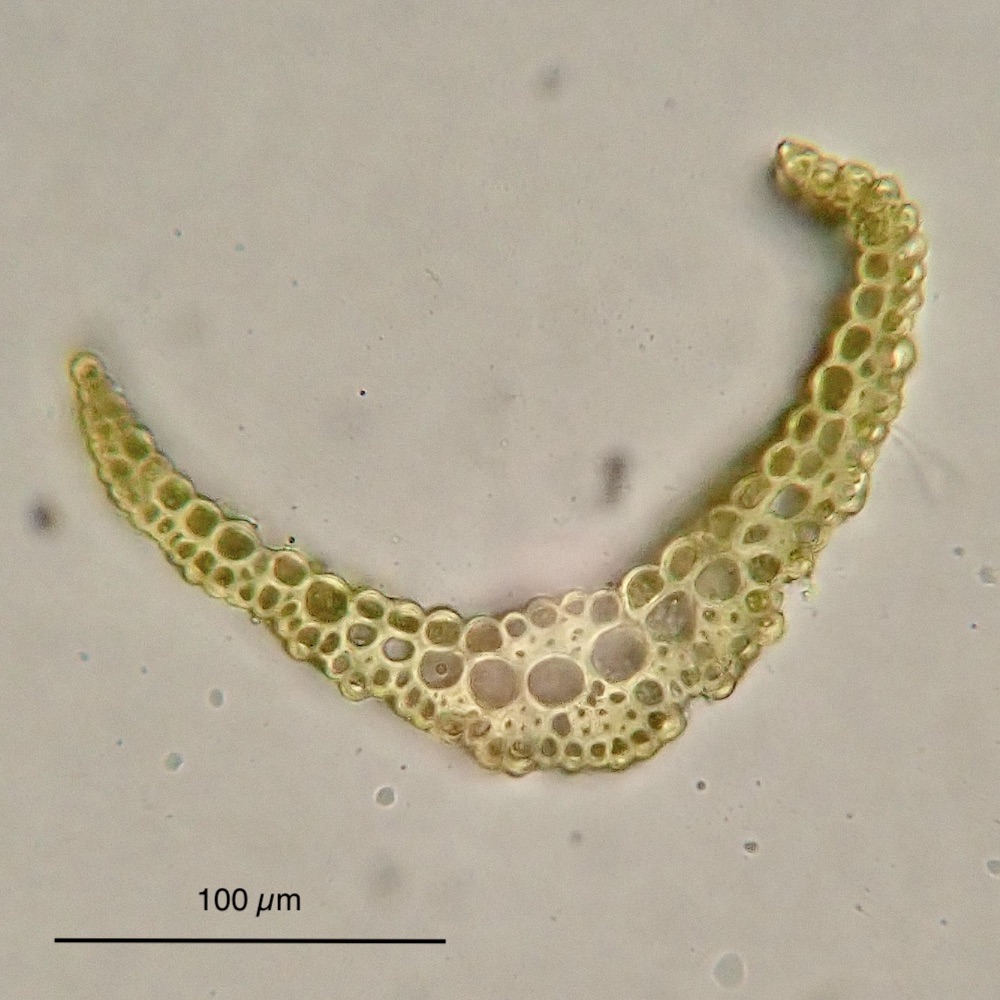
Leaves: Pleuridium acuminatum leaves are awl shaped (subulate), with a broad base, tapering to a long pointy tip. Some leaves taper rather abruptly creating a shoulder, whereas others taper more gradually. The upper leaves which surround the sporophyte (perichaetial leaves) are much longer than the lower leaves. The upper portion of the leaves is bistratose (composed of two layers of cells), a character which helps to separate the species from Pleuridium subulatum, whose leaves are unistratose throughout. Leaf tip margins are slightly toothy (serrulate) and slightly inrolled. The midrib (costa) is very wide at the base.


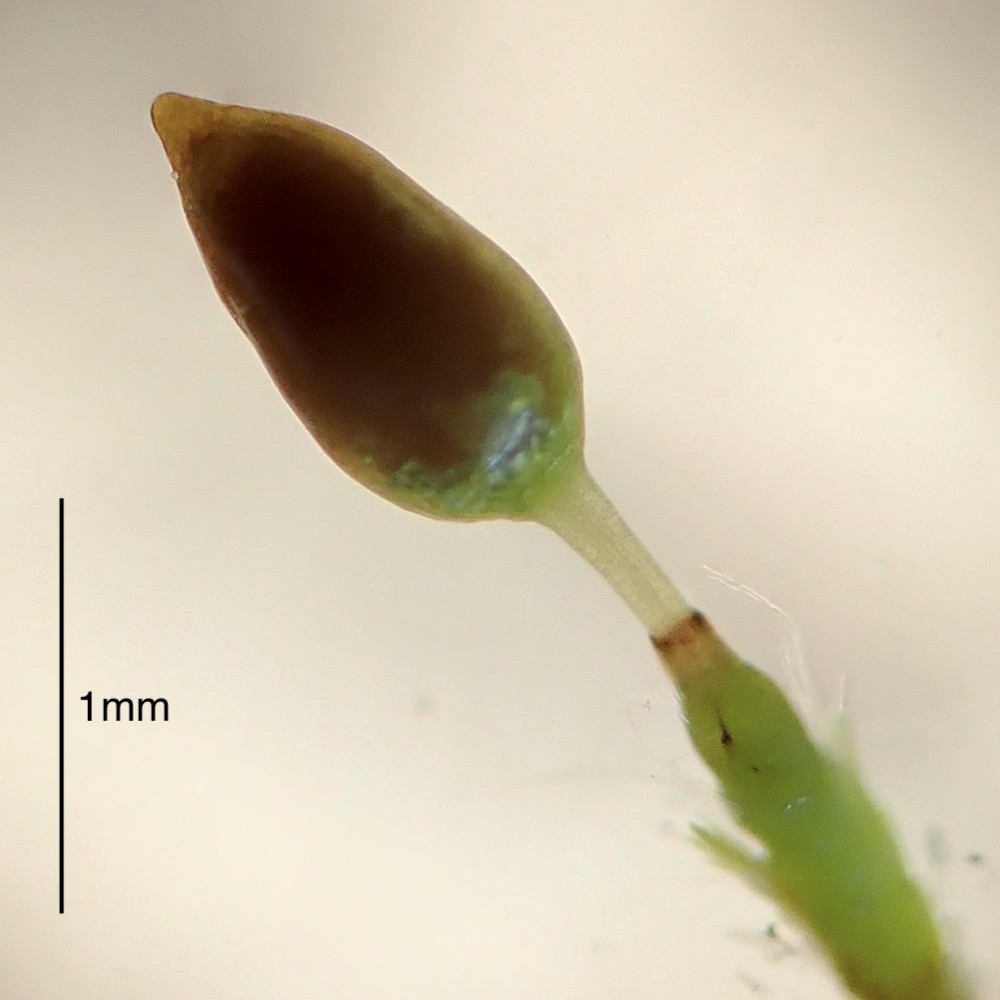
Sporophytes: Pleuridium acuminatum sporophytes are short (about 2 mm) and nestled within the long slender perichaetial leaves. The chestnut brown capsules are oblong with a bump on top (apiculus), and are cleistocarpous, that is, they lack a discrete lid (operculum) and simply decay to release the mature spores. The stalk (seta) is very short (about 0.5 mm). The calyptra, which protects the capsule during development, is hood-shaped (cucullate).

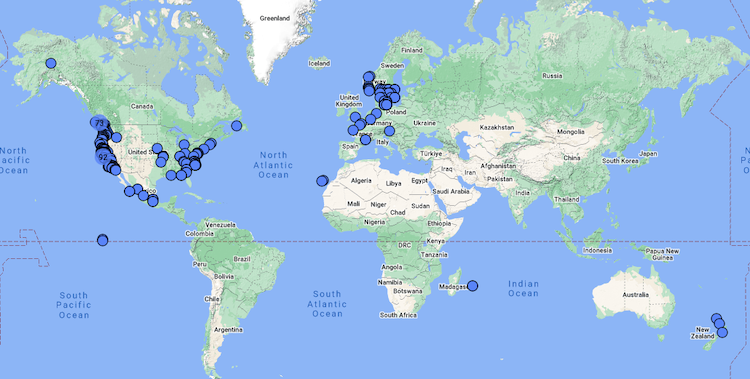
Distribution: Pleuridium acuminatum is found in North America, Europe, Africa, China and New Zealand.
 Bryophytes of Santa Barbara