
Hennediella stanfordensis (Steere) Blockeel
Hennediella stanfordensis is a small (0.5-1 cm), somewhat ephemeral, acrocarpous moss, with a rather floral look. Plants are translucent medium green when thoroughly wet, but quickly become a lighter, brighter, matte green when merely moist. Leaves are elliptic with a sturdy costa, distinctive stout teeth at the apex, and a bistratose border made up of long papillose cells. Hennediella stanfordensis thrives in ruderal areas with a fair amount of human disturbance, but can also be found in coastal sage scrub or chaparral.
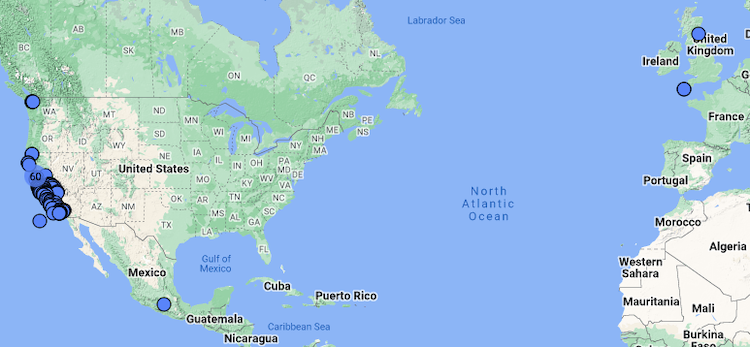
Scroll down for more photos (click to enlarge) and descriptions of habitat, plants, leaves, distribution map, and name origin.

Habitat: Hennediella stanfordensis thrives in ruderal areas with a fair amount of human disturbance, such as along trails, and at rest areas and playgrounds, but it can also be found at the base of shrubs in coastal sage scrub or chaparral, in partial shade or full sun.


Habit: Hennediella stanfordensis tends to form low, loose carpets in areas of high human disturbance. In more sheltered sites, Hennediella stanfordensis may form denser, taller cushions, which tend to be less ephemeral, with plants persisting for years.
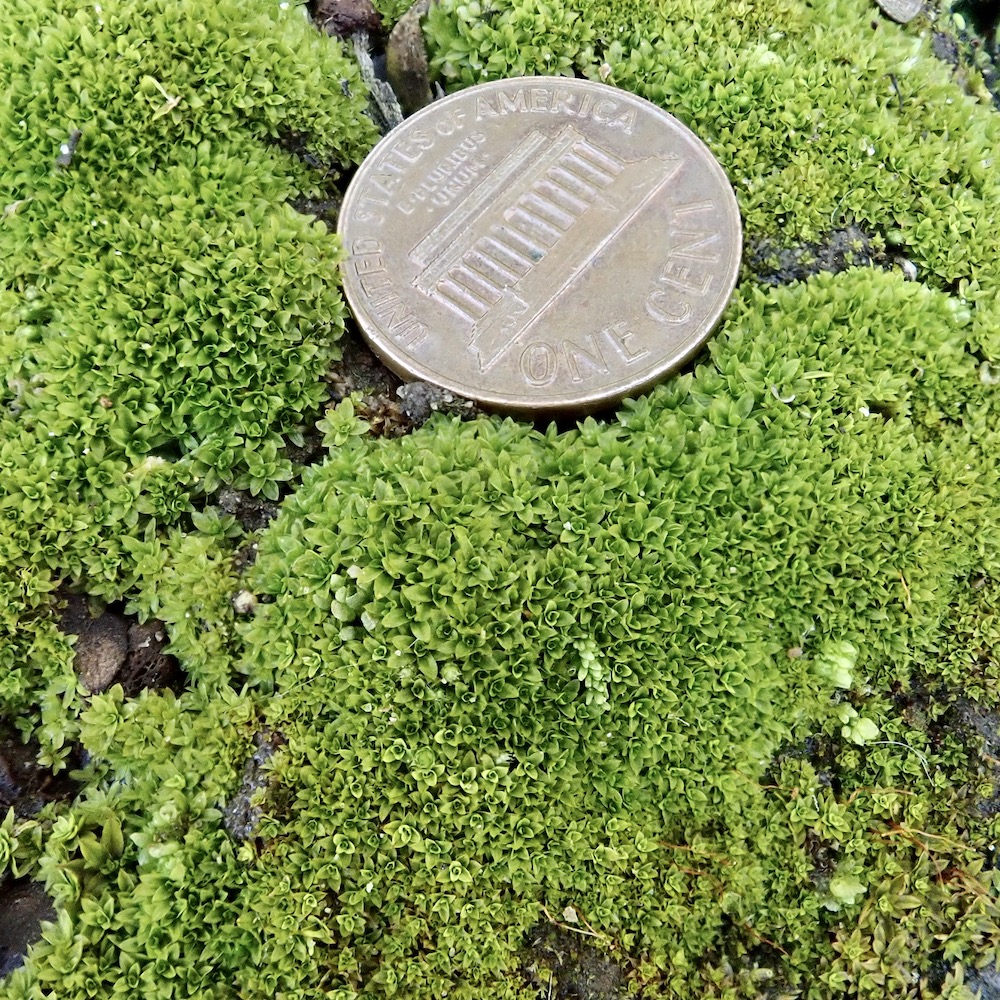
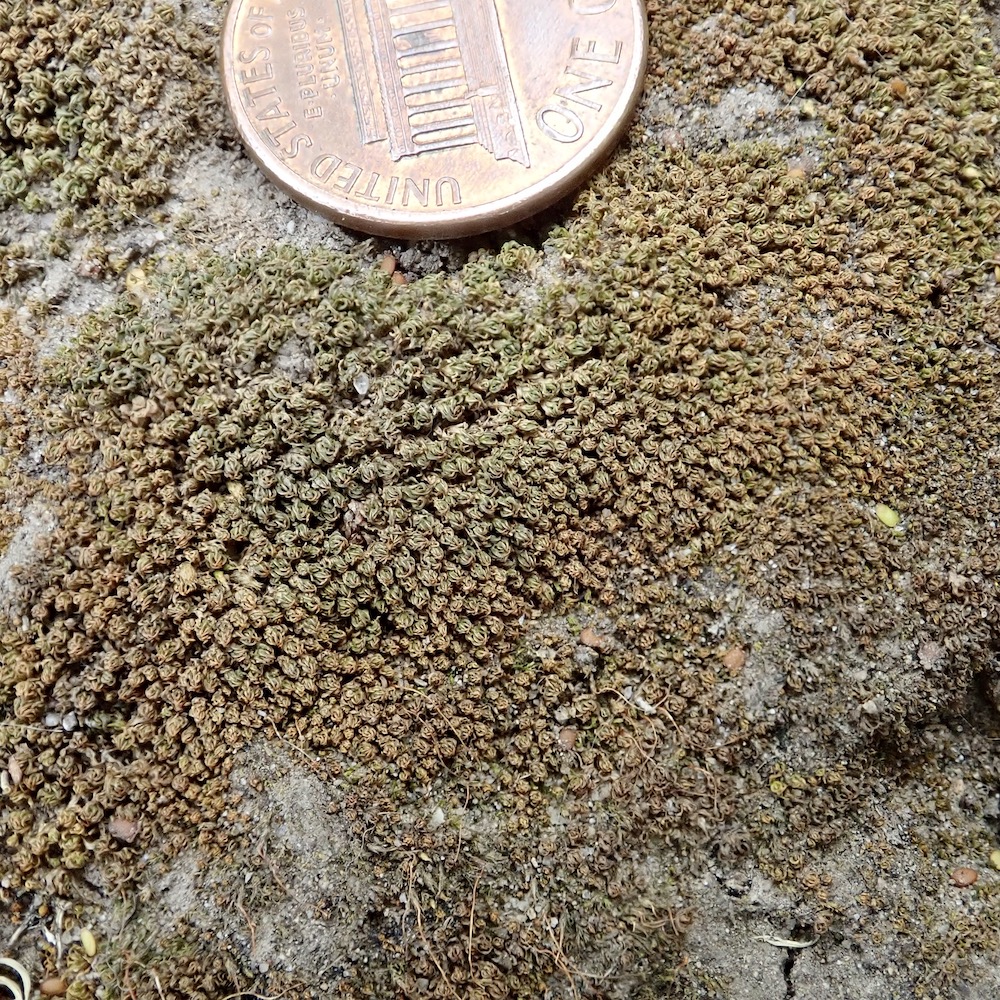
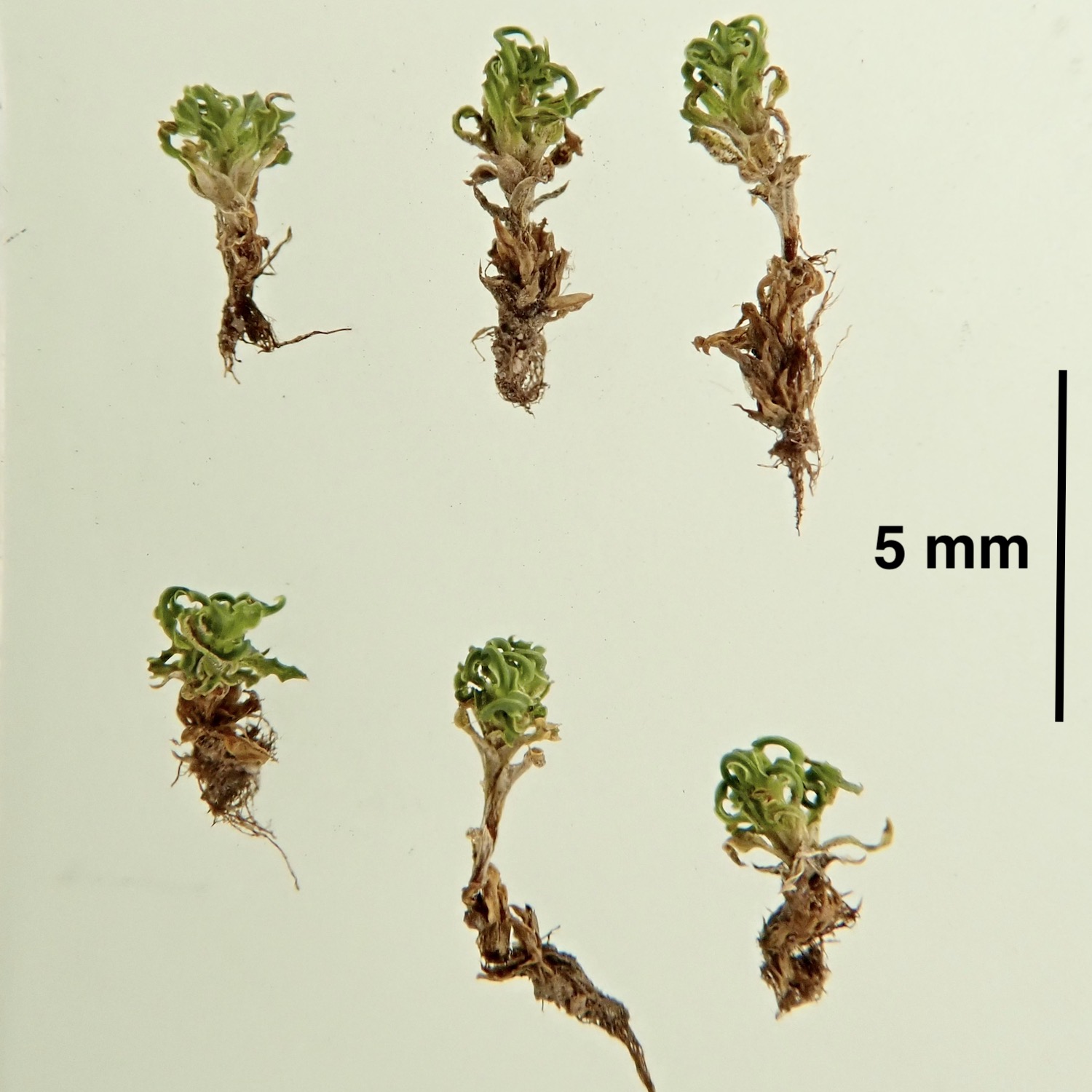
Plants: Hennediella stanfordensis plants growing in loosely scattered populations tend to have an open floral rosette appearance, with larger oblong leaves spreading horizontally, revealing the budlike smaller perichaetial leaves in the center, which tightly surround the archegonia. In tighter cushions, the leaves tend to be more upright, giving the appearance of a flower just beginning to open. Plants are translucent medium green when thoroughly wet, but quickly become a lighter, brighter, matte green when merely moist. When dry, leaves curl revealing the sturdy costa and bistratose margins in a twisted wired ribbon look.


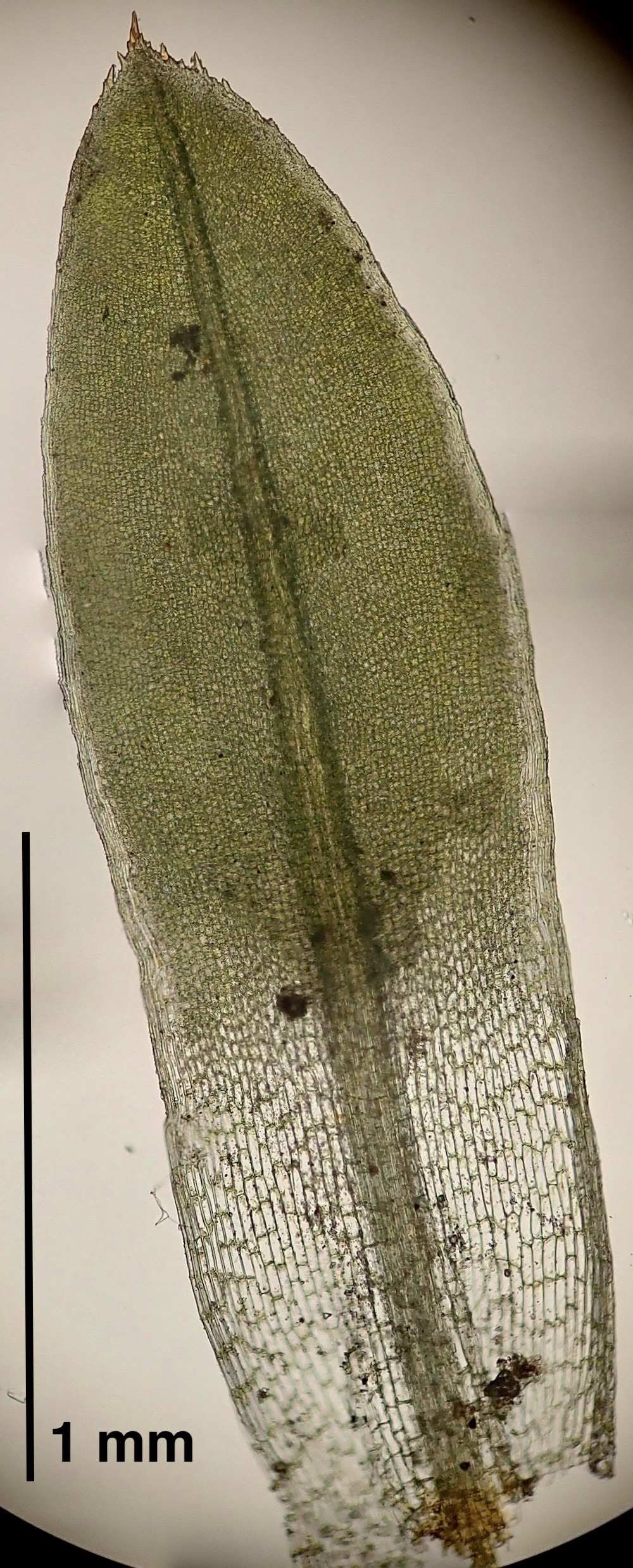
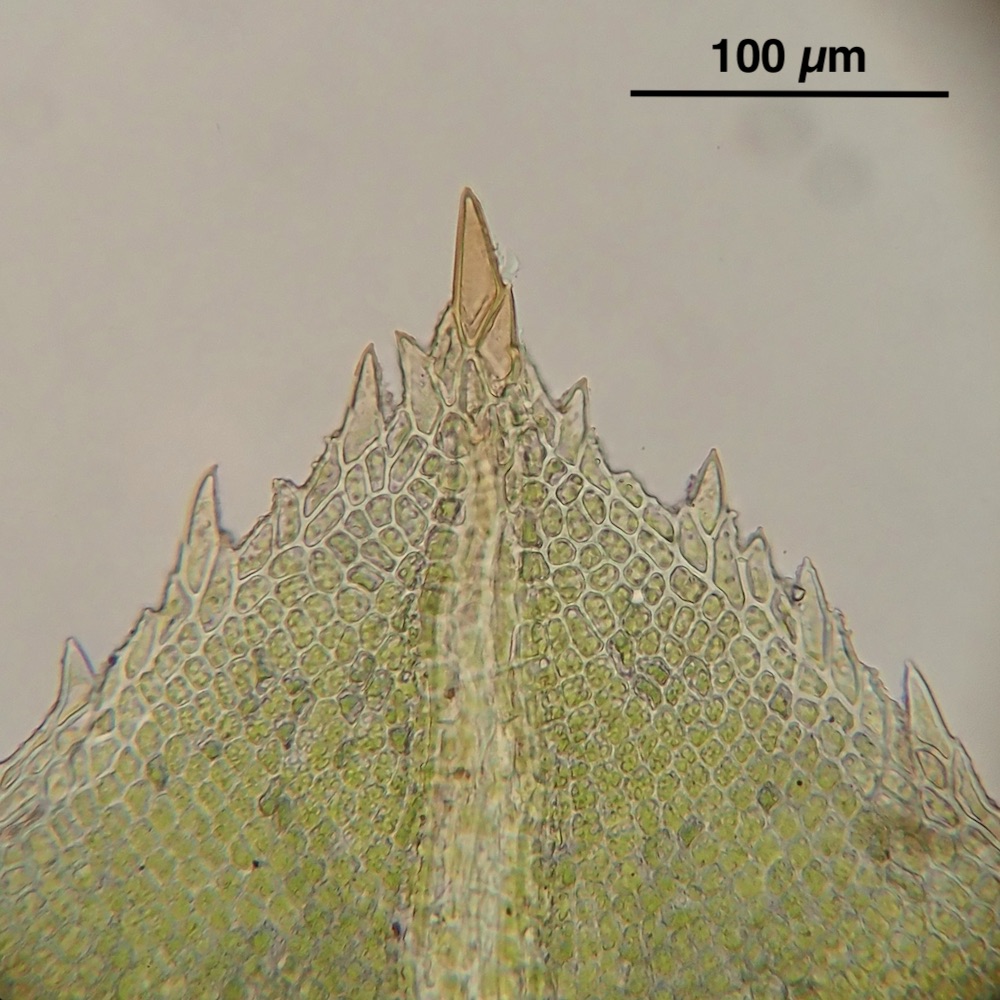
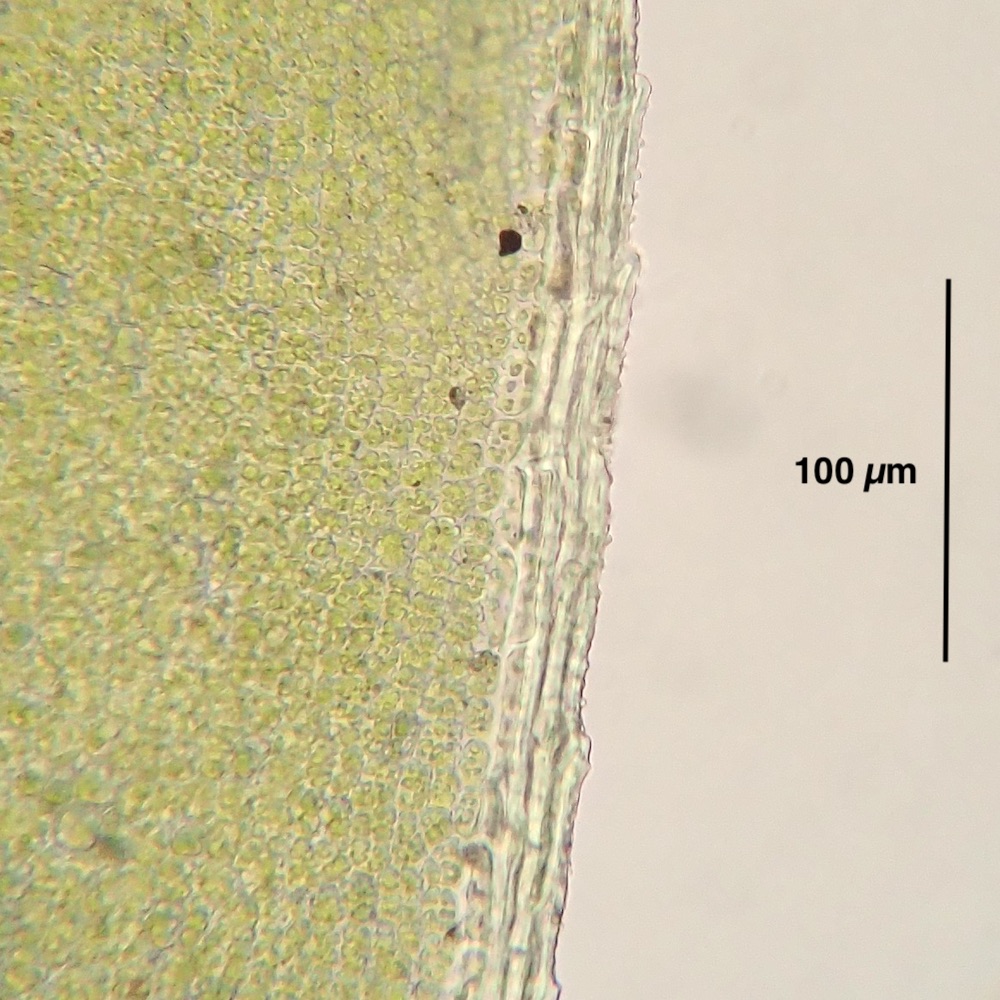
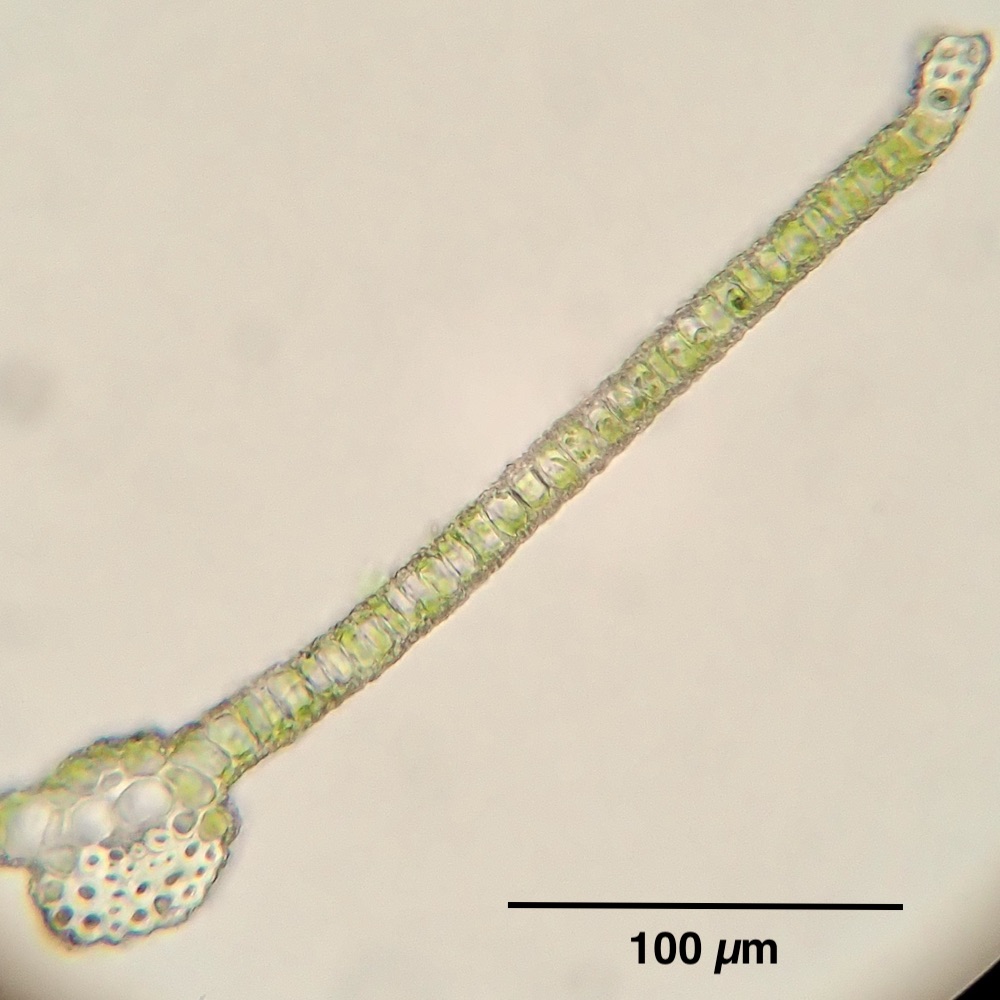
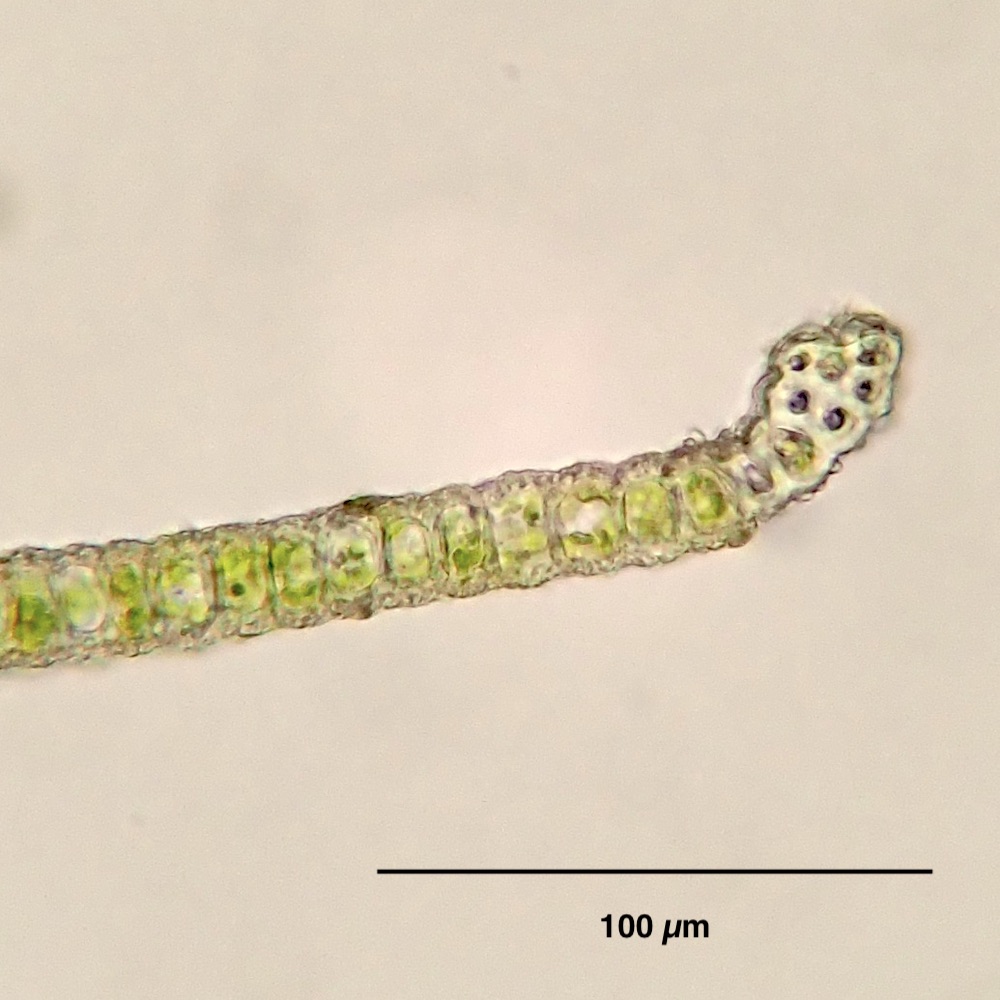
Leaves: Hennediella stanfordensis leaves are oblong to elliptic, 2-3 mm long, with a sturdy costa ending in a serious snaggle tooth, visible in the field with a decent hand lens. The apex of the leaf has several additional large, menacing teeth. Both the upper and lower surfaces of the leaf cells are covered with a dense layer of c-shaped bumps (papillae), contributing to the matte appearance of plants when merely moist. The leaf border is quite unusual in that it is composed of two layers (bistratose) or more (multistratose) of long, narrow cells, which are also papillose.

Sporophytes: Sporophytes have not been seen on Hennediella stanfordensis within California. Most plants I have examined have several archegonia with eggs, apparently waiting in vain for sperm, which never arrive. The species is dioicous, with separate male and female plants, but I have yet to come across a male. I became somewhat obsessed with the question of how an ephemeral moss which does not produce sporophytes manages to replicate itself year after year, and wrote an article about my investigations for Bryolog, the quarterly newsletter of the California Native Plant Society Bryophyte Chapter.

Distribution:
 Bryophytes of Santa Barbara