
Grimmia laevigata (Bridel) Bridel
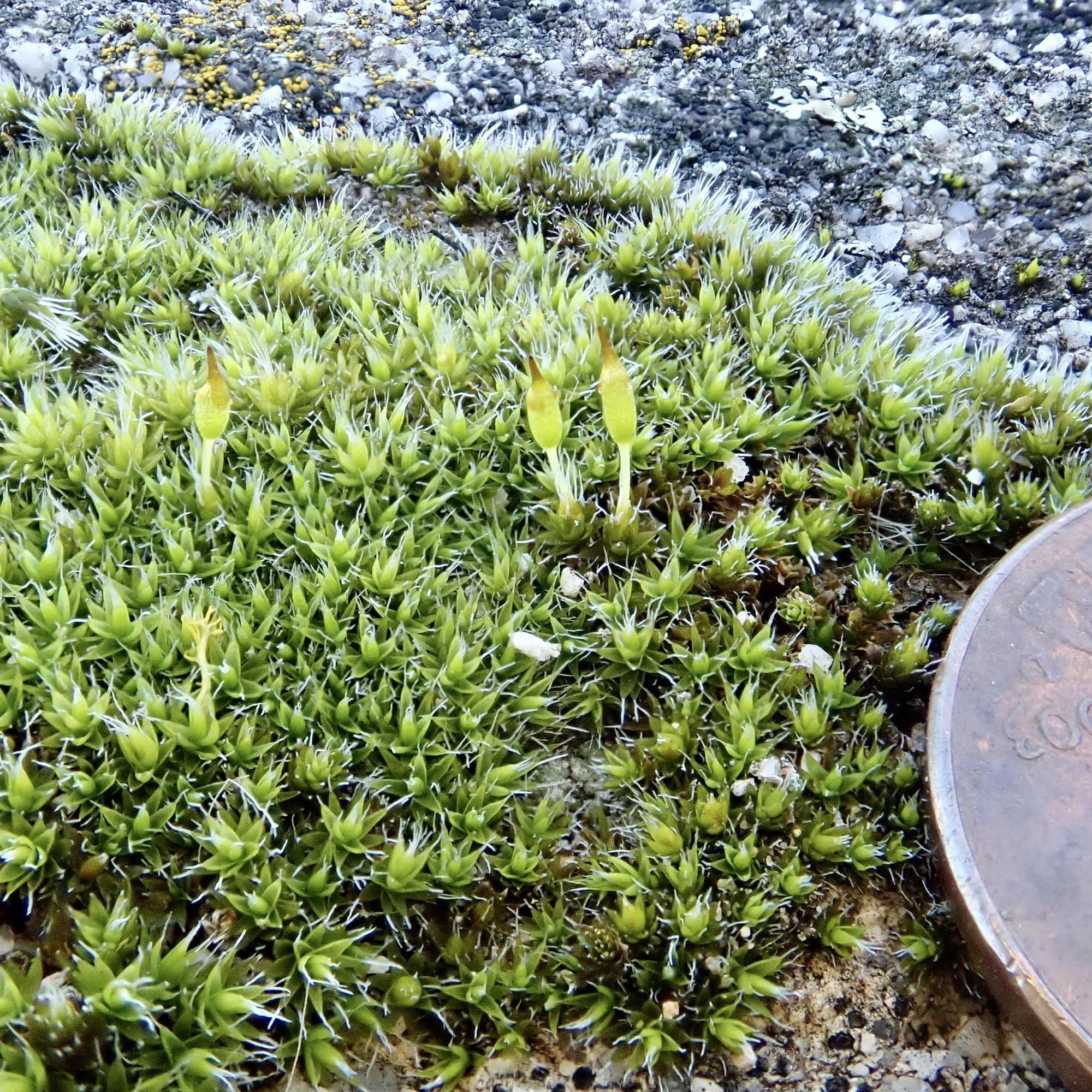
Grimmia laevigata is a medium-sized (0.5-2 cm high), sparsely branched, acrocarpous moss, with long white hair points on the leaves, which lend it a distinctive hoary look. The plants grow in tight rounded mounds or flattened islands, appearing whitish grey when dry, and whitish light green when moist. It is common on rocks and boulders in full sun to dappled shade.
Scroll down for more photos (click to enlarge) and descriptions of habitat, plants, leaves, sporophytes, distribution map, name origin, and similar species.
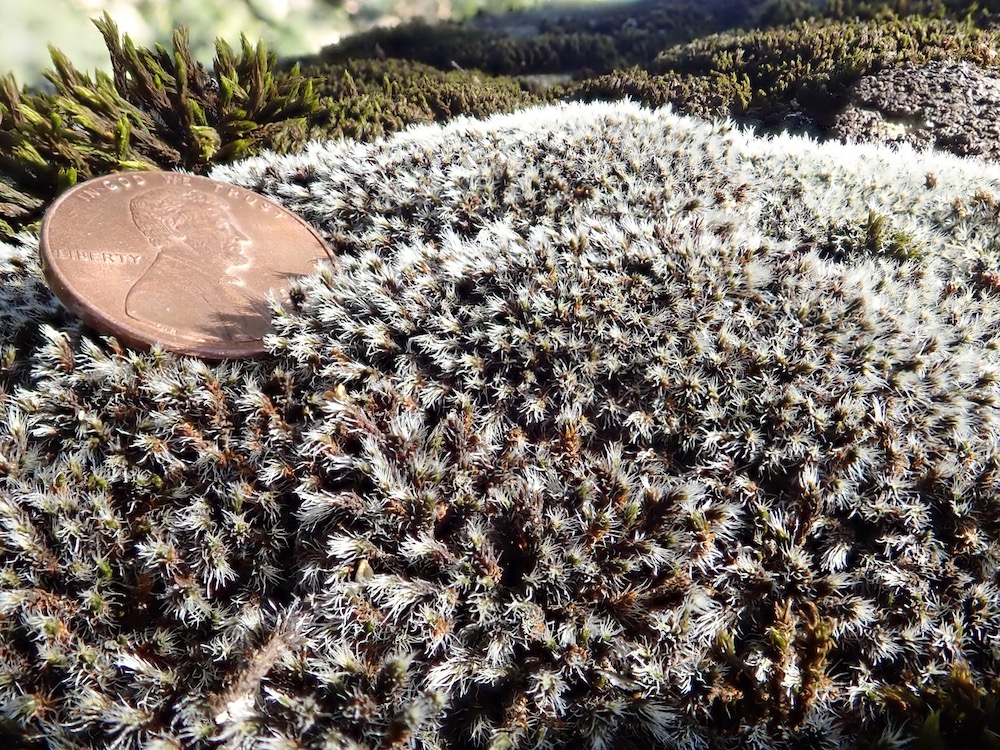
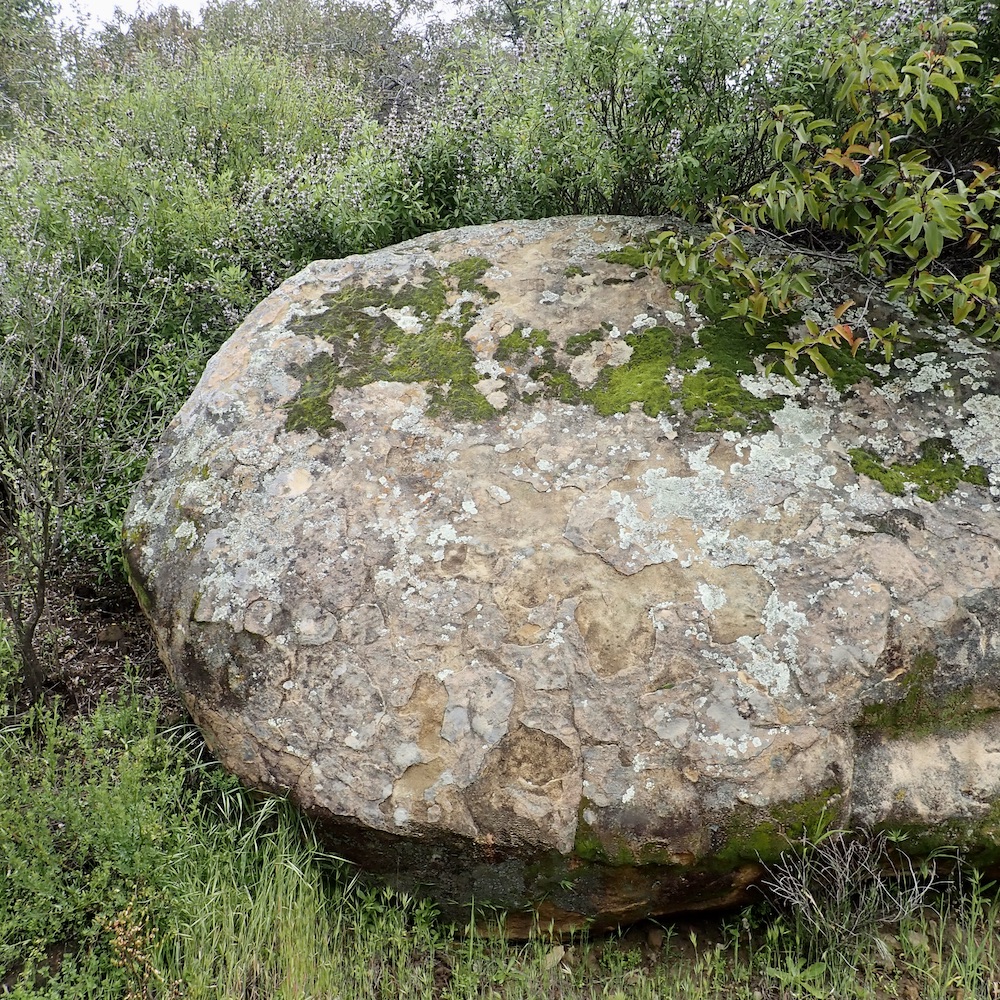
Habitat: Grimmia laevigata grows on rocks and boulders in full sun to dappled shade.
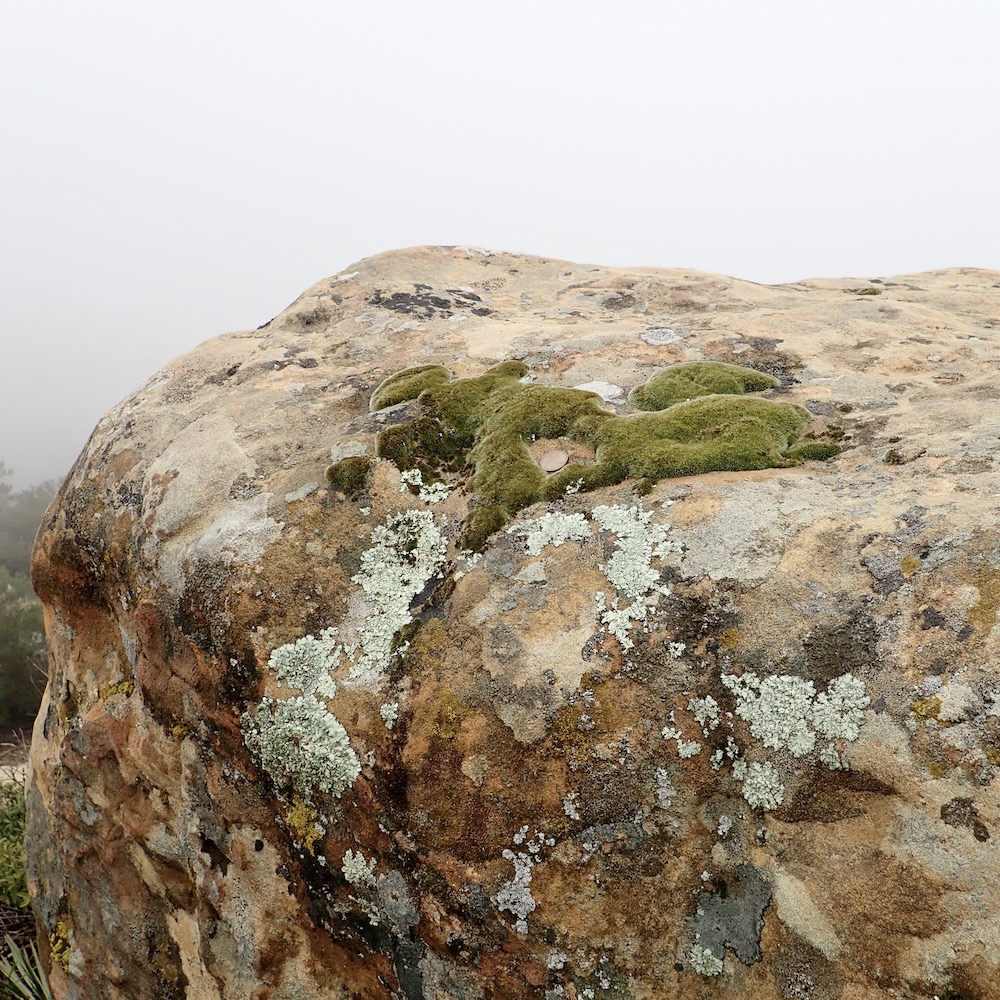
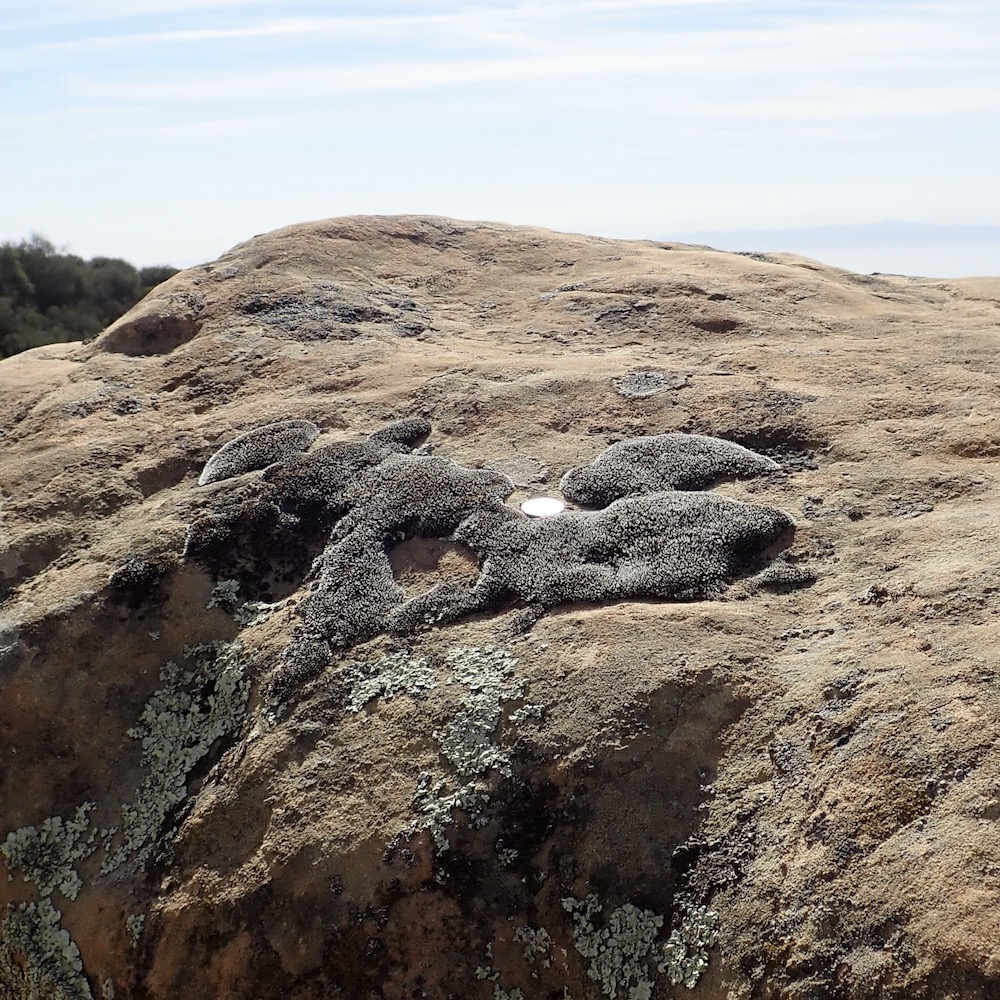
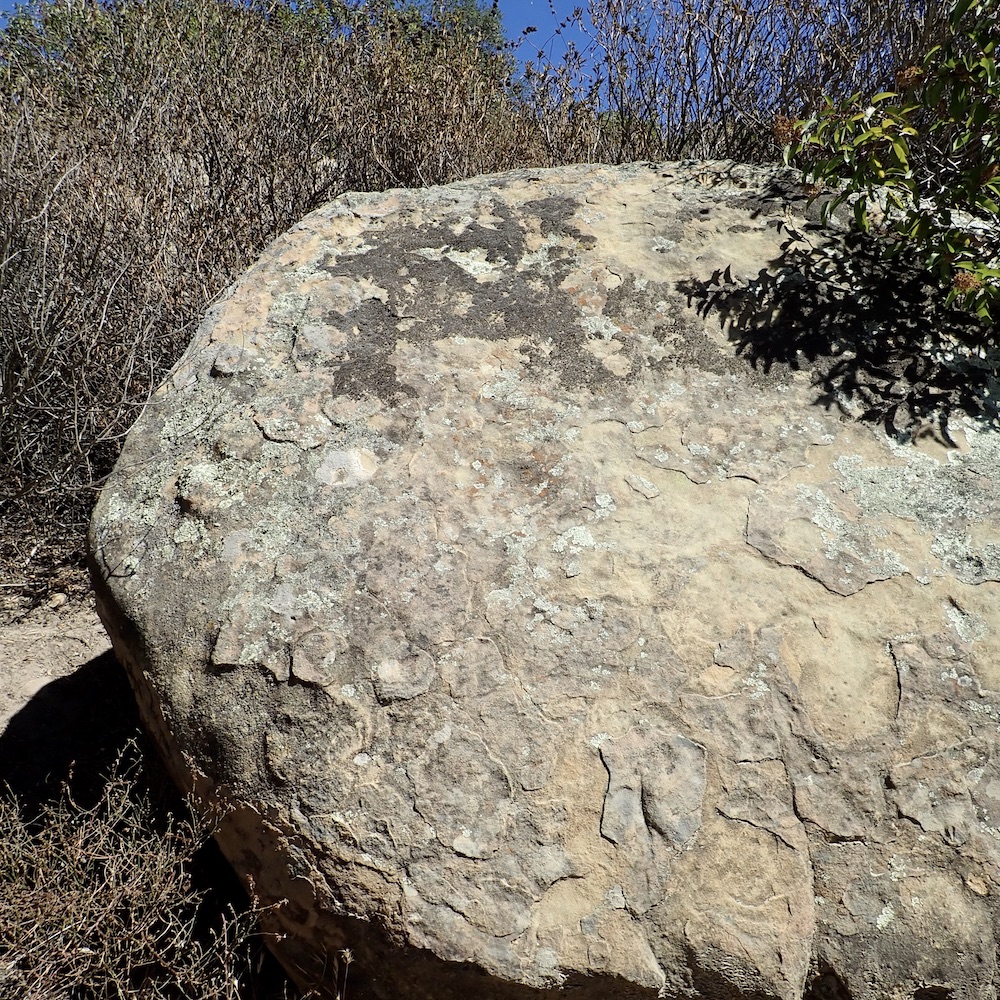
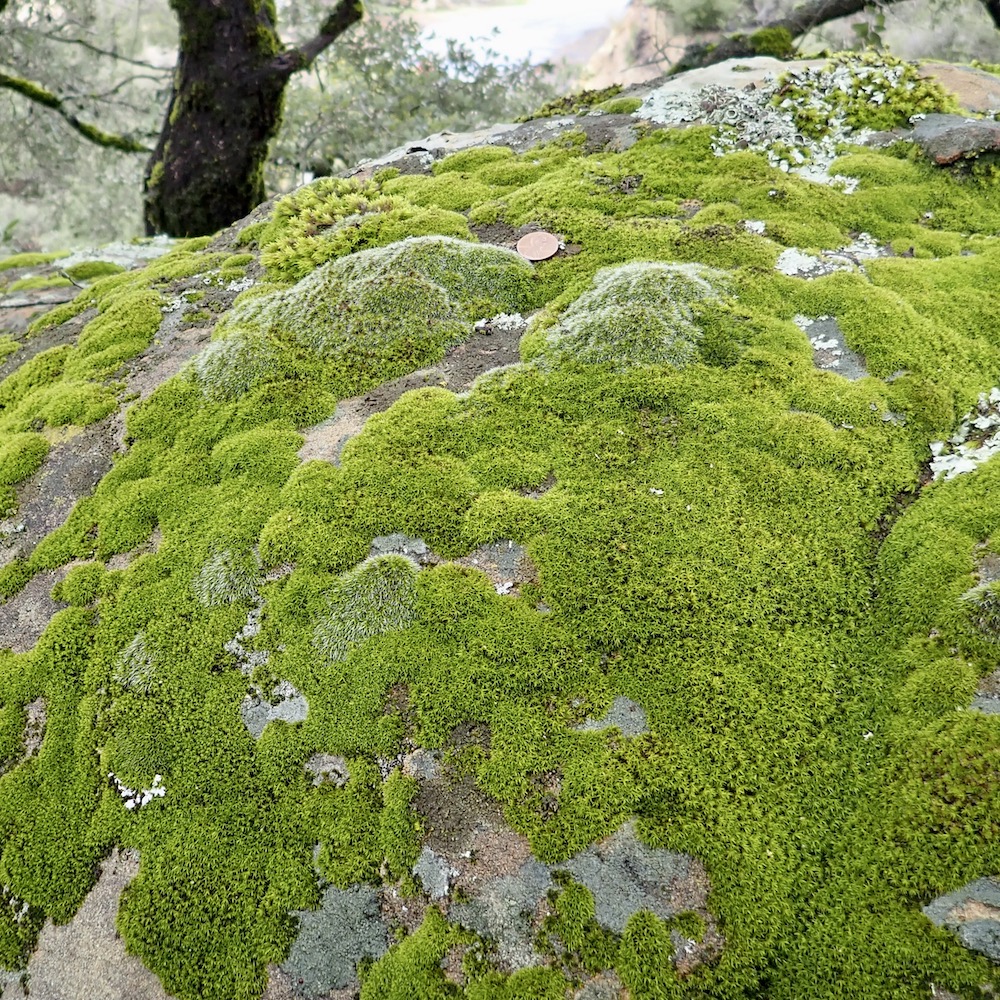
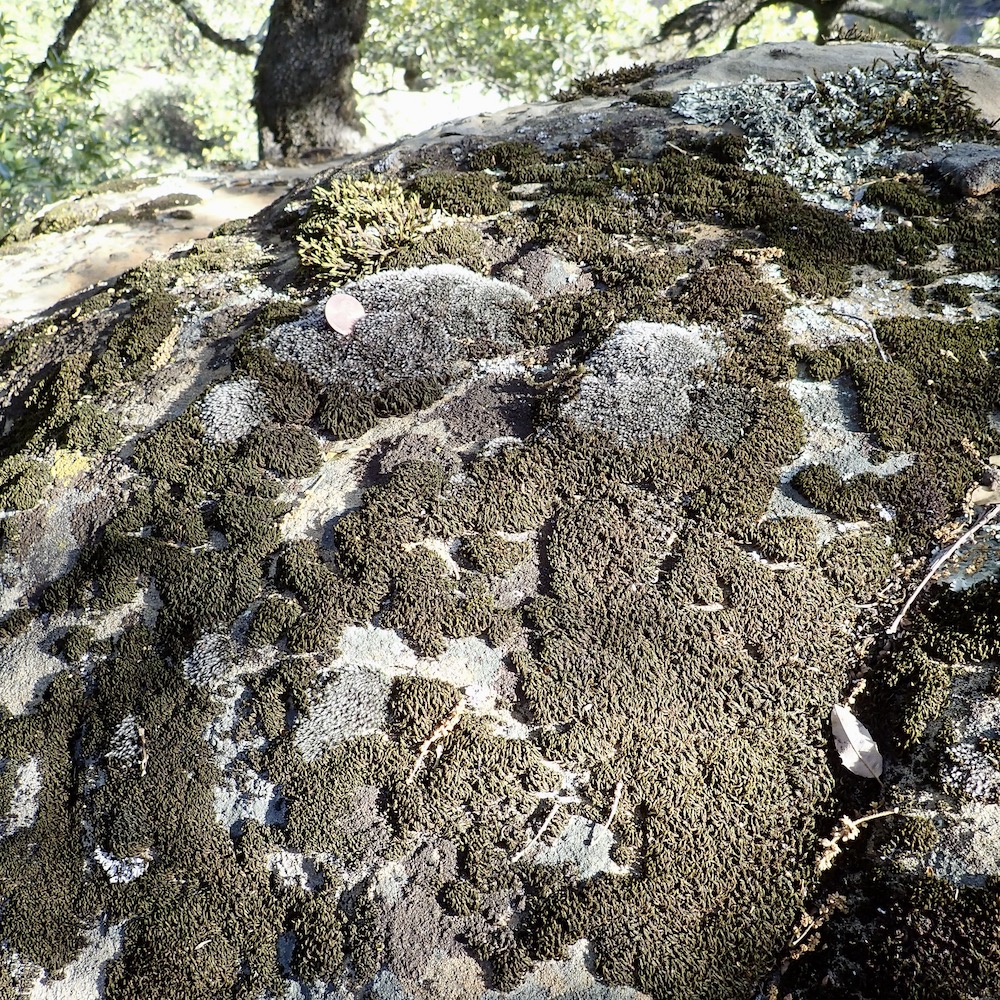
Habit: Grimmia laevigata grows in tufts which may resemble rounded mounds or flattened islands. Plants are generally packed tightly together, but disassociate readily from the clump when collected, a hallmark feature.
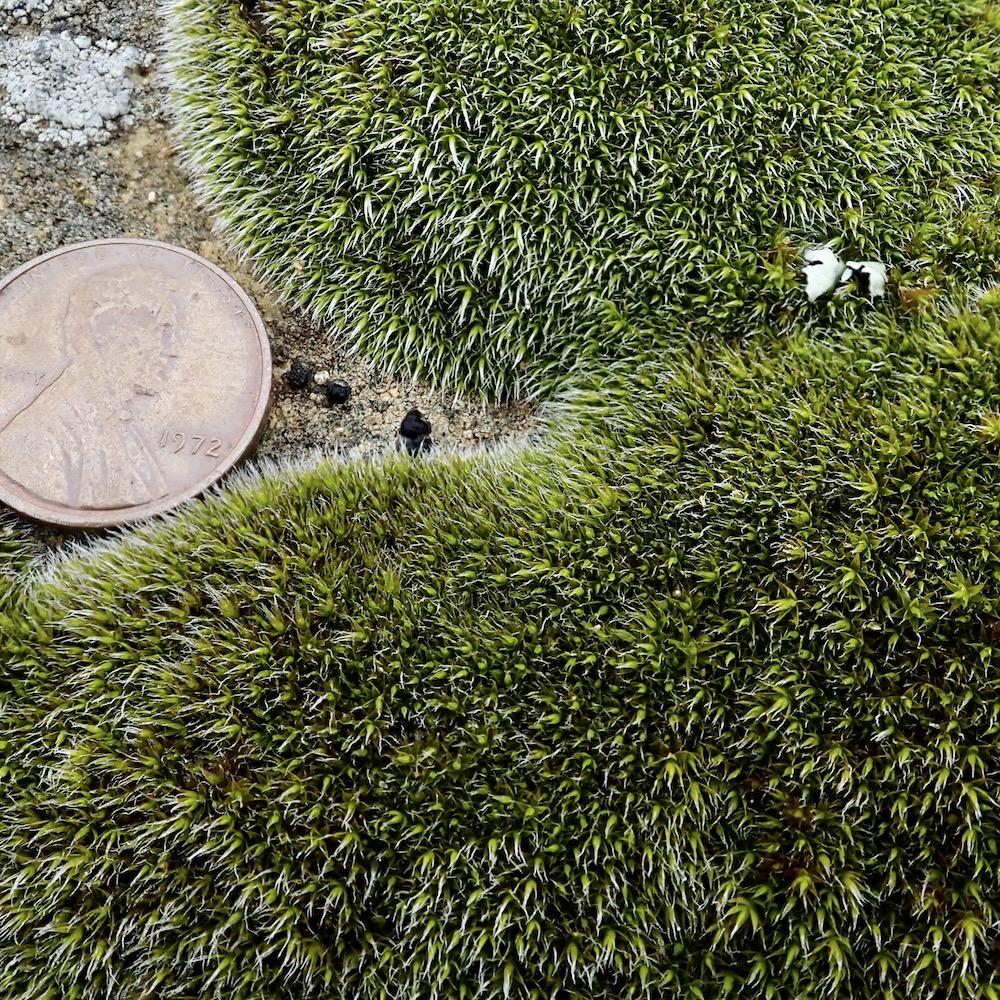
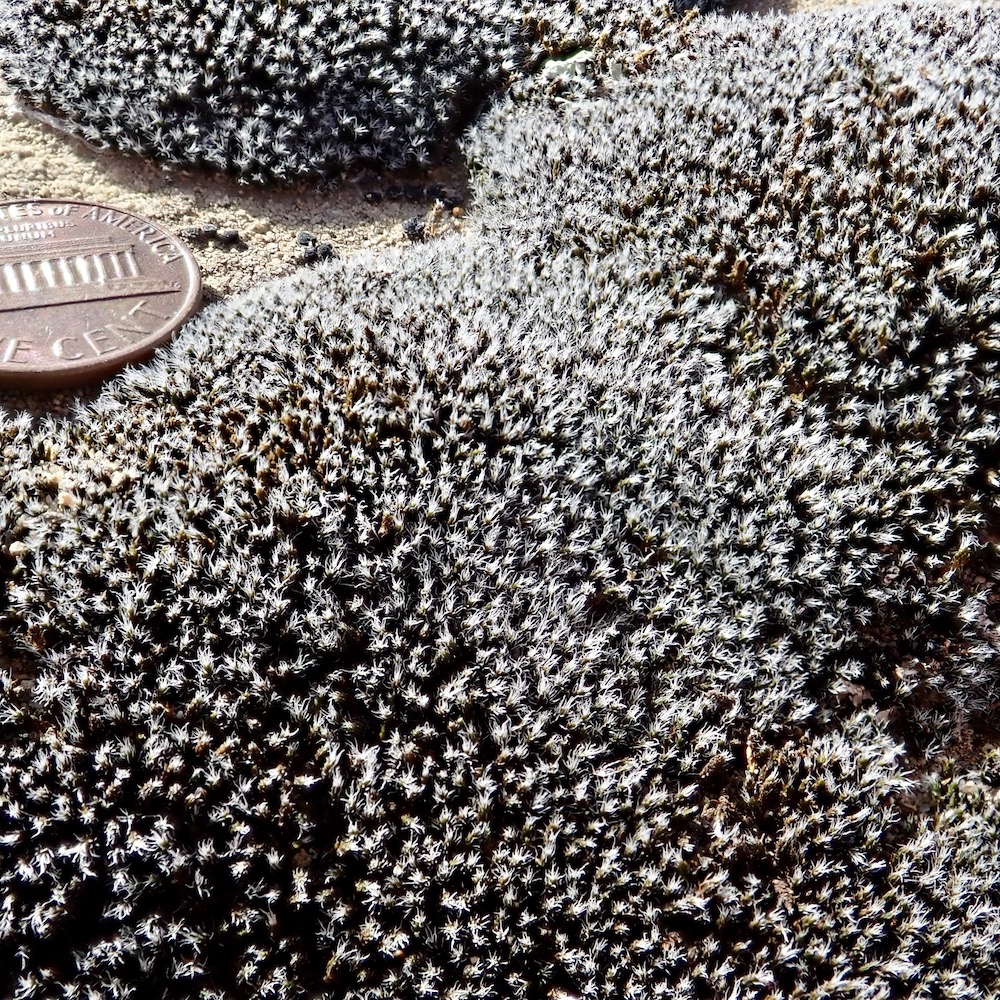
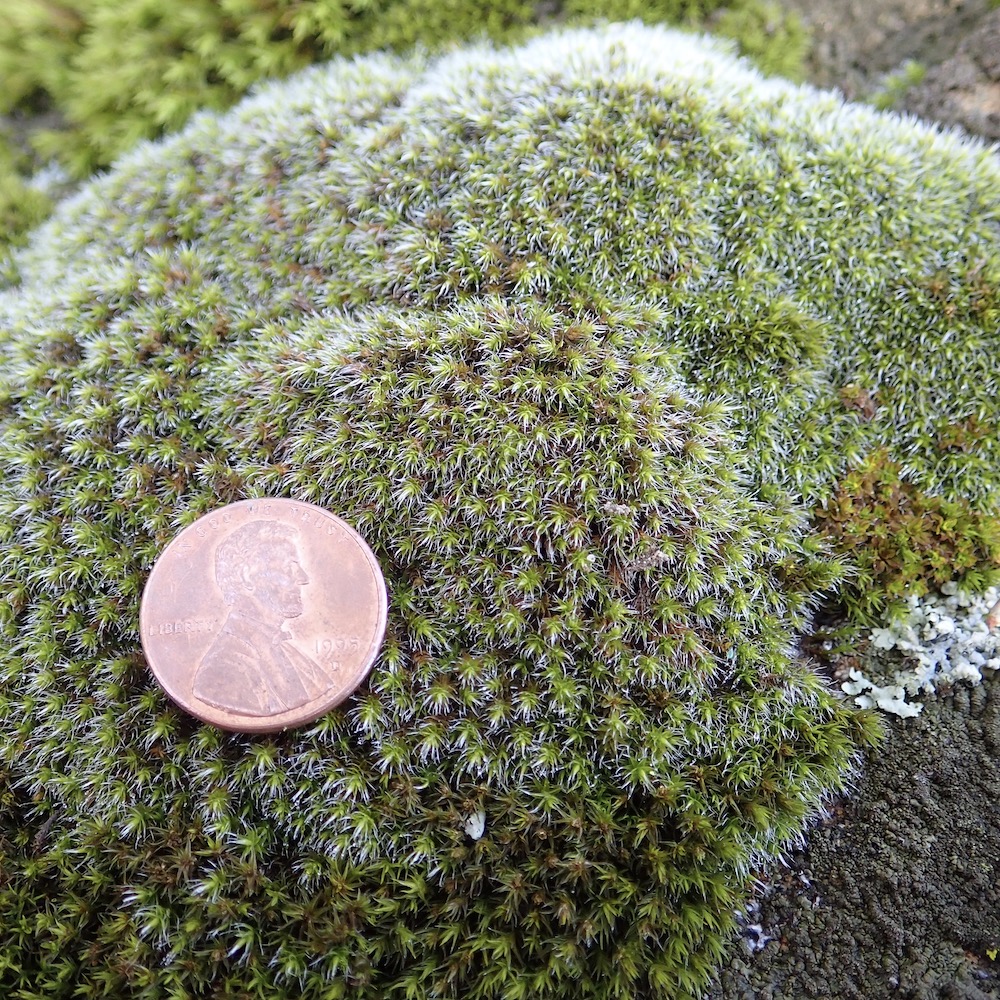
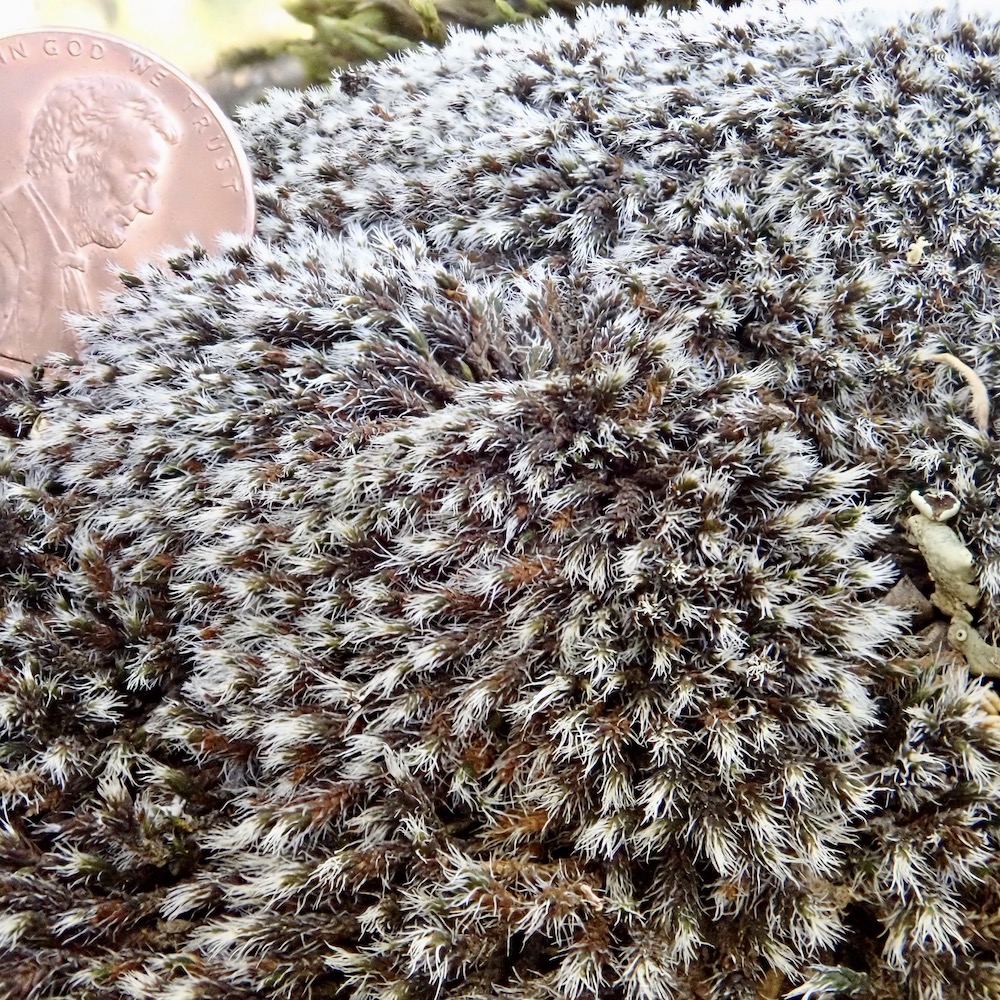
Plants: Grimmia laevigata plants are 0.5-2 cm high and sparsely branched. The leaves are light olive-green with long white awns when moist, and are held quite stiffly away from the stem. When dry, the leaves become a much darker shade of olive-green/brown, and are appressed tightly to the stem, overlapping neatly like scales, and accentuating the white awns.
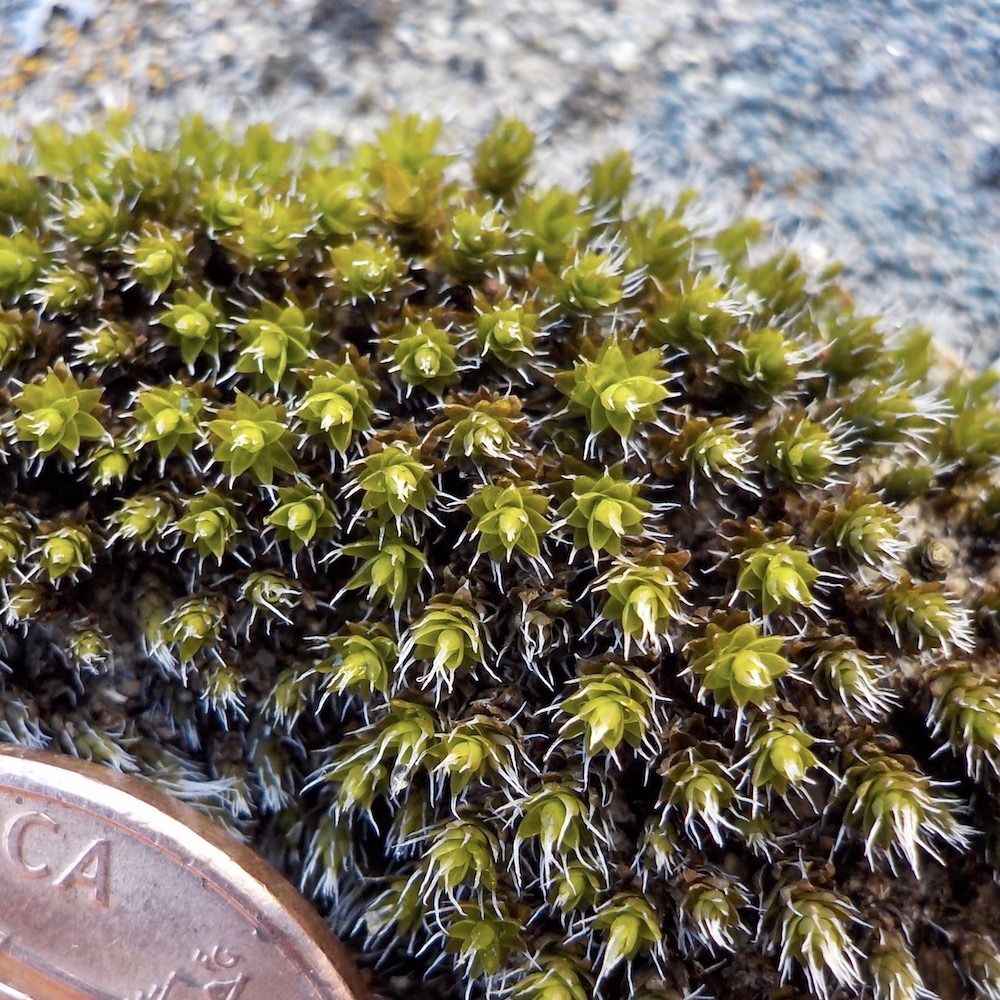
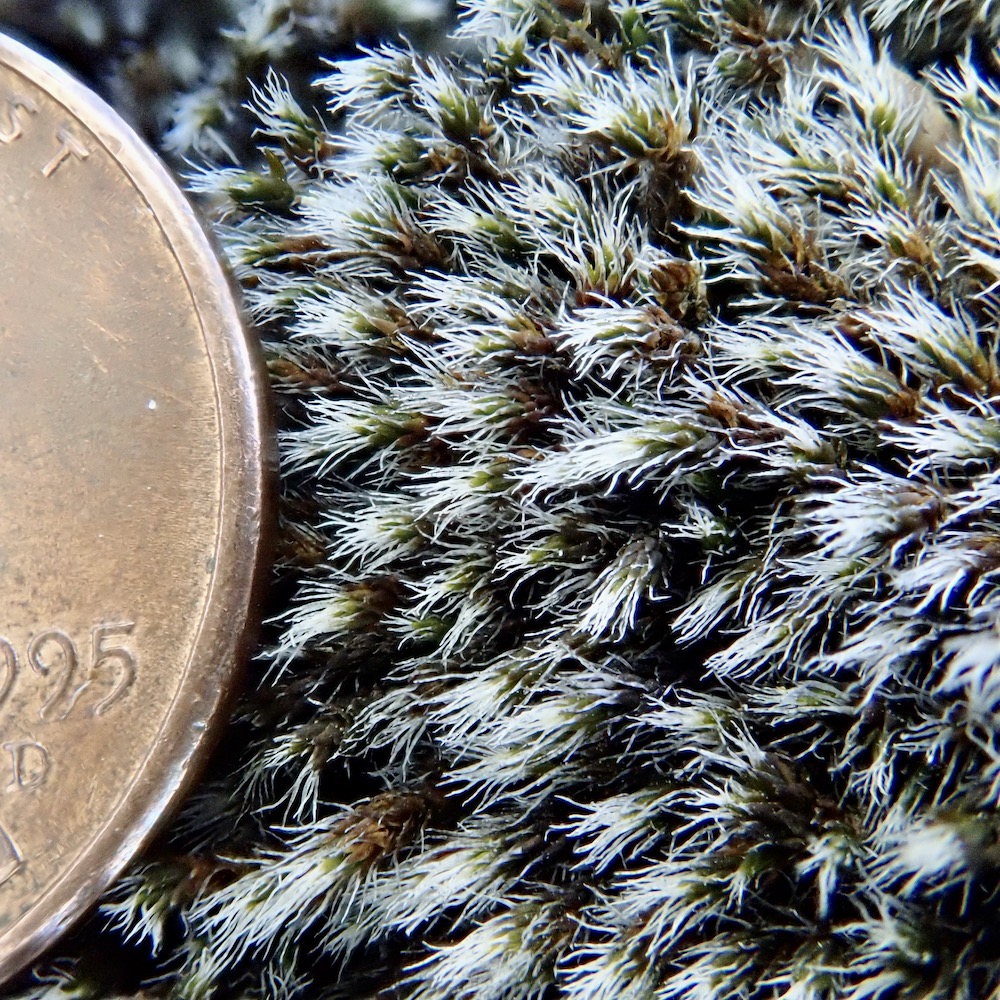
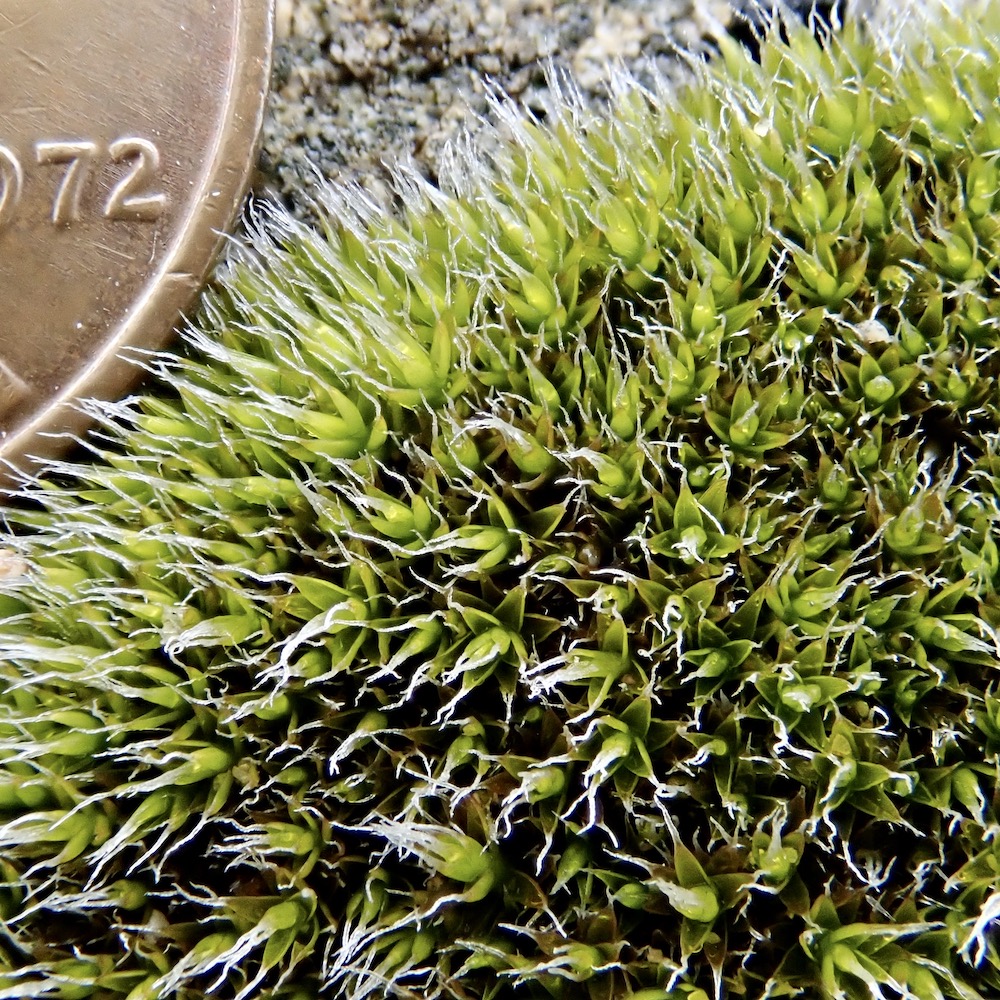
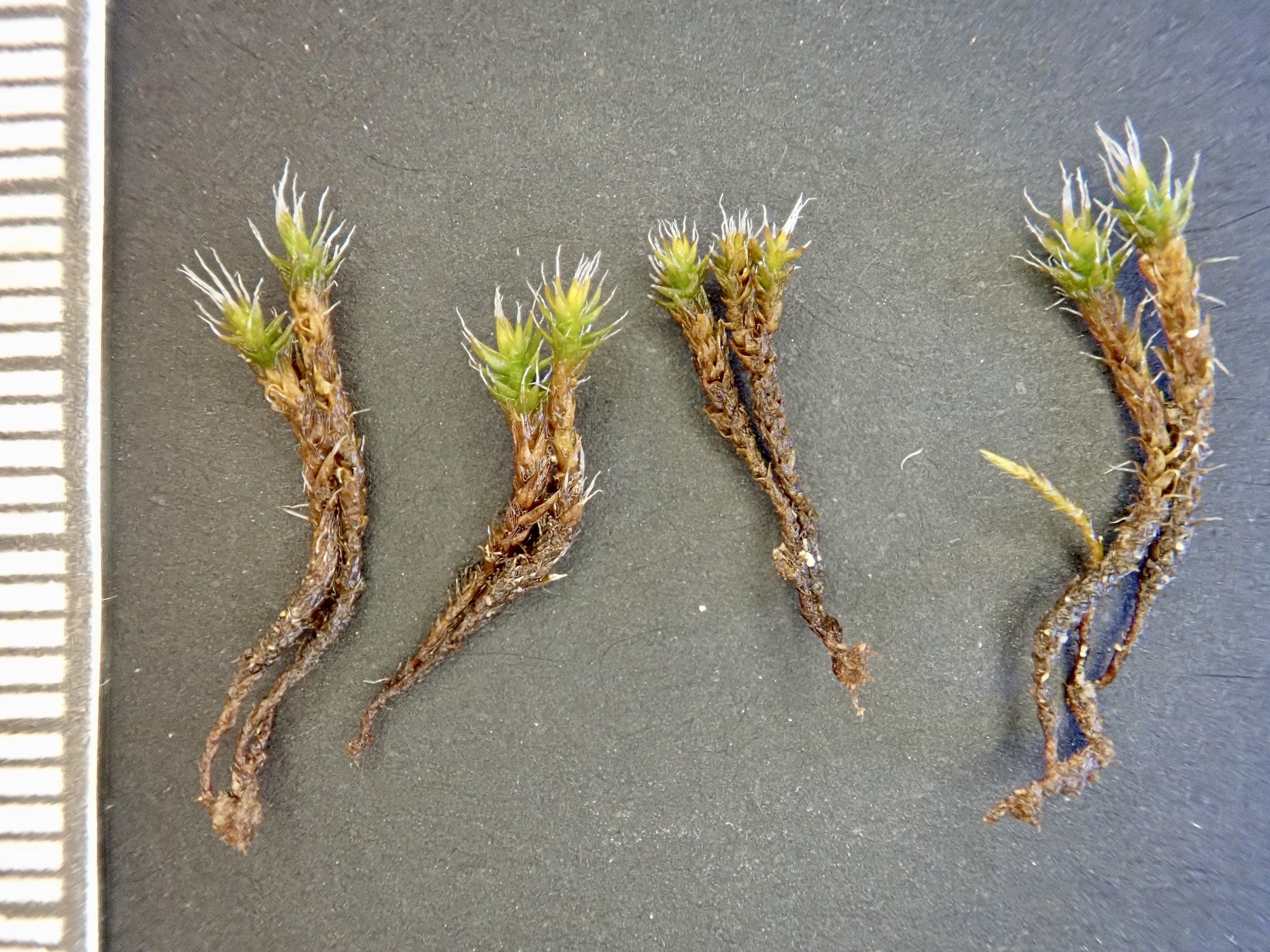
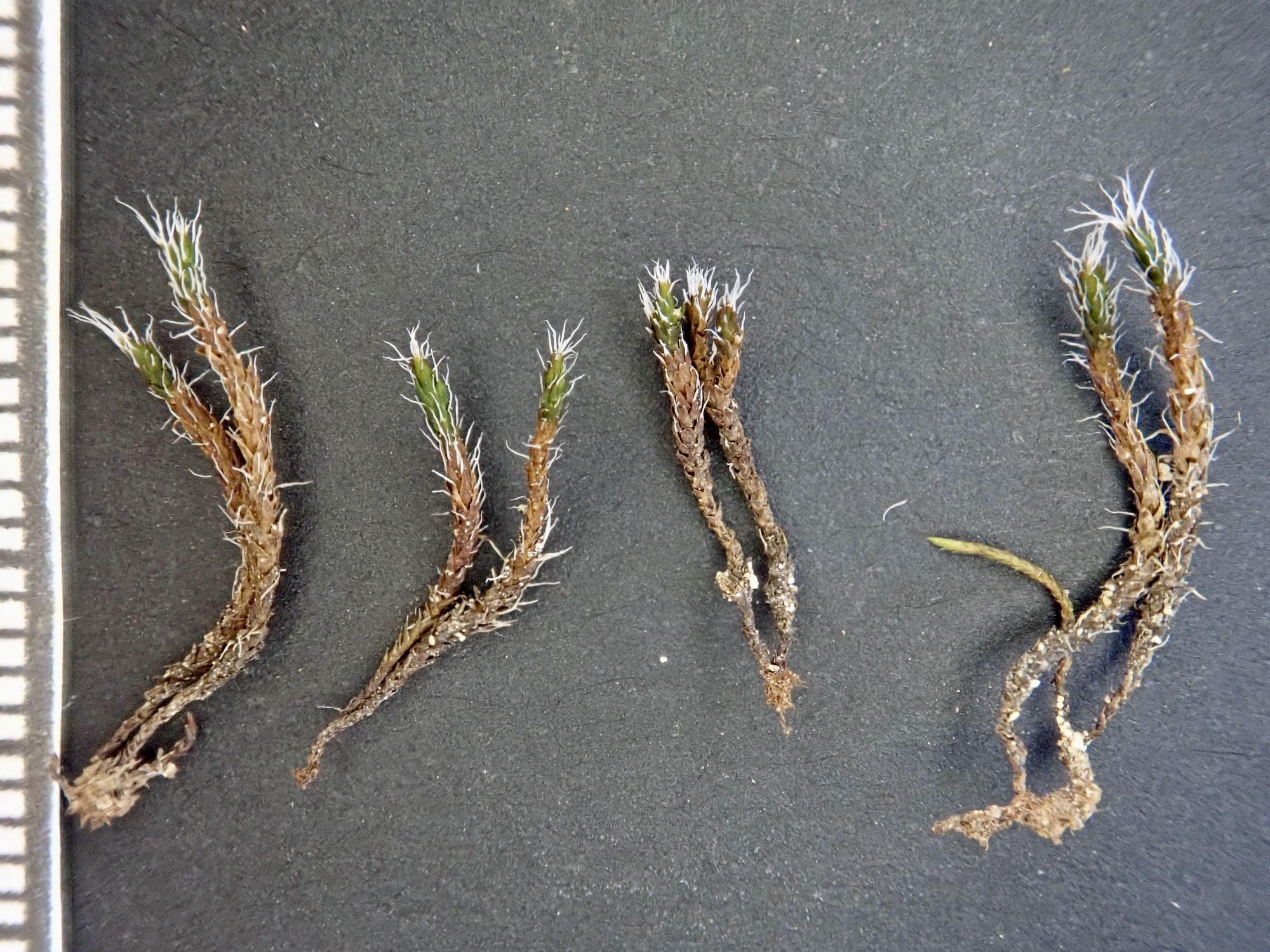
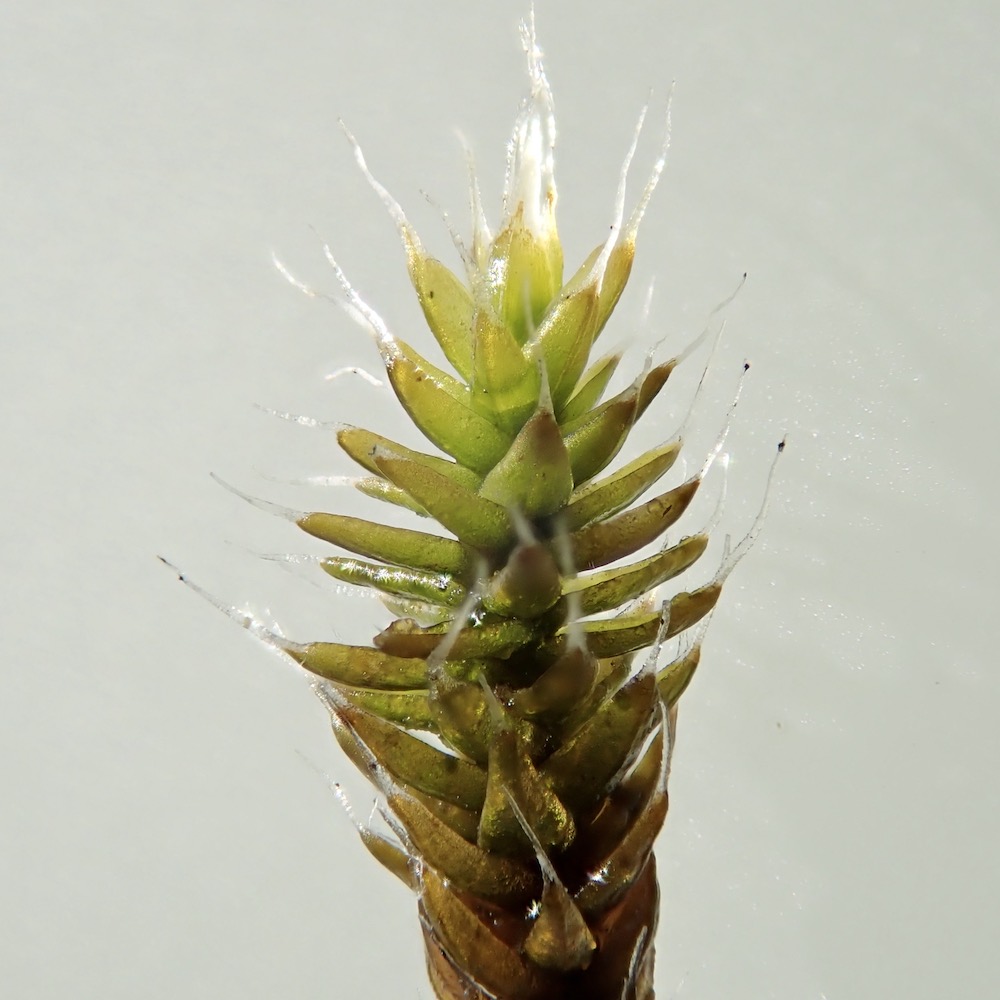
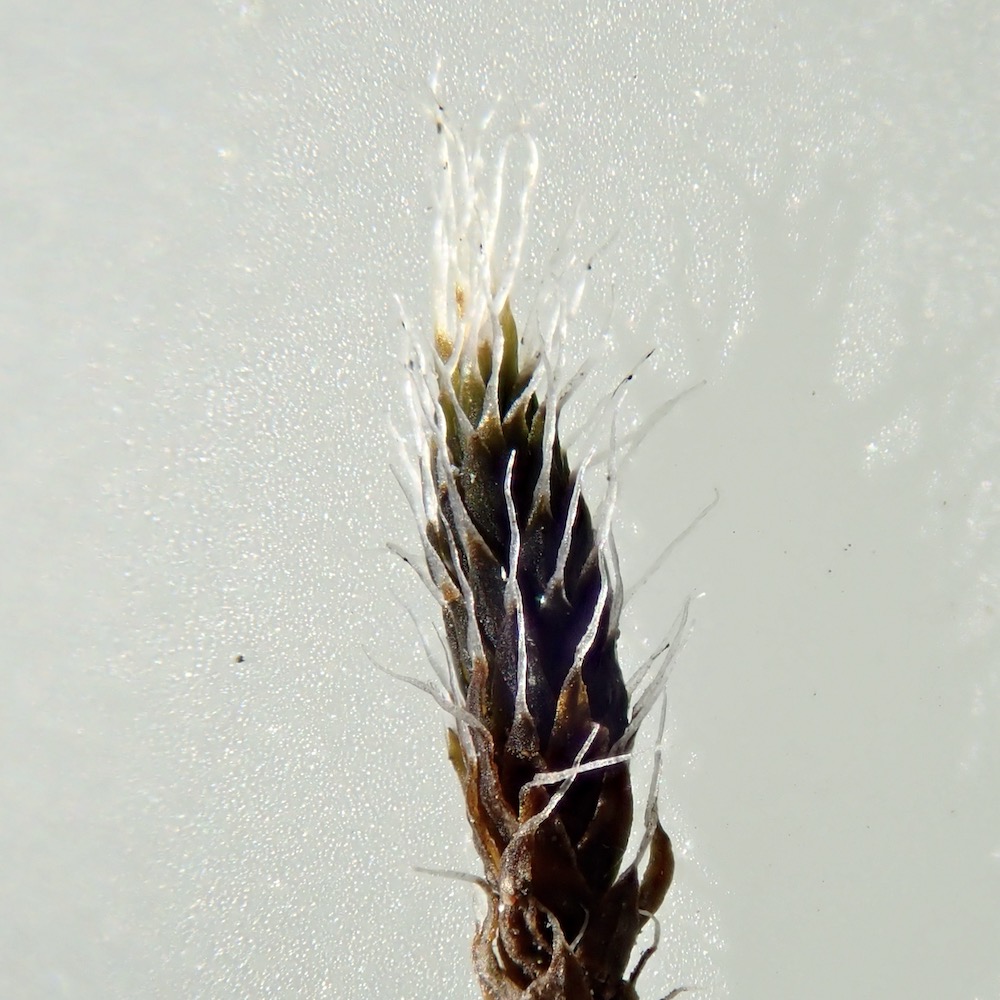
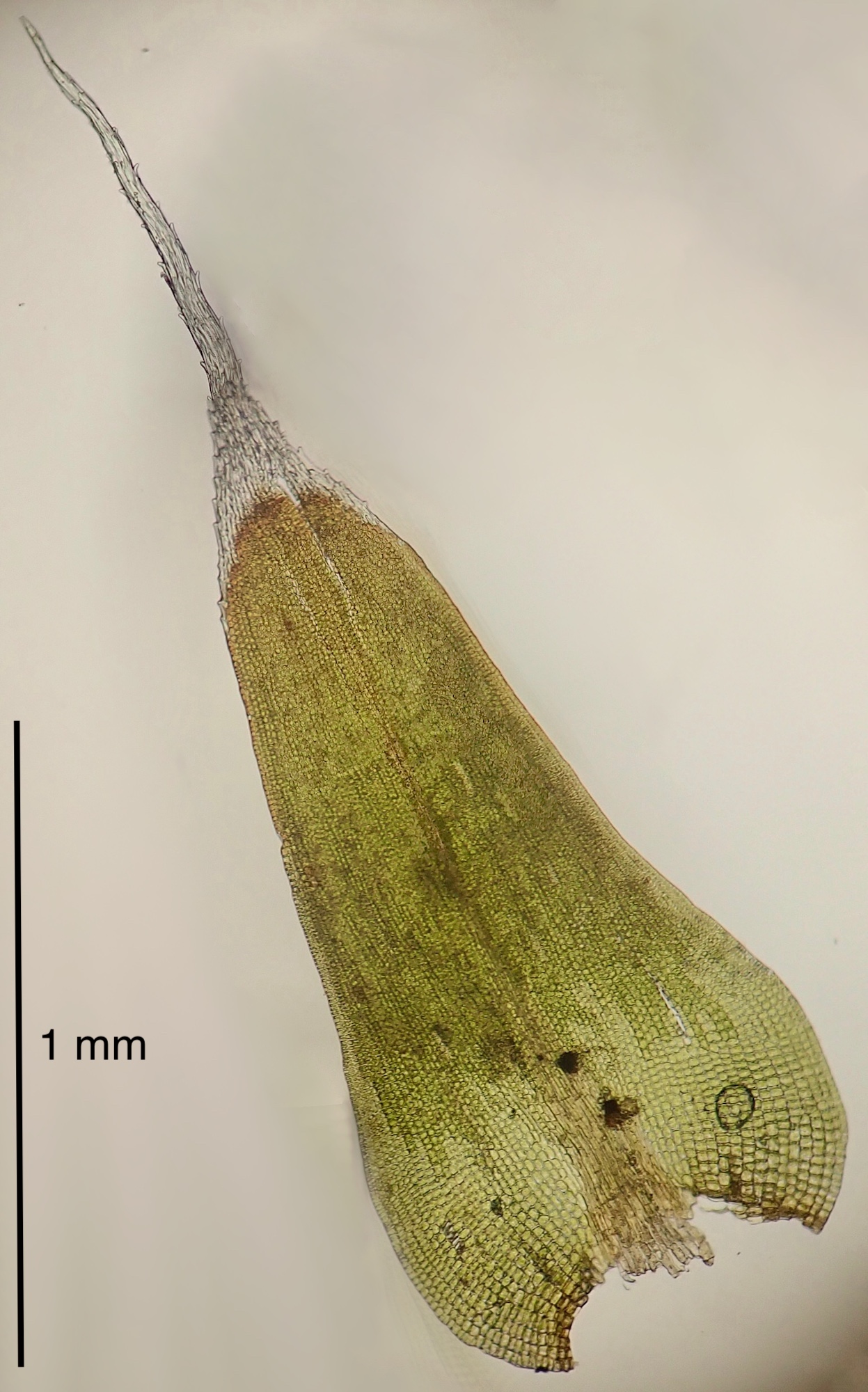
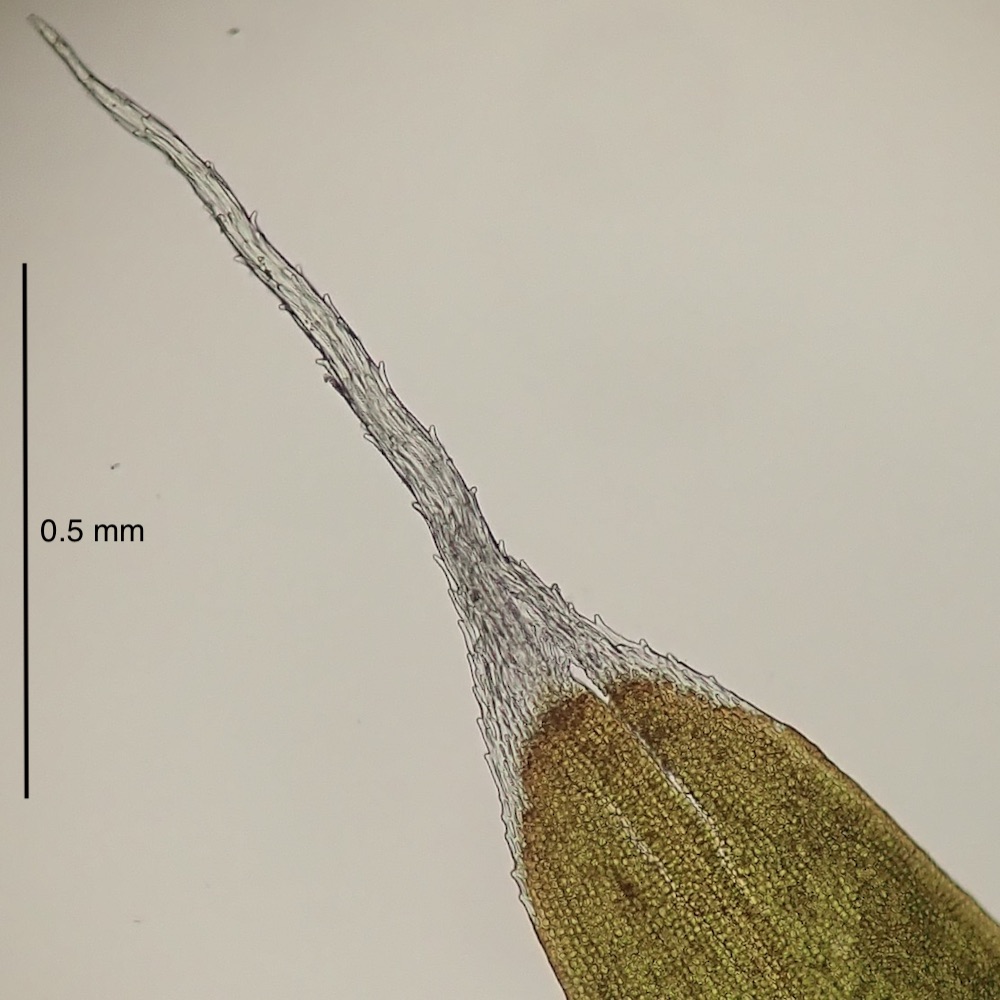
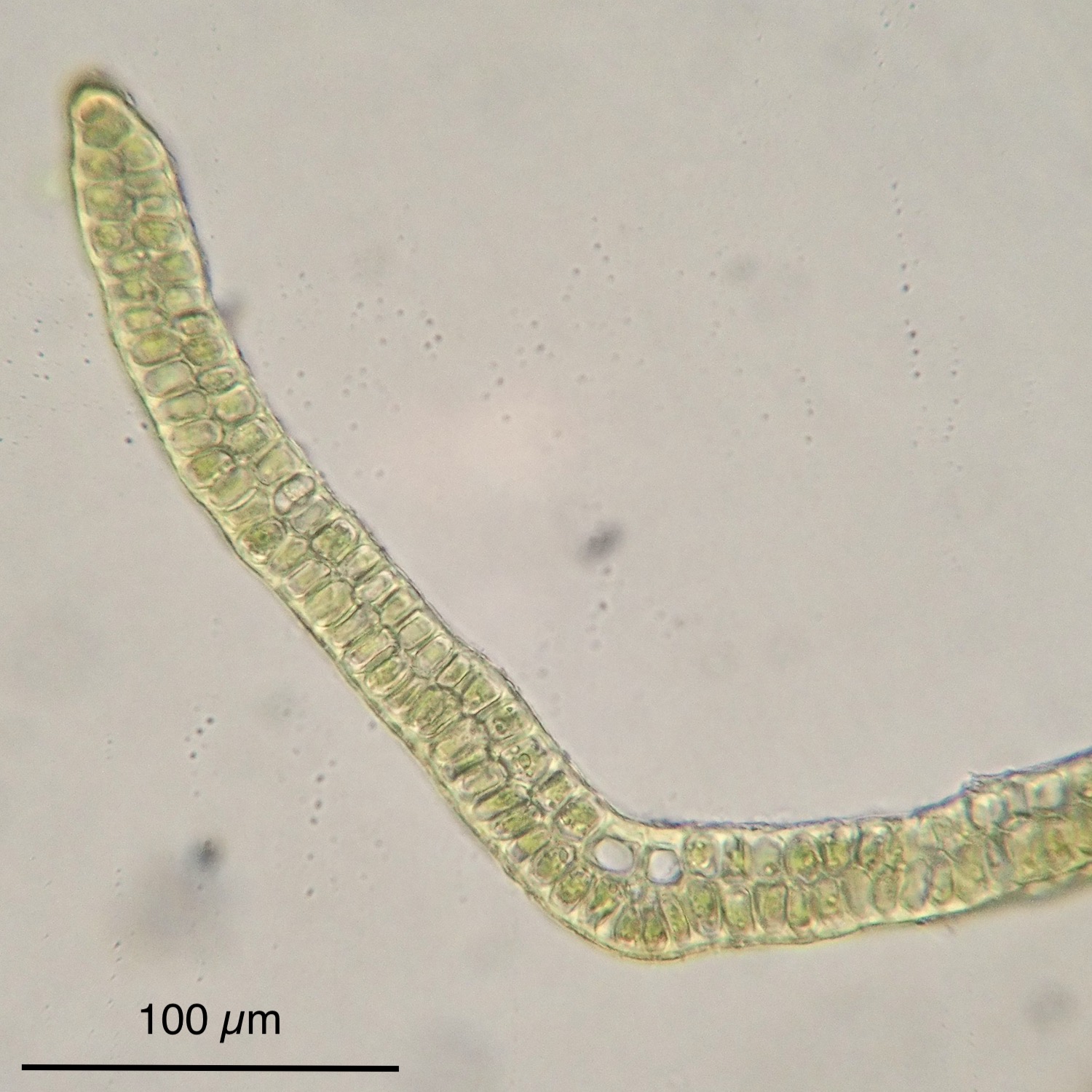
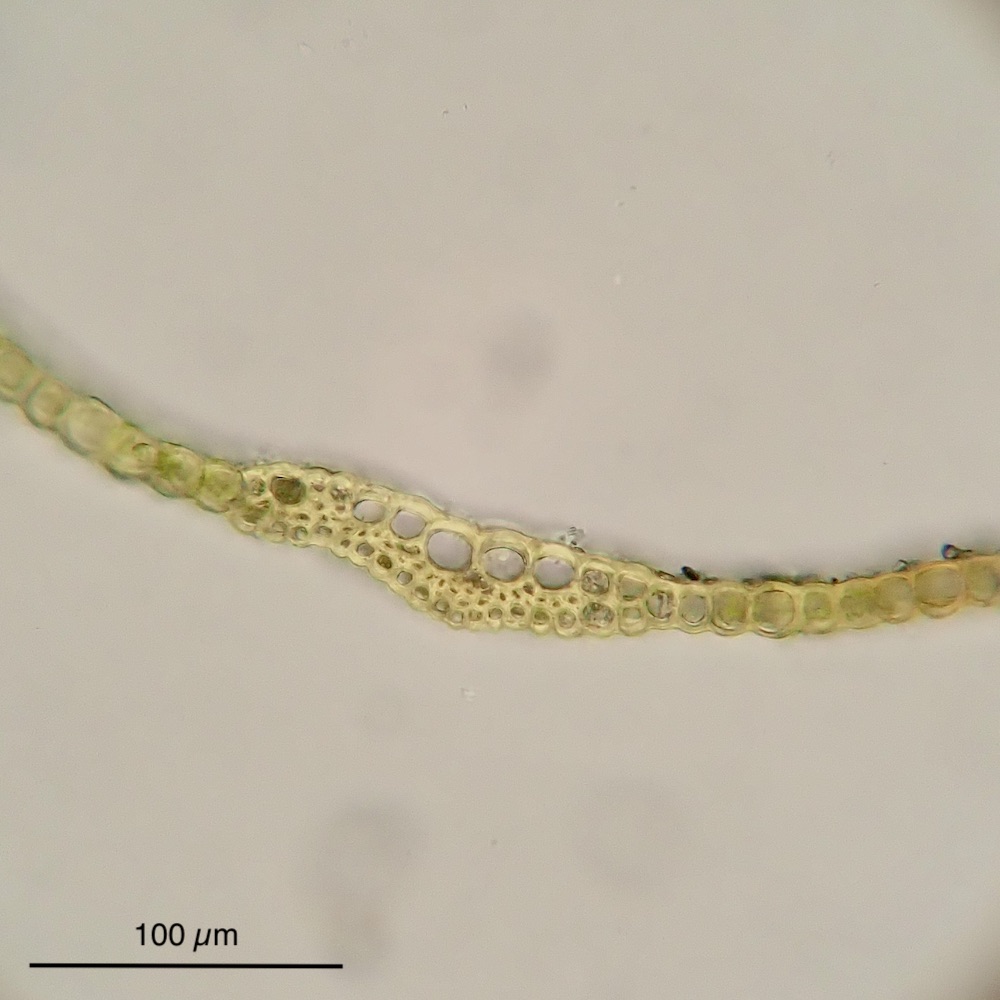
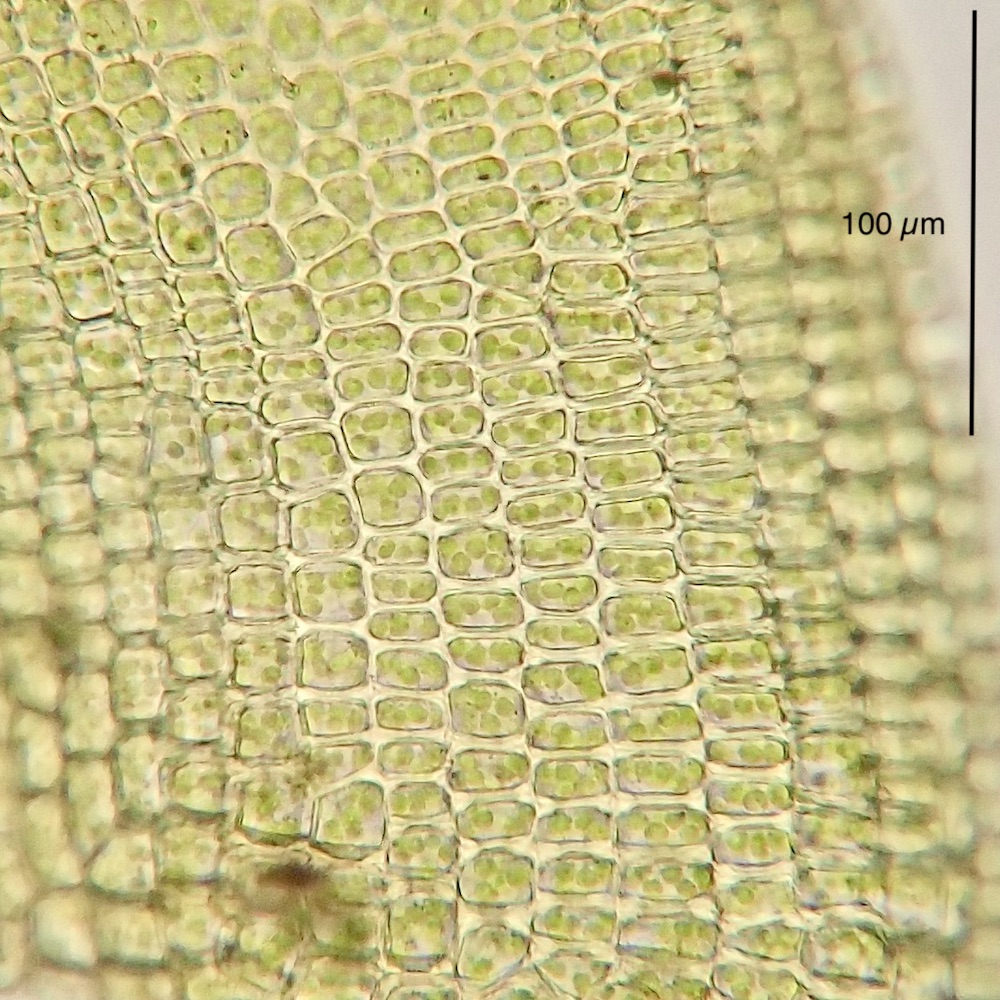
Leaves: Grimmia laevigata leaves are 1.5-3 mm long, concave, and oblong with a flared, ovate base. The long (0.3-2 mm) hyaline awns (colorless leaf points) are covered with spines and are decurrent, that is the edges creep down the sides of the leaf. The upper portion of the leaf is bistratose (two cells thick) whereas the lower portion is merely unistratose. The costa (midrib) is very broad at the base of the leaf, and only a few cells thick when viewed in cross-section. The cells of the leaf base are often wider than long, and have thick transverse walls and thin longitudinal walls.
Sporophytes: Sporophytes are rather rare on Grimmia laevigata. The oblong capsule is held atop a short seta, and capped with a split (mitrate) calyptra.
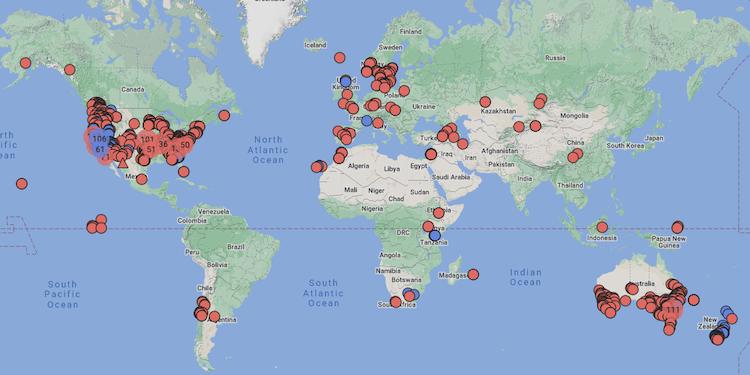
Distribution: Grimmia laevigata is found on every continent except Antarctica. It is common throughout California, including in Santa Barbara County.
 Bryophytes of Santa Barbara