Anacolia menziesii (Turner) Paris

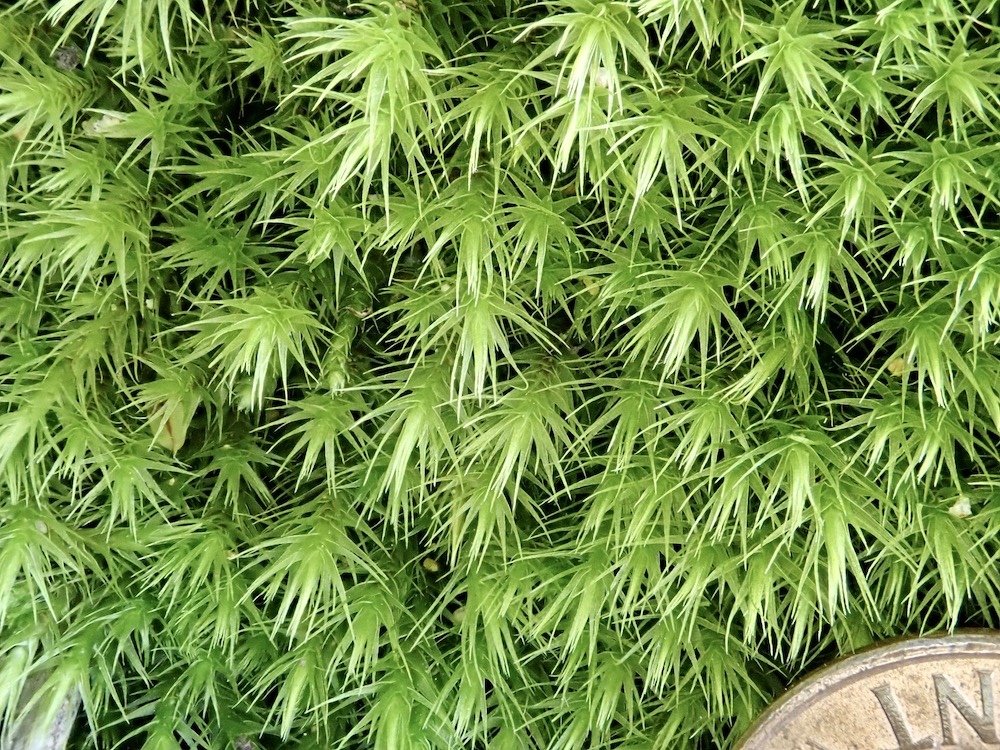
Anacolia menziesii is a large (2-5 cm), bright yellow-green, sparsely branched, acrocarpous moss, which grows in deep, dense to loose tufts, on soil or rock, often along road or trail banks, typically in some shade. Its long, narrow, pointy leaves spread out from the stem when moist, giving it a starry, fuzzy appearance. When dry, the leaves are tightly appressed against the stem, and the plants curve upward, resulting in a wispy, wind-blown look. The stems are reddish, and are often covered with dense reddish-brown rhizoids (tomentum).
Note that some authors distinguish between Anacolia menziesii and Anacolia baueri based on shape of the sporophyte capsules, while the FNA does not recognize Anacolia baueri. I have never witnessed sporophytes on Anacolia here in Santa Barbara County and have chosen to follow the FNA’s convention.
Scroll down for more photos (click to enlarge) and descriptions of habitat, plants, leaves, distribution map, name origin, similar species.
Anacolia menziesii
Anacolia menziesii CC BY-NC Amanda Heinrich
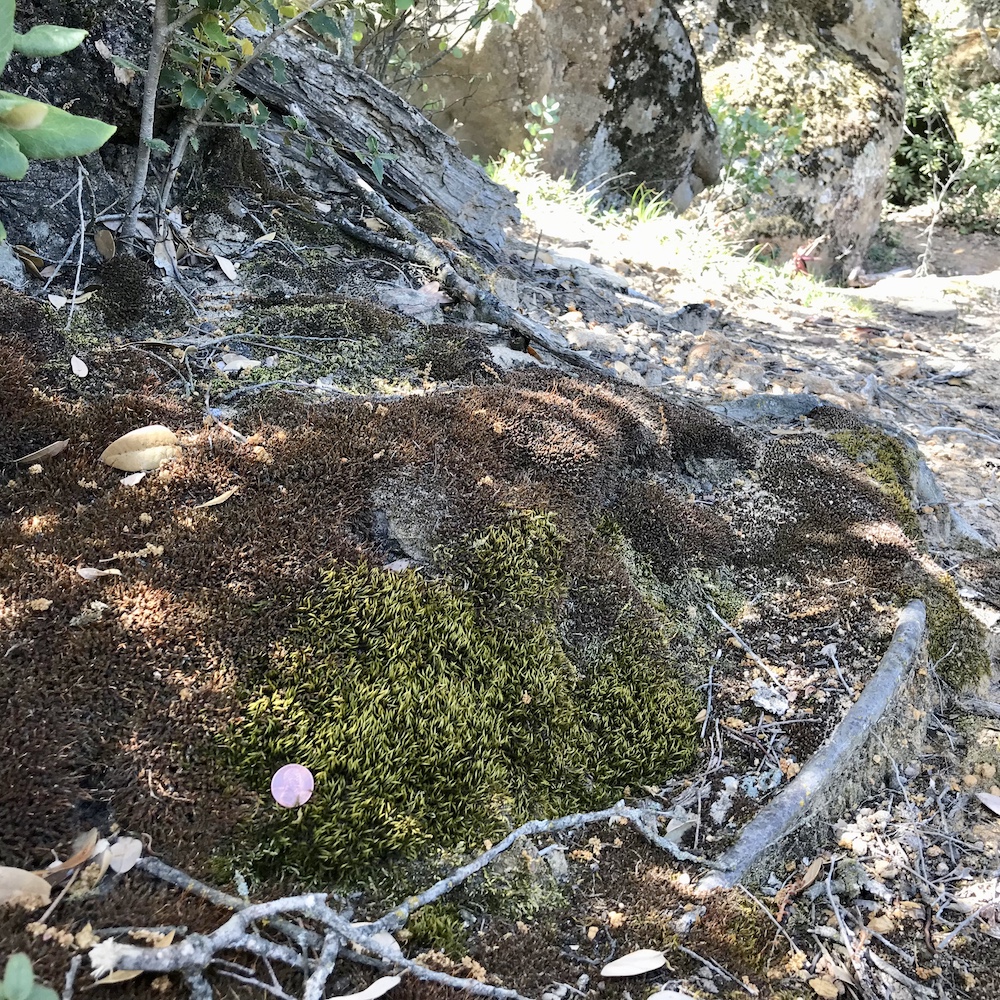
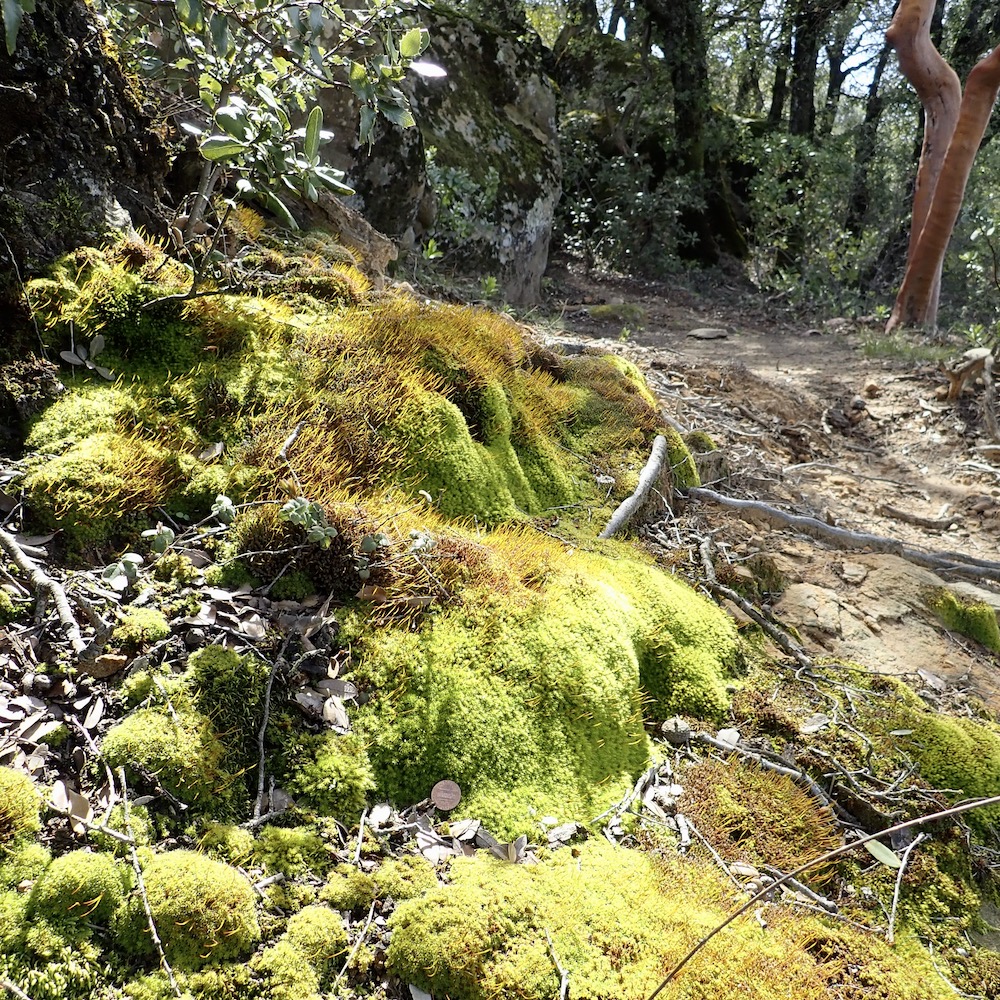
Habitat:  Anacolia menziesii grows on soil or rock, often along road and trail banks, typically in some shade.
Anacolia menziesii
Anacolia menziesii moist on soil along trail. CC BY-NC Amanda Heinrich
Anacolia menziesii
Anacolia menziesii dry on soil along trail. CC BY-NC Amanda Heinrich
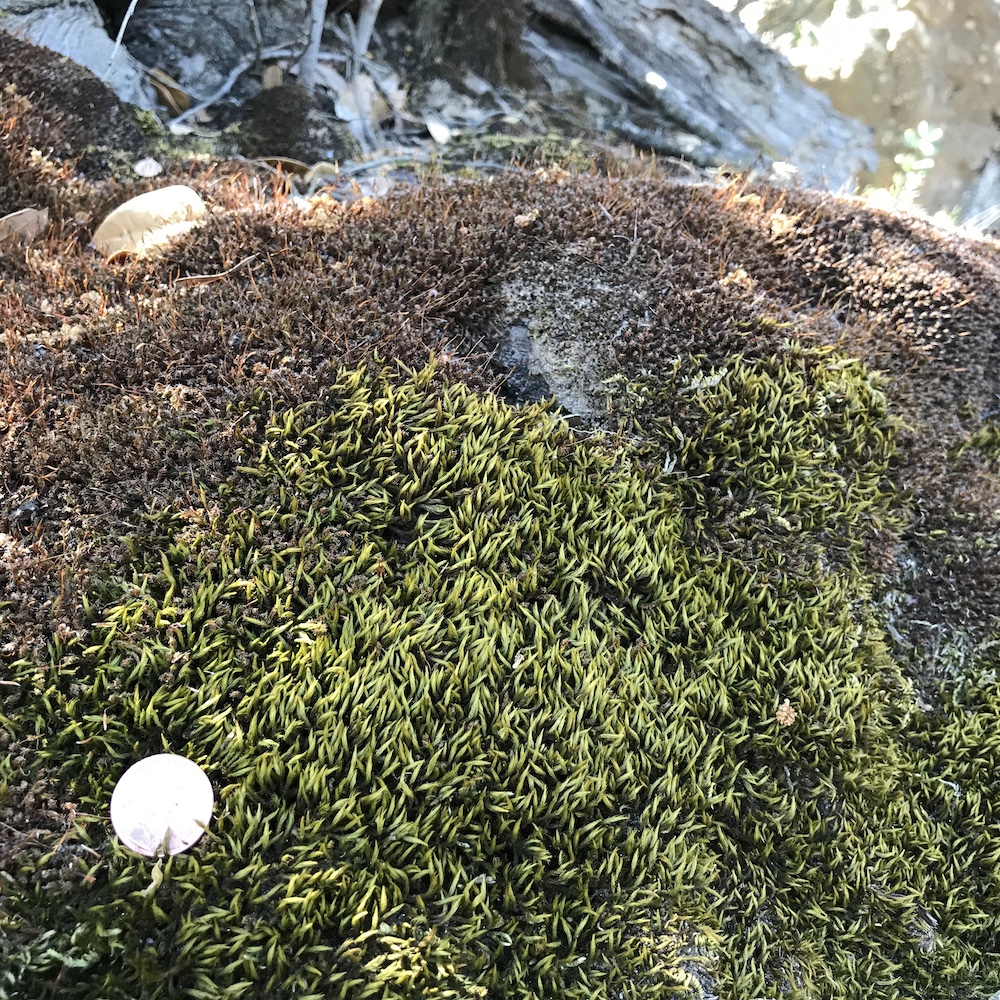
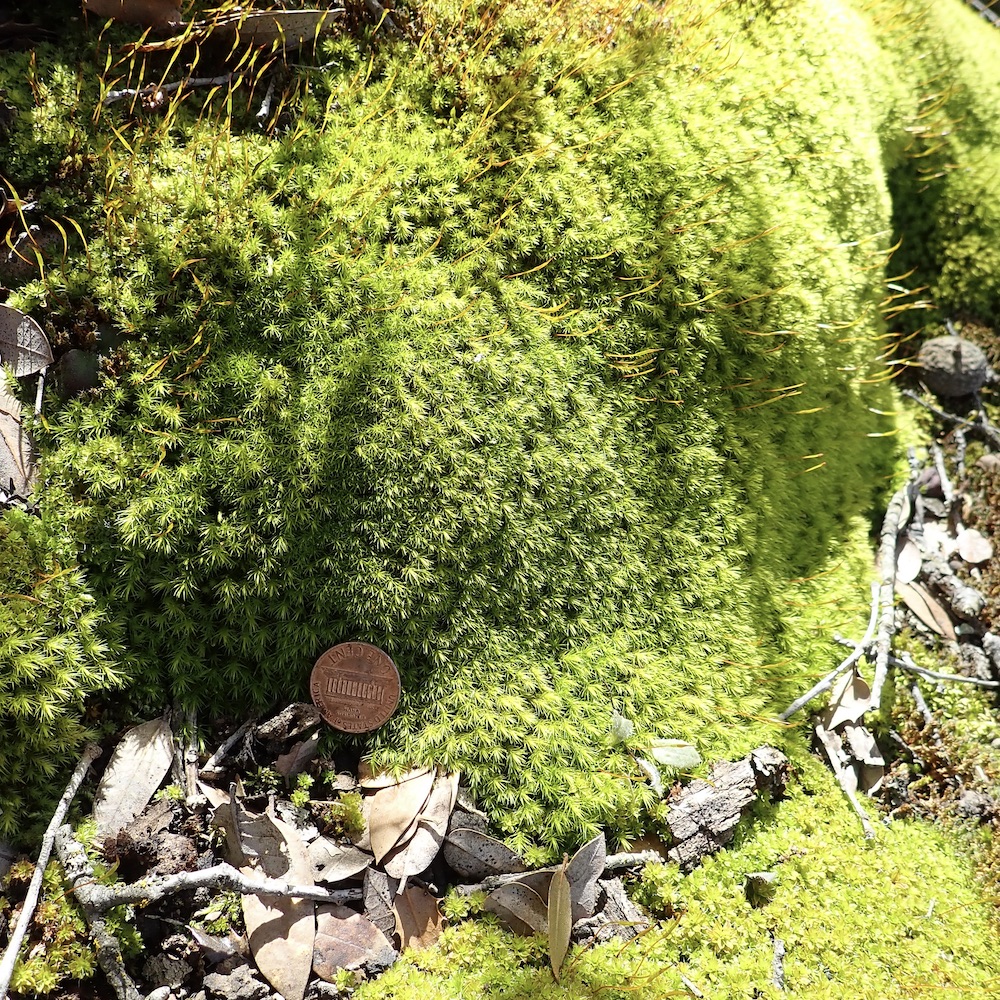
Habit:  Anacolia menziesii forms deep tufts that one can sink one’s fingers into. Tufts may be dense, with plants packed tightly together, or loose, with plants more widely spaced. When moist, tufts appear lush and furry. When dry, plants curve upward resulting in a windblown look.
Anacolia menziesii
Anacolia menziesii tufts, deep and luscious when moist. CC BY-NC Amanda Heinrich
Anacolia menziesii
Anacolia menziesii tufts dry, plants silky, wispy and arching up with a windblown look. CC BY-NC Amanda Heinrich
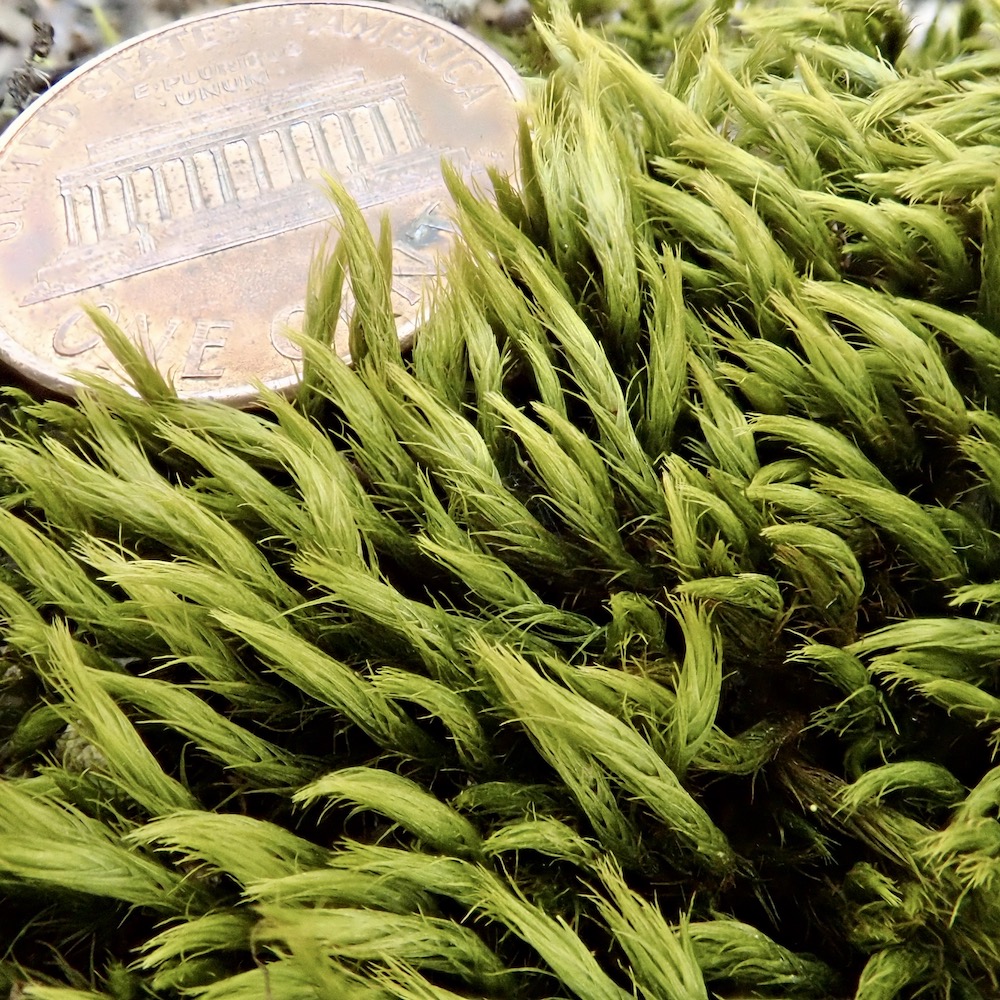
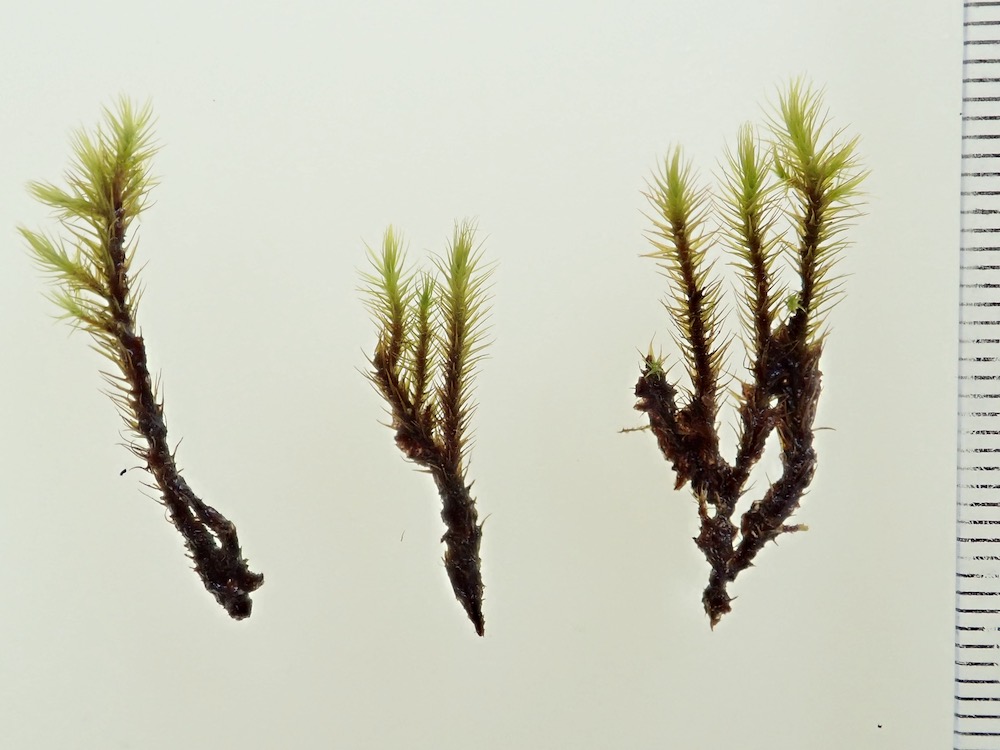
Plants:  Anacolia menziesii‘s long, narrow, pointy leaves spread from the stem when moist, creating a furry look. The leaves appress tightly to the stem when dry, and individual plants are clearly distinguished.
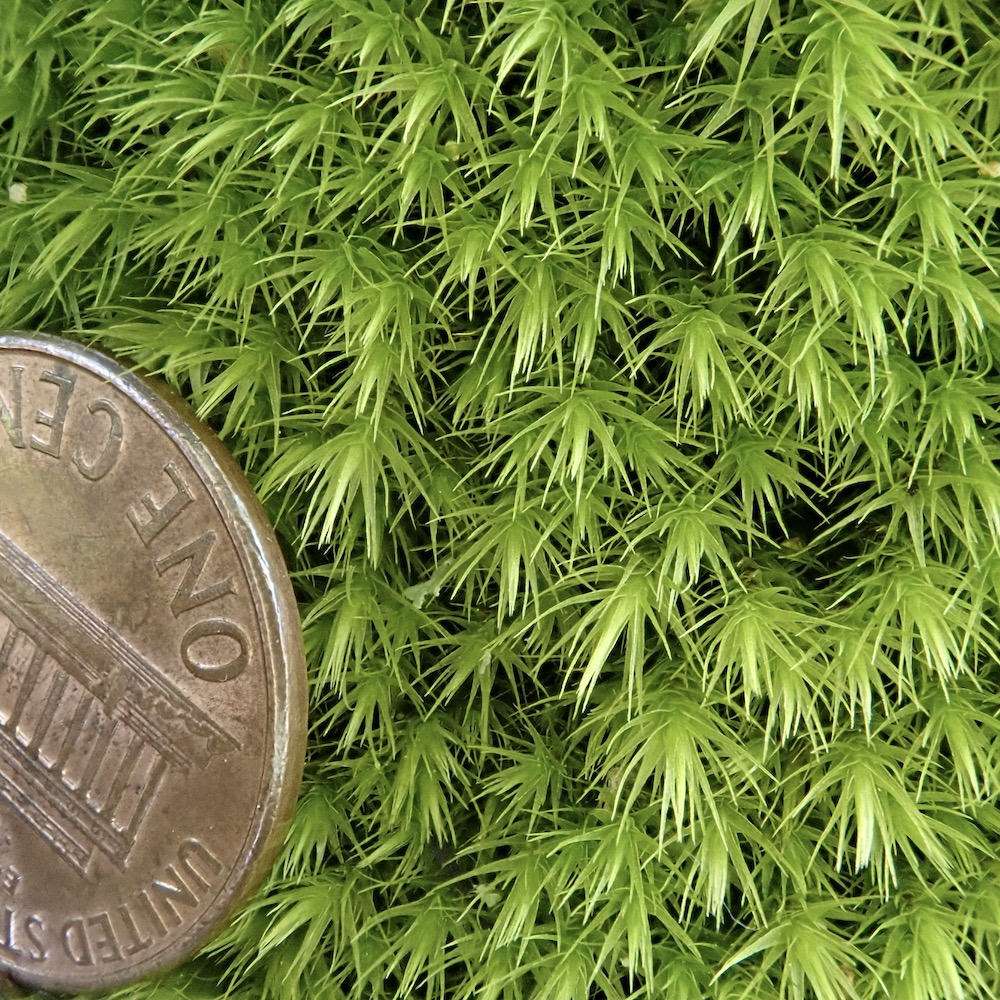
Anacolia menziesii
Anacolia menziesii moist leaves spread from the stem in a spiral arrangement, resulting in a starry look, when viewed from above. CC BY-NC Amanda Heinrich
Anacolia menziesii
Anacolia menziesii dry leaves are appressed to the stem, overlapping neatly, giving plants separation. CC BY-NC Amanda Heinrich
Anacolia menziesii
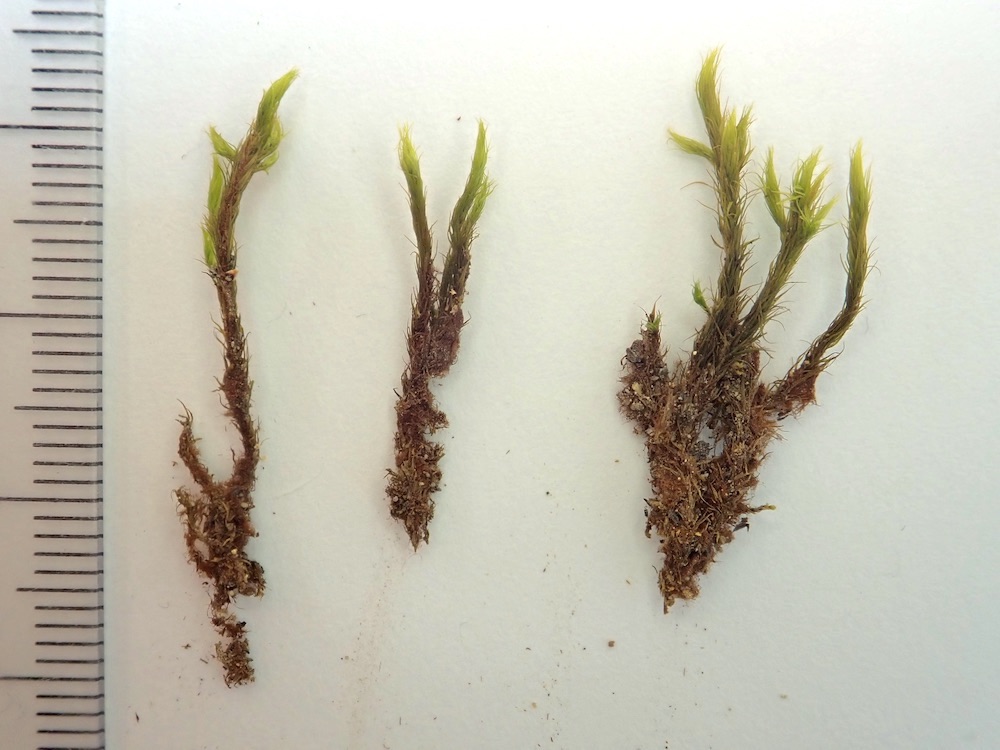
Anacolia menziesii three individual plants moist. (CAH #957) CC BY-NC Amanda Heinrich
Anacolia menziesii
Anacolia menziesii same three individual plants dry. (CAH #957) CC BY-NC Amanda Heinrich
Leaves:  Anacolia menziesii leaves are long (2.5-4.5 mm), narrow and pointy, flared at the base (ovate), and narrowly tapered above (lanceolate). The margins are strongly rolled back (recurved) from the base to at least halfway up the leaf, and are strongly toothed in the upper half. The base of the leaf typically has a few short pleats (is plicate).
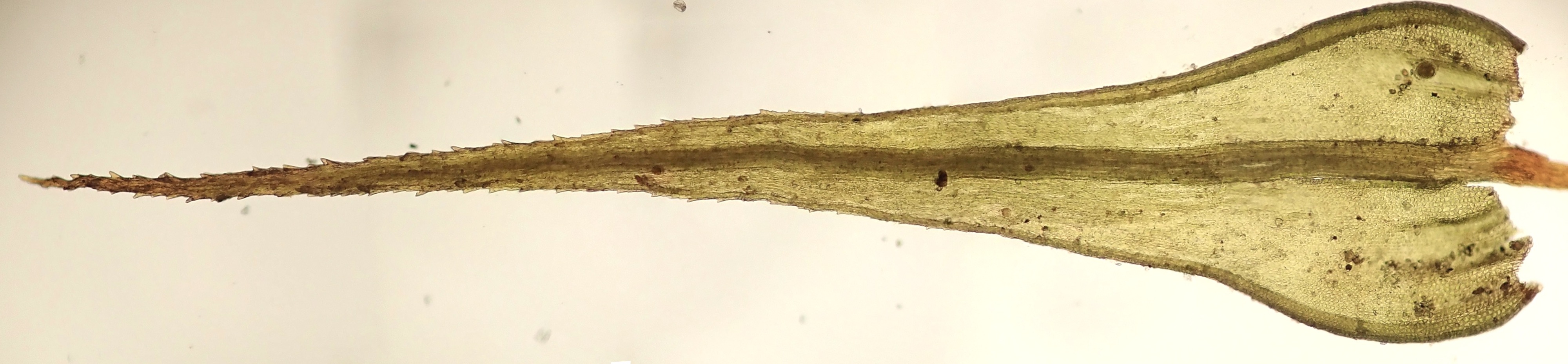
Anacolia menziesii leaf
Anacolia menziesii leaf, tapers to a long, narrow, toothed tip, from a flared and pleated base, with recurved margins. (CAH #957, 100x) CC BY-NC Amanda Heinrich
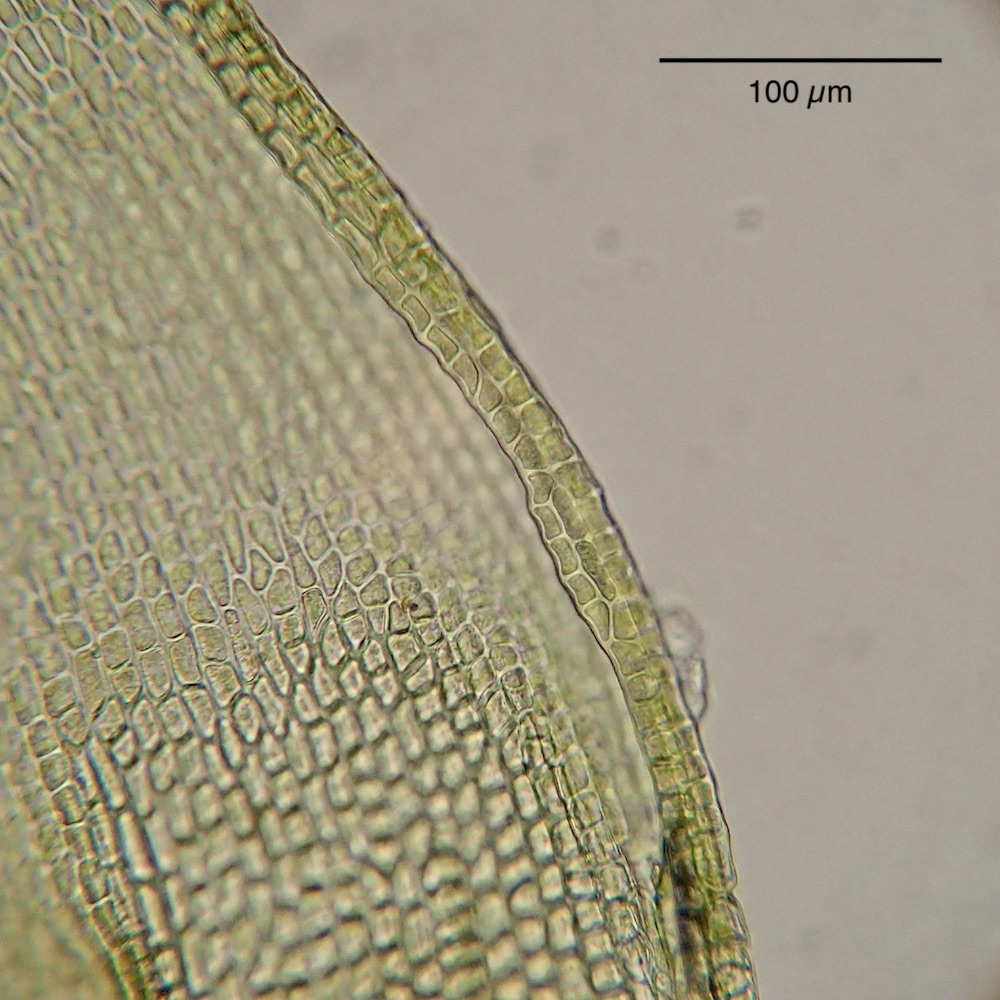
Anacolia menziesii leaf margin
Anacolia menziesii leaf margin is recurved in the lower half. (CAH #957, 400x) CC BY-NC Amanda Heinrich
Anacolia menziesii leaf tip
Anacolia menziesii leaf tip (and upper half of leaf) is strongly serrated. (CAH #957, 400x) CC BY-NC Amanda Heinrich
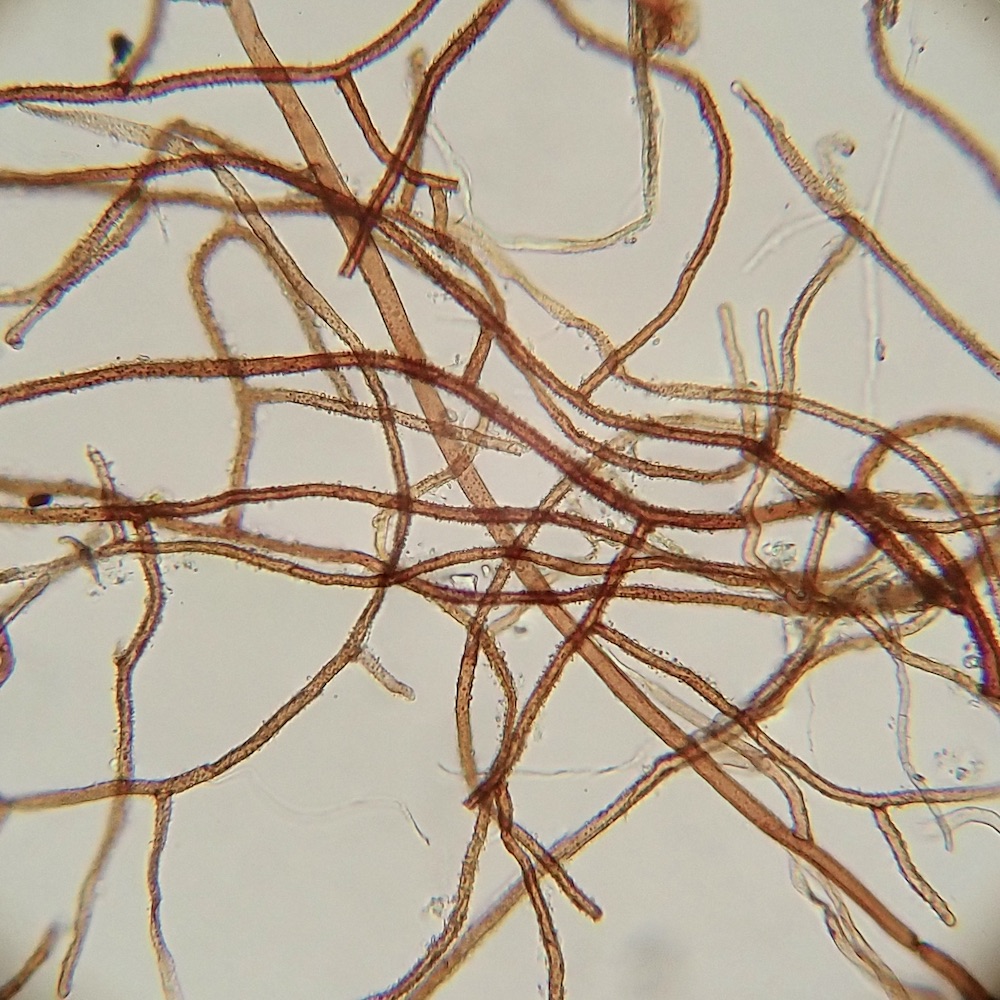
Tomentum:  Anacolia menziesii stems are often covered with dense reddish-brown to orange rhizoids, particularly toward the base, but often up into the leaves. This felty mat of rhizoids is referred to as a tomentum. Rhizoids attach the moss to the substratum, and also wick water, which is likely the main function of these dense mats.
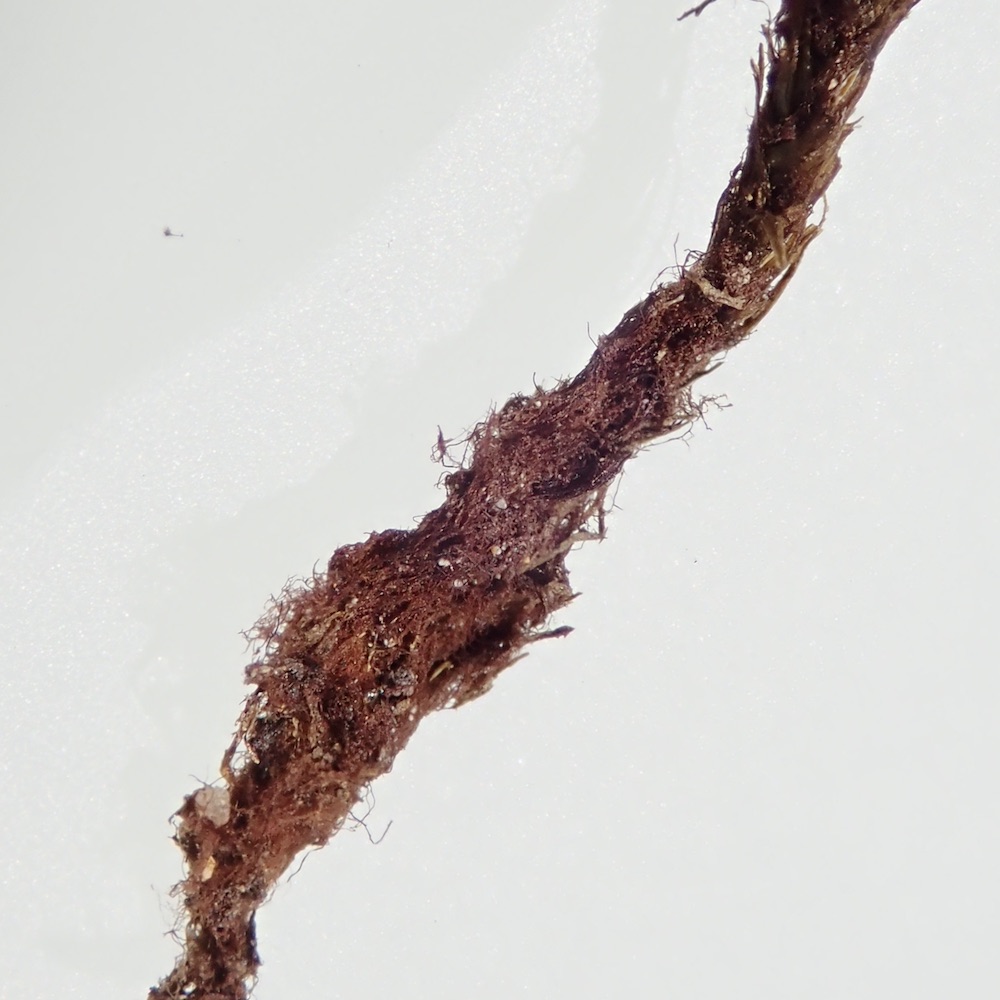
Anacolia menziesii tomentum
Anacolia menziesii’s dense layer of reddish-brown rhizoids along the stem is often referred to as a tomentum. (CAH #957) CC BY-NC Amanda Heinrich
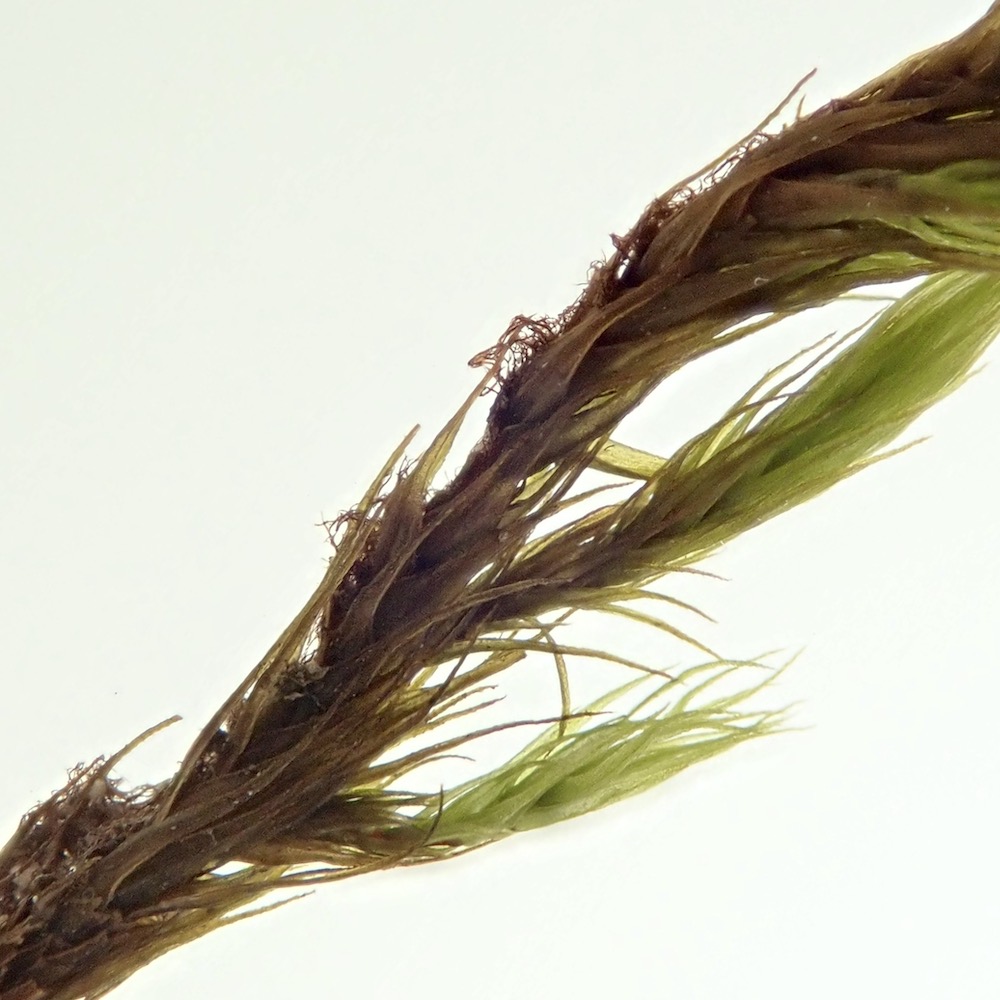
Anacolia menziesii tomentum
Anacolia menziesii‘s reddish-brown tomentum often extends up the stem where it is interspersed between the leaves. (CAH #957) CC BY-NC Amanda Heinrich
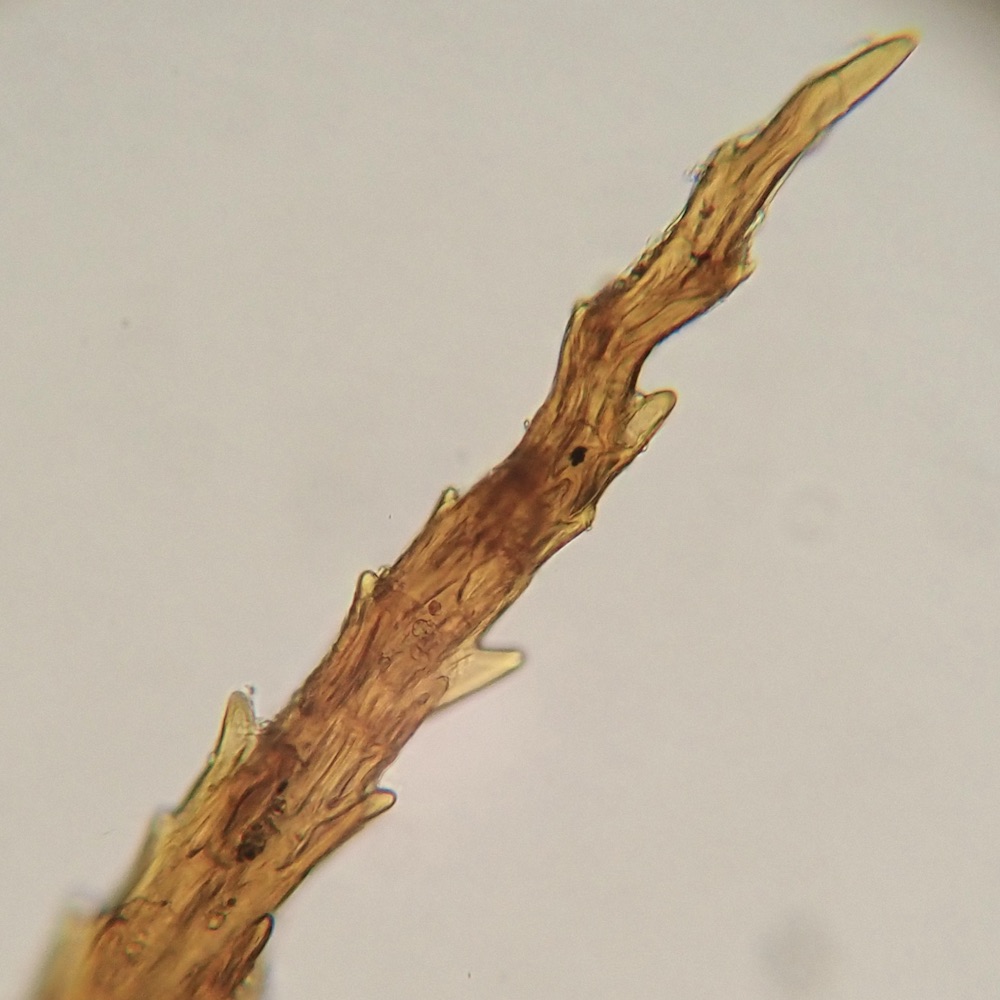
Anacolia menziesii tomentum
Anacolia menziesii‘s reddish-brown tomentum is composed of larger mostly smooth rhizoids and smaller papillose rhizoids. (CAH #957, 400x) CC BY-NC Amanda Heinrich
Distribution:  Anacolia menziesii is found in the western United States, into British Columbia and Northern Mexico. It is common in Santa Barbara County, and indeed throughout California.
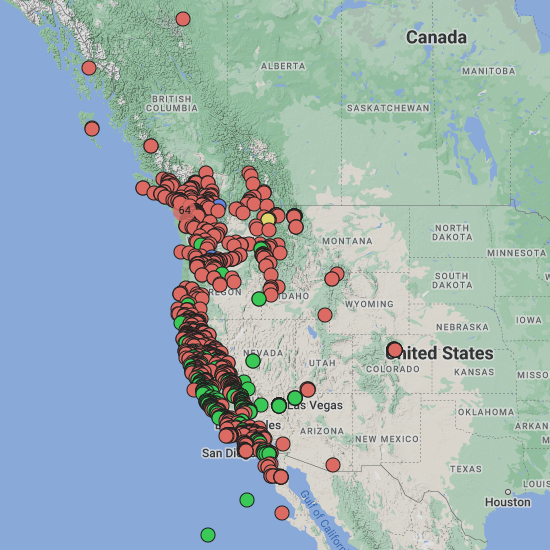
Anacolia menziesii distribution
Anacolia menziesii collections. Map generated by google maps using data from the Consortium of Bryophyte Herbaria of accessioned collections from herbaria.
Name: The genus name Anacolia is derived from the Greek “ana-” meaning above, and “koleos” meaning sheath, and refers to the base of the leaf which does not sheath.
The species epithet, menziesii, honors the Scottish botanist Archibald Menzies (1754-1842), the first known collector of bryophytes in California.
Similar Species in Santa Barbara County
Anacolia menziesii cannot be confused with any other species found in Santa Barbara County thus far.  Bartramia pomiformis, found in San Luis Obispo County, is quite similar and may turn up in northern Santa Barbara County with further searching.
Once again, some authors distinguish between Anacolia menziesii and Anacolia baueri based on the shape of the sporophyte capsules, with A. menziesii having an ovoid to globose capsule and A. baueri having a more oblong to short-cylindric capsule. I have not encountered sporophytes on any Anacolia population in 20 years here in Santa Barbara County and cannot distinguish between them, and have therefore choosen to follow the Flora of North America convention, treating the two as a single species, Anacolia menziesii.
References and Further Reading
Anacolia menziesii, Flora of North America Vol. 28, www.efloras.org
California Mosses, Bill and Nancy Malcolm, Jim Shevock and Dan Norris. Available for purchase from the California Native Plant Society here.
Contributions toward a Bryoflora of California II. A Key to the Mosses, Daniel H. Norris and James R. Shevock, Madrono 51(2): 133-269. 2004. Available for purchase  here.
Common Mosses of Western Oregon and Washington, Bruce McCune & Martin Hutten
The Moss Flora of Mexico, Edited by Aaron J. Sharp, Howard Crum & Patricia M Eckel, The New York Botanical Garden, 1994