Aloina aloides var. ambigua (Bruch & Schimper) E. J. Craig = Aloina ambigua

(Note: many bryologists recognize Aloina ambigua as a distinct species, whereas the Flora of North America recognizes it only as a variety of Aloina aloides)
Aloina aloides var. ambigua is a tiny (2.5 mm) acrocarpous moss, with thick, strap-shaped, fleshy leaves arranged in a rosette, giving the impression of a miniature aloe plant. The margins of the leaves are seriously incurved, partially obscuring the finger-like photosynthetic filaments which cover the leaf surface. Sporophytes are tall (5-13 mm), with a cylindrical capsule, and long twisted peristome teeth atop a basal membrane. Plants may be scattered or in crowded turfs, typically on flat, compact, sandy or gravelly soil, in partial shade or full sun.
Scroll down for more photos (click to enlarge) and descriptions of habitat, plants, leaves, sporophytes, distribution map, name origin, and similar species.
Aloina ambigua
Aloina aloides var. ambigua, with nascent sporophytes, early January. CC BY-NC Amanda Heinrich
Habitat: Aloina aloides var. ambigua grows on mineral soil in partial shade or full sun.
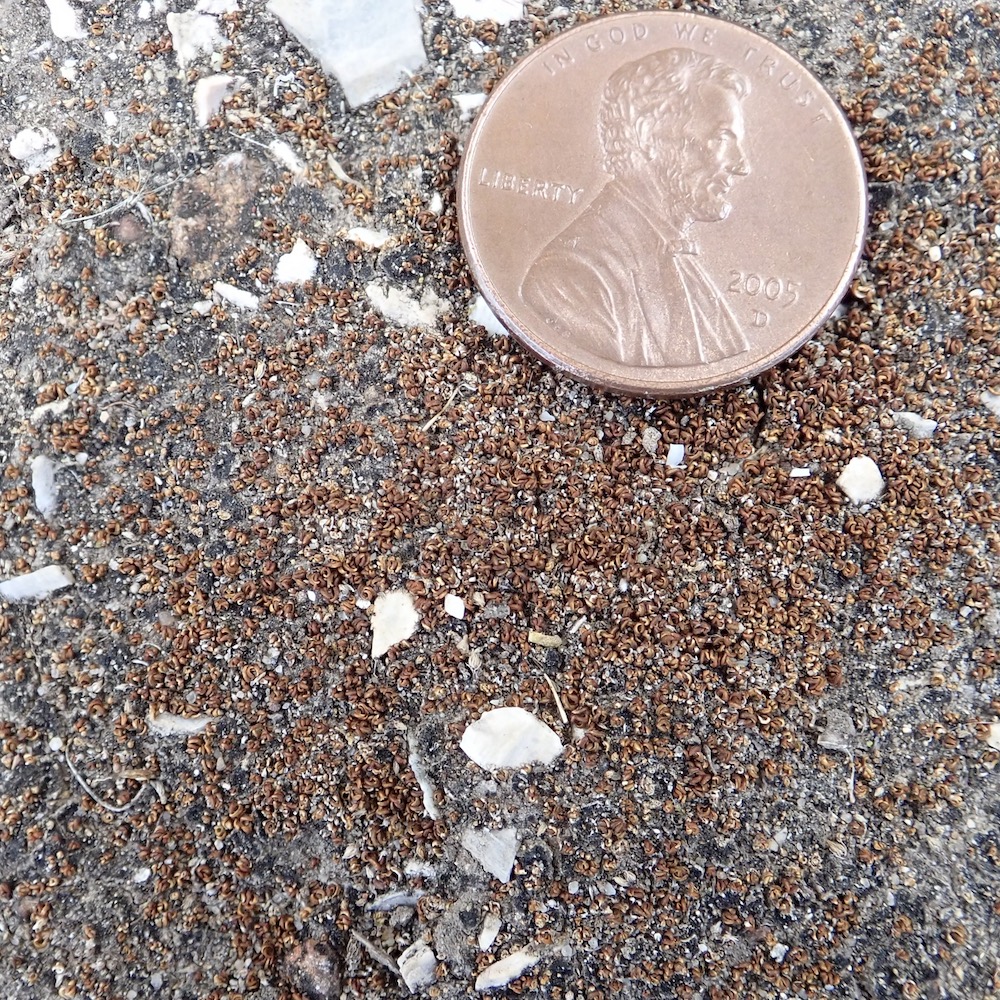
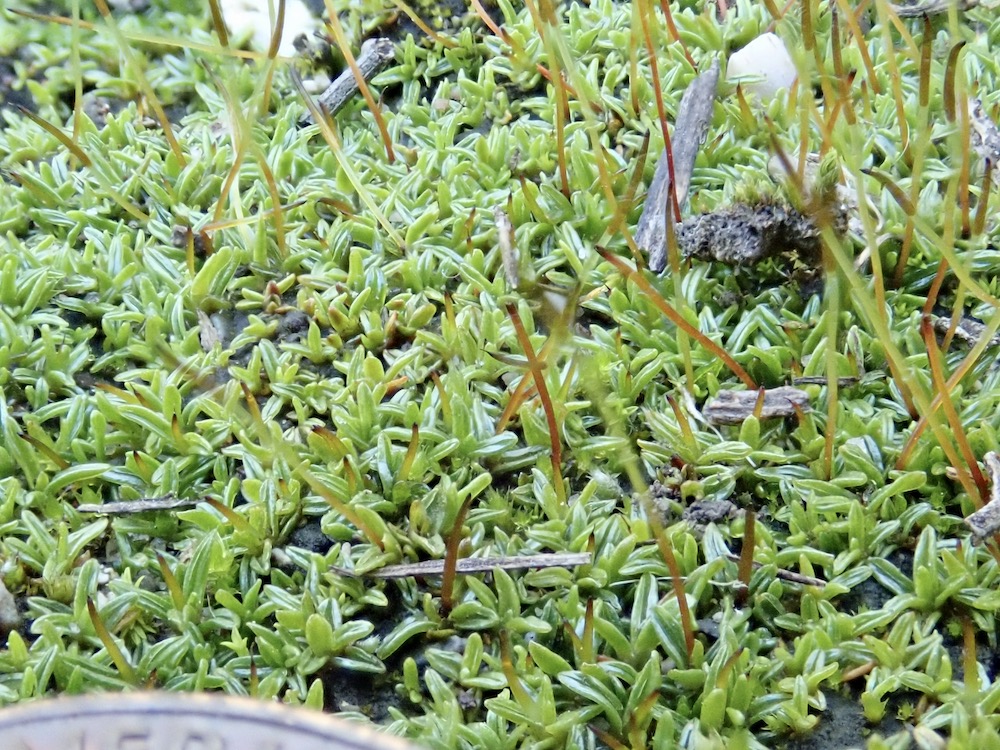
Aloina ambigua habitat moist
Aloina aloides var. ambigua, dense patch immediately behind penny, with other moss species, on compact, mineral soil, moist in January. CC BY-NC Amanda Heinrich
Aloina ambigua habitat dry
Aloina aloides var. ambigua same population on compact, mineral soil, dry and brown in November. CC BY-NC Amanda Heinrich
Habit:  Aloina aloides var. ambigua may be found as scattered plants, or in dense patches.
Aloina aloides var. ambigua
Aloina aloides var. ambigua patch, moist in January. CC BY-NC Amanda Heinrich
Aloina aloides var. ambigua dry
Aloina aloides var. ambigua patch, dry and brown in November. CC BY-NC Amanda Heinrich
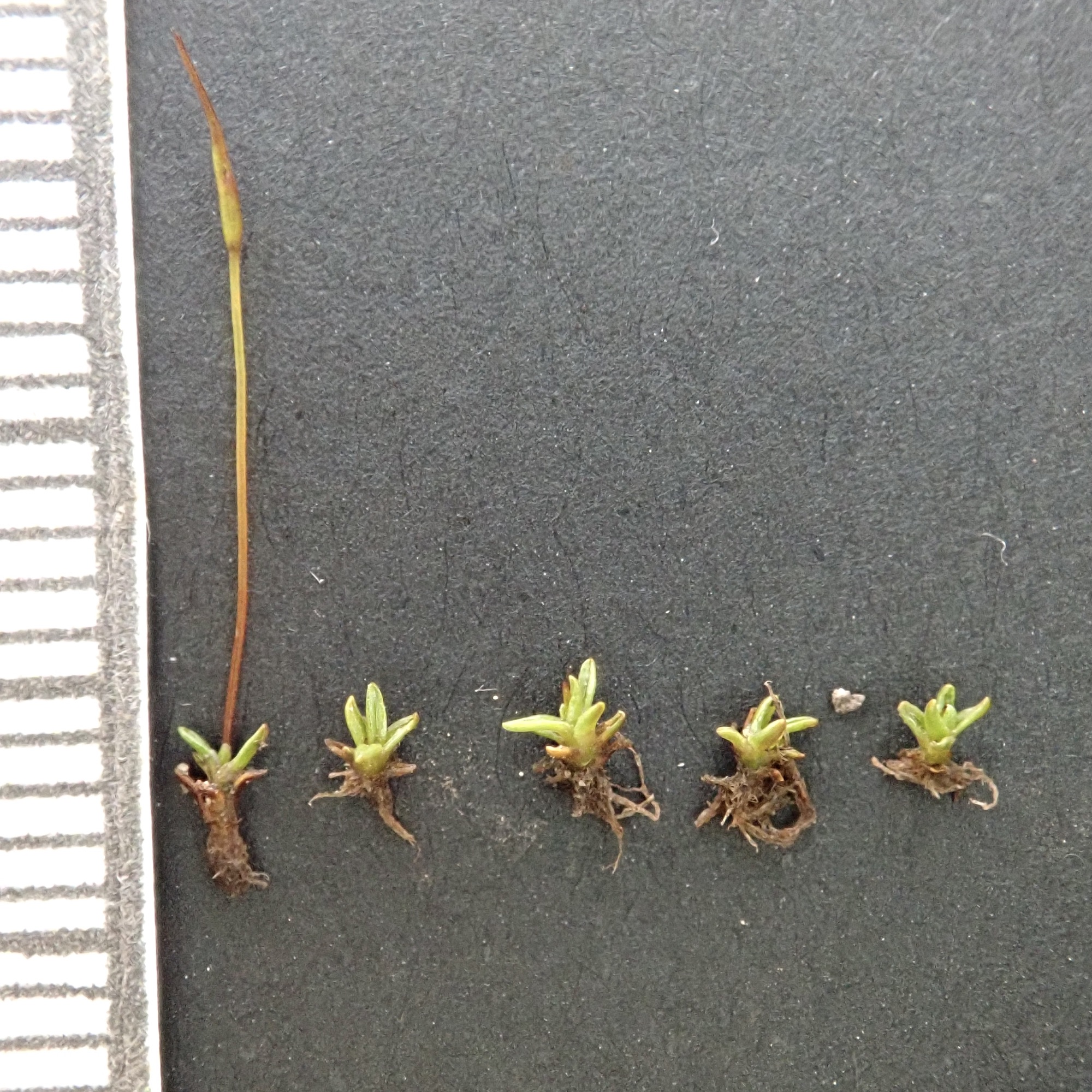
Plants:  Each Aloina aloides var. ambigua plant has just a few leaves arranged in a flattened rosette, perhaps 1 mm high. When fertile, the tall, straight sporophytes add another 3-5 mm in height. When dry, the leaves curl up and plants appear as brown nubs.
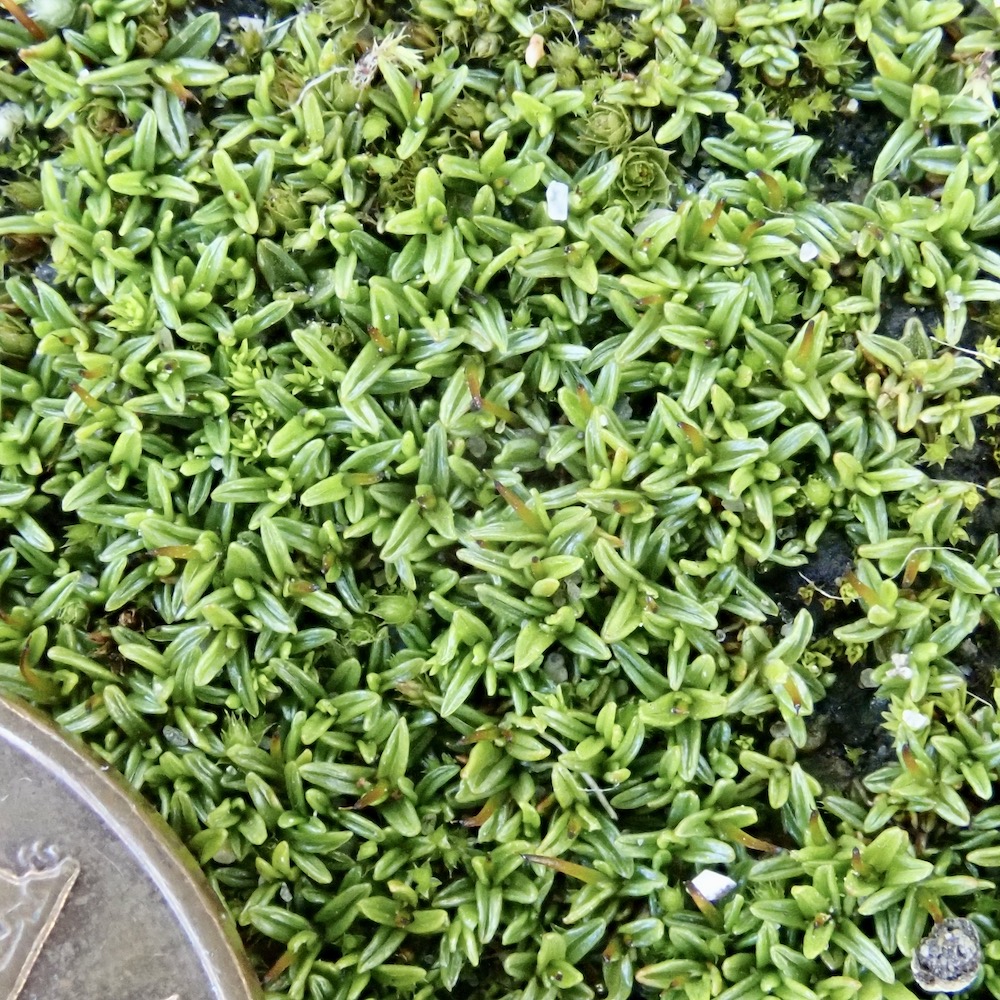
Aloina aloides var. ambigua moist
Aloina aloides var. ambigua moist, with thick strap-shaped leaves, appearing as miniature succulents, or piles of spruce needles, in January. CC BY-NC Amanda Heinrich
Aloina aloides var. ambigua dry
Aloina aloides var. ambigua dry, leaves rolled up and brown like a nubby carpet, in November. CC BY-NC Amanda Heinrich
Aloina ambigua
Aloina aloides var. ambigua individual plants moist (CAH #1196). CC BY-NC Amanda Heinrich
Aloina ambigua
Aloina aloides var. ambigua individual plants moist (CAH #1196). CC BY-NC Amanda Heinrich
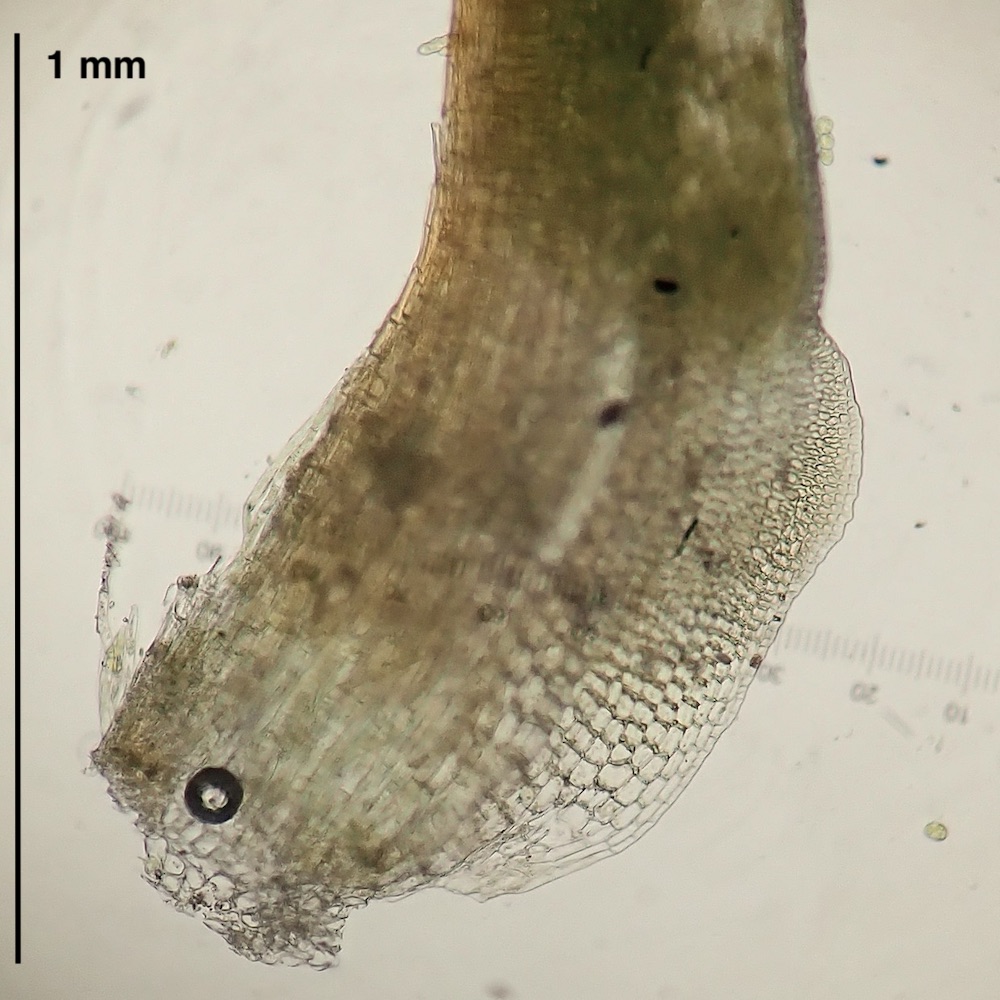
Leaves: Aloina ambigua leaves are strap-shaped (ligulate) or tongue-shaped (lingulate), 1-2.8 mm long, with inrolled margins partially covering a layer of finger-like photosynthetic filaments (lamellae) arising from the midrib (costa). The leaf tips are blunt and rounded, with the costa rarely projecting beyond it. The leaf base is thinner and sheathing, with flat margins which reportedly do not have a clear border (limbidium), that is, there are not several rows of significantly longer and thinner walled cells along the edge. The Moss Flora of Mexico states that the marginal cells may be bleached. In my experience, there are one or two rows of cells that are indeed bleached (hyaline) and do have thinner walls than those of the interior cells, but are not typically longer and narrower.
Aloina ambigua leaves
Aloina aloides var. ambigua leaves from a single plant (CAH #1203). CC BY-NC Amanda Heinrich
Aloina ambigua leaves
Aloina aloides var. ambigua three leaves, 40x, (CAH #1203). CC BY-NC Amanda Heinrich
Aloina ambigua leaf
Aloina aloides var. ambigua leaf, 100x, (CAH #1196). CC BY-NC Amanda Heinrich
Aloina ambigua leaf base
Aloina aloides var. ambigua leaf base, 100x, (CAH #1203). CC BY-NC Amanda Heinrich
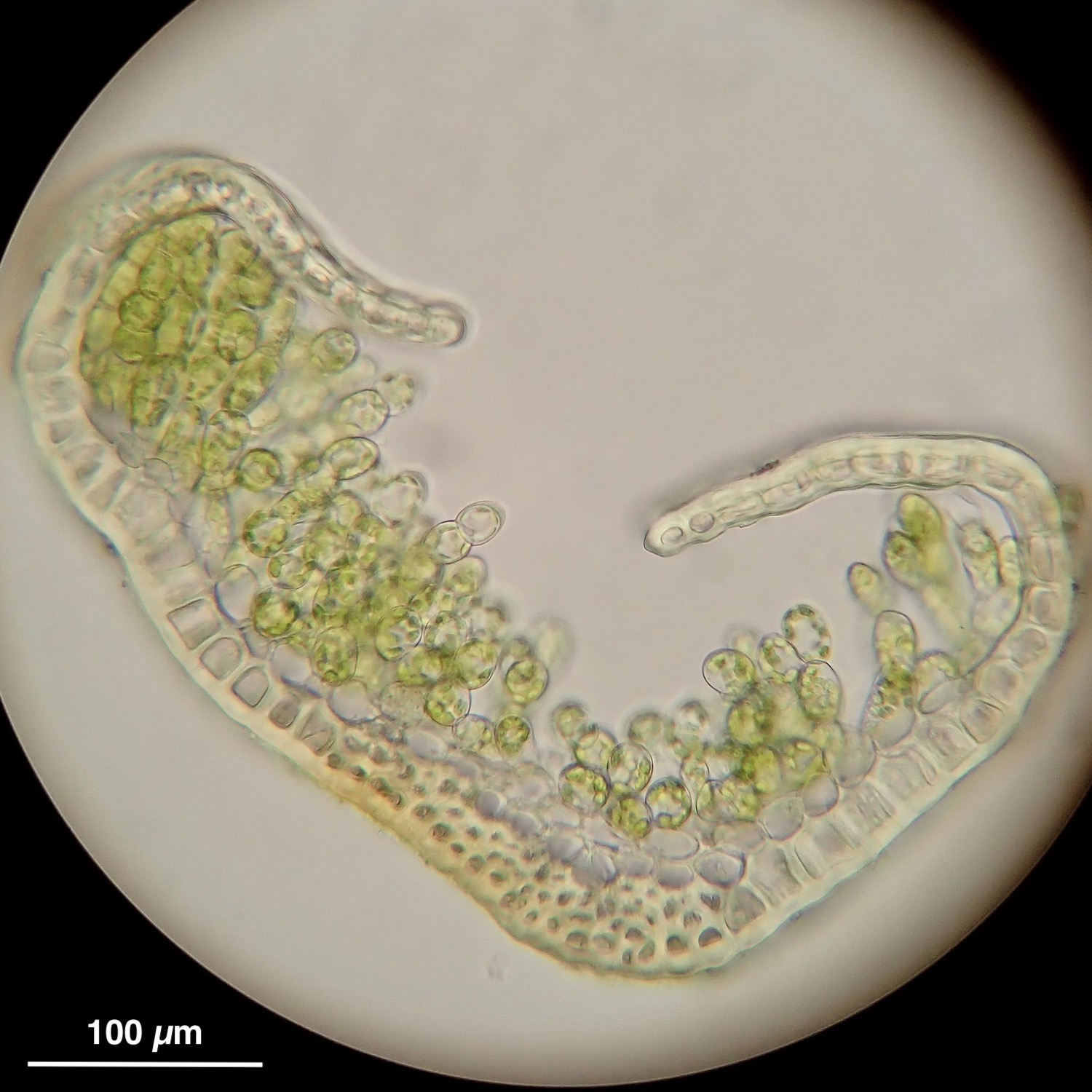
Aloina ambigua leaf cross-section
Aloina aloides var. ambigua leaf cross section, showing photosynthetic lamellae snuggled by incurved leaf margins, 400x, (CAH #1196). CC BY-NC Amanda Heinrich
Aloina ambigua filament apical cell
Aloina aloides var. ambigua filament, 4 cells high, apical cell wall thickened, 400x, (CAH #1196). CC BY-NC Amanda Heinrich
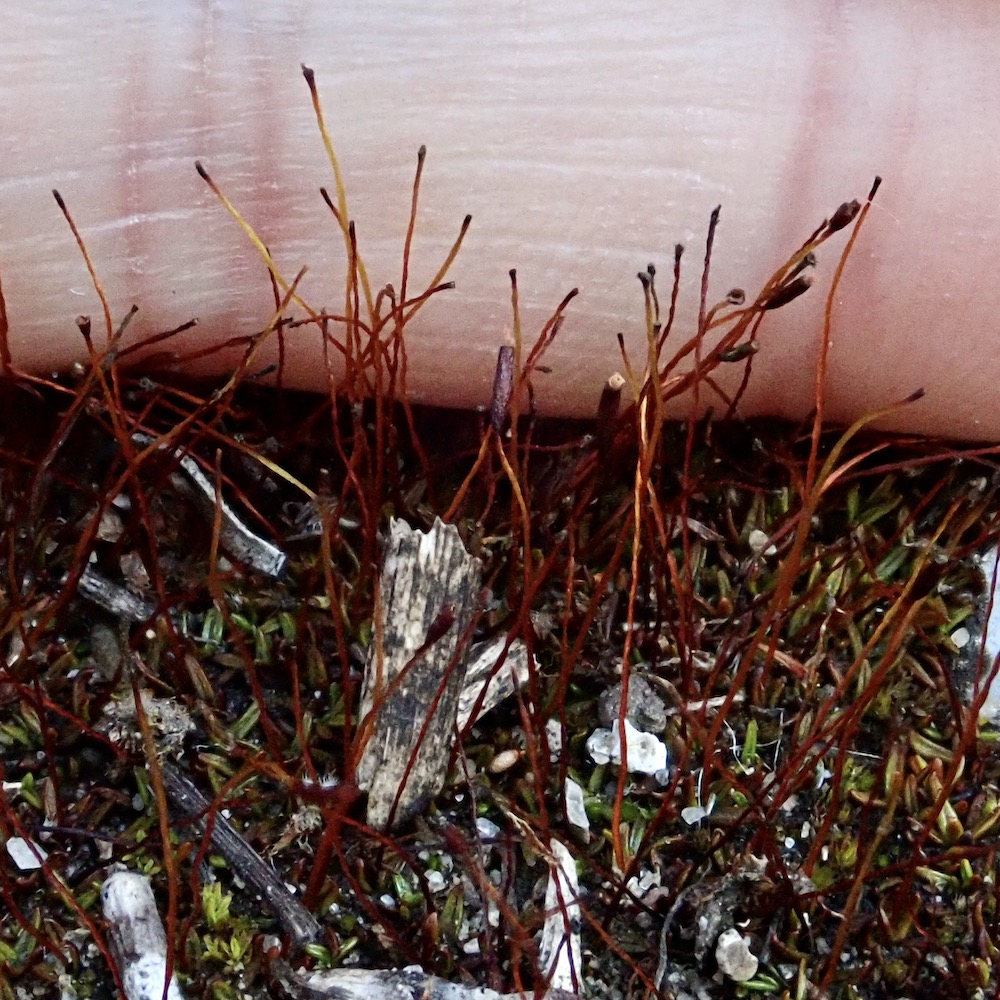
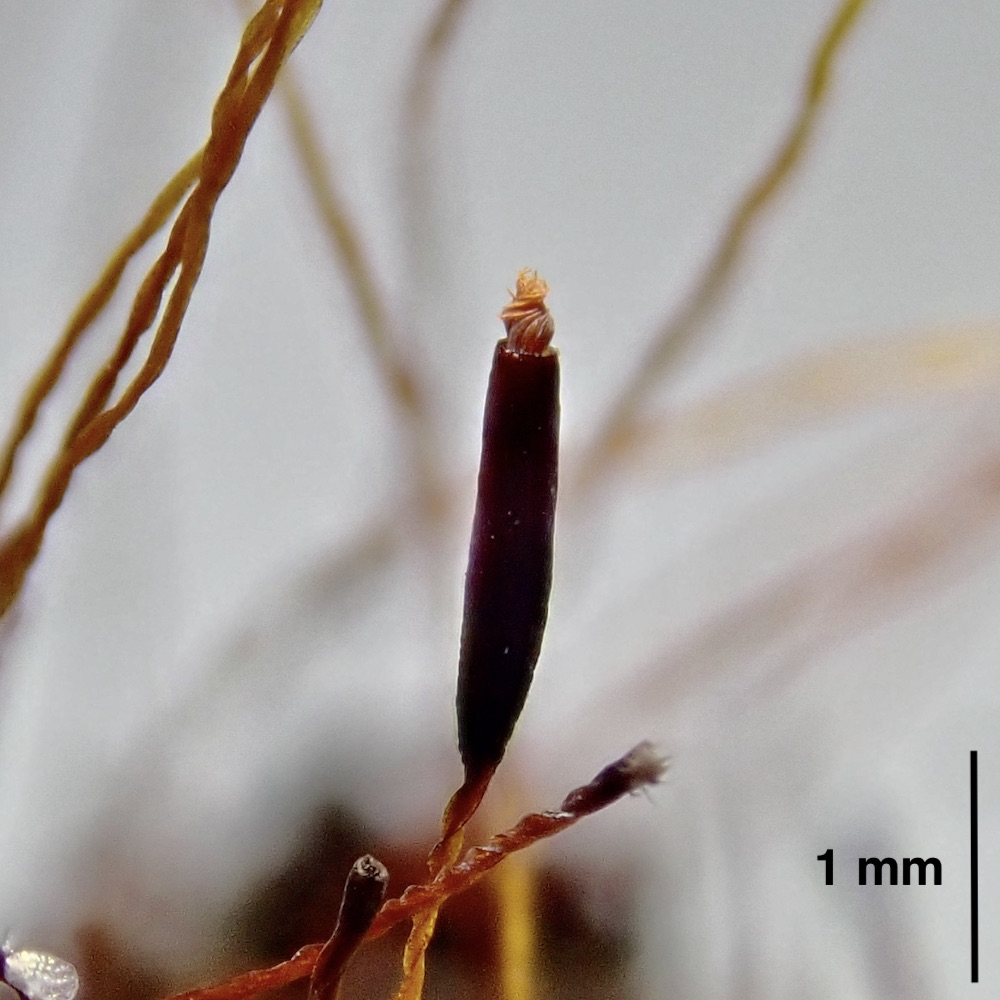
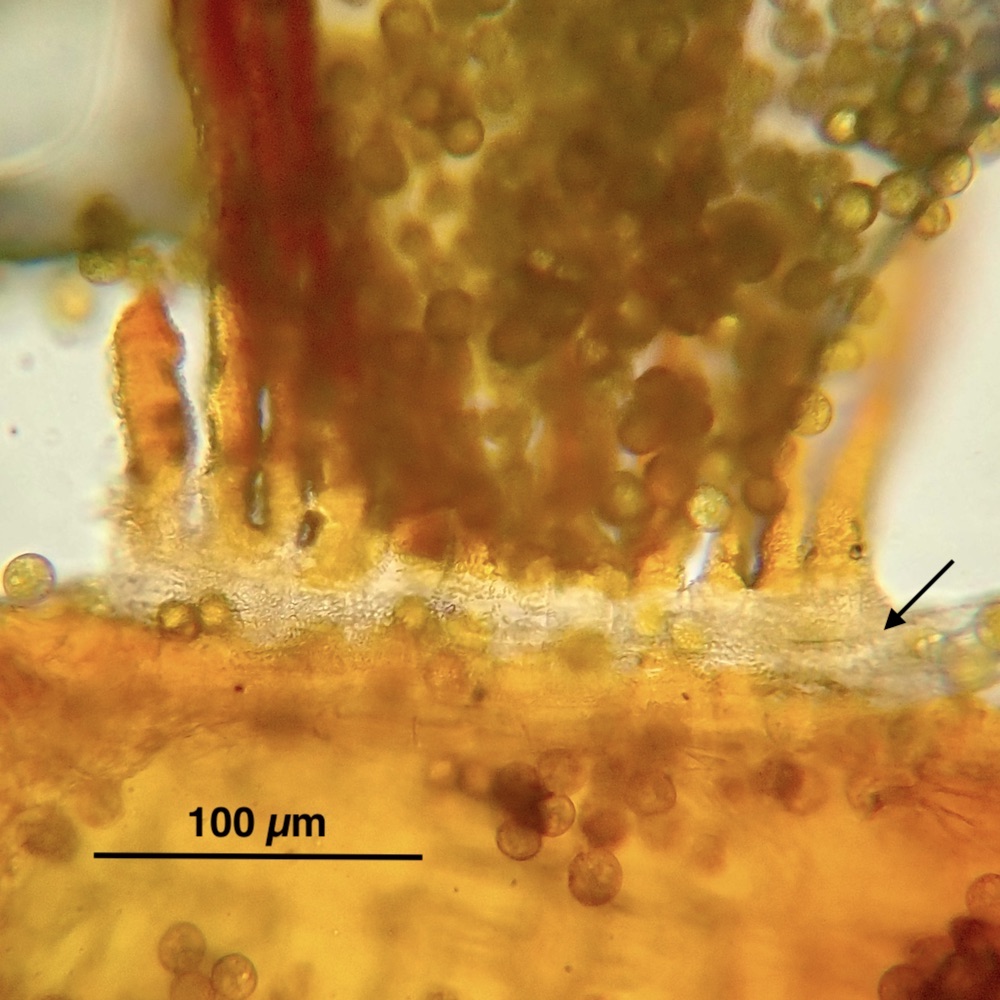
Sporophytes: Aloina aloides var. ambigua sporophytes tower up to 13 mm above the plants, with stalks (setae) that are overall straight, but which regularly twist to the left at the base and then to the right near the capsule, according to the authors of the Moss Flora of Mexico, and indeed I have seen this to be the case. The capsules are cylindric, up to 3 mm long, and if they manage to make it to maturity, will have a set of long (600-1200 µm), twisted teeth (peristome), which on close inspection (400x) are seen to be atop a basal membrane a few cells tall. Before fully mature, the peristome teeth are covered with a lid (operculum) which is long and beak-like (rostrate).
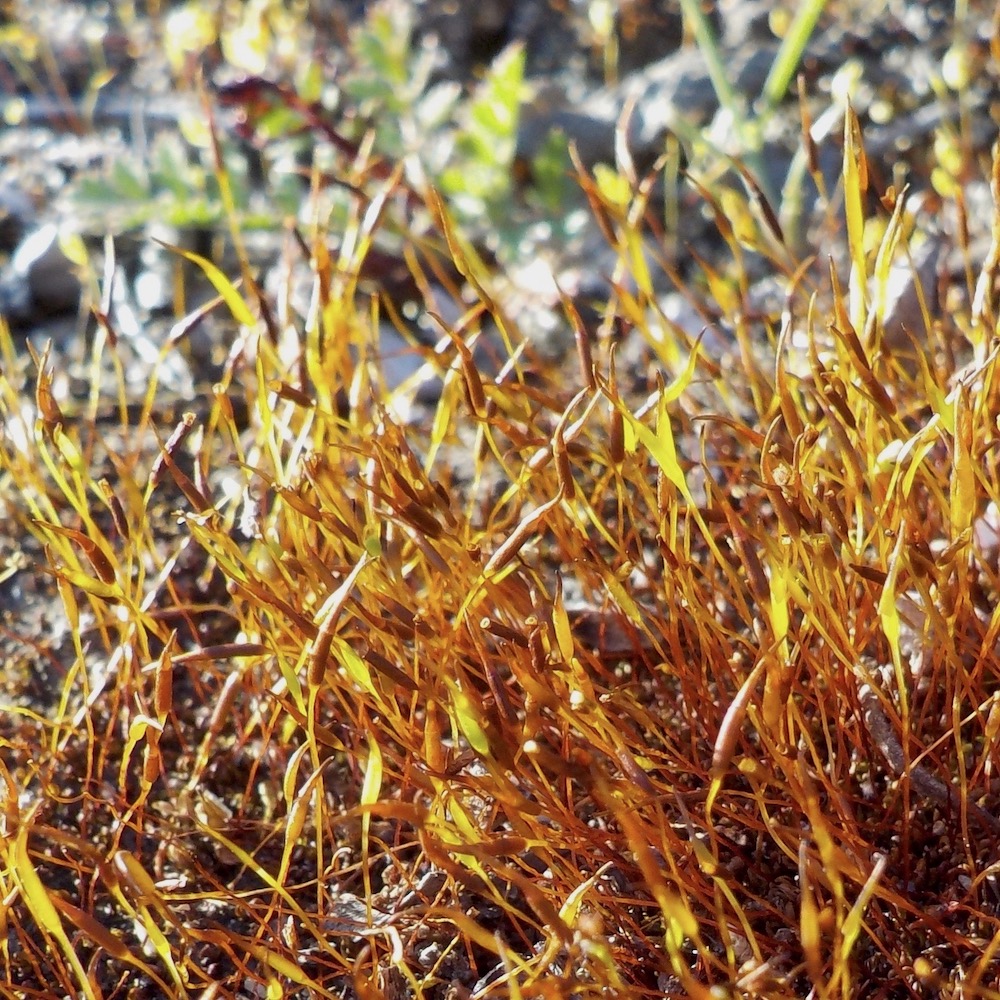
Aloina aloides var. ambigua sporophytes
Aloina aloides var. ambigua with copious sporophytes at various stages in early March 2017. CC BY-NC Amanda Heinrich
Aloina aloides var. ambigua sporophytes
Aloina aloides var. ambigua sporophytes, a few mature, many aborted or eaten in early April 2023, (CAH #1087). CC BY-NC Amanda Heinrich
Aloina aloides var. ambigua capsule, twisted peristome
Aloina aloides var. ambigua mature sporophyte capsule with twisted peristome teeth, (CAH #1087). CC BY-NC Amanda Heinrich
Aloina aloides var. ambigua basal membrane
Aloina aloides var. ambigua basal membrane (black arrow) visible between capsule mouth and peristome teeth on mature sporophyte, 400x, (CAH #1087). CC BY-NC Amanda Heinrich
Aloina ambigua capsule with operculum and calyptra
Aloina aloides var. ambigua immature sporophyte capsule with calyptra removed, revealing rostrate operculum, (CAH #1199). CC BY-NC Amanda Heinrich
Aloina ambigua membrane
Aloina aloides var. ambigua immature sporophyte capsule with membrane between capsule mouth and peristome teeth already visible, 400x, (CAH #1199). CC BY-NC Amanda Heinrich
Male plants: Aloina aloides var. ambigua is dioicous, with separate male and female plants, or apparently sometimes rhizautoicous, with males attached to females via rhizoids. Males can be spotted by the presence of an orange-brown mound in the center of the rosette. These are the sausage-like antheridia containing sperm, interspersed with sterile finger-like paraphyses.
Aloina ambigua male plant
Aloina aloides var. ambigua male plant with orange-brown mound of antheridia and paraphyses in center of rosette, (CAH #1203). CC BY-NC Amanda Heinrich
Aloina ambigua antheridia and paraphyses
Aloina aloides var. ambigua sausage-shaped antheridia and finger-like paraphyses, 100x, (CAH #1203). CC BY-NC Amanda Heinrich
Distribution:  
Aloina aloides var. ambigua distribution
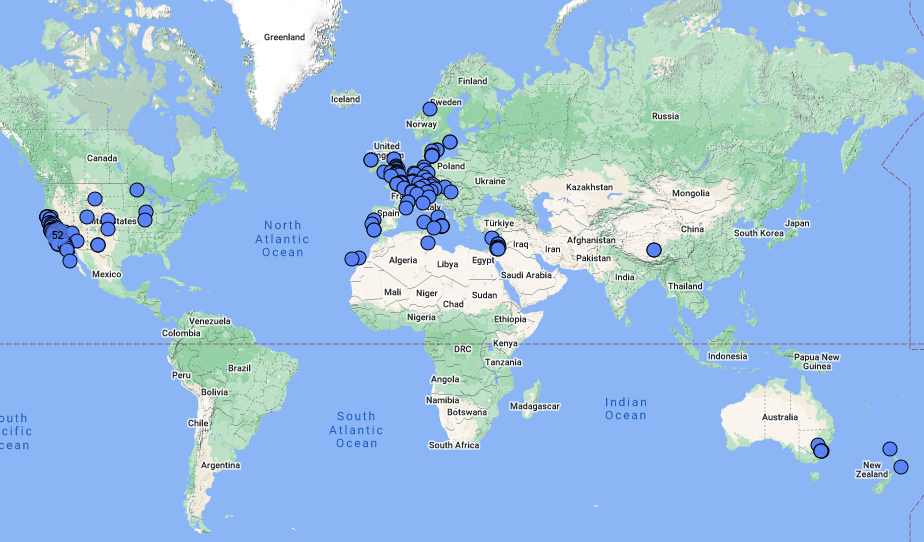
 Aloina aloides var. ambigua collections. Map generated by google maps using data from the Consortium of Bryophyte Herbaria of accessioned collections from herbaria.
Similar Species in Santa Barbara County
Aloina bifrons has leaves with a long hyaline awn.
Name
Both the genus name, Aloina, and the species epithet, aloides, refer to the thick, juicy leaves which resemble those of the succulent Aloe plant. The variety name, ambigua, does not instill a lot of confidence, does it?
References and Further Reading
Aloina aloides var. ambigua, Claudio Delgadillo M., Flora of North America Vol. 27
California Mosses, Bill and Nancy Malcolm, Jim Shevock and Dan Norris. Available for purchase from the California Native Plant Society here.
Contributions toward a Bryoflora of California II. A Key to the Mosses, Daniel H. Norris and James R. Shevock, Madrono 51(2): 133-269. 2004. Available for purchase here.
Aloina ambigua, British Bryological Society Field Guide
The Moss Flora of Mexico, Edited by Aaron J. Sharp, Howard Crum & Patricia M Eckel, The New York Botanical Garden, 1994
Aloina ambigua, Bildatlas der Moose Deutschlands, Michael Lüth