Hornworts
Phymatoceros phymatodes (M. Howe) R. J. Duff, J. C. Villarreal, Cargill & Renzaglia
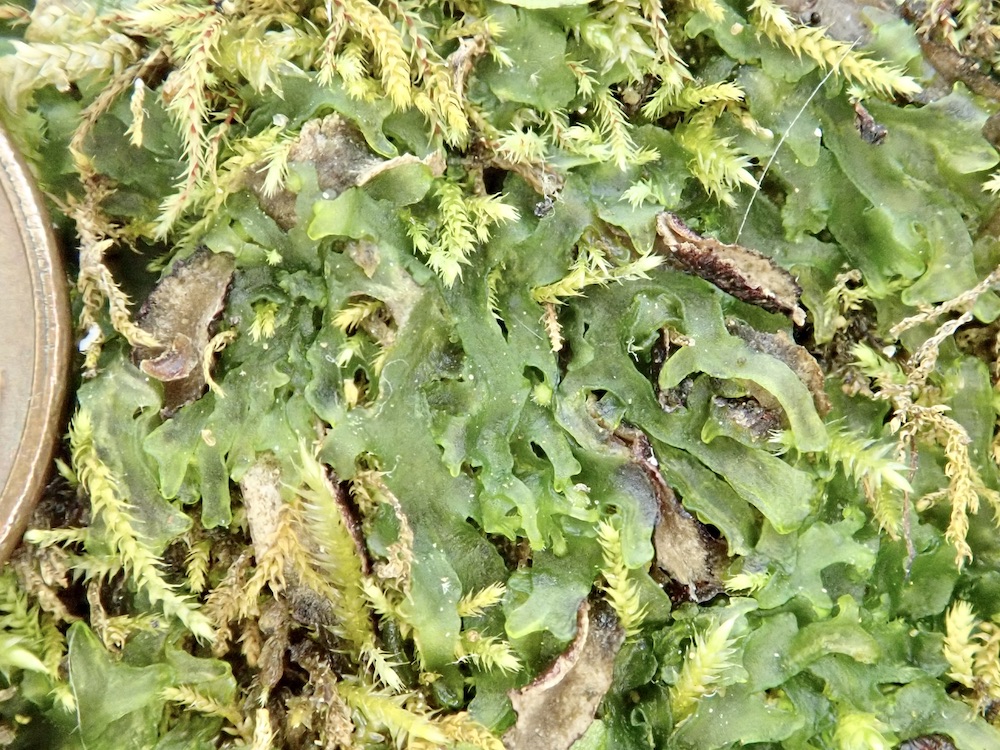
Description: Phymatoceros phymatodes is a hornwort with strap-shaped thalli, often with smooth, parallel sides, but sometimes with more flared and frilly edges, particularly when growing in dense populations. Plants rarely produce sporophytes, but nearly always form spherical tubers on long cylindrical stalks extending from the underside of the thallus. So far, here in Santa Barbara County, I have seen it primarily on the crest of the Santa Ynez Mountains, on the banks of seasonal streams, as well as on road cuts and trail cuts, and even in moist openings in the chaparral.
Key Characters:
  • Thallus: strap-like, solid (no cavities)
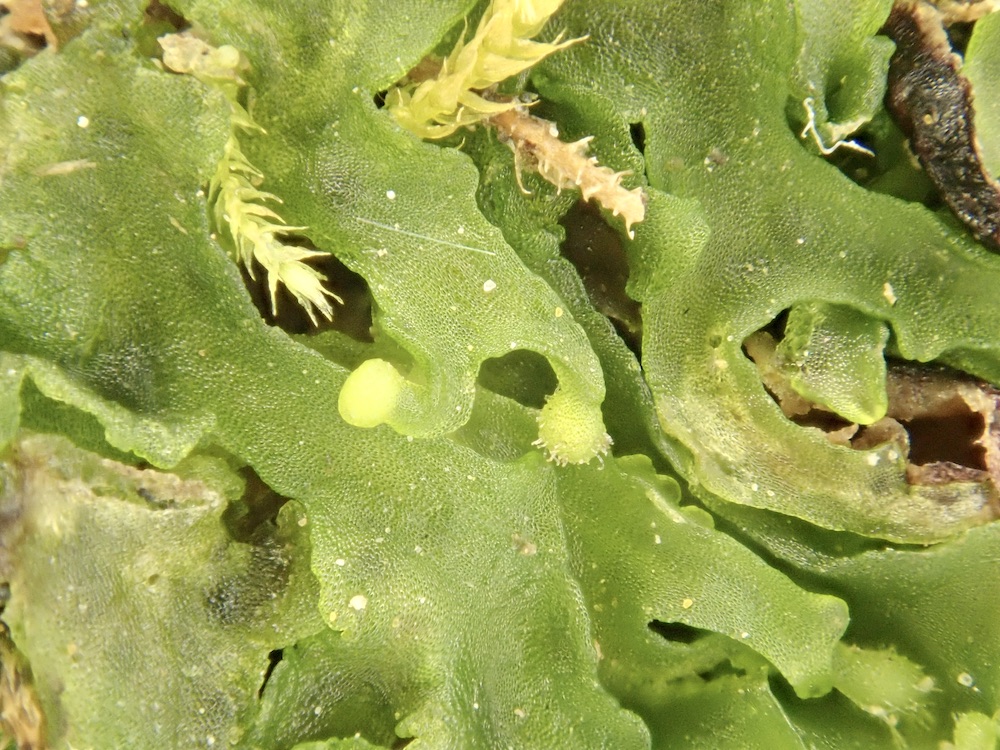
  • Tubers: spherical, with or without hairs, on cylindrical stems on underside of thallus
  • Sporophytes: uncommon, up to 2 cm long, quite thick and stubby
  • Spores: yellow to brown
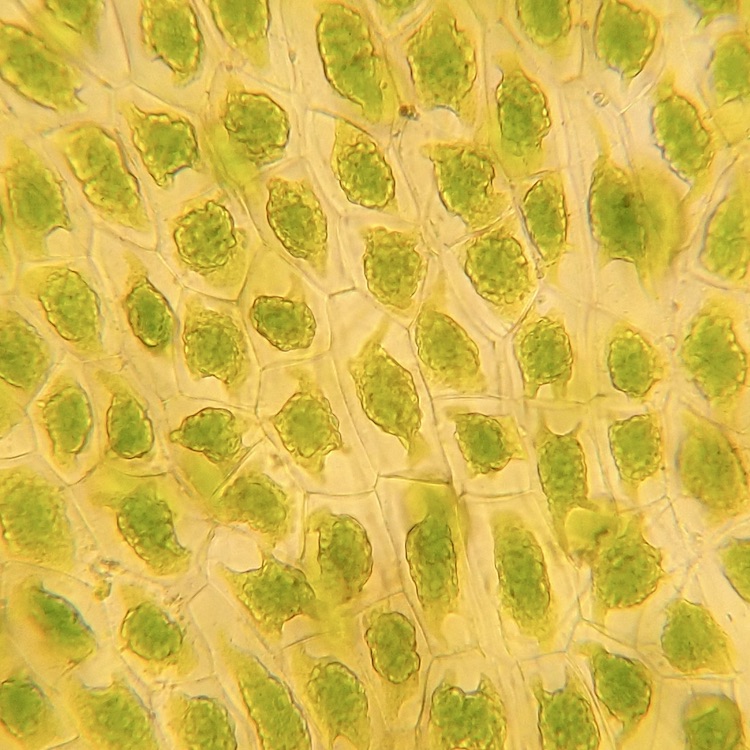
  • Chloroplasts: usually 1/cell, usually without pyrenoids
Scroll down for photos illustrating habitat, form, tubers, and chloroplasts (click to enlarge).
Phymatoceros phymatodes
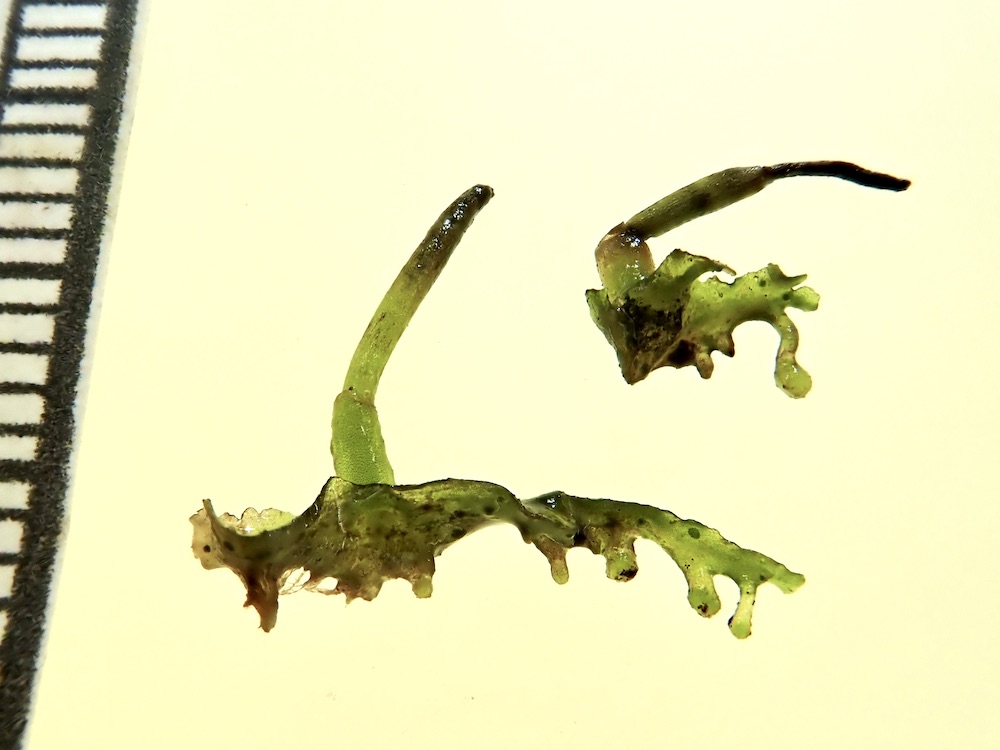
Phymatoceros phymatodes individual plant with mature spherical tubers on long cylindrical stalks extending from lower surface. CC BY-NC Amanda Heinrich
Phymatoceros phymatodes
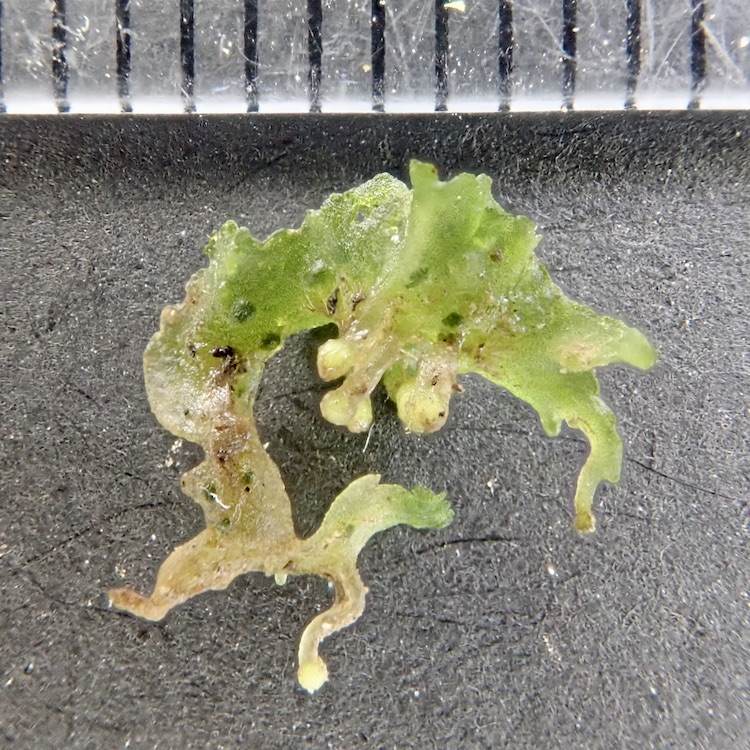
Phymatoceros phymatodes with immature spherical tubers beginning to extend from lower surface, one with hairs, one without. CC BY-NC Amanda Heinrich
Phymatoceros phymatodes spherical tuber
Phymatoceros phymatodes young tuber with hairs, 100x. CC BY-NC Amanda Heinrich
Phymatoceros phymatodes cross sections
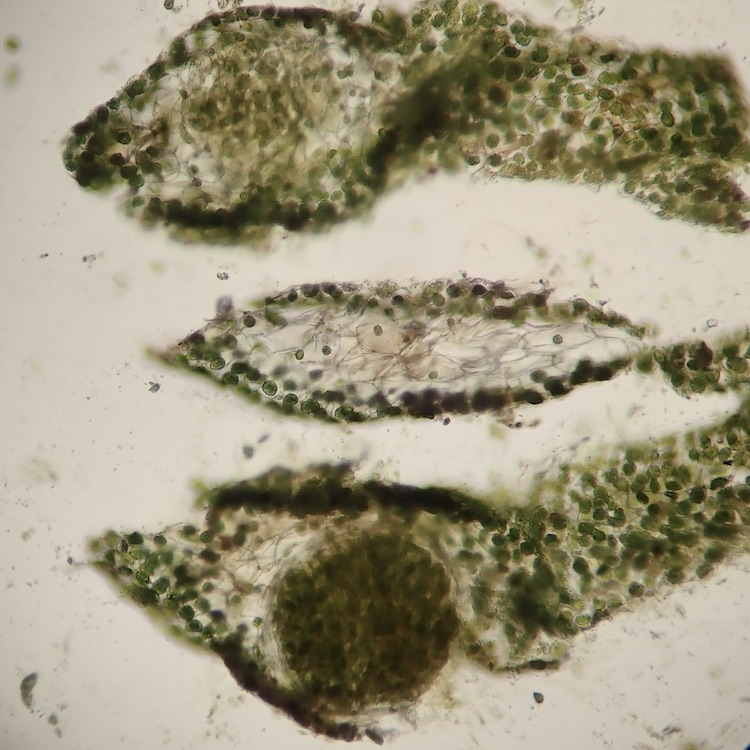
Phymatoceros phymatodes thallus cross-sections, lower one with large spherical cyanobacteria colony. CC BY-NC Amanda Heinrich
Phymatoceros phymatodes chloroplasts
Phymatoceros phymatodes thallus cells, each with one large chloroplast, 400x. CC BY-NC Amanda Heinrich
Phymatoceros phymatodes habitat
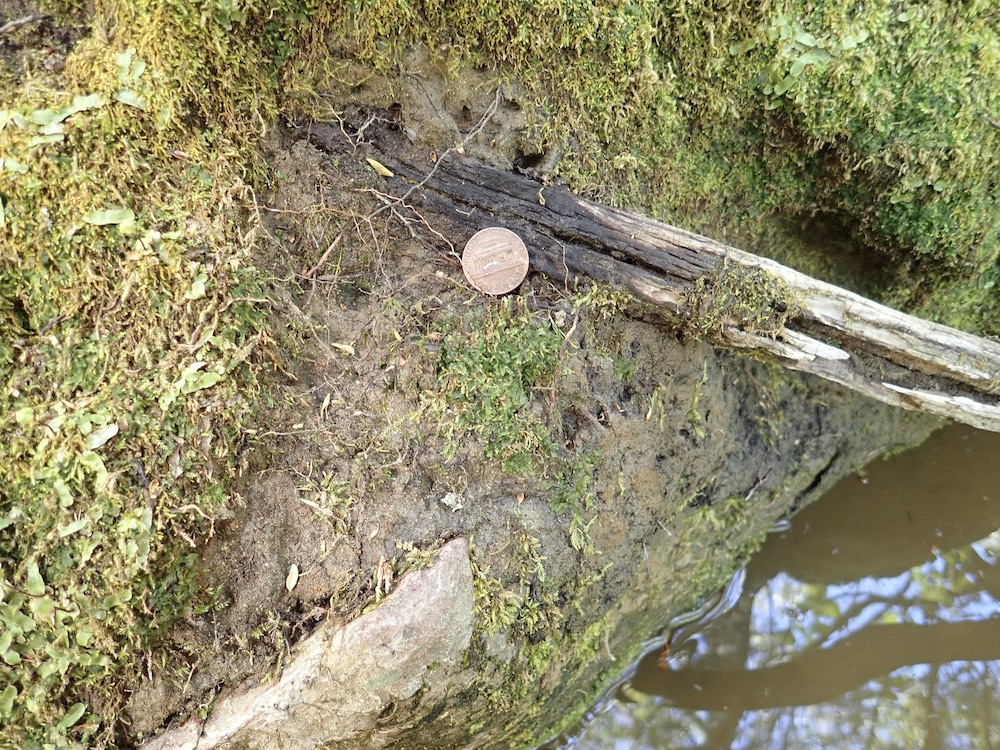
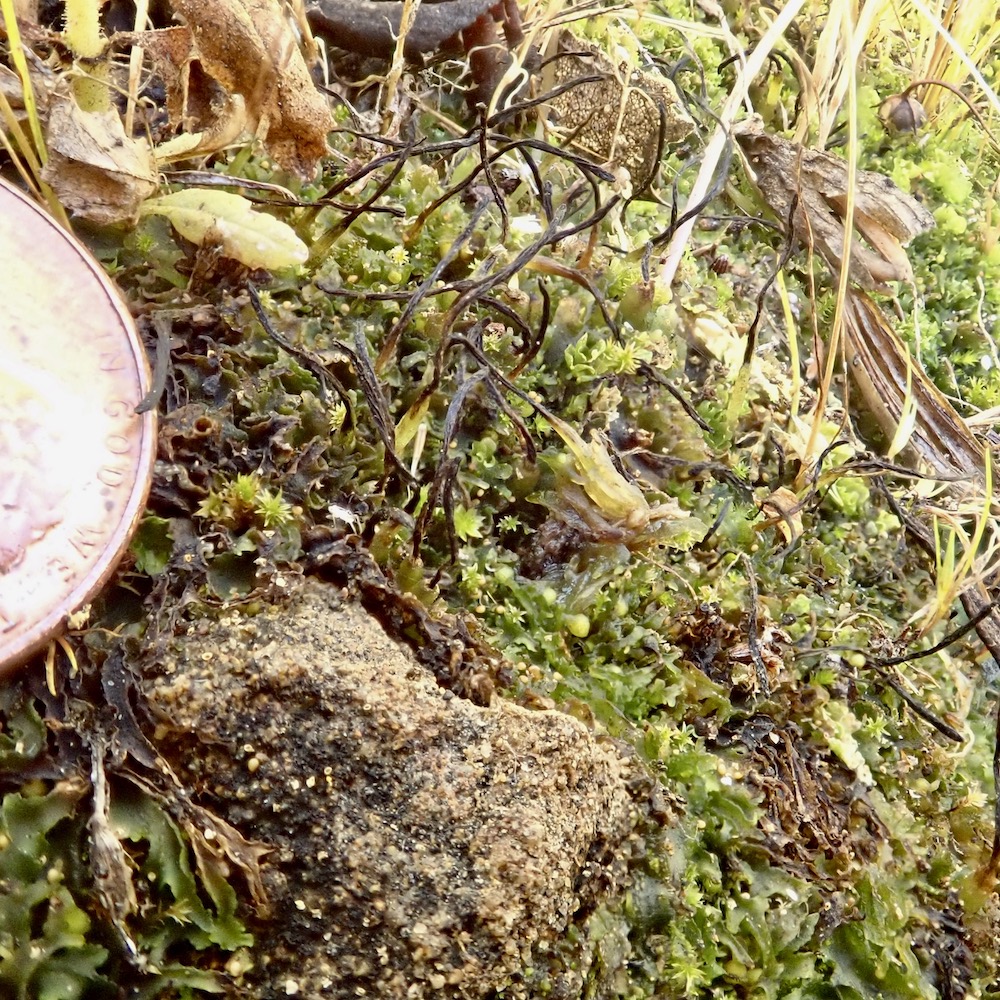
Phymatoceros phymatodes habitat here in Santa Barbara County, CA, on moist vertical soil above seasonal stream. CC BY-NC Amanda Heinrich
Phymatoceros phymatodes
Phymatoceros phymatodes individual plant, from above. CC BY-NC Amanda Heinrich
Phymatoceros phymatodes
Phymatoceros phymatodes underside of individual plant: many tubers on stalks of various lengths, black spherical cyanobacteria colonies visible within thallus. CC BY-NC Amanda Heinrich
Phymatoceros phymatodes plants with sporophytes
Phymatoceros phymatodes plants with sporophytes. CC BY-NC Amanda Heinrich
Phymatoceros phymatodes young sporophytes
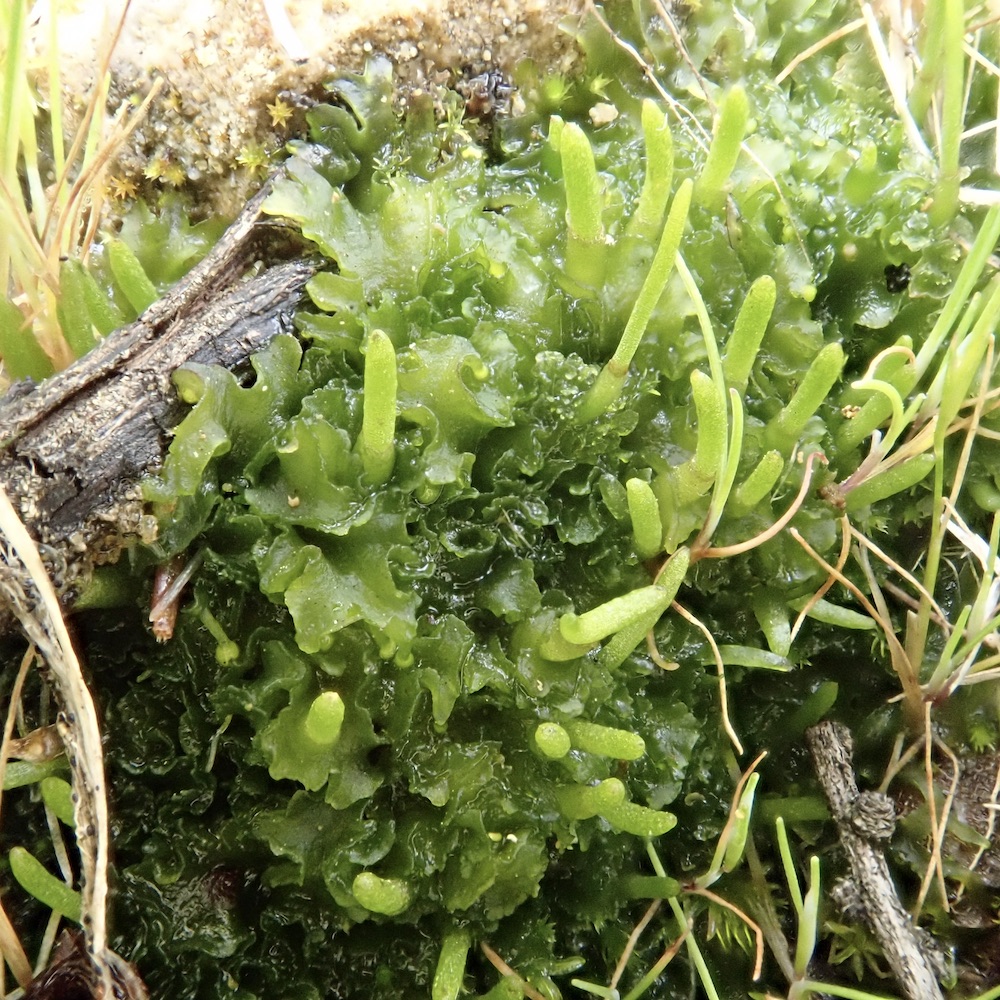
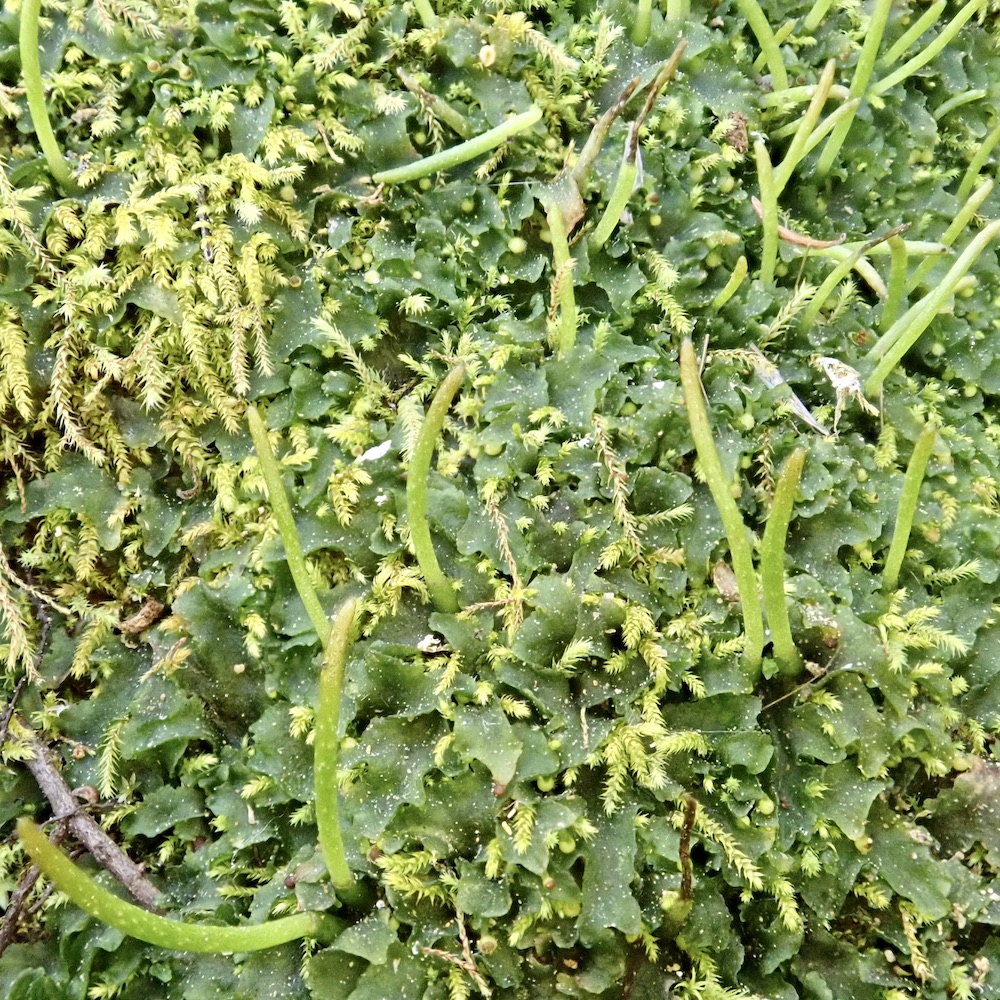
Phymatoceros phymatodes with nascent, thick, stubby, immature sporophytes. Note single, significantly more slender sporophyte of Anthoceros fusiformis in center. CC BY-NC Amanda Heinrich
Phymatoceros phymatodes with Anthoceros Fusiformis
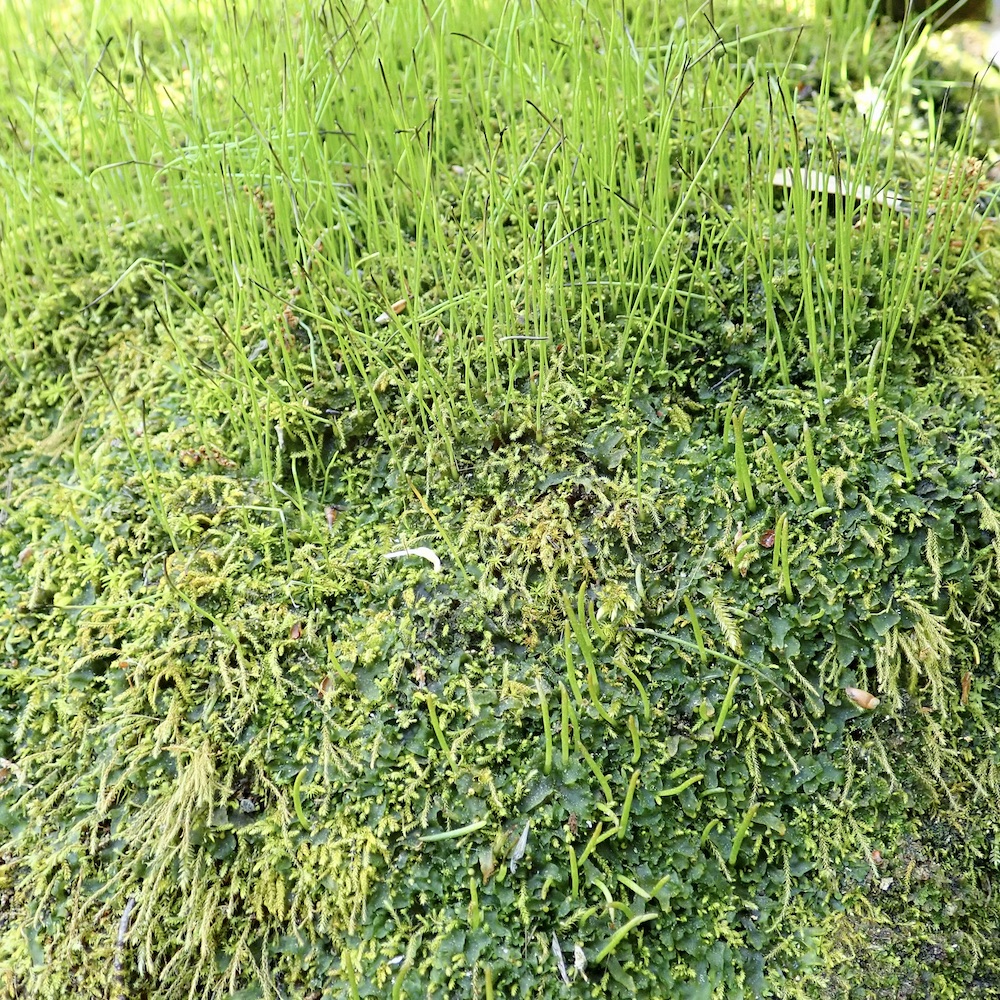
Phymatoceros phymatodes in foreground with maturing sporophytes, turning brown at tips. Anthoceros fusiformis plants in background with significantly taller, thinner, maturing sporophytes turning black at tips. CC BY-NC Amanda Heinrich
Phymatoceros phymatodes with maturing sporophytes
Phymatoceros phymatodes with maturing sporophytes, turning brown at tips. CC BY-NC Amanda Heinrich
Phymatoceros phymatodes mature sporophytes
Phymatoceros phymatodes with sporophytes reaching maturity, turning brown and dry. CC BY-NC Amanda Heinrich
Phymatoceros phymatodes spores and pseudoelaters
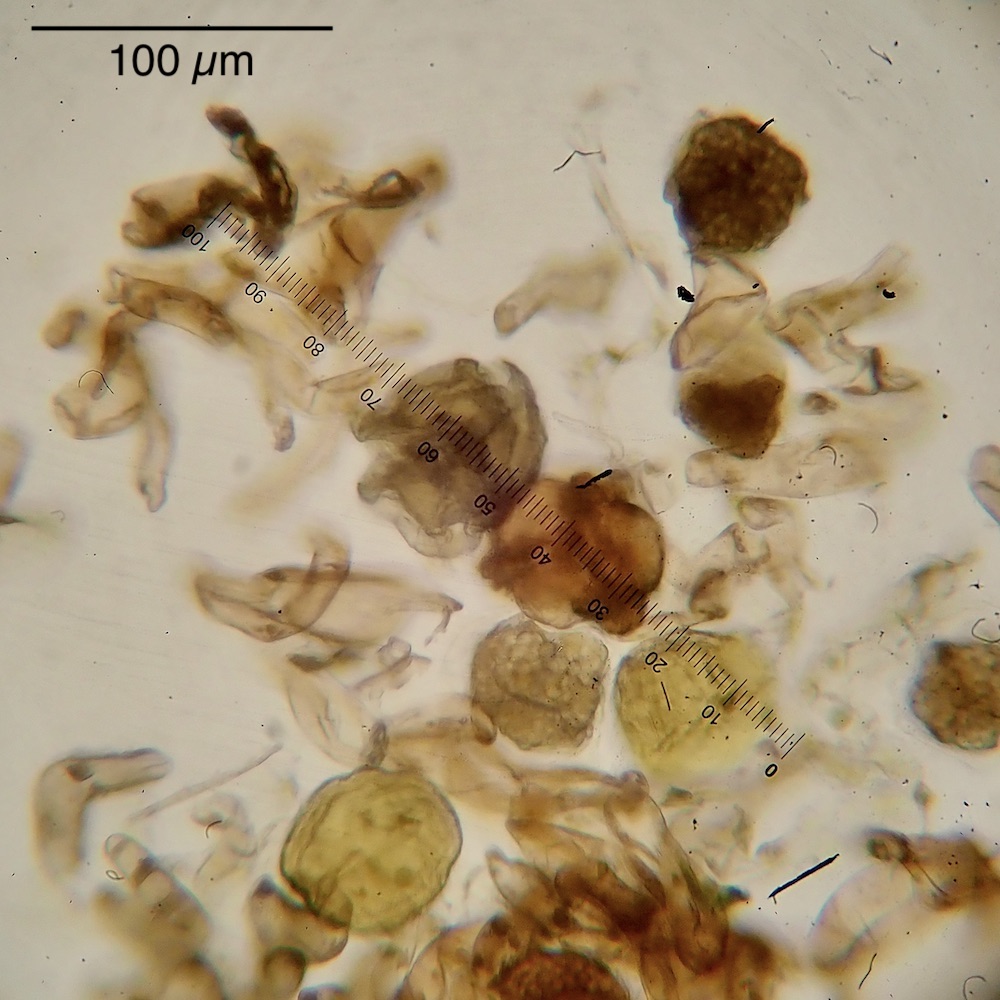
Phymatoceros phymatodes pseudoelaters and spores at various stages of maturity. CC BY-NC Amanda Heinrich
References and Further Reading
Contributions toward a bryoflora of California III. Keys and annotated species catalogue for liverworts and hornworts, William T. Doyle and Raymond E. Stotler, Madroño, A West American Journal of Botany, Volume 53, Number 2. This issue can be ordered here.
Anthocerotophyta, Juan Carlos Villarreal A. Karen S. Renzaglia, Bryophyte Flora of North America, Provisional Publication, Missouri Botanical Garden.
Hornworts of Oregon, David Wagner