Hornworts
Phaeoceros carolinianus (Michaux) Proskauer
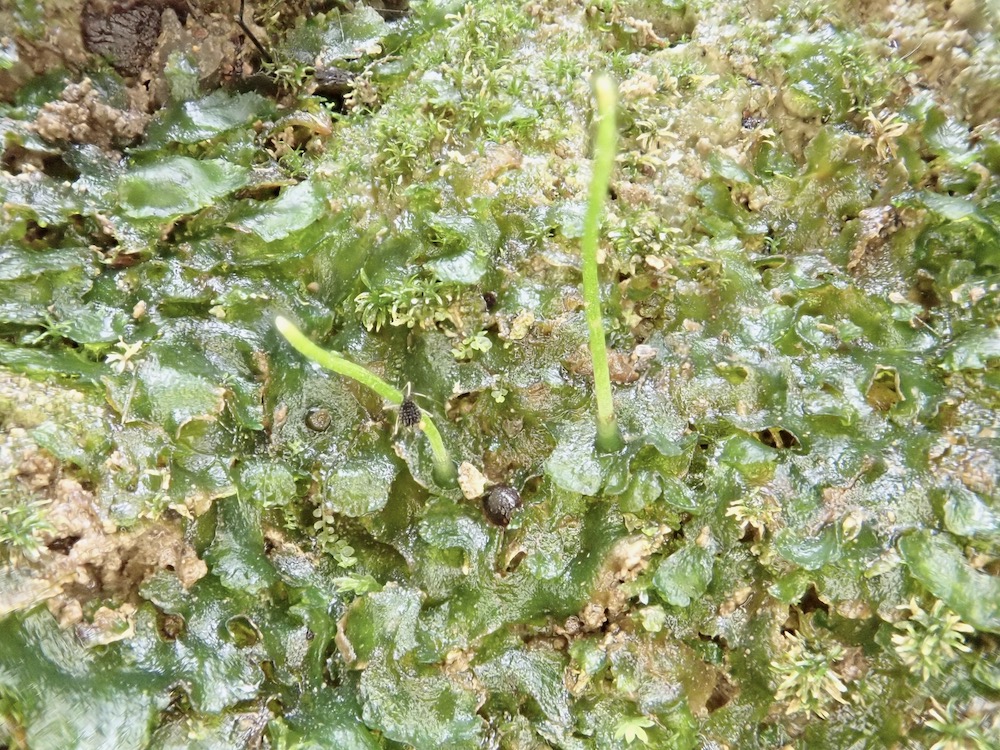
Phaeoceros carolinianus
Phaeoceros carolinianus on rock face in waterfall. CC BY-NC Amanda Heinrich
Description: Phaeoceros carolinianus is a hornwort with a smooth, deep-green thallus, which forms irregular, dichotomously branching ribbons. Here in Santa Barbara County, I have found it only at Nojoqui Falls. It is our only species that lacks both lamellae and tubers. Sporophytes are 2-5 cm tall, and mature spores are yellow, with fine spines on the distal face. In the absence of spores, it is helpful to look for antheridial pits on the upper surface, each containing 2-4 antheridia (male structures containing sperm), which are pale and quite large (up to 150 μm). Thallus cells have one large chloroplast with a central pyrenoid, visible as bumps or ridges at high magnification. Large, black, spherical colonies of cyanobacteria are often visible, particularly on the underside of the thallus.
Key Characters:
  • Thallus: variable shape, solid (no cavities), smooth (no lamellae)
  • Tubers: none
  • Sporophytes: 2-5 cm tall
  • Spores: yellow, fine spines on distal face, fewer than 30 warts on proximal face
  • Pseudoelaters: 3-4 cells (but may disintegrate)
  • Chloroplasts: usually 1/cell, with central pyrenoid visible as a bump or ridges
Scroll down for photos illustrating habitat, form, antheridial pits, Nostoc colonies, chloroplasts and spores (click to enlarge).
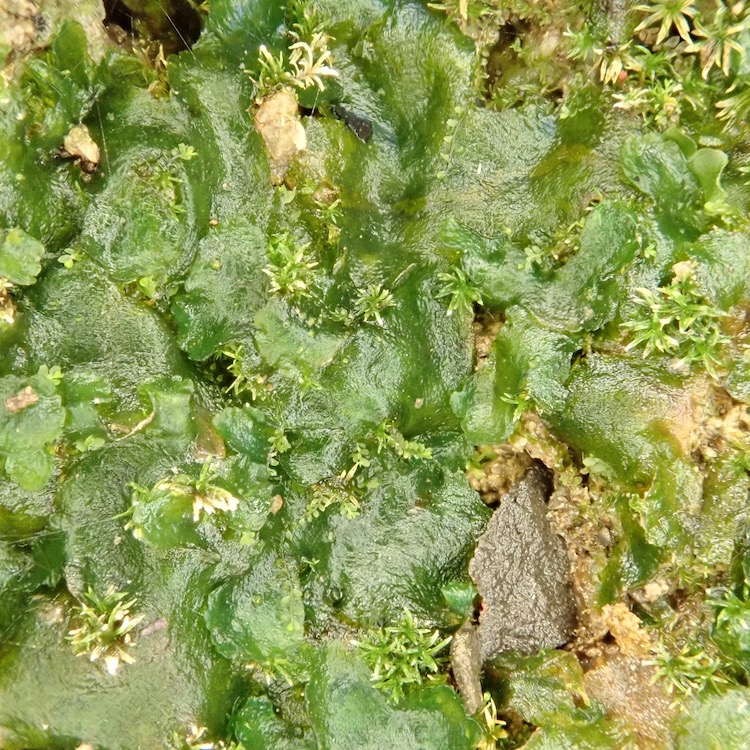
Phaeoceros carolinianus
Phaeoceros carolinianus in waterfall, with wide thallus and smooth surface, in March. CC BY-NC Amanda Heinrich
Phaeoceros carolinianus
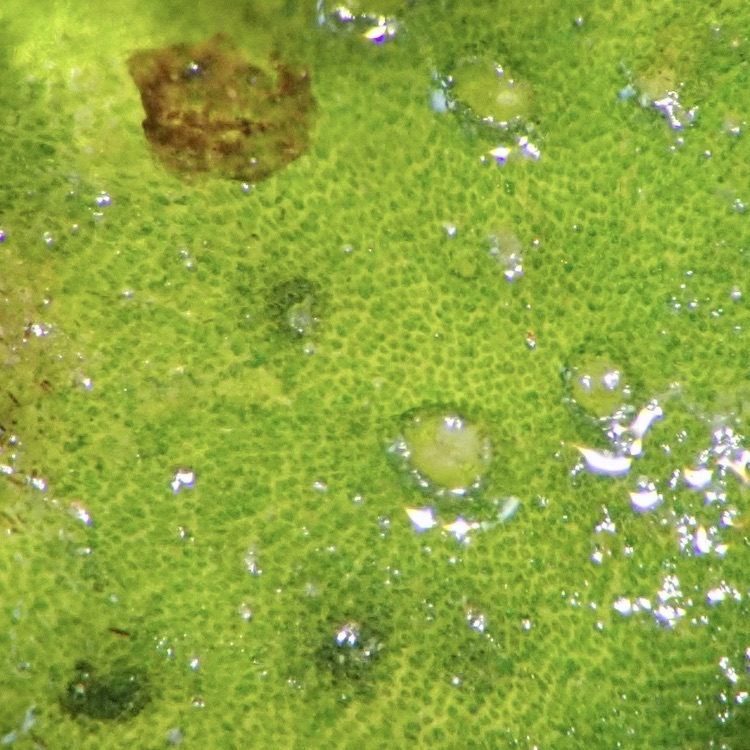
Phaeoceros carolinianus antheridial pits visible as craters on upper surface. Cyanobacteria colonies visible through upper surface as black spots. CC BY-NC Amanda Heinrich
Phaeoceros carolinianus antheridial pit
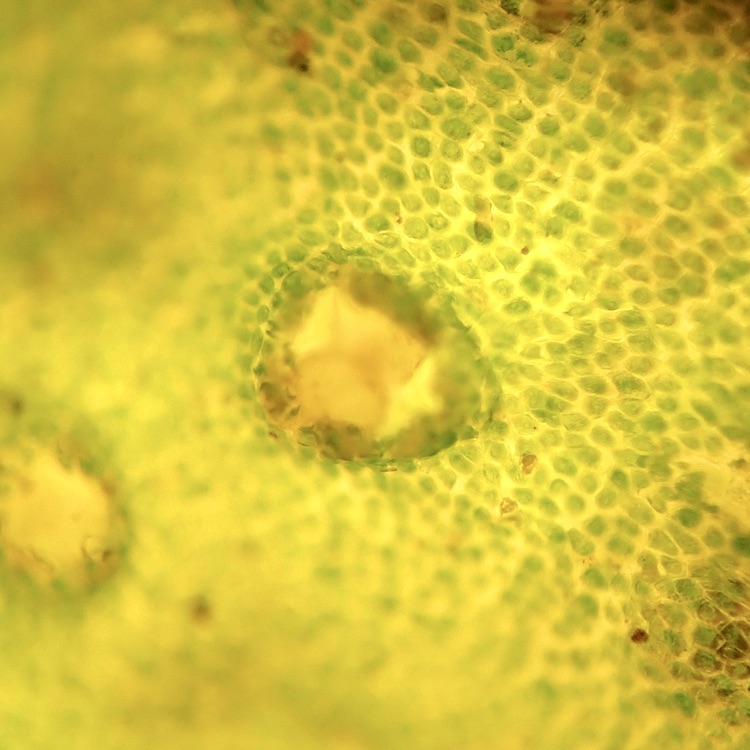
Phaeoceros carolinianus antheridial pit with two antheridia, each containing thousands of sperm. CC BY-NC Amanda Heinrich
Phaeoceros carolinianus cross section antheridial pits
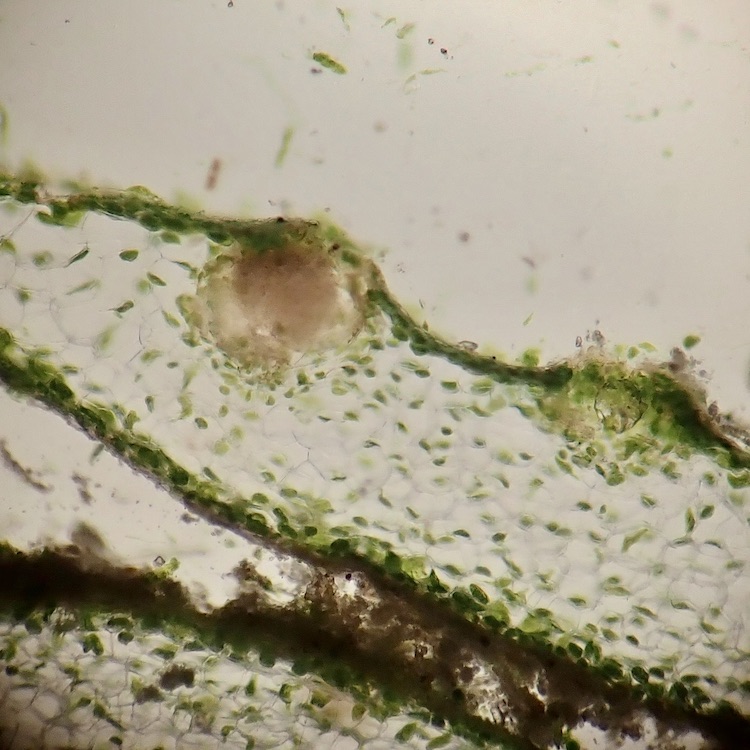
Phaeoceros carolinianus cross-section of thallus showing antheridia within pits, bursting through upper surface. CC BY-NC Amanda Heinrich
Phaeoceros carolinianus chloroplasts with pyrenoids
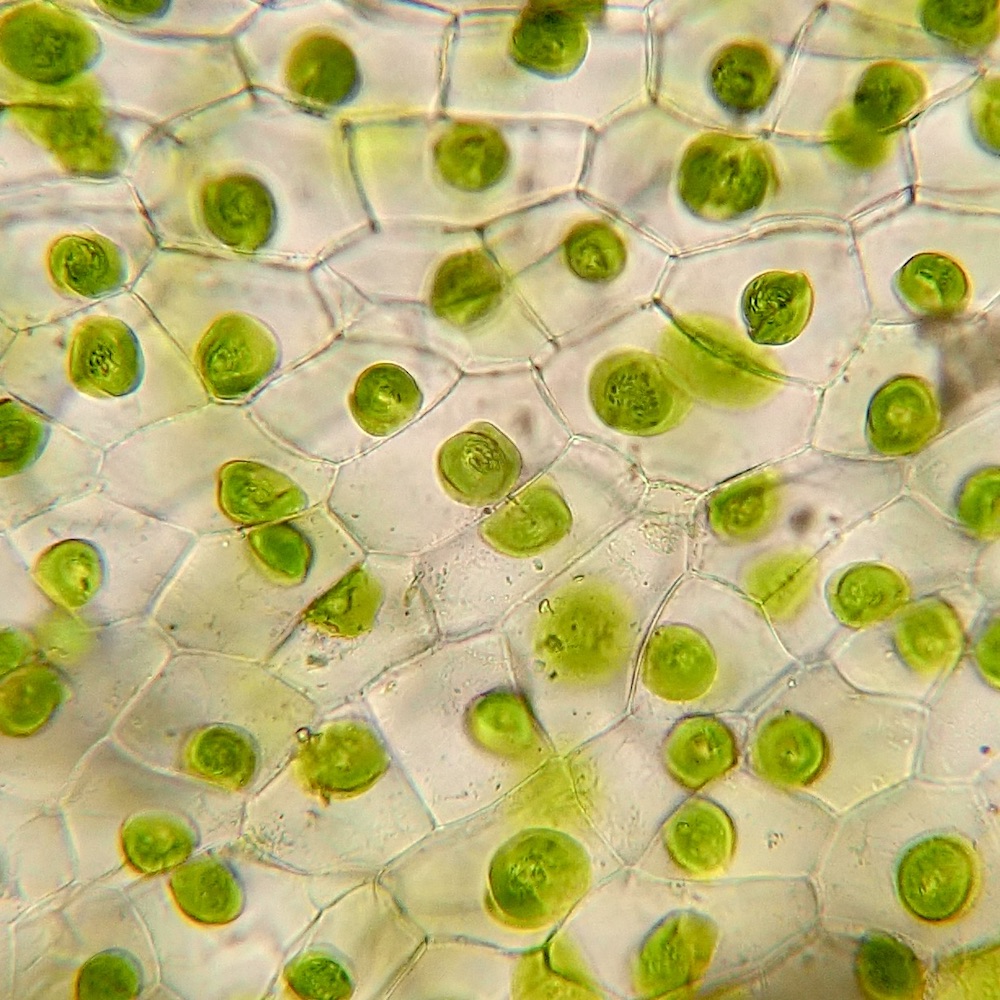
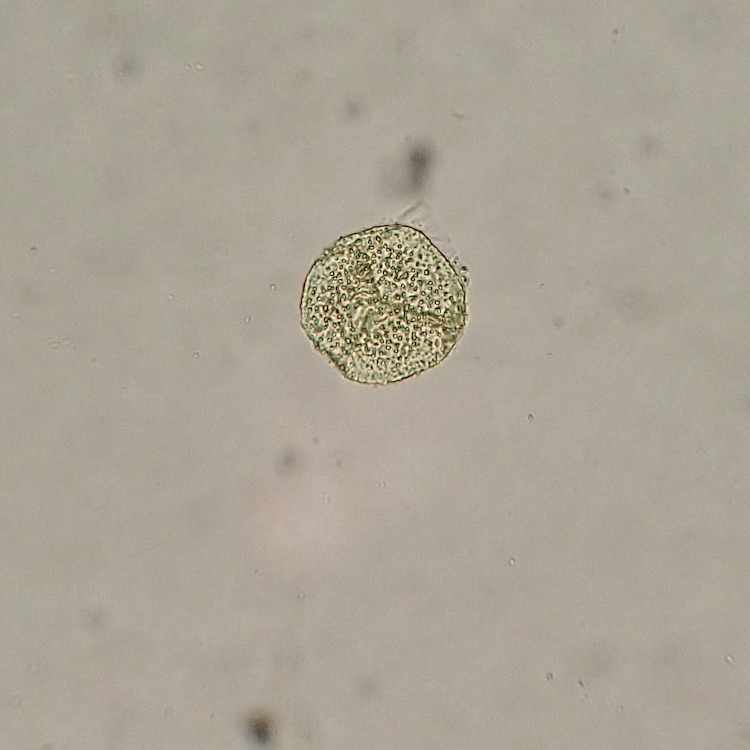
Phaeoceros carolinianus thallus at 400x showing large single chloroplasts with central pyrenoids visible as bumps or ridges. CC BY-NC Amanda Heinrich
Phaeoceros carolinianus cross section Nostoc colonies
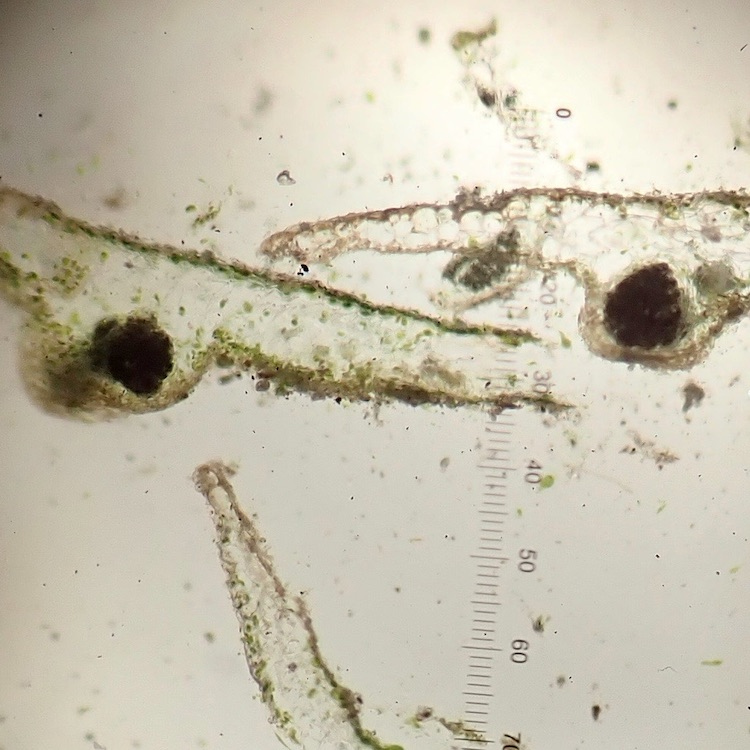
Phaeoceros carolinianus cross-section of thallus at 40x showing black spherical cyanobacteria colonies bulging along lower surface. CC BY-NC Amanda Heinrich
Phaeoceros carolinianus sporophytes
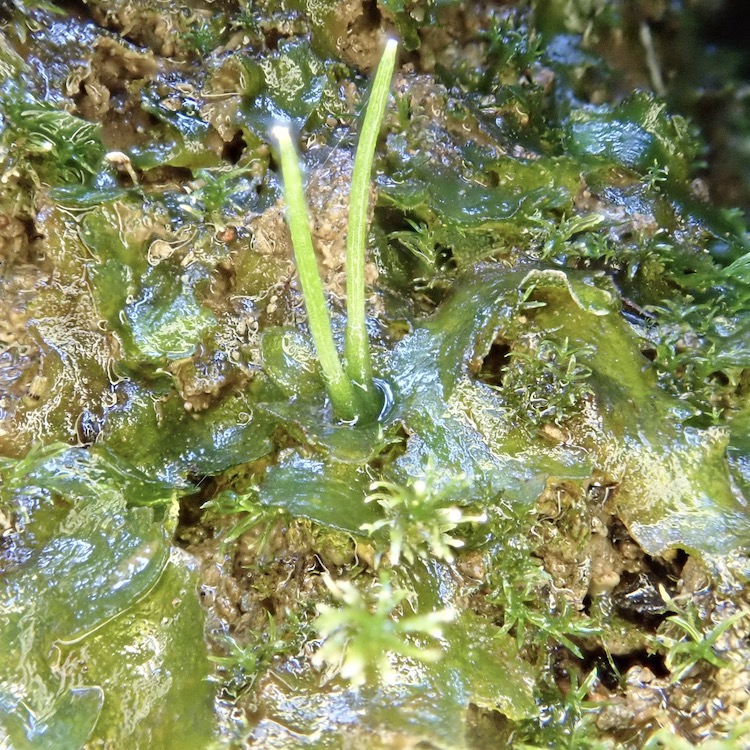
Phaeoceros carolinianus with rare angelic double sporophyte, not quite fully mature, in April. CC BY-NC Amanda Heinrich
Phaeoceros carolinianus immature spore
Phaeoceros carolinianus spore, not quite fully mature, yellow with fine spines on distal surface. CC BY-NC Amanda Heinrich
Phaeoceros carolinianus
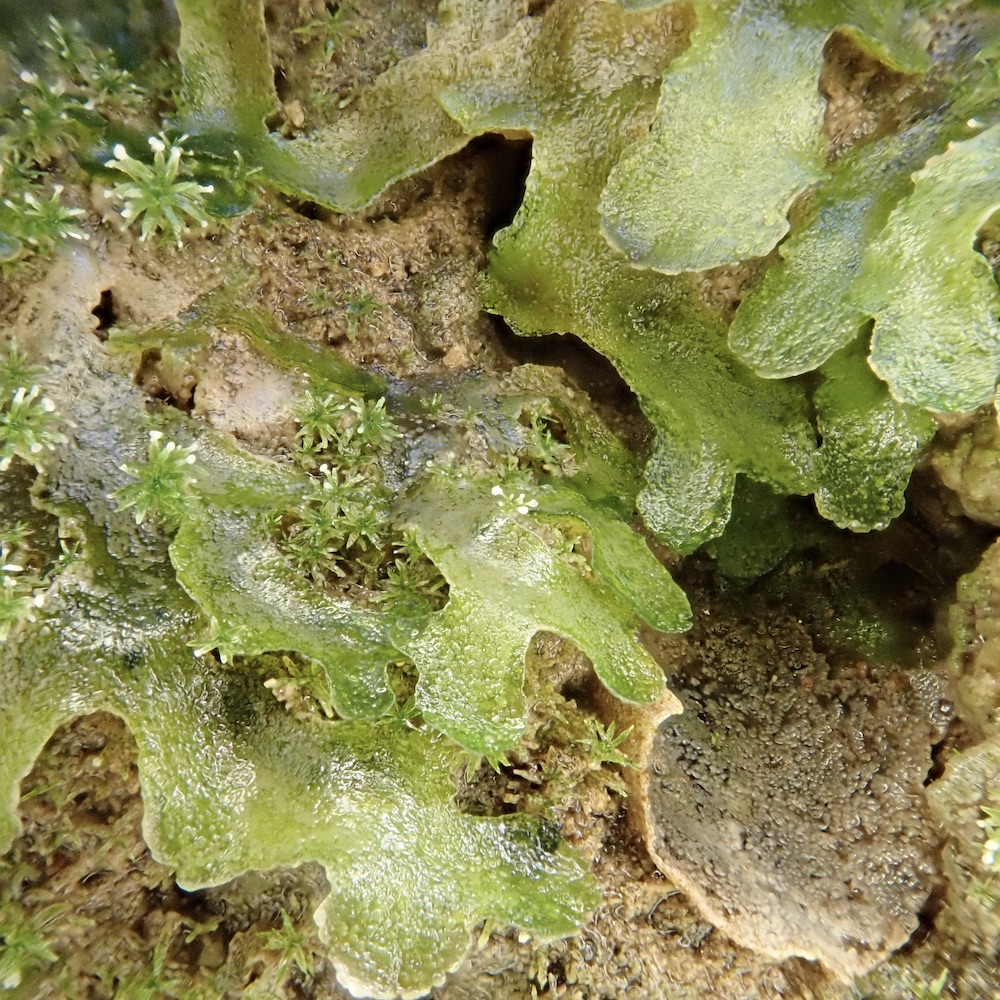
Phaeoceros carolinianus in waterfall in November 2023, quite small, with irregular dichotomous branching more readily visible, perhaps re-establishing after a year of quite heavy rains. Thalli are covered with diatoms and mineral deposits, resulting in a lighter shade of green.
References and Further Reading
Contributions toward a bryoflora of California III. Keys and annotated species catalogue for liverworts and hornworts, William T. Doyle and Raymond E. Stotler, Madroño, A West American Journal of Botany, Volume 53, Number 2. This issue can be ordered here.
Anthocerotophyta, Juan Carlos Villarreal A. Karen S. Renzaglia, Bryophyte Flora of North America, Provisional Publication, Missouri Botanical Garden.
Hornworts of Oregon, David Wagner