Hornworts
Paraphymatoceros proskaueri (Stotler, Crandall-Stotler & W. T. Doyle) J. C. Villarreal & Cargill
Paraphymatoceros proskaueri
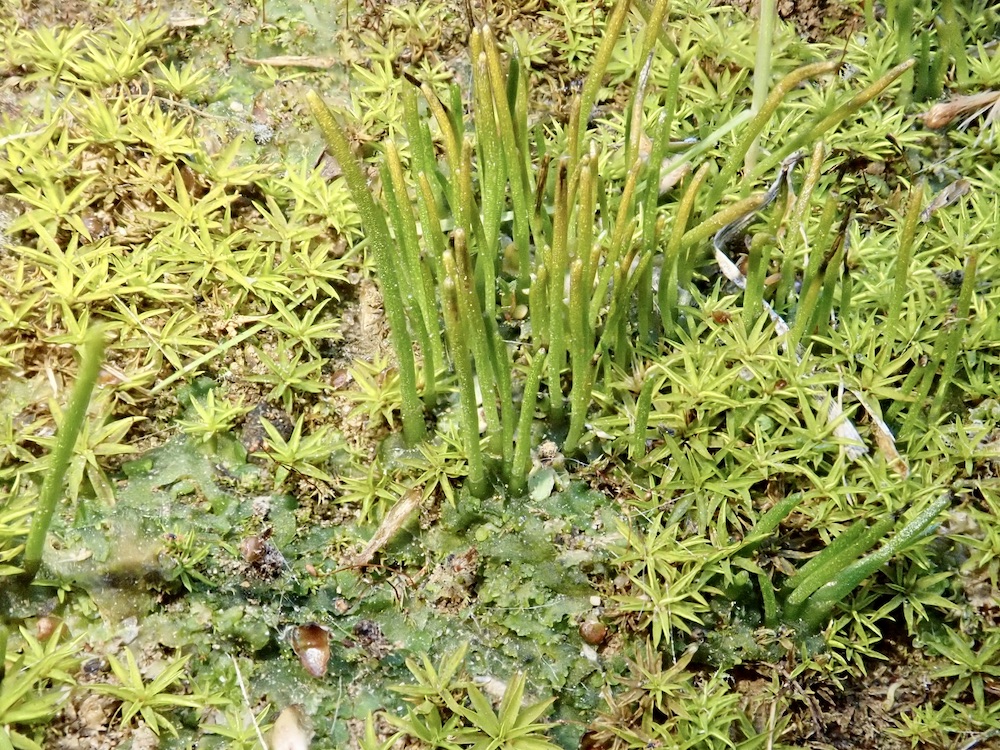
Paraphymatoceros proskaueri on sloped soil, with short, stubby sporophytes nearly mature, in April. CC BY-NC Amanda Heinrich
Description: Paraphymatoceros proskaueri is a relatively newly described species, recently separated from Paraphymatoceros pearsonii. It is a dioicous species, with separate male plants, which are said to be significantly smaller (0.3-0.8 mm) than female plants (1.5-2mm). Both sexes form disc-shaped tubers at the lobe tips and along the margins on tiny dwarf branches. This may or may not be diagnostic. Sporophytes are short, 0.7-1.7 cm at maturity, turning yellow then brown at the tips when spores are mature. Spores are yellow to brown, with warts on the distal surface and a few smaller bumps (papillae) on the proximal surfaces. Pseudoelaters are 2-3 celled. Here in Santa Barabara County, I have found definitive Paraphymatoceros proskaueri with sporophytes at only one location. I have found what I believe to be vegetative plants at several locations, and what may be hybrids between Paraphymatoceros proskaueri and Paraphymatoceros pearsonii at several others.
Key Characters:
  • Thallus: solid (no cavities), strap-like, females 1.5-2 mm, males 0.3-0.8 mm
  • Tubers: flattened disks at lobe tips and along margins on dwarf branches
  • Sporophytes: 0.7-1.27 cm long
  • Spores: yellow to brown, distal face with 13-30 warts, proximal face with 4-10 papillae
  • Pseudoelaters: 2-3 cells (but may disintegrate)
  • Chloroplasts: usually 1/cell, without pyrenoids
Scroll down for photos illustrating habitat, form, tubers, chloroplasts, pseudoelaters and spores (click to enlarge).
Paraphymatoceros proskaueri
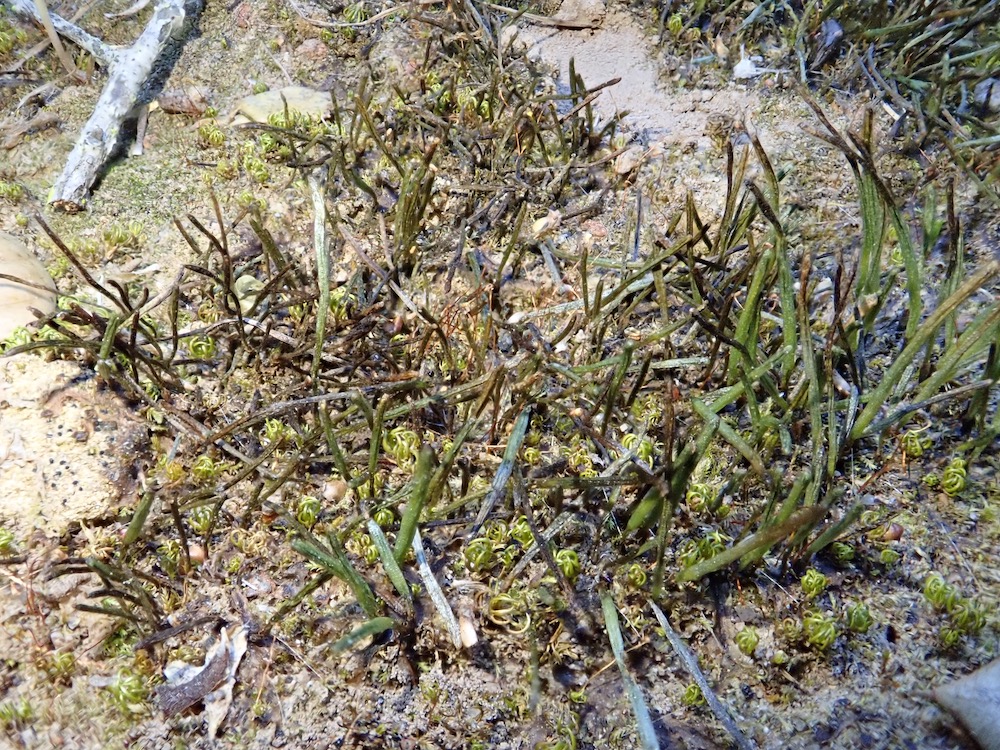
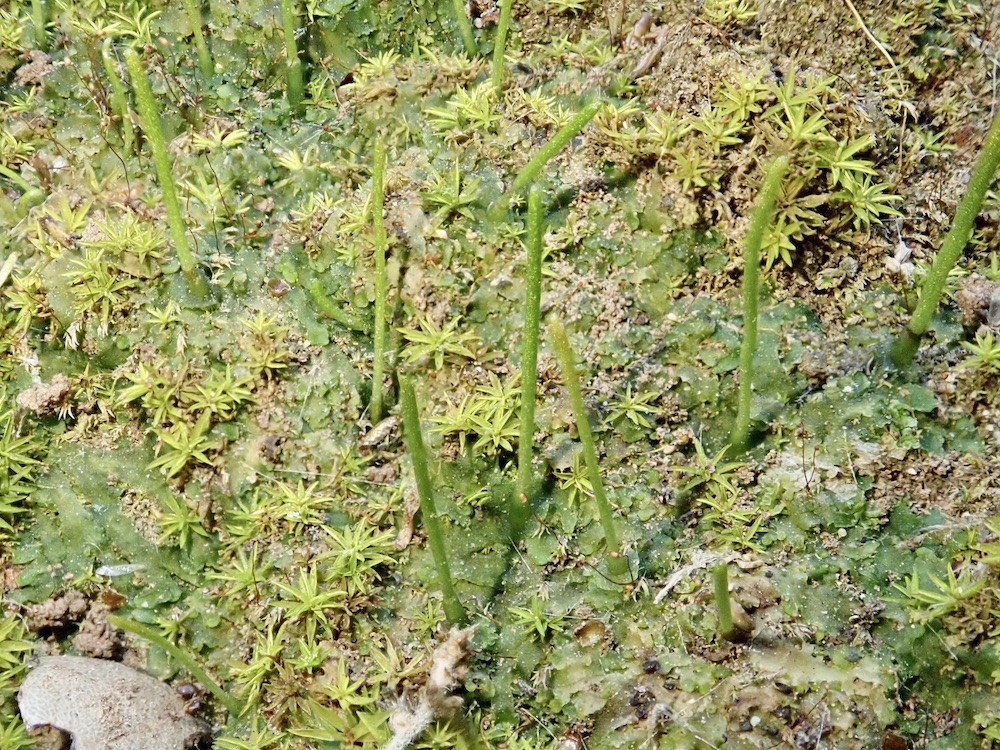
Paraphymatoceros proskaueri in April, thallus more visible, with rather narrow lobes and tubers on dwarf branches. CC BY-NC Amanda Heinrich
Paraphymatoceros proskaueri
Paraphymatoceros proskaueri, also in April, in more exposed microhabitat, sporophytes blackening and splitting at tips. CC BY-NC Amanda Heinrich
Paraphymatoceros proskaueri spores
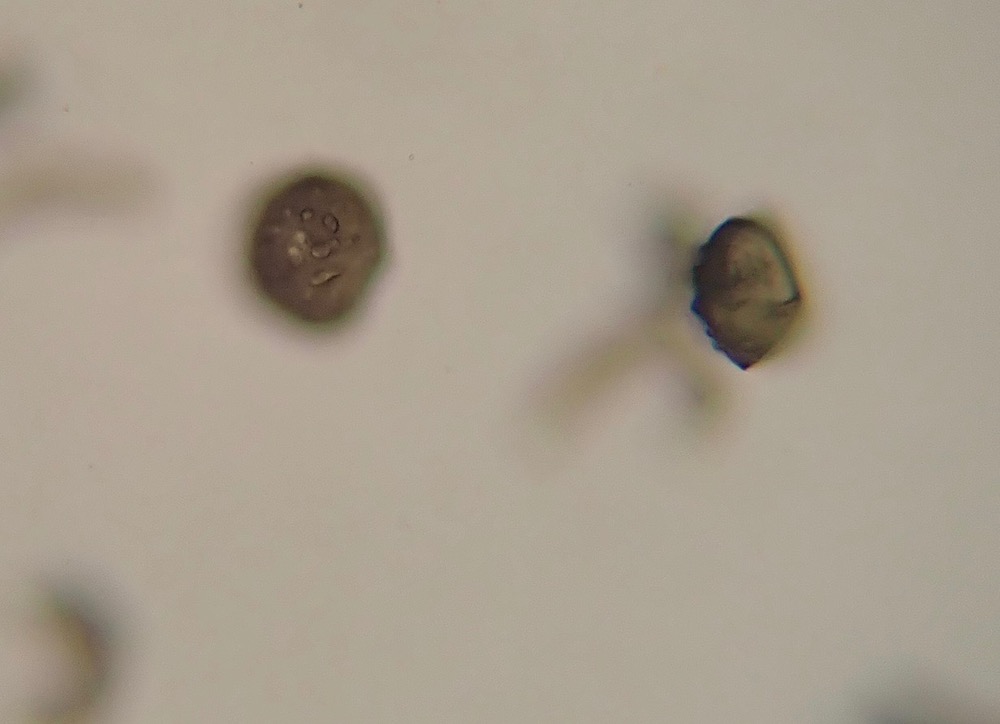
Paraphymatoceros proskaueri dark brown spores, with warts on distal surface. CC BY-NC Amanda Heinrich
Paraphymatoceros proskaueri
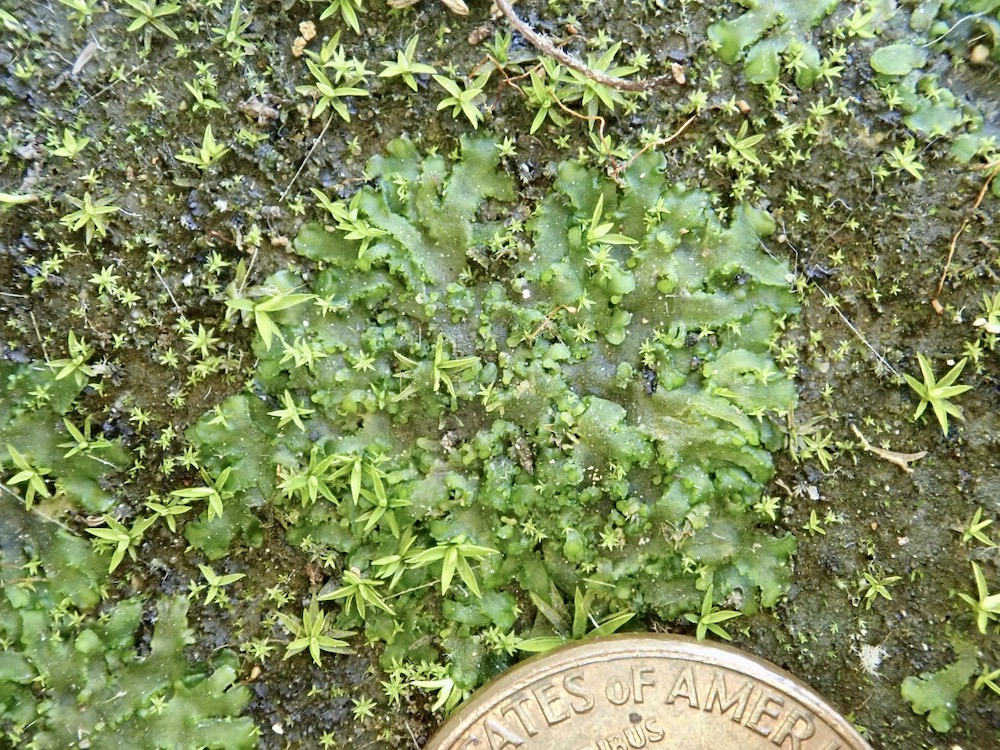
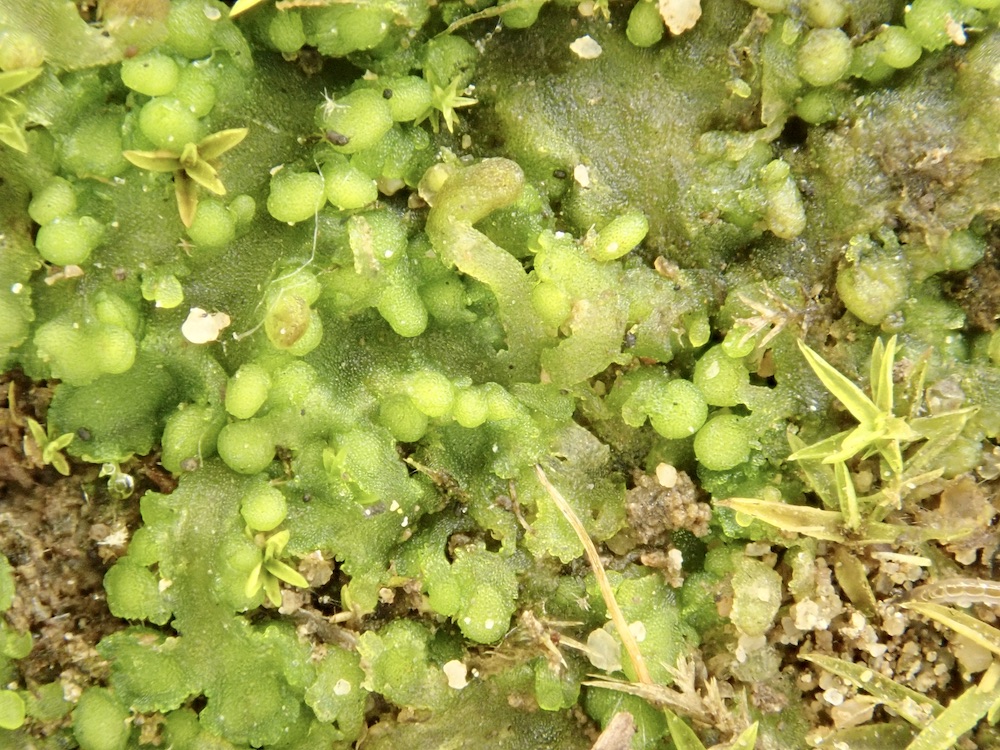
Paraphymatoceros proskaueri vegetative plants, many tubers on dwarf branches (CAH #1105). CC BY-NC Amanda Heinrich
Paraphymatoceros proskaueri
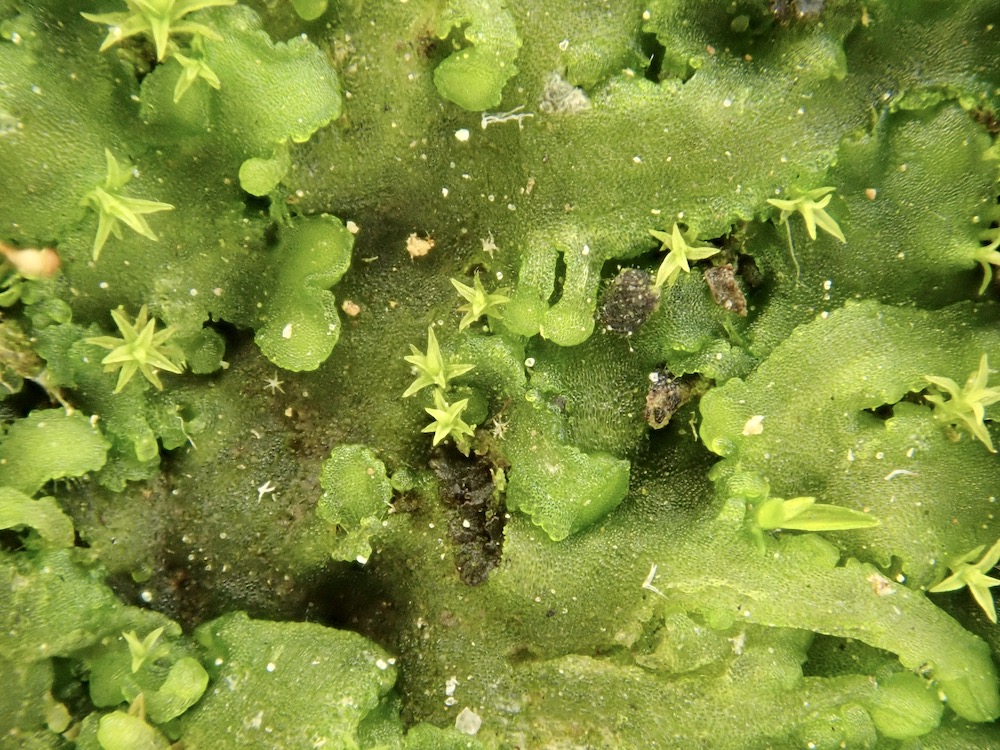
Paraphymatoceros proskaueri close up of tubers on dwarf branches, (CAH #1105). CC BY-NC Amanda Heinrich
Paraphymatoceros proskaueri
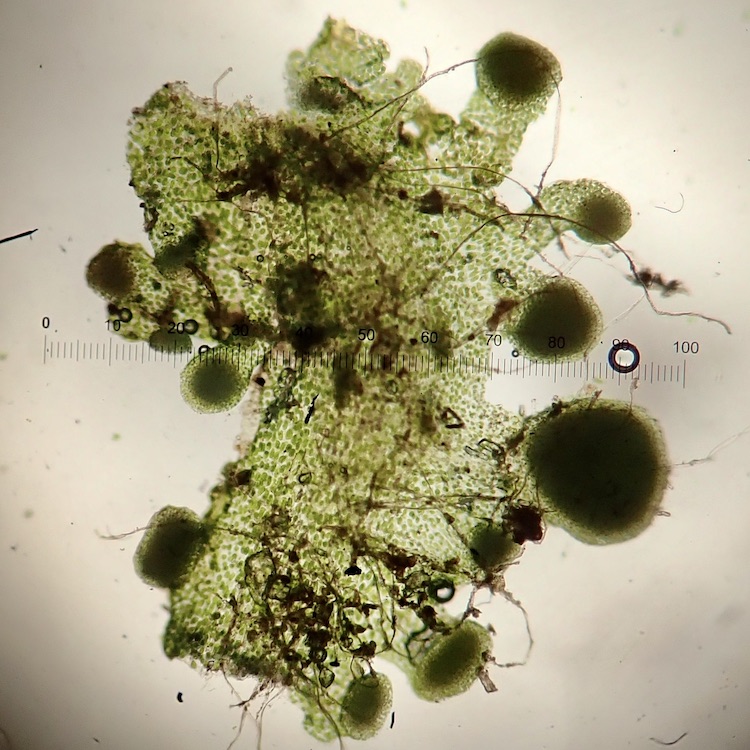
Paraphymatoceros proskaueri thallus with tubers on dwarf branches, 40x, (CAH #1105). CC BY-NC Amanda Heinrich
Paraphymatoceros proskaueri chloroplasts
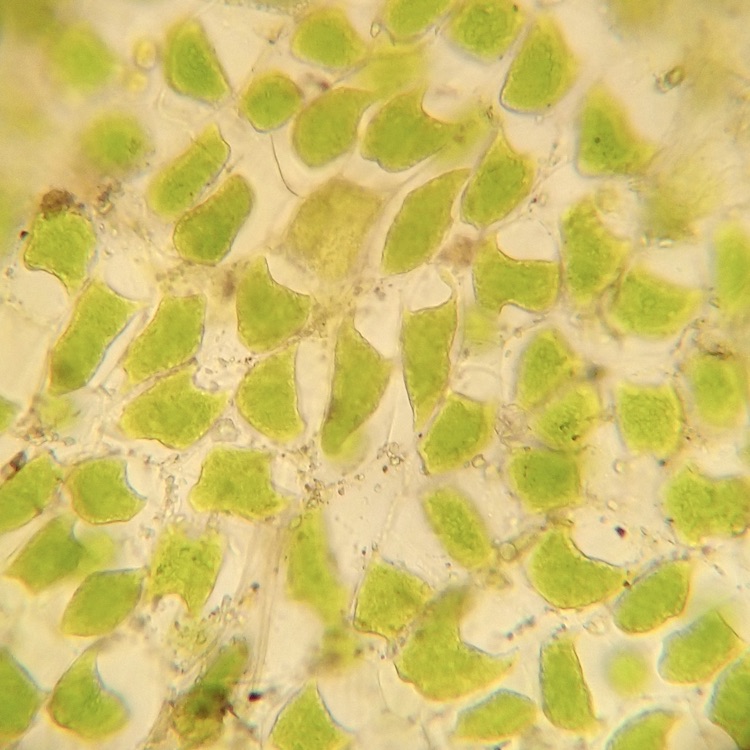
Paraphymatoceros proskaueri upper thallus cells with single large chloroplasts, (CAH #1105). CC BY-NC Amanda Heinrich
Paraphymatoceros proskaueri
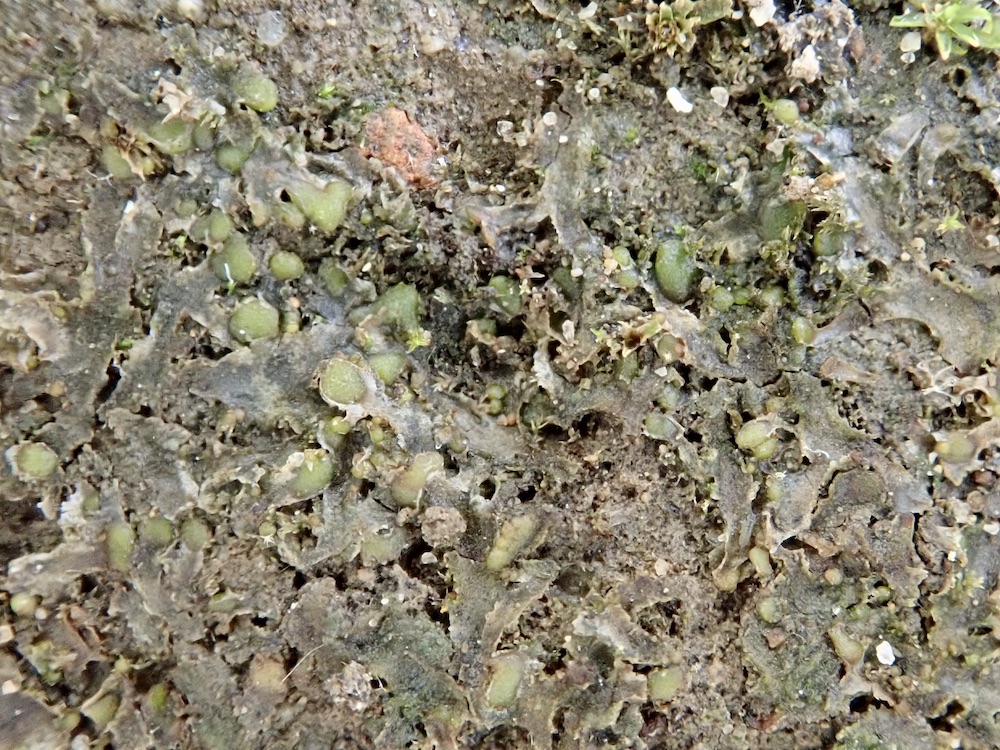
Paraphymatoceros proskaueri later in season in May, with tubers on dwarf branches more prominent as thallus begins to dry out. CC BY-NC Amanda Heinrich
Paraphymatoceros proskaueri
Paraphymatoceros proskaueri following first rains of season in January, tubers greening up and springing back to life. CC BY-NC Amanda Heinrich
References and Further Reading
Contributions toward a bryoflora of California III. Keys and annotated species catalogue for liverworts and hornworts, William T. Doyle and Raymond E. Stotler, Madroño, A West American Journal of Botany, Volume 53, Number 2. This issue can be ordered here.
Anthocerotophyta, Juan Carlos Villarreal A. Karen S. Renzaglia, Bryophyte Flora of North America, Provisional Publication, Missouri Botanical Garden.
Hornworts of Oregon, David Wagner