Hornworts
Paraphymatoceros pearsonii (M. Howe) J.C. Villarreal & Cargill
Paraphymatoceros pearsonii
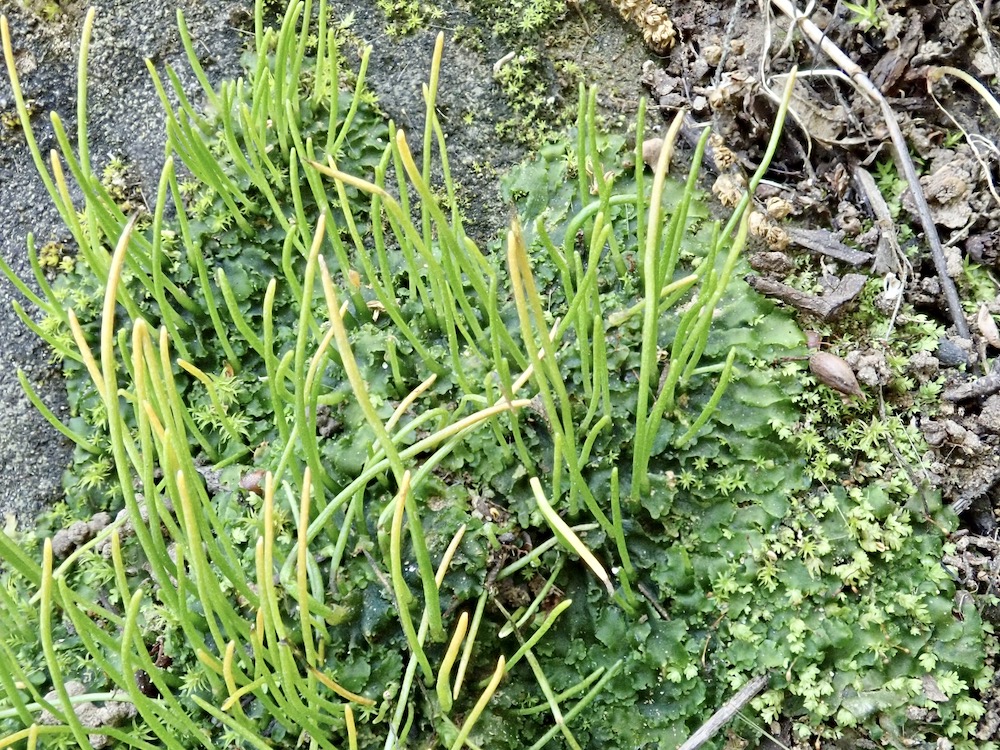
Paraphymatoceros pearsonii on thin soil over rock, sporophytes beginning to mature in April. CC BY-NC Amanda Heinrich
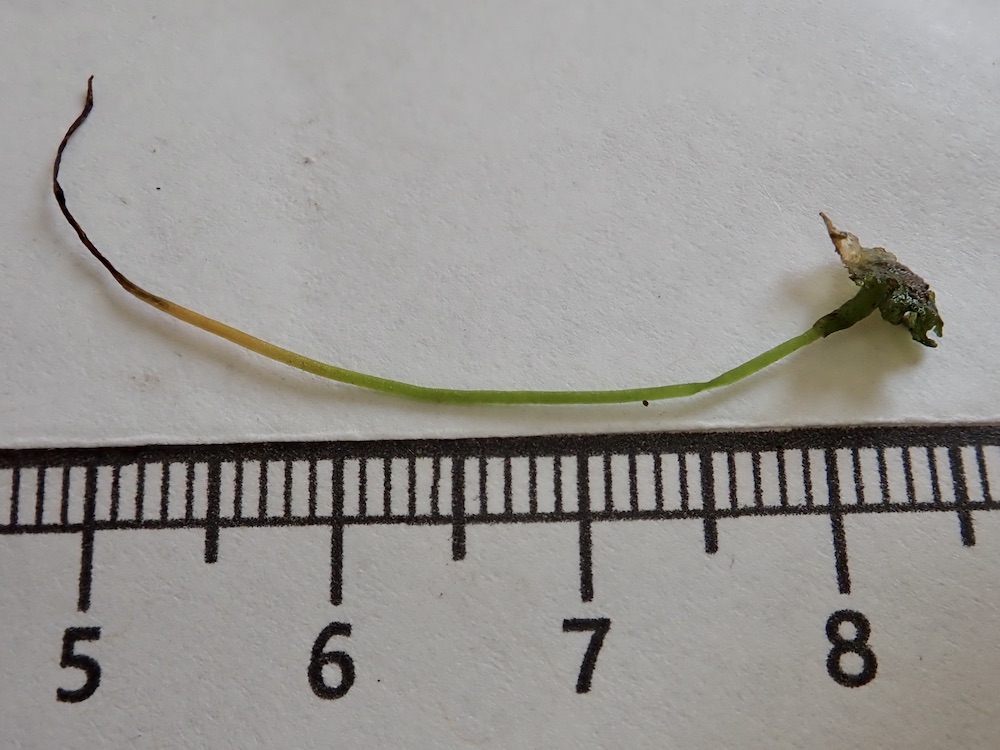
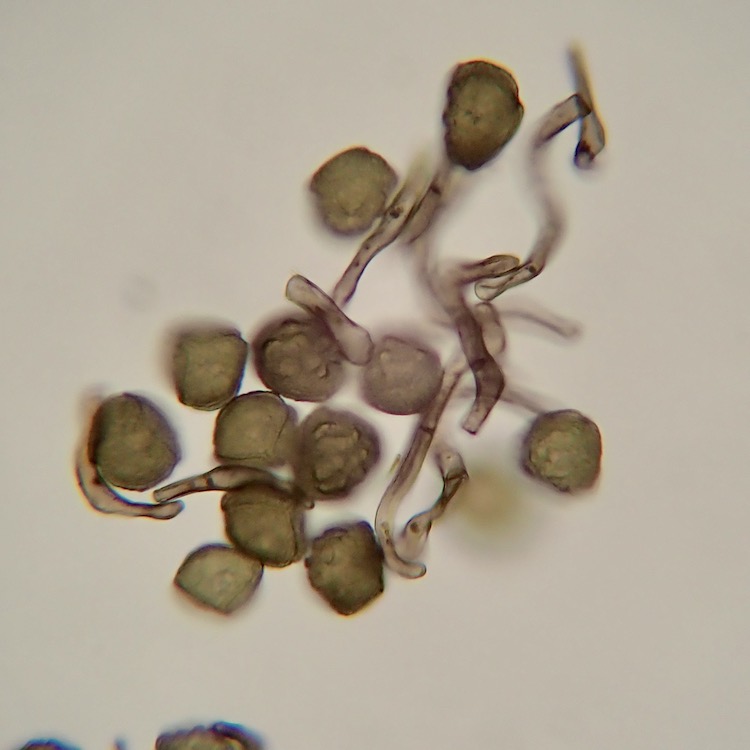
Description: Paraphymatoceros pearsonii is a hornwort with medium-sized, usually strap-shaped thalli with somewhat wavy edges, and with thickened, disc-shaped tubers at the lobe tips and margins. Individual plants are monoicous, bearing both male and female organs, but are said to be “strongly protandrous,” such that male antheridia appear much earlier than the female archegonia, presumably reducing self-fertilization. Plants are usually found with sporophytes, which reach 2-4 cm in length, turning first yellow-ish brown, and finally dark brown at the tips, splitting open to release the spores. Mature spores are yellow to brown, with large warts on the distal surface, and a smooth proximal surface. Pseudoelaters are said to be 3-4 cells, but in my experience, this is true of only a few pseudoelaters within a sporophyte, with most seemingly broken down to 2 cells or a single cell.
Key Characters:
  • Thallus: variable, usually strap-like, solid (no cavities)
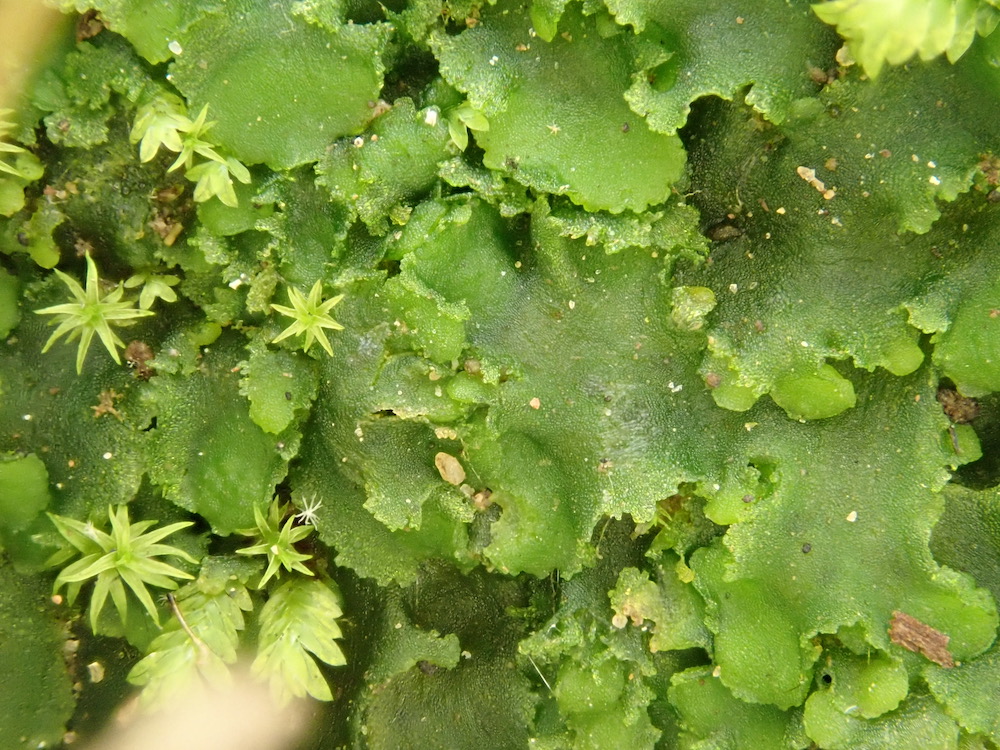
  • Tubers: flattened disks at lobe tips and along margins
  • Sporophytes: 2-4 cm long
  • Spores: yellow to brown, 8-15 warts on distal face, proximal face smooth or obscured
  • Pseudoelaters: 3-4 cells (but may disintegrate)
  • Chloroplasts: usually 1/cell, without pyrenoids
  • Antheridia: one per pit, 100-200 µm
Scroll down for photos illustrating habitat, form, antheridia, chloroplasts, pseudoelaters and spores (click to enlarge) .
Paraphymatoceros pearsonii
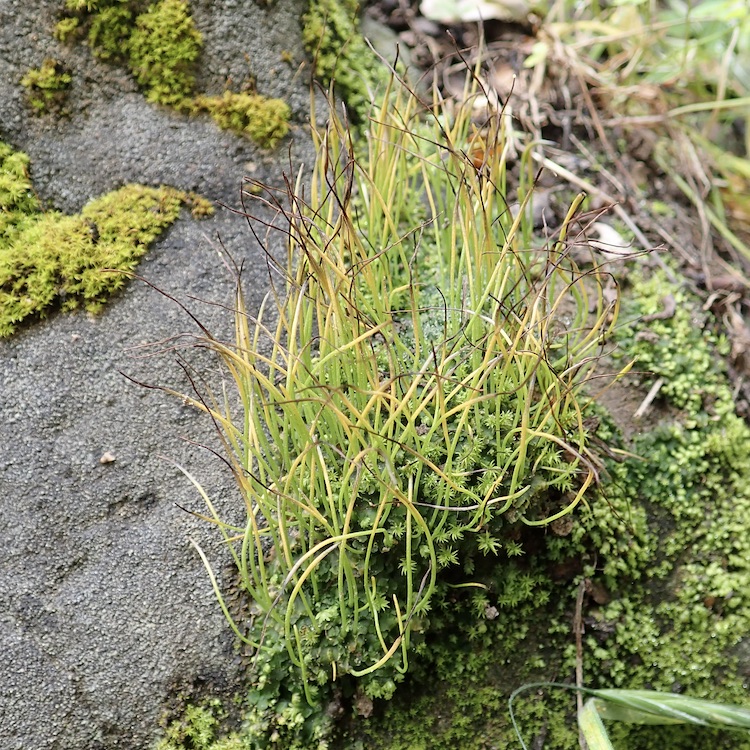
Paraphymatoceros pearsonii same plants as previous photo, now in May, on thin soil over rock, sporophytes mature at tips. CC BY-NC Amanda Heinrich
Paraphymatoceros pearsonii
Paraphymatoceros pearsonii individual plant with sporophyte mature at tip. CC BY-NC Amanda Heinrich
Paraphymatoceros pearsonii spores and pseudoelaters
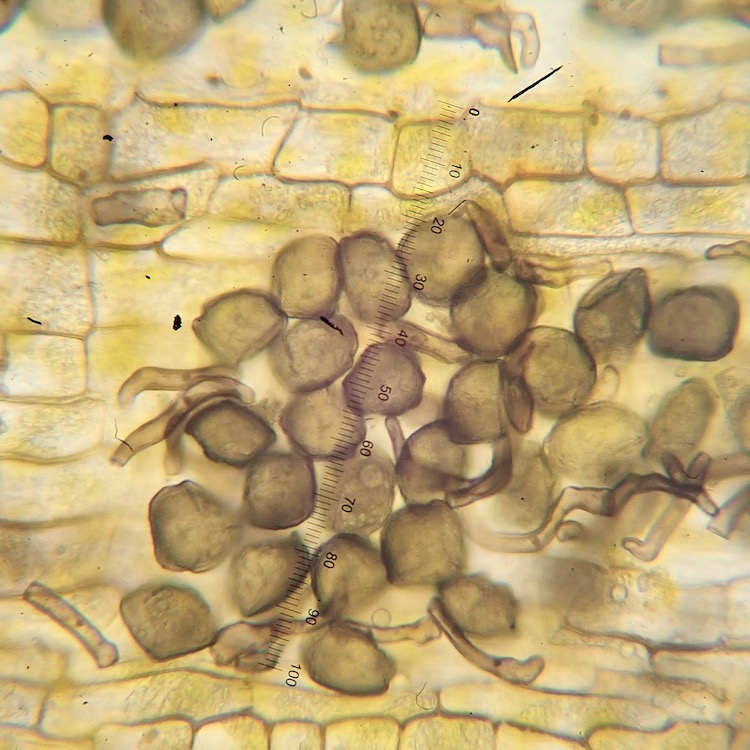
Paraphymatoceros pearsonii elaters and mature brown spores with warts on distal face. CC BY-NC Amanda Heinrich
Paraphymatoceros pearsonii
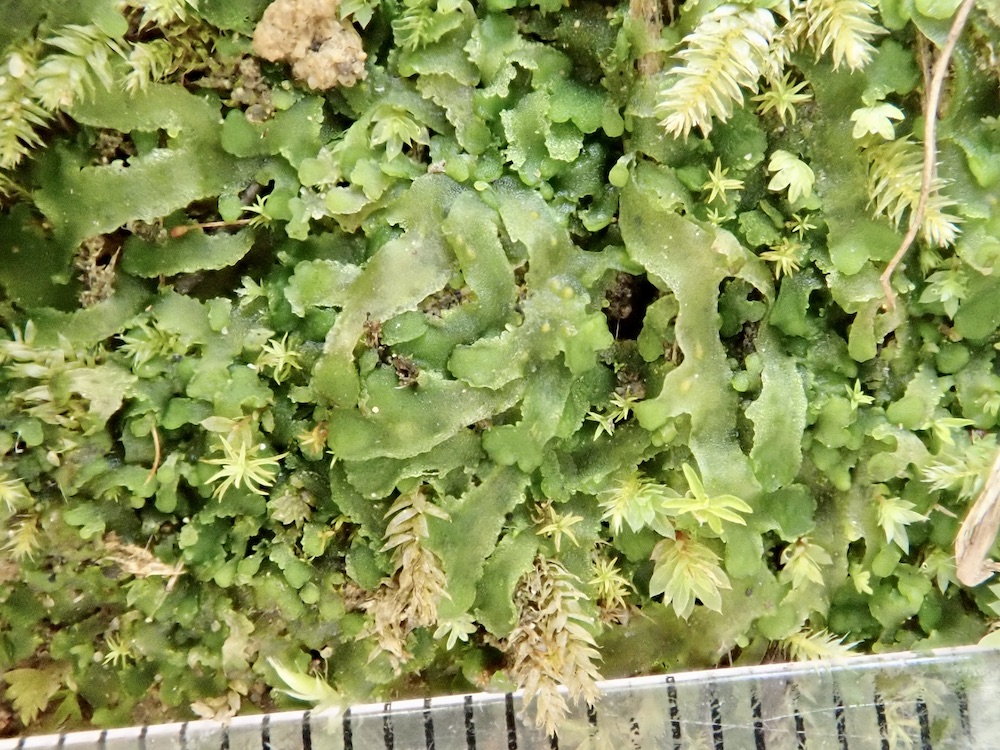
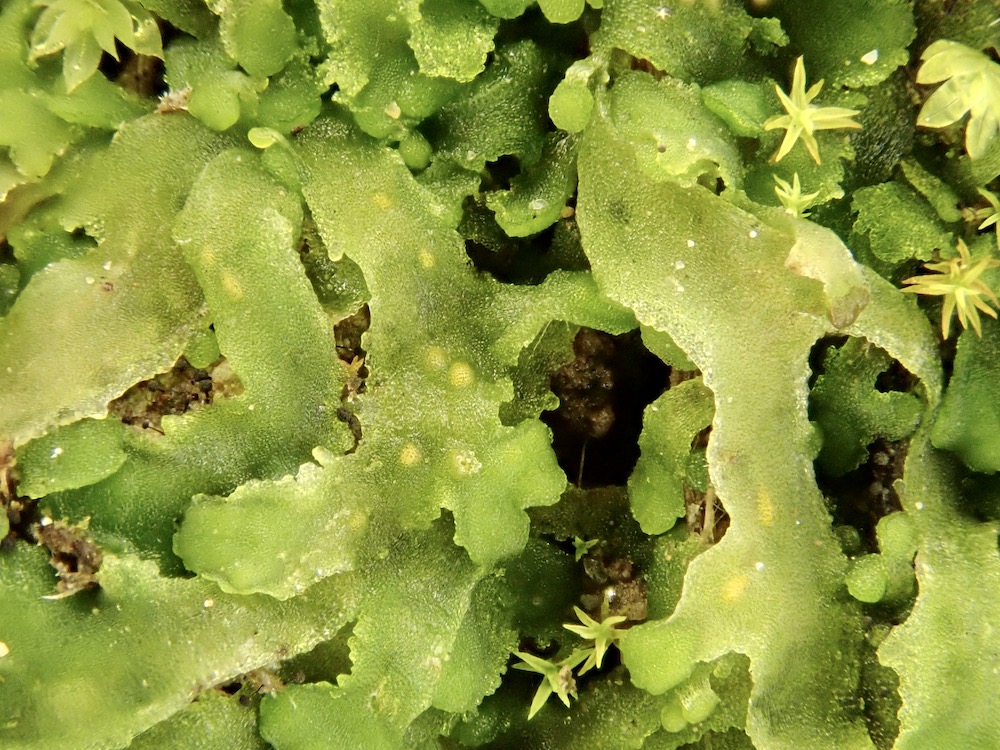
Paraphymatoceros pearsonii thalli with somewhat frilly edges and thickened disc-shaped tubers at apices and along margin. CC BY-NC Amanda Heinrich
Paraphymatoceros pearsonii spores and pseudoelaters
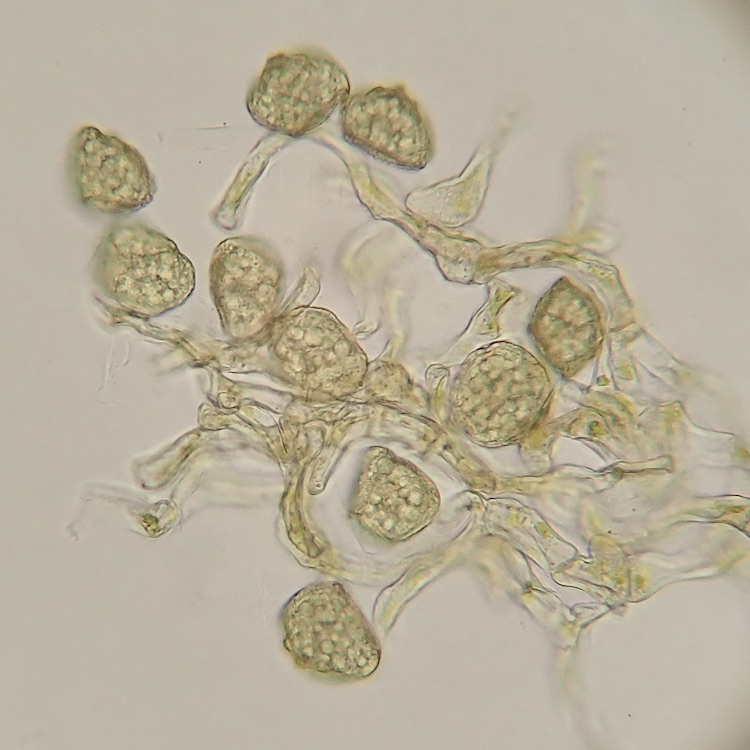
Paraphymatoceros pearsonii immature elaters and spores, yellow, with warts already apparent. CC BY-NC Amanda Heinrich
Paraphymatoceros pearsonii pseudoeleater
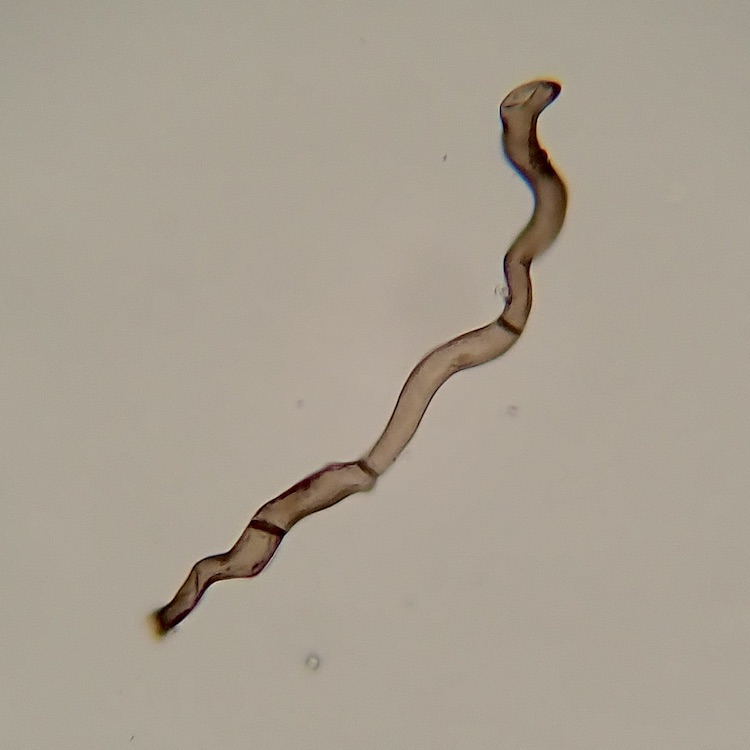
Paraphymatoceros pearsonii pseudoelater, 4 cells long. CC BY-NC Amanda Heinrich
Paraphymatoceros pearsonii spores and pseudoelaters
Paraphymatoceros pearsonii nearly mature brown spores with elaters, presumably degraded, with most only 1 or 2 cells. CC BY-NC Amanda Heinrich
Paraphymatoceros pearsonii chloroplasts
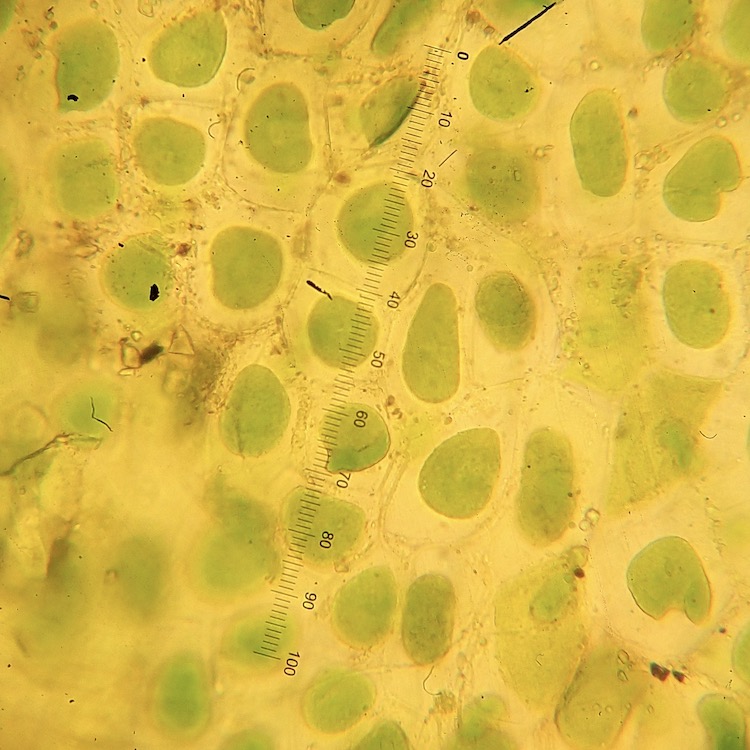
Paraphymatoceros pearsonii large chloroplasts, one per cell. CC BY-NC Amanda Heinrich
Paraphymatoceros pearsonii
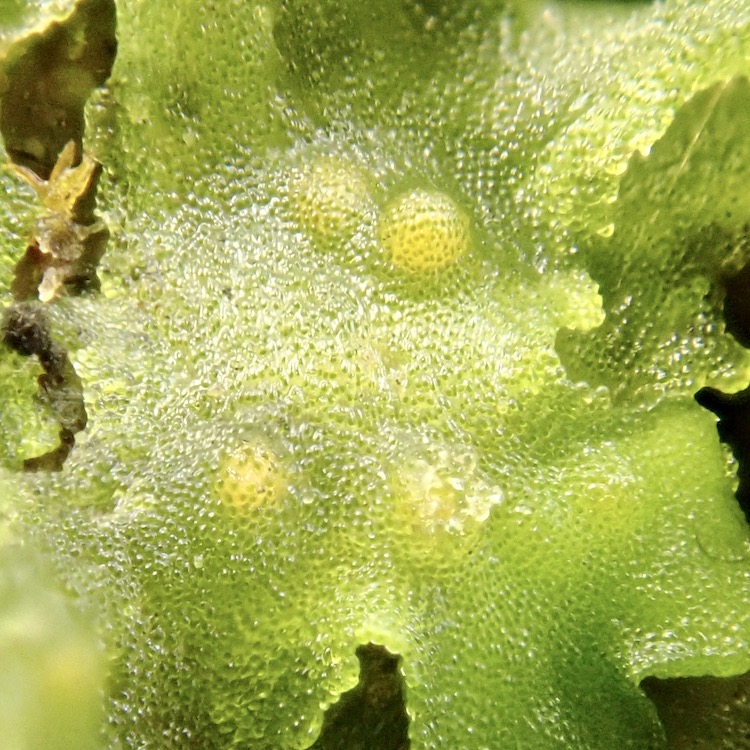
Paraphymatoceros pearsonii with antheridia (male structures containing sperm) apparent as yellow bumps. CC BY-NC Amanda Heinrich
Paraphymatoceros pearsonii
Paraphymatoceros pearsonii with antheridia (male structures containing sperm) bulging through upper surface of thallus. CC BY-NC Amanda Heinrich
Paraphymatoceros pearsonii antheridia
Paraphymatoceros pearsonii with antheridia (male structures containing sperm) erupting through upper surface of thallus. CC BY-NC Amanda Heinrich
Paraphymatoceros pearsonii
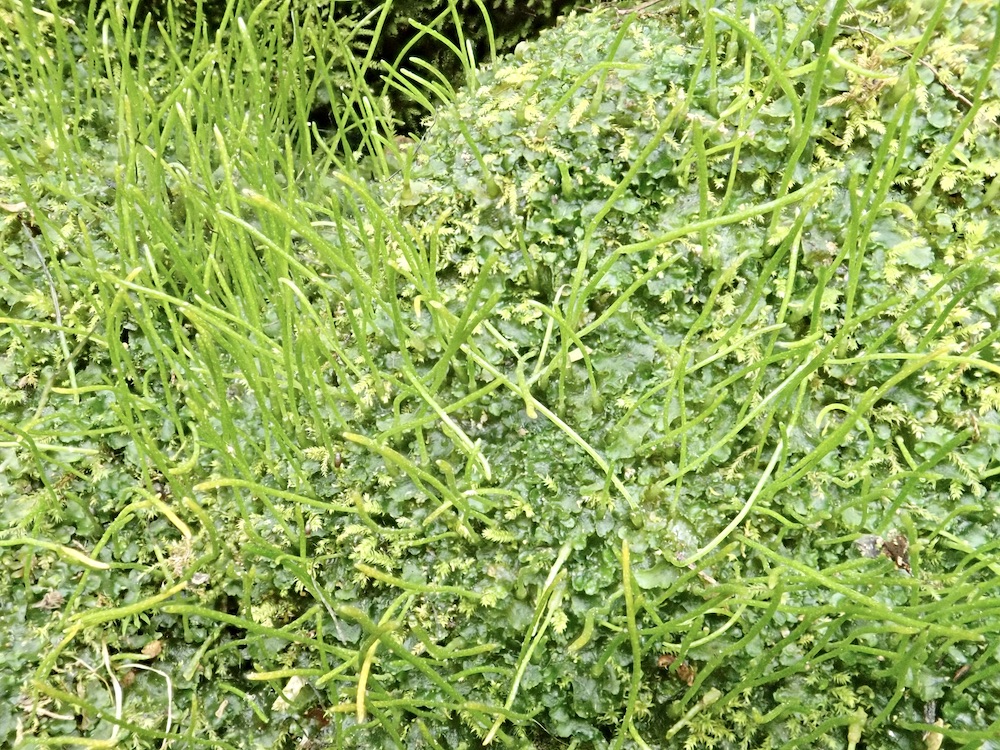
Paraphymatoceros pearsonii growing in profusion on moist soil above seasonal stream, with many sporophytes, and with few, less pronounced tubers. CC BY-NC Amanda Heinrich
Paraphymatoceros pearsonii dry on soil
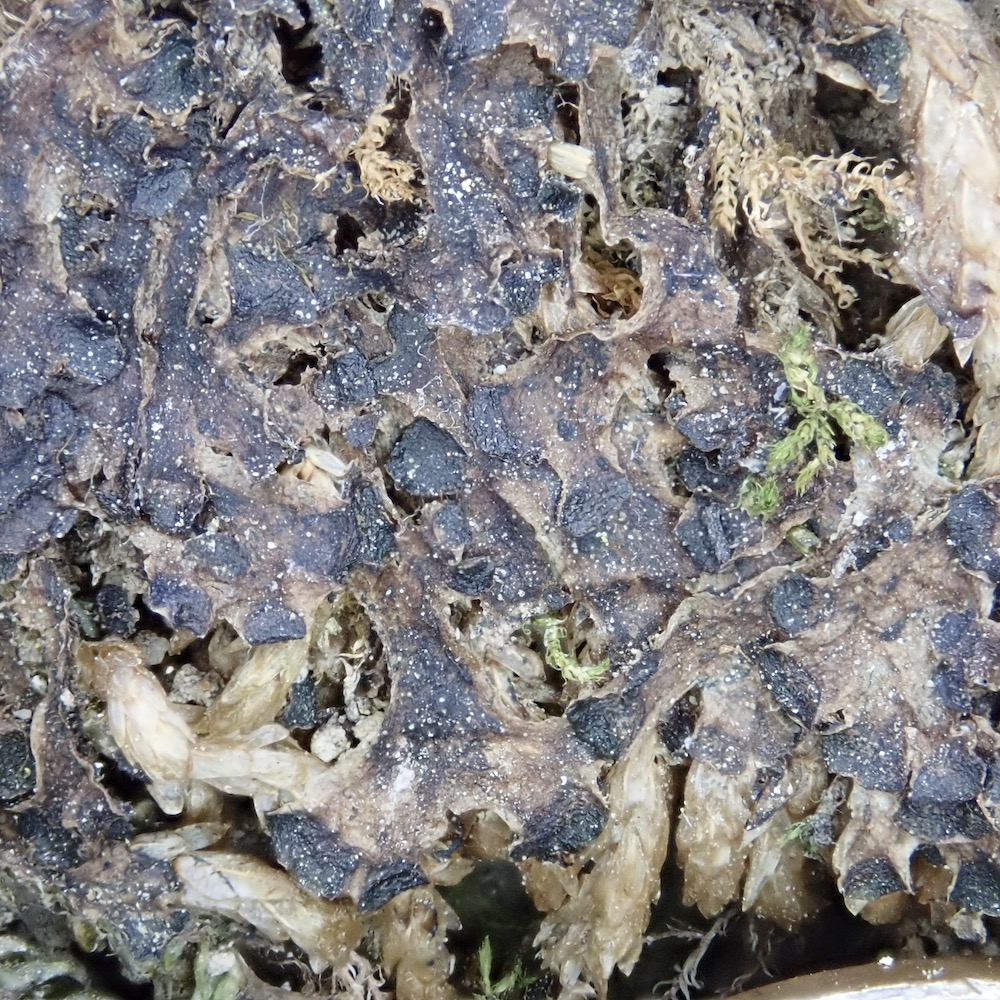
Paraphymatoceros pearsonii at the end of the dry season in November, on soil above seasonal streamlet, tubers evident as extra black, thickened discs on tips of crispier, paler thallus.
Paraphymatoceros pearsonii dry
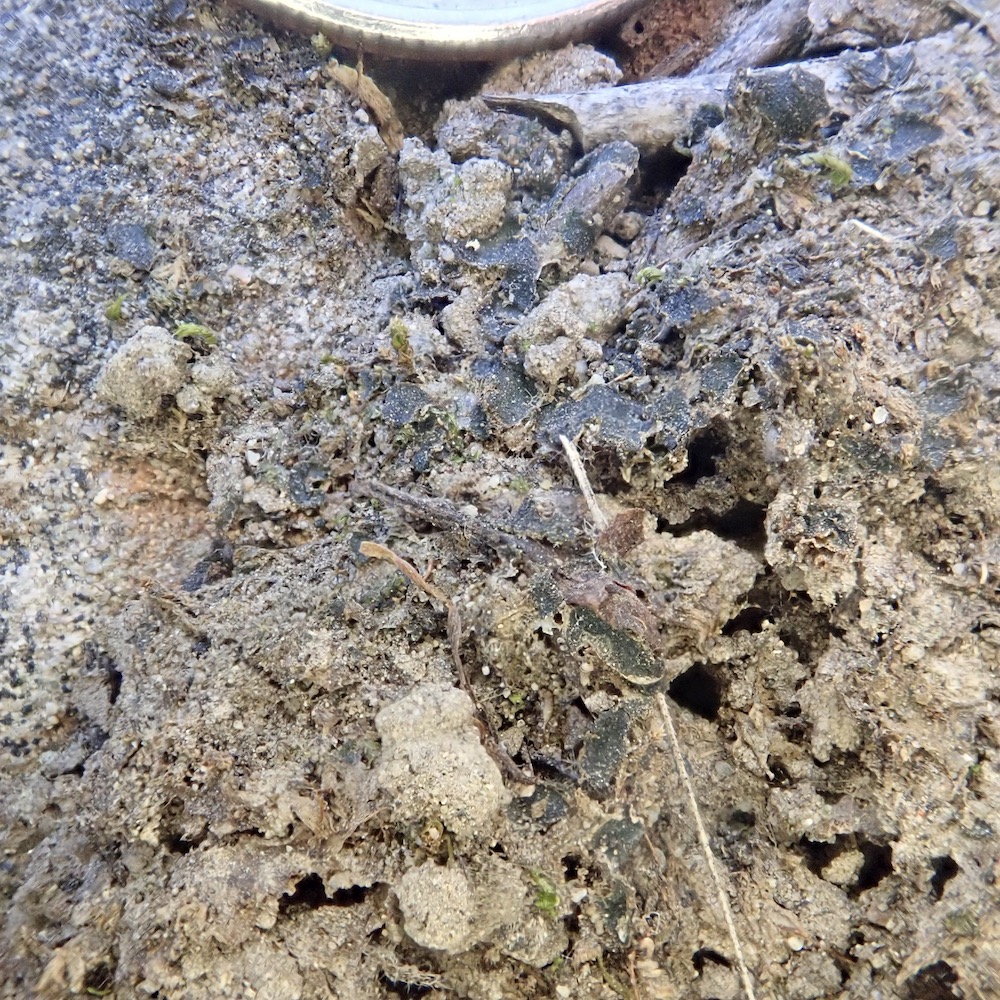
Paraphymatoceros pearsonii at the end of the dry season in November, on thin soil over rock, same population as first two photos on this page, barely recognizable, but ready to rise from the dead when the rains return (rain and photo coming soon).
References and Further Reading
Contributions toward a bryoflora of California III. Keys and annotated species catalogue for liverworts and hornworts, William T. Doyle and Raymond E. Stotler, Madroño, A West American Journal of Botany, Volume 53, Number 2. This issue can be ordered here.
Anthocerotophyta, Juan Carlos Villarreal A. Karen S. Renzaglia, Bryophyte Flora of North America, Provisional Publication, Missouri Botanical Garden.
Hornworts of Oregon, David Wagner