Hornworts
Anthoceros fusiformis Austin
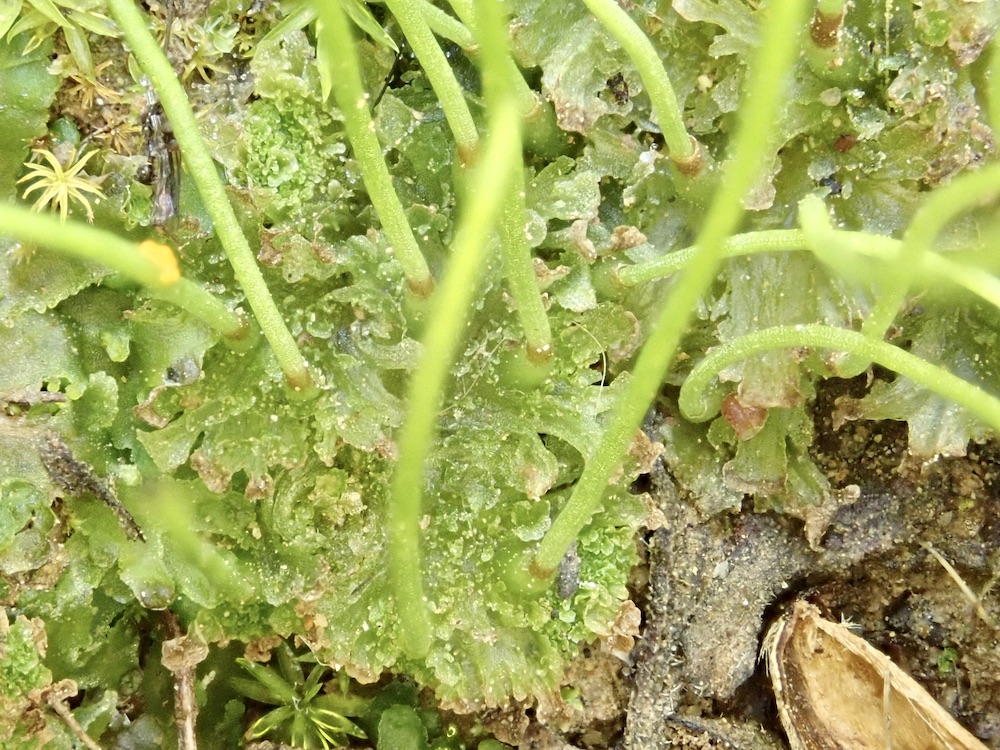
Anthoceros fusiformis
Anthoceros fusiformis CC BY-NC Amanda Heinrich
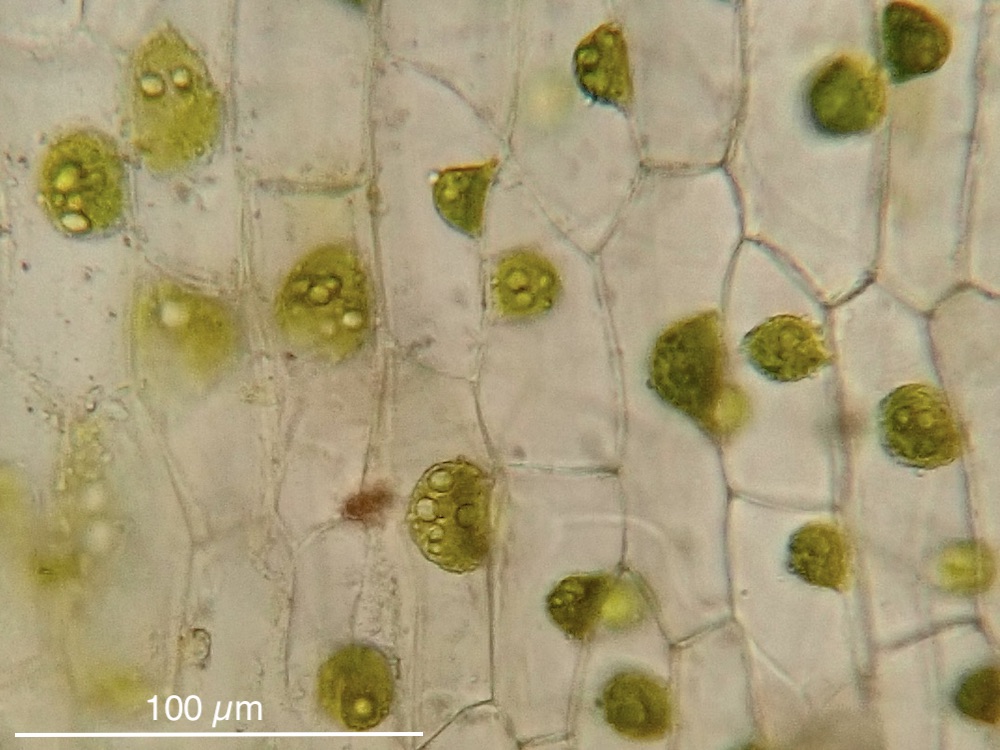
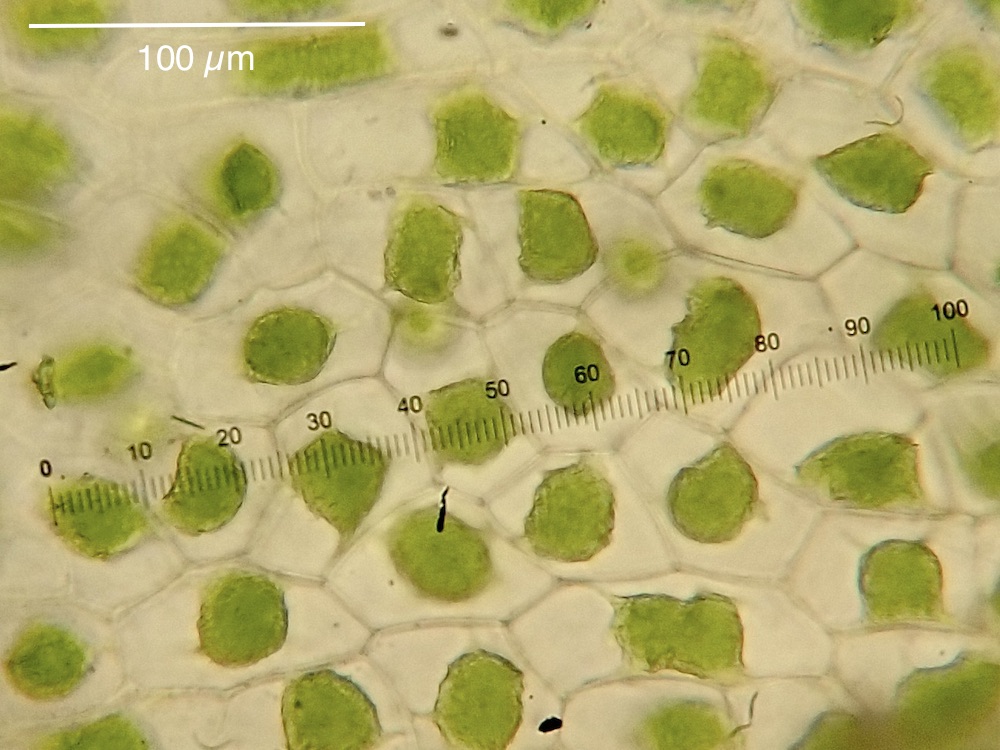
Description: Anthoceros fusiformis is a hornwort that forms rather frilly, light green rosettes, composed of strap-shaped branches with wavy margins (dissected or crisped), and many flap-like outgrowths (lamellae) of varying sizes on the upper surface. The thallus is quite thick near the center, expanded by internal cavities filled with air or mucilage, and by large black, spherical colonies of the cyanobacteria Nostoc. As in all hornworts, cells of the thallus have one large chloroplast per cell. Chloroplasts have starch-free regions, though in my limited experience these are visible only in more mature plants. 
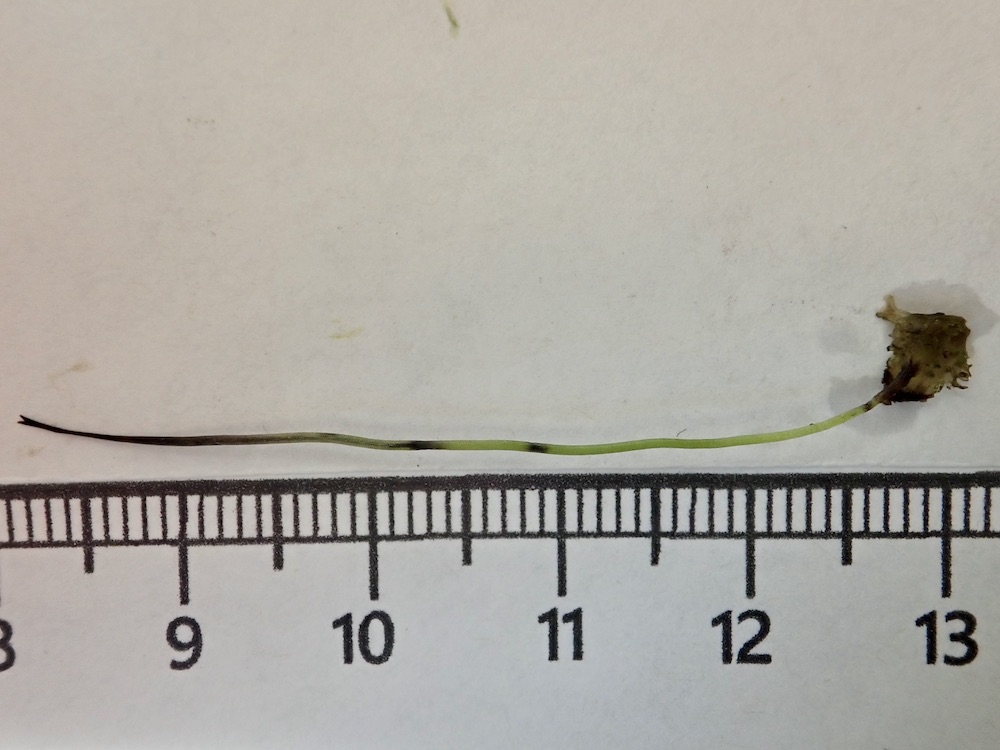
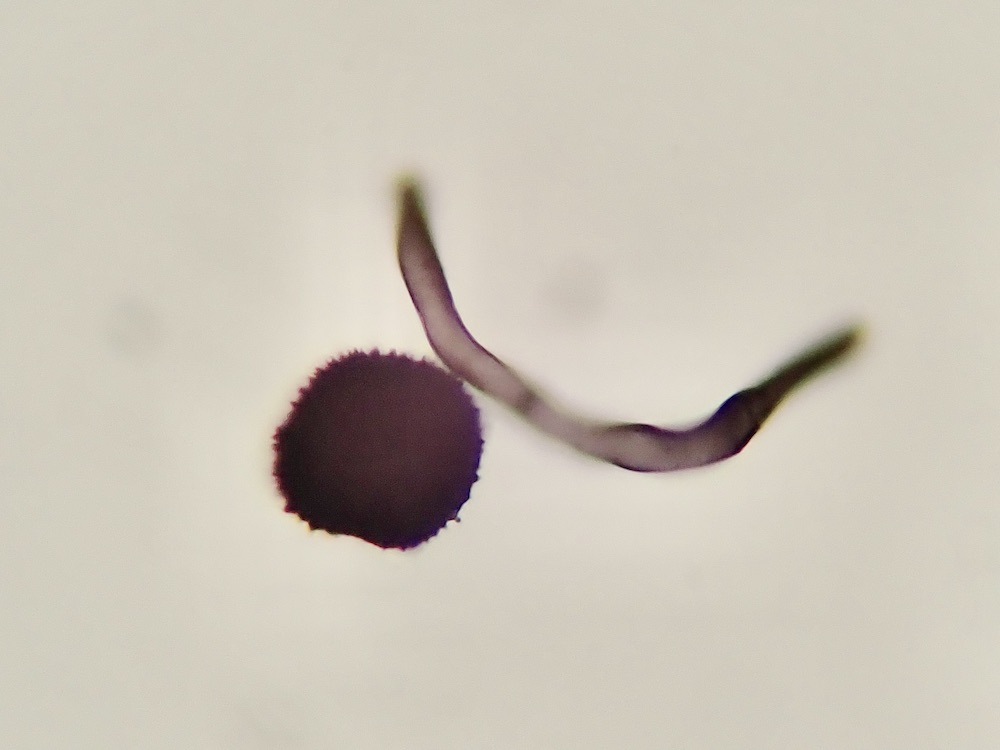
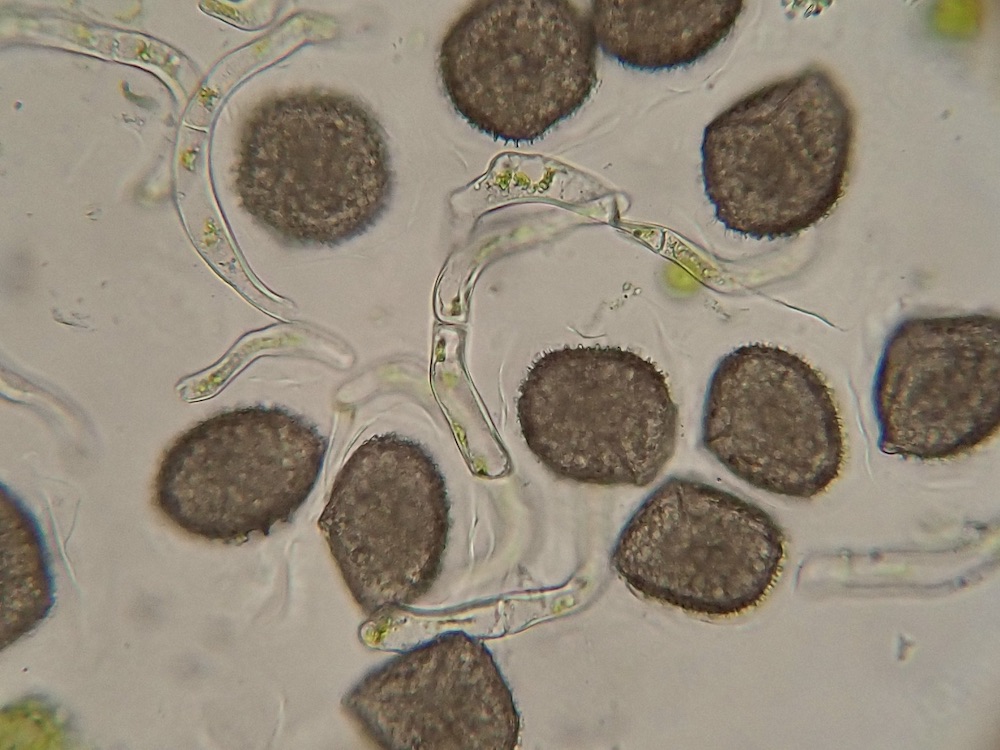
Anthoceros fusiformis is monoicous, with individual plants bearing both female and male reproductive organs, and consequently is commonly found with sporophytes, the horn-like structures. Sporophytes are very tall (4 cm to over 10 cm), and at maturity turn black at the tips, as the capsule splits open to release the black spores. Spores are 42-58 (or 33-62) μm, with black spines on the distal face, and papillae on the proximal faces, with the exception of a narrow smooth strip along the triradiate ridge.
Anthoceros fusiformis is typically found on exposed soil in shaded areas along trails, road cuts or creeks, but can also be found on rocks and in sunnier areas in seeps.
Key Characters:
  • Thallus: rosettes of overlapping strap-shaped branches, inflated by large cavities within, upper surface covered with many flap-like lamellae
  • Tubers: none
  • Sporophytes: 4-10 cm or even 16 cm long
  • Spores: dark brown or black, distal face with spines, proximal face with shorter spines, but with a smooth strip along the triradiate ridge
  • Chloroplasts: usually 1/cell, with starch-free zones in center
Scroll down for photos illustrating habitat, form, macroscopic and microscopic features such as lamellae, cavities, chloroplasts, spores (click to enlarge) .
Anthoceros fusiformis
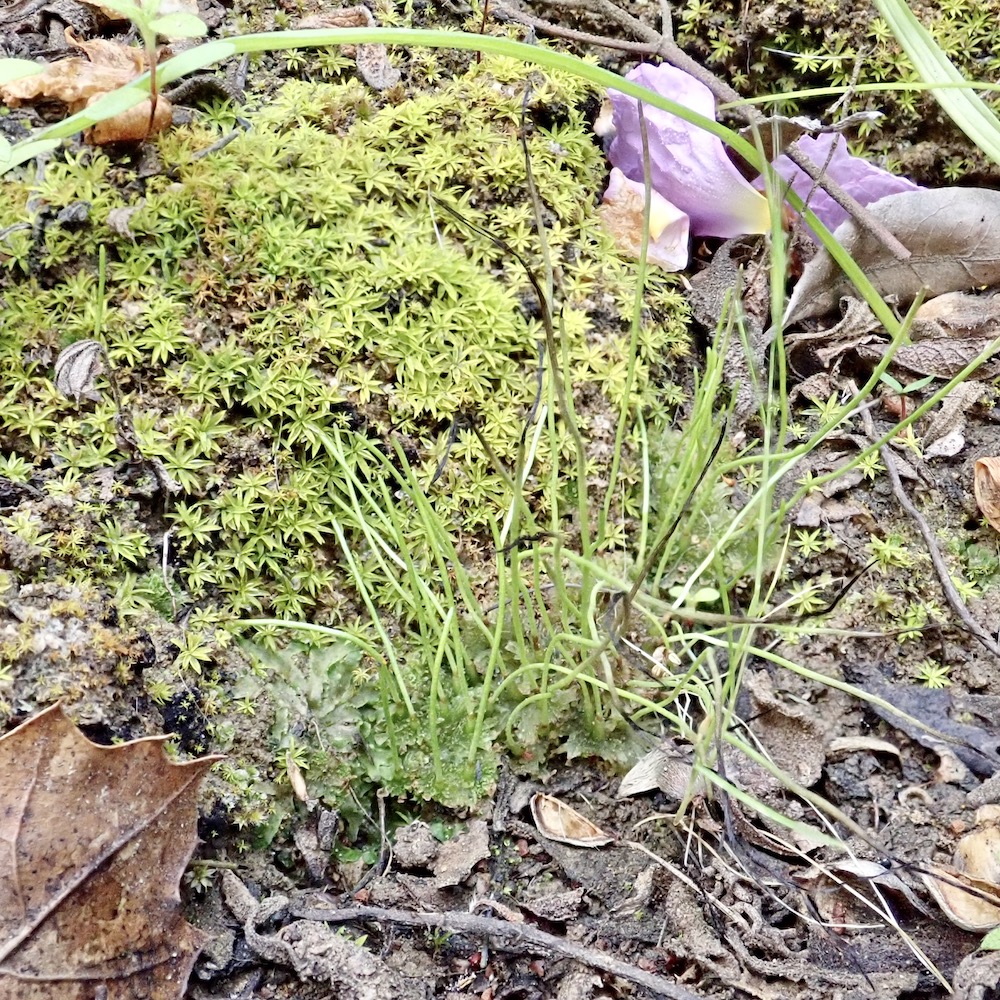
Anthoceros fusiformis on soil along trail in May, with tall, maturing sporophytes blackening and splitting from tips down. Smoother, lankier Paraphymatoceros sp. on left, Coast Live Oak leaf and rose petal for scale. CC BY-NC Amanda Heinrich
Anthoceros fusiformis
Anthoceros fusiformis on soil along stream in May, with immature sporophytes. CC BY-NC Amanda Heinrich
Anthoceros fusiformis
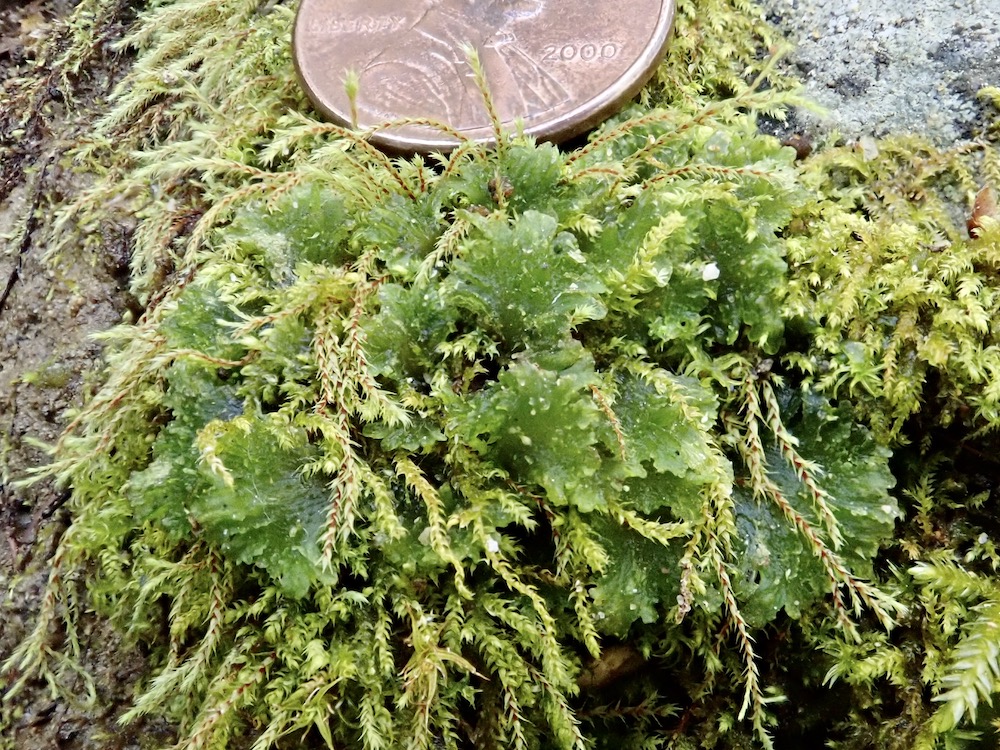
Anthoceros fusiformis rosettes of overlapping straps covered with lamellae. CC BY-NC Amanda Heinrich
Anthoceros fusiformis
Anthoceros fusiformis younger plants, with sporophytes just beginning to form, in April. CC BY-NC Amanda Heinrich
Anthoceros fusiformis
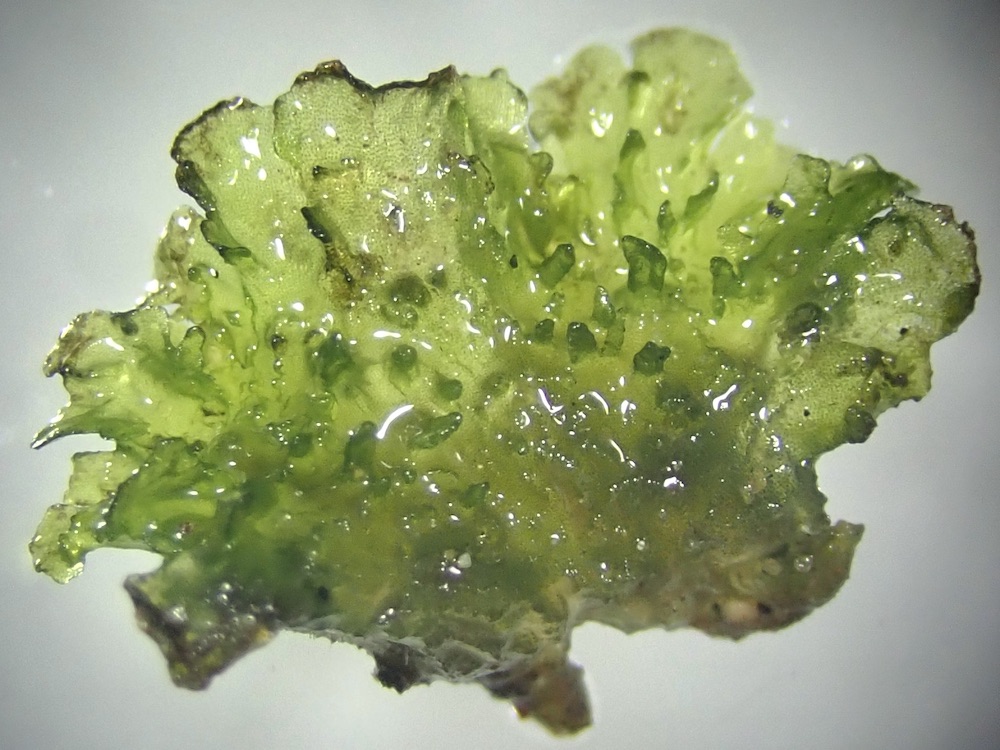
Anthoceros fusiformis individual rosette of overlapping branches, with frilly margins and flap-like lamellae of various sizes on surface. CC BY-NC Amanda Heinrich
Anthoceros fusiformis
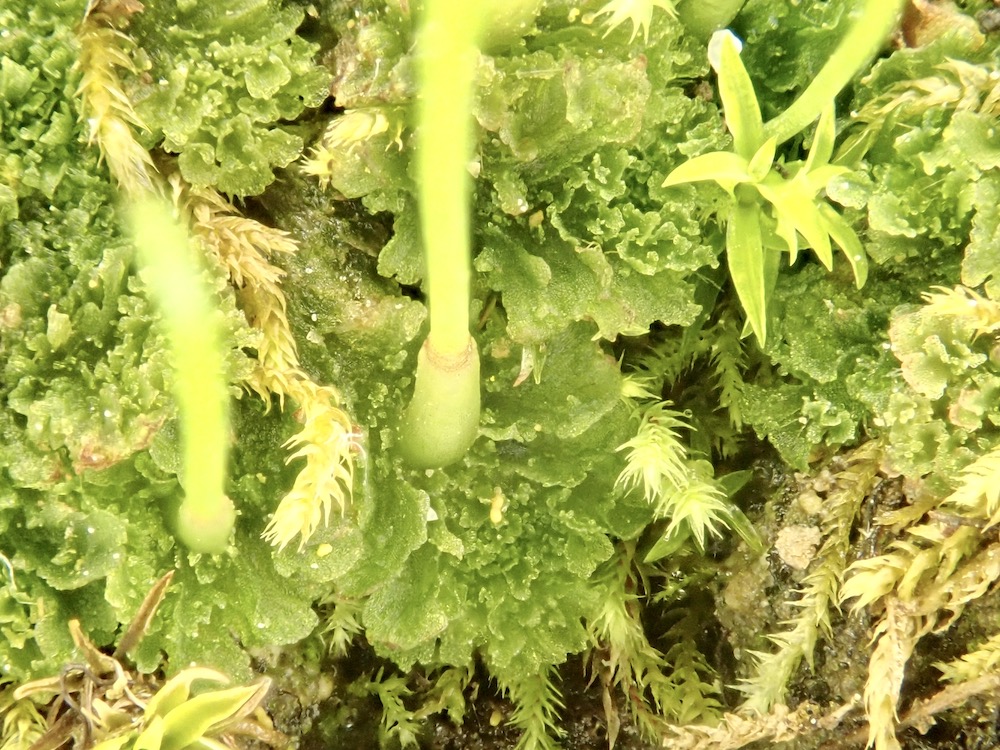
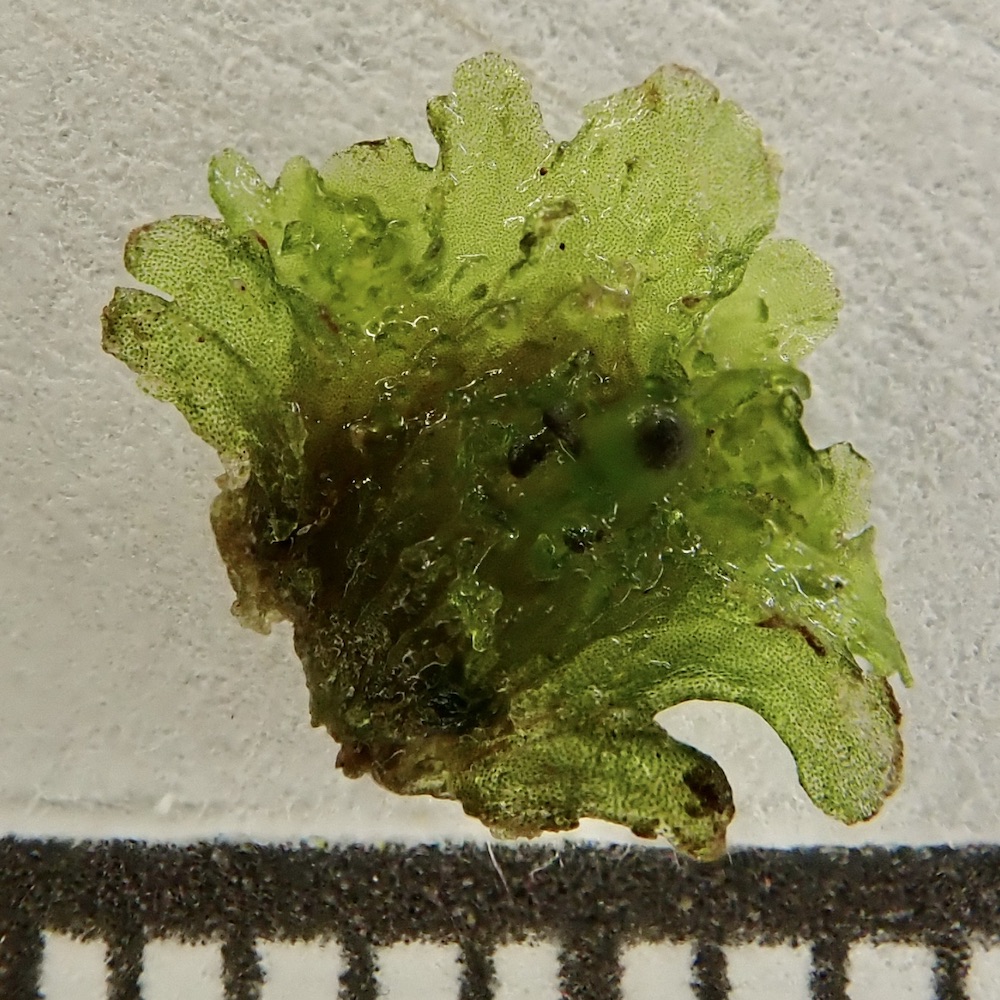
Anthoceros fusiformis individual rosette with, early developing sporophyte just right of center with black tip. Large chloroplasts visible as tiny green specks. CC BY-NC Amanda Heinrich
Anthoceros fusiformis
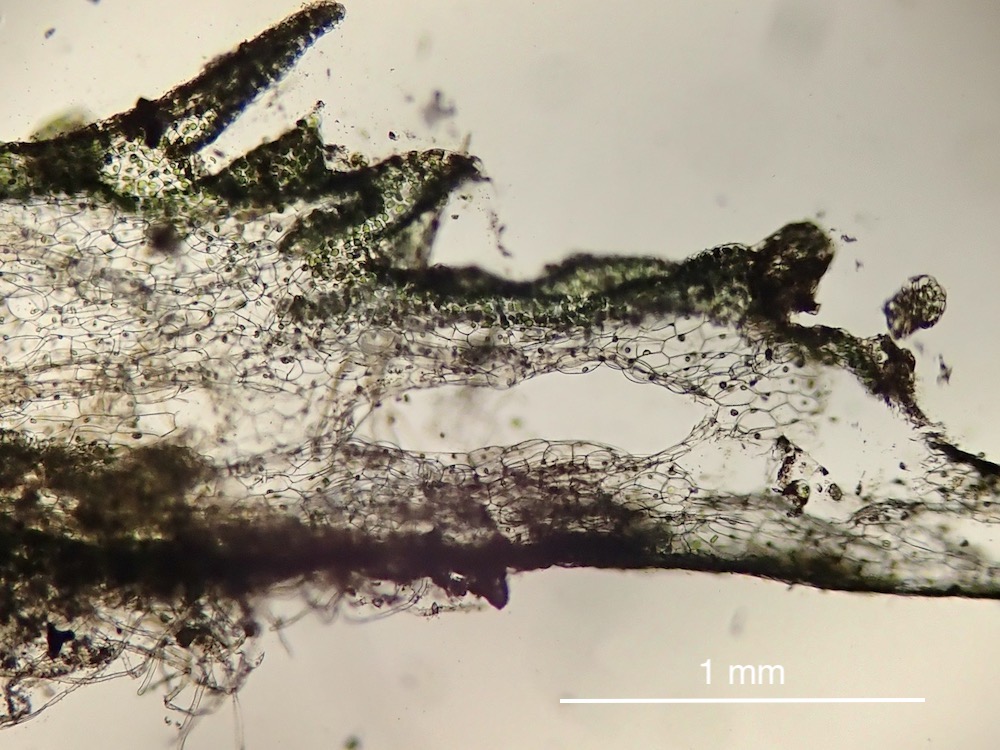
Cross-section of Anthoceros fusiformis thallus, showing large cavity within. Lamellae visible above. CC BY-NC Amanda Heinrich
Anthoceros fusiformis
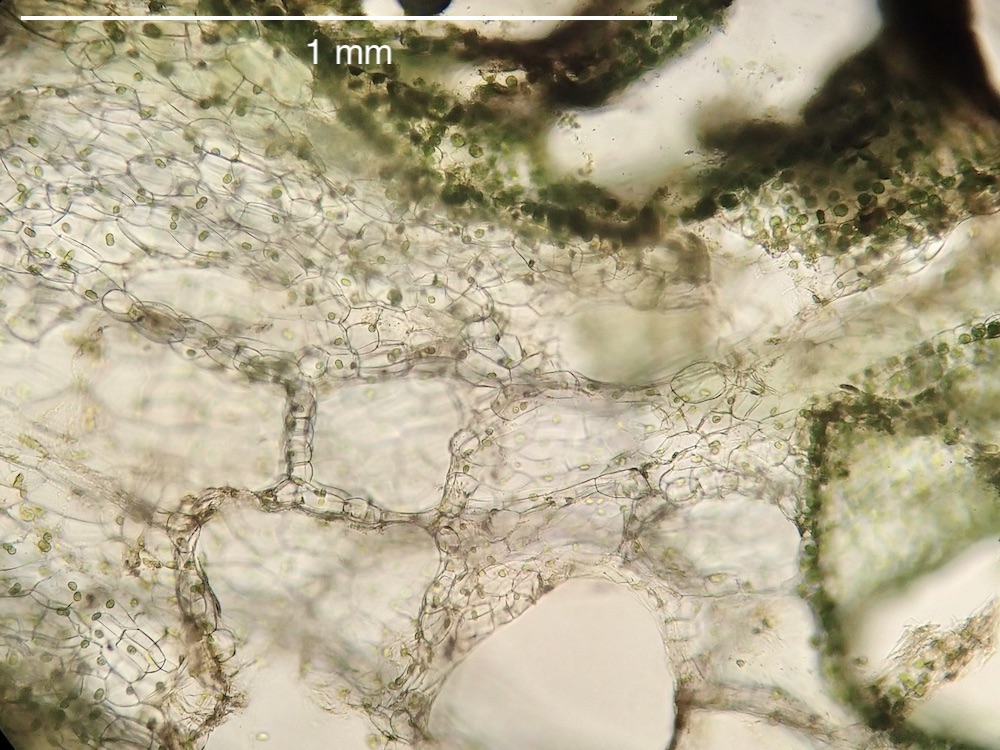
Cross-section of Anthoceros fusiformis thallus, showing many large cavities within. CC BY-NC Amanda Heinrich
Anthoceros fusiformis
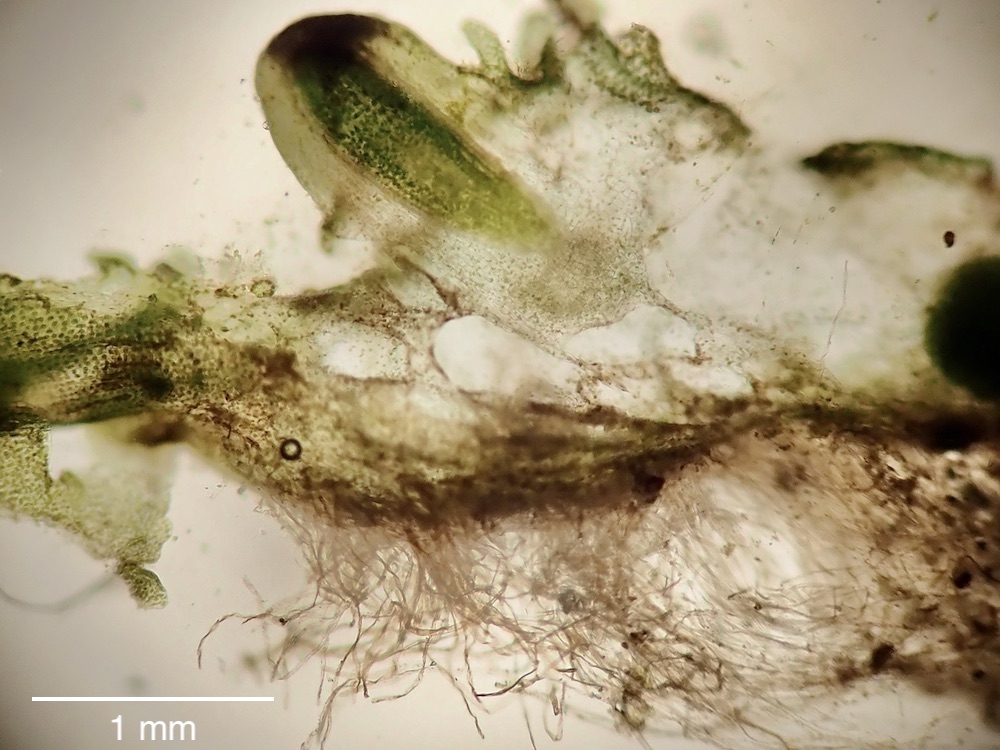
Cross-section of Anthoceros fusiformis thallus, showing developing sporophyte budding from surface, cavities within, rhizoids on underside. Spherical colony of Nostoc partly visible on right. CC BY-NC Amanda Heinrich
Anthoceros fusiformis chloroplasts
Anthoceros fusiformis mature thallus magnified 400x, showing chloroplasts, one per cell, with apparent starch-free zones. CC BY-NC Amanda Heinrich
Anthoceros fusiformis chloroplasts
Anthoceros fusiformis young thallus magnified 400x, showing chloroplasts, one per cell, starch-free zones not readily apparent. CC BY-NC Amanda Heinrich
Anthoceros fusiformis
Anthoceros fusiformis individual plant with maturing sporophyte blackening and splitting at tip. CC BY-NC Amanda Heinrich
Anthoceros fusiformis spore pseudoelater
Anthoceros fusiformis very dark mature pseudoelater and spore with spines on distal surface. (400x) CC BY-NC Amanda Heinrich
Anthoceros fusiformis immature spores
Anthoceros fusiformis lighter immature spores and pseudoelaters. (400x) CC BY-NC Amanda Heinrich
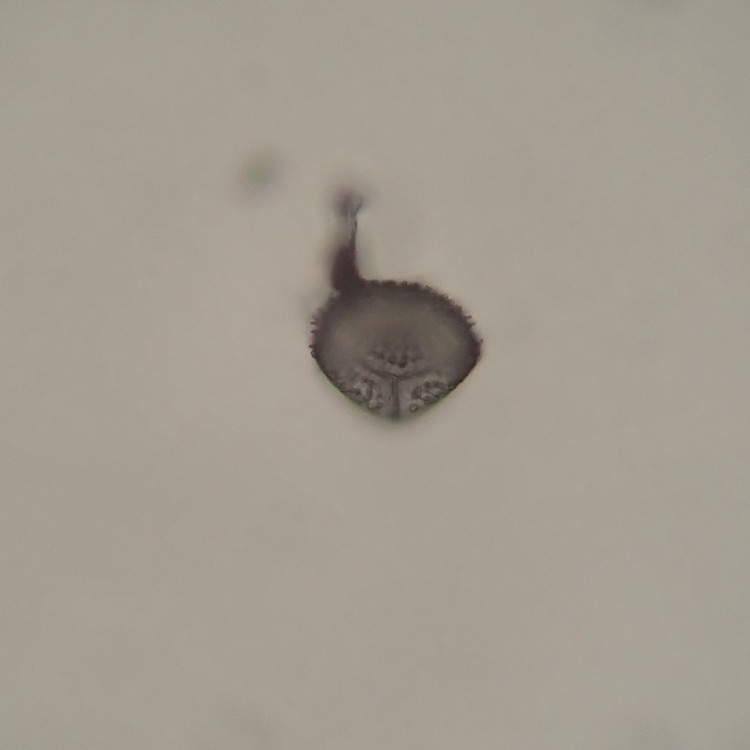
Anthoceros fusiformis spore proximal
Anthoceros fusiformis slightly immature spore with papillae on proximal surface, except for narrow smooth strips along triradiate ridge. Pseudoelater in background. (400x) CC BY-NC Amanda Heinrich
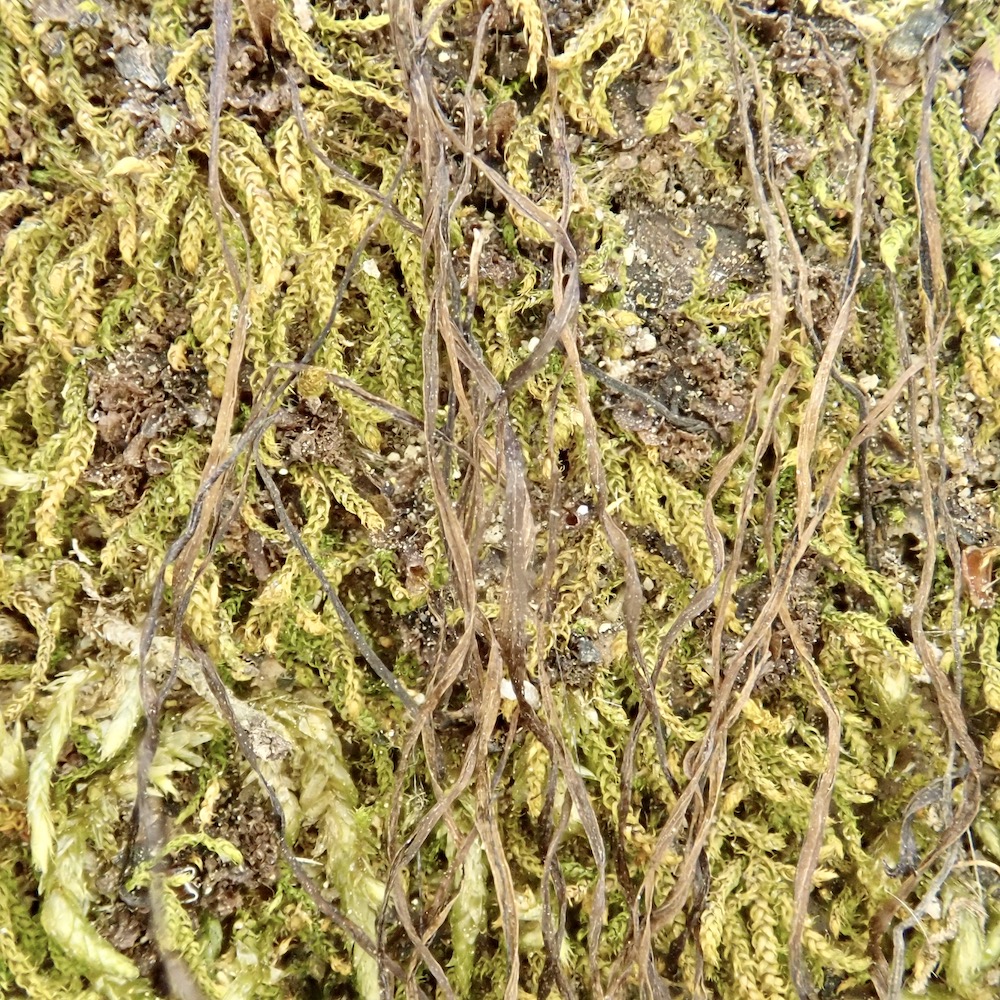
Anthoceros fusiformis dry
Anthoceros fusiformis plants in November, sporophytes browned and fallen, like a clump of hair.
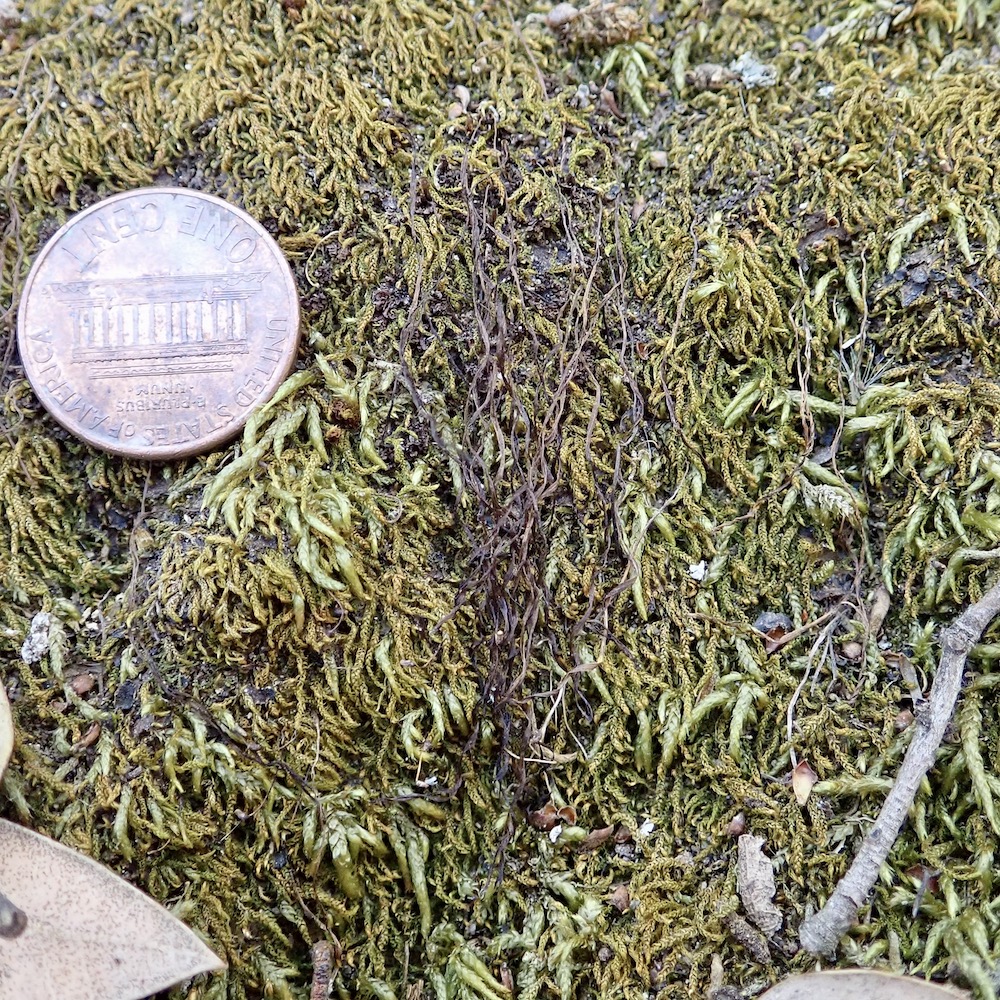
Anthoceros fusiformis dry
Anthoceros fusiformis dried thalli in November, frilly and brown, with twisted, split, fallen sporophytes draped above, amongst green moss, Claopodium whippleanum.
Name: Antho is Greek for flower and ceros is greek for horn.  fusiformis is from the Latin fusus, for spindle.
References and Further Reading
Contributions toward a bryoflora of California III. Keys and annotated species catalogue for liverworts and hornworts, William T. Doyle and Raymond E. Stotler, Madroño, A West American Journal of Botany, Volume 53, Number 2. This issue can be ordered here.
Anthocerotophyta, Juan Carlos Villarreal A. Karen S. Renzaglia, Bryophyte Flora of North America, Provisional Publication, Missouri Botanical Garden.
Hornworts of Oregon, David Wagner